Hisagozuka Kofun: An Early Kofun-Period Burial Mound in Japan
Site at a Glance
- Popularity
- Medium
- Country
- Japan
- Primary era
- Classical
- Eras represented
- Classical
- Civilizations
- Unclassified
- Site type
- Burial
- Remains
- Burial Mound
On this page6 sections
History
Hisagozuka Kofun is a burial mound in Himeji, Japan, thought to have been built in the early Kofun period, an era associated with large burial mounds. Its shape provides the basis for this dating. Also known as Yoro-Hisagozuka Kofun, it is part of the Yoro Kofun Group.
The mound’s scale and form have prompted the interpretation that it held the remains of a leading chief in a small local region, with direct ties to forces in the Kinai region. The Yamato polity, an early Japanese political power centered in central Japan, is associated with rulers whose tombs resemble Hisagozuka in form. Pottery fragments in the mound fill suggest that its construction may have destroyed a nearby settlement.
Japan designated the site a National Historic Site in 1978. A survey of the mound followed in 1987.
Remains
Setting and mound
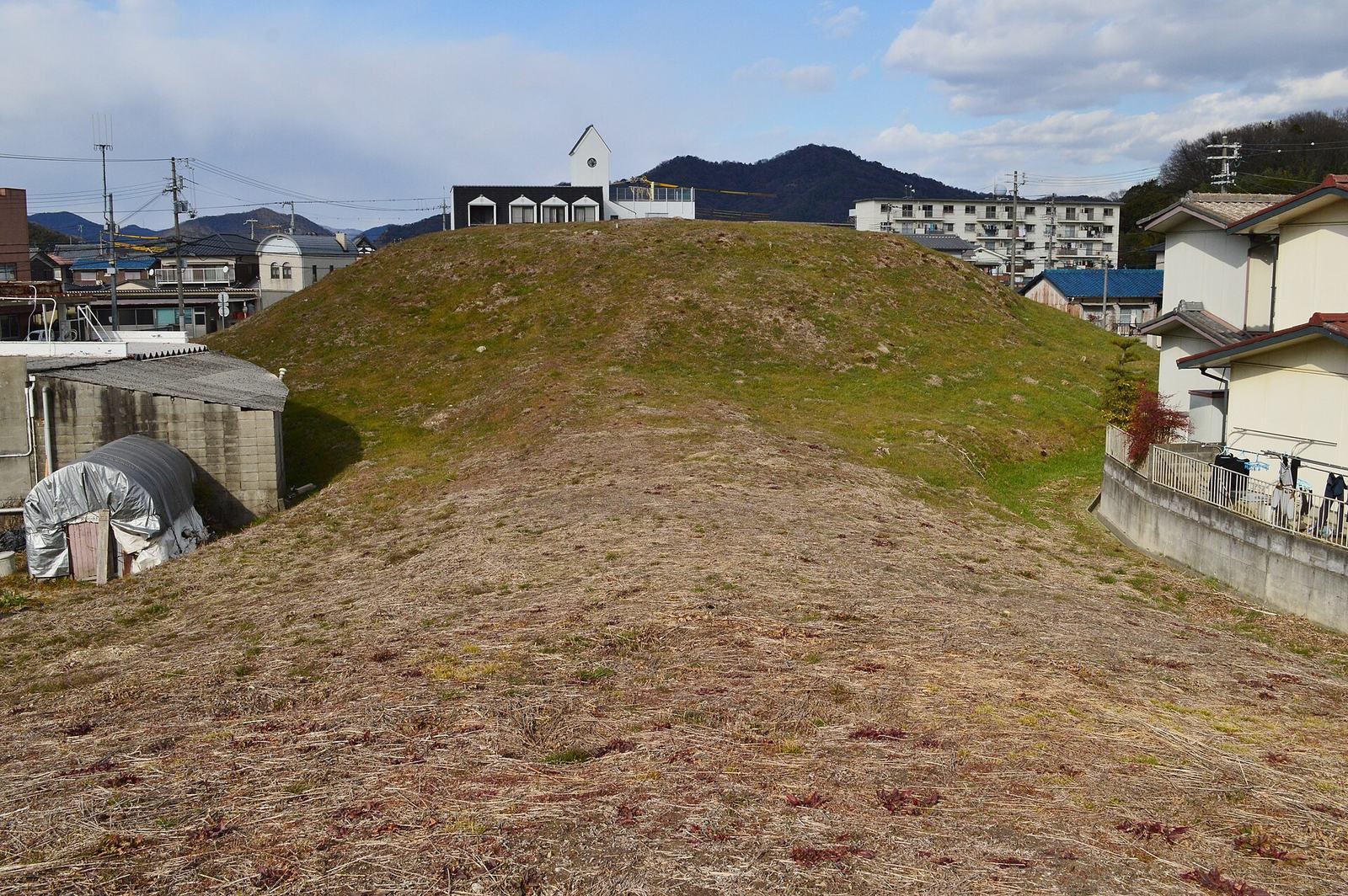
The mound lies at the eastern edge of the Ibo River Plain, about 5 m above sea level, on flat ground near a hill to the east. It may incorporate part of the hill’s extension. Builders shaped it by cutting into and adding fill to an existing natural levee.
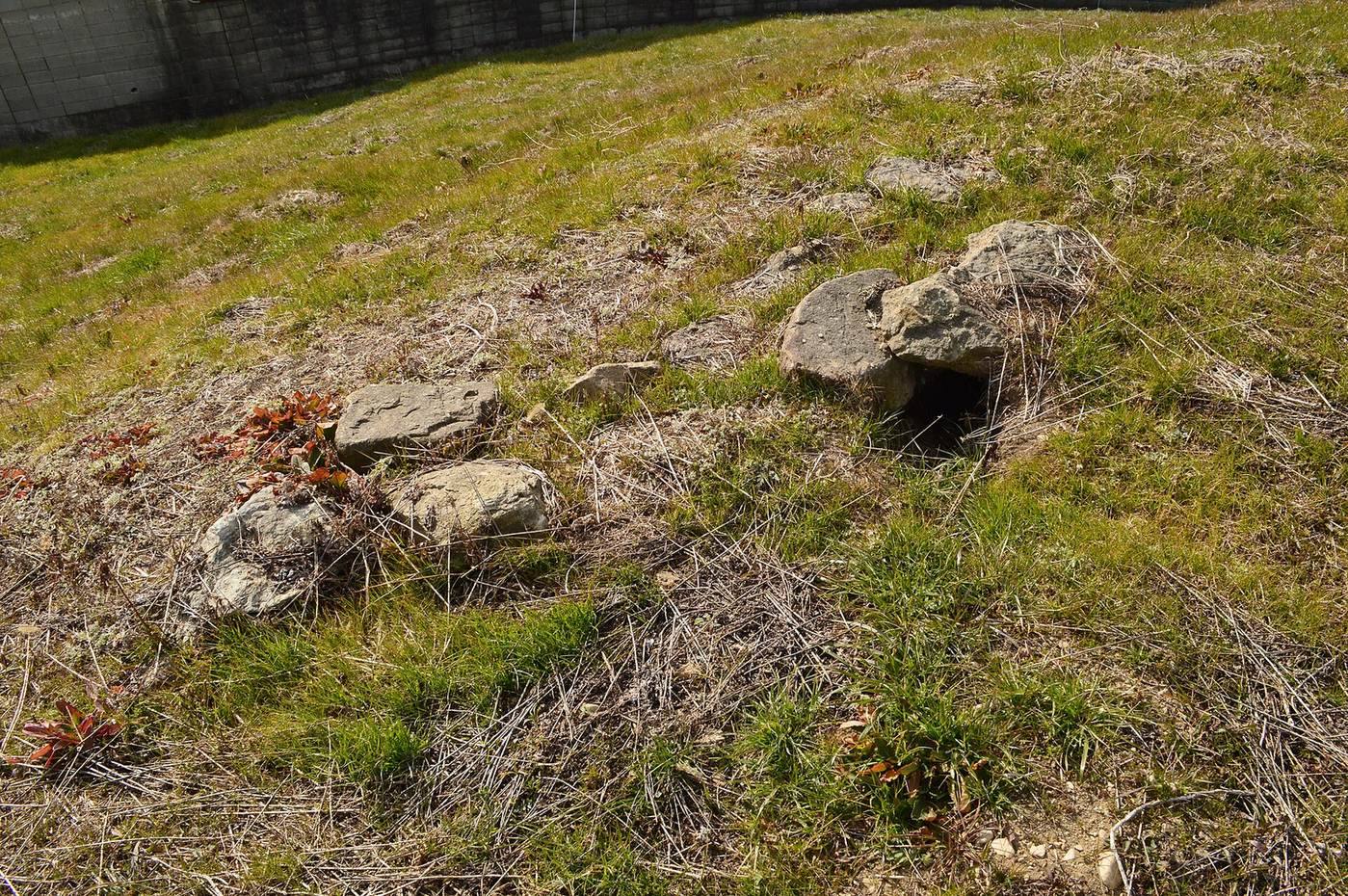
Hisagozuka is keyhole-shaped, with a circular rear joined to a flared front; its axis runs north to south, and the front faces south. The length is estimated at about 100 m, although its full extent has not been established. It is among the largest kofun in the Nishi-Harima region and is more than twice the size of nearby early-period mounds. The circular rear has three tiers. A projection on the eastern side of the front may be a remnant left after extensive leveling or an extension of the mound, but its origin is uncertain. Stone rows resembling a wall are thought to have surrounded it.
Burial features and finds
Burial chambers
A pit-type stone burial chamber, built in a pit using stone slabs, was exposed at the southern edge of the circular rear section. A separate burial facility is presumed to have occupied the center of the rear section.
Pottery and reported haniwa
Pottery bearing impressions made with bamboo tubes has been collected from the mound. Fragments identified as haniwa, fired-clay objects placed on or around burial mounds, have also been reported, although their presence at the site remains uncertain.