Hintsi Archaeological Site: A Late Paleolithic Site in Ukraine
Site at a Glance
- Popularity
- Low
- Country
- Ukraine
- Primary era
- Stone Age
- Eras represented
- Stone Age
- Civilizations
- Unclassified
- Site type
- Domestic
- Remains
- House
On this page10 sections
History
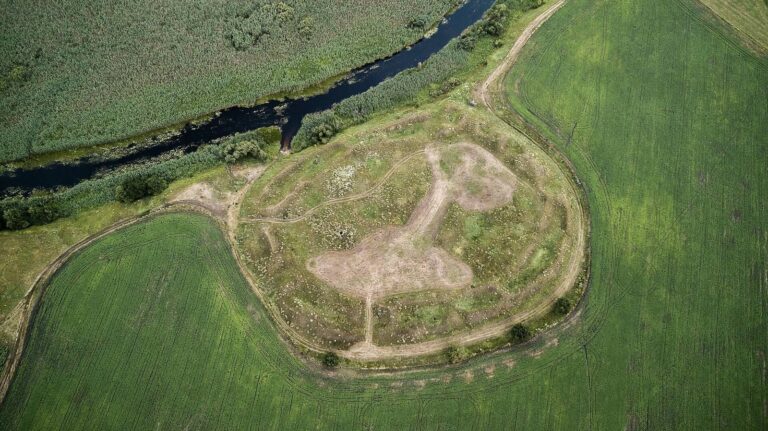
Hintsi Archaeological Site is a Late Paleolithic site on the banks of the Uday River in Hintsi village, Lubny district, Poltava region, Ukraine, dating to about 13,000 to 15,000 years ago. The Late Paleolithic is the later phase of the Old Stone Age, a prehistoric period associated with stone-tool-making societies. Hintsi was the first identified Late Paleolithic site in Eastern Europe.
Discovery and early investigations
Estate work on property owned by Hryhorii Stepanovych Kyriakov brought the site to attention in 1871, when workers recovered mammoth bones and chipped flint. With Kyriakov’s support, archaeologist F. Kaminsky and geologist K. Feofilaktov investigated the area in 1873. Their work established that Paleolithic people had lived in the Dnieper region, challenging the prevailing view of Danish archaeologist Jens Jacob Asmussen Worsaae that Paleolithic people had not inhabited the European part of the Russian Empire. Feofilaktov prepared a geological description of the site.
Excavations and changing interpretations
Geological research by M. I. Kryshtafovych took place in the early twentieth century. Unsystematic excavations from 1904 to 1906 damaged much of the site, effectively destroying a large part of it. Vadym Shcherbakivskyi then led extensive investigations in 1914 and 1915, assisted by archaeologist Vasyl Horodtsov, and further research followed in 1919.
In 1935, I. F. Levytskyi led excavations with A. Ya. Brusov and I. H. Pidoplichko, seeking to locate and reconstruct dwelling complexes. The team identified five cultural layers, deposits containing traces of human activity. These led researchers to propose that the site comprised settlements from different periods.
Later research and protection
Staff from the Lubny Museum carried out smaller excavations in 1952. From 1977 to 1980, a Moscow team led by V. Ya. Sergin continued the investigations. Excavations led by L. A. Yakovleva have proceeded since 1992, with the aim of refining the site’s dating and studying the sequence of its archaeological layers. In 2009, Hintsi was entered in Ukraine’s State Register of Immovable Monuments.
Remains
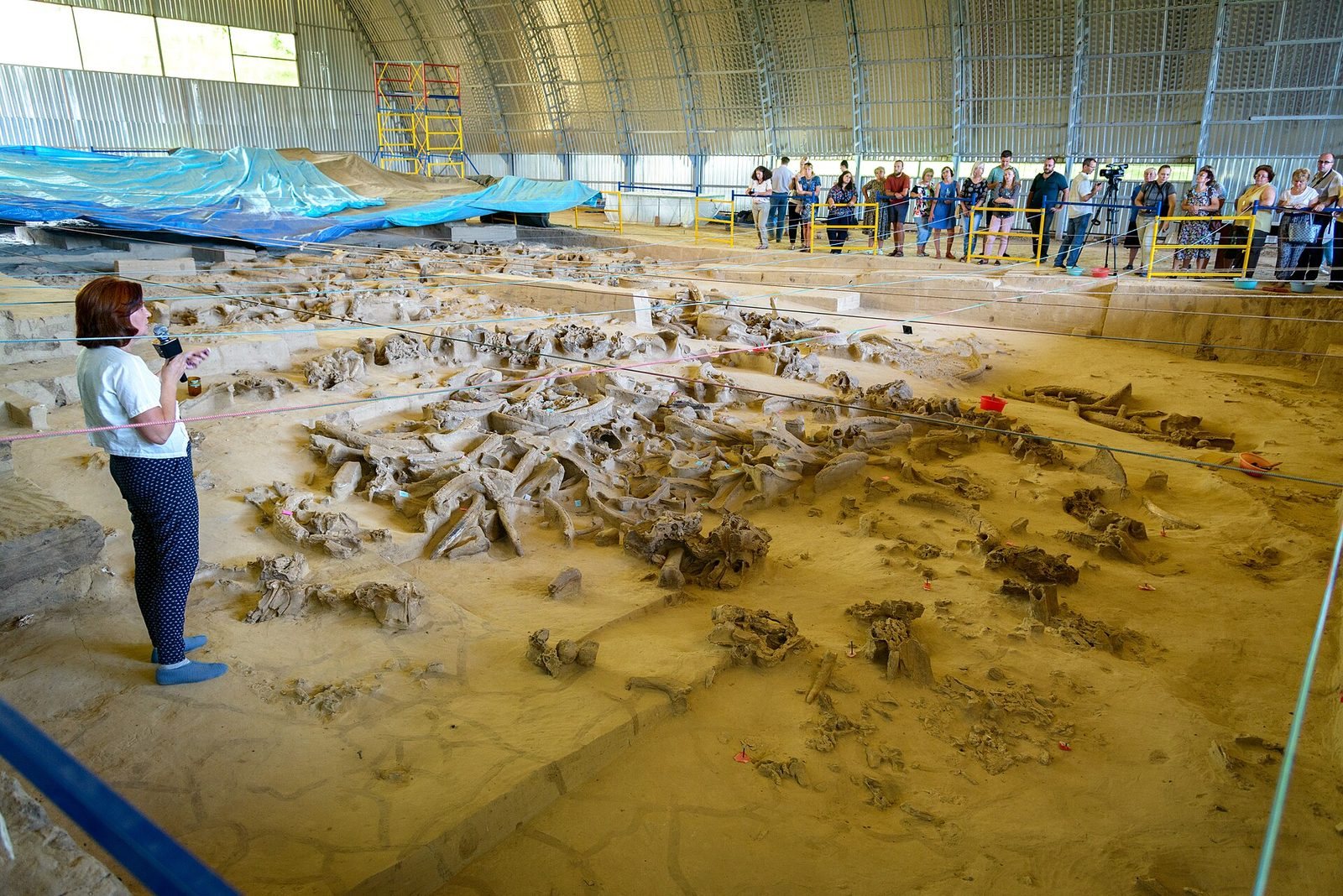
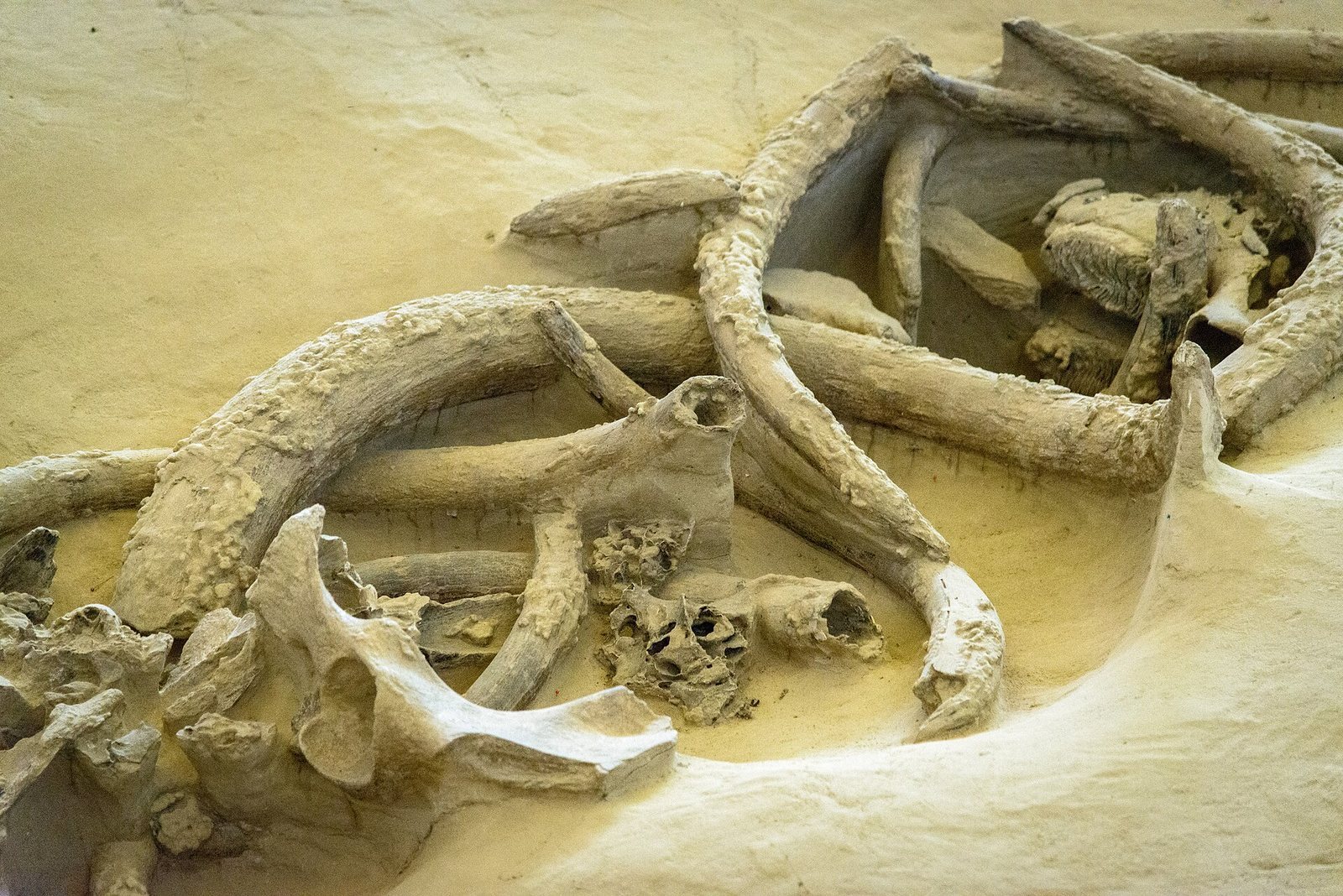
The archaeological evidence includes dwelling remains, mammoth and other animal bones, chipped flint, and a carved bone fragment recorded in a drawing. The site lies beside the Uday River. Excavations between 1977 and 1980 identified two concentrations of cultural remains and produced plans of dwelling bone remains.
Dwelling remains
Dwelling investigated in 1914–1915
A dwelling made from mammoth bones was identified during Shcherbakivskyi’s investigations. After it was studied, it was covered with earth. The dwelling was exposed again in 1935 so it could be measured and drawn, then covered once more.
Dwelling and pits investigated in 1977–1980
Excavations during this period dismantled a dwelling and pits containing bones of mammoths and other animals.
Seven-metre dwelling
Excavations in 1993 and 1994 uncovered remains of the site’s largest dwelling, which measured seven metres across. Its remains included skulls and bones from mammoths of different ages.
Animal remains and carved marks
Mammoth bones and chipped flint were among the finds recovered when the site was identified in 1871. Mammoth bones also came to light in the 1952 excavations. A mammoth-bone fragment bore carved marks. A sketch by Shcherbakivskyi records a fine curved line at the centre, with 32 long marks and 78 short ones branching from it. The pattern has been tentatively interpreted as a record of lunar cycles. Archaeologist V. Khvoiko found a bone fragment with a similar pattern at the Kyiv-Kyryliv site.