Himmelthal Monastery: A Former Cistercian Nunnery in Germany
Site at a Glance
- Popularity
- Medium
- Country
- Germany
- Primary era
- Early Modern
- Eras represented
- Medieval, Early Modern
- Civilizations
- Holy Roman Empire
- Site type
- Religious
- Remains
- Monastery
On this page11 sections
History
Foundation and growth
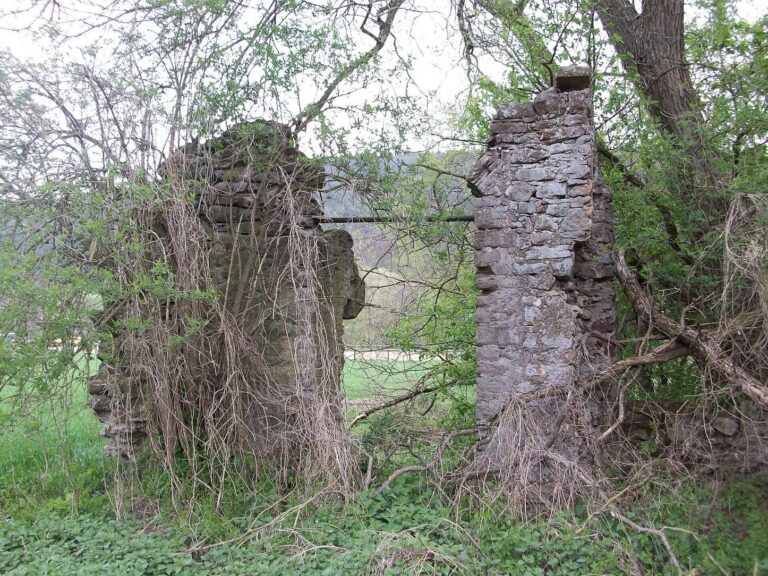
Himmelthal Monastery is a former Cistercian nunnery in Rück, in the municipality of Elsenfeld, Bavaria, Germany. Count Ludwig II von Rieneck and Adelheid von Henneberg founded the women’s convent in 1232 and gave it one of their estates. Although associated with the Catholic Cistercian monastic order, Himmelthal was never formally incorporated into it. The monastery was also called Vallis coeli, meaning “Valley of Heaven.”
In 1234, the German king Henry VII granted the community protective privileges, and Pope Gregory IX confirmed its rights in a papal bull, a formal document issued by the pope. Two years later, the monastery was transferred to Siegfried III, Archbishop of Mainz. By 1243, it had grown enough to send nuns to establish a new convent at Lichtenstern, near Heilbronn. Cistercian abbots from Ebrach and Bronnbach and a Benedictine abbot from Seligenstadt visited Himmelthal; the recorded visits included the abbots of Ebrach in 1406 and Seligenstadt in 1516.
Landholding and disruption
The Counts of Rieneck continued to protect the monastery. Gifts from the lords of Bickenbach and the families of Fechenbach, Riedern, and Schlüsselberg helped it build up lands and rights in more than 80 settlements after 1400. Its possessions included Eichelsbach, much of Großheubach and Reistenhausen, estate farms at Mechenhard, and the right to nominate the parish priest at Erlenbach.
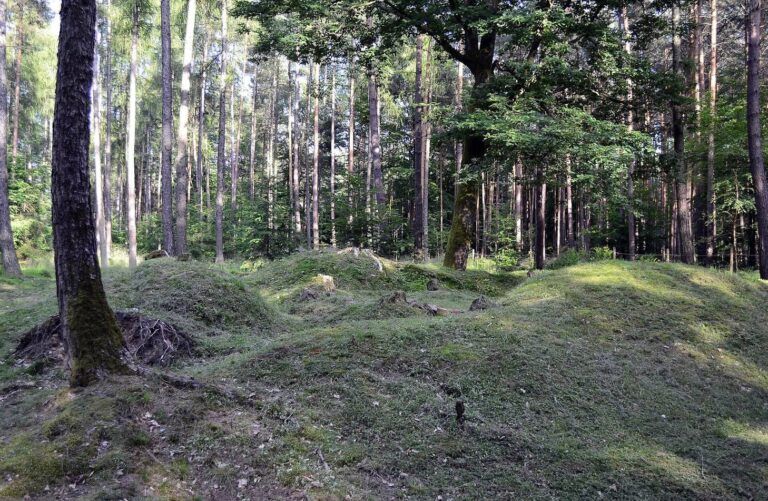
During the Reformation, the sixteenth-century movement that led to Protestant churches and divided Western Christianity, and the religious wars that followed, Himmelthal was looted in 1525, 1552, and 1557. Some of its buildings were destroyed.
From convent to educational complex
By 1568, the monastic community had ceased to function. The Archbishopric of Mainz, both a church jurisdiction and a territorial government, converted the premises into an estate intended to provide revenue. From 1569, Anna Geipel von Schöllkrippen, formerly a nun at the Benedictine convent of Schmerlenbach, lived there as the sole resident and nominal abbess. She died on 25 May 1601 and was buried in the church at Erlenbach am Main.
The archbishop entrusted management of the estate to the Jesuits in 1595. The Jesuits were a Catholic religious order associated with preaching, education, and missionary work. The Counts of Erbach, who claimed to be the monastery’s lawful successors, accepted the arrangement in 1618, and the estate was formally granted to the order in 1626. After the Jesuits were suppressed in 1773, the property returned to the Archbishopric of Mainz and was assigned to an educational institution in Aschaffenburg. Eichelsbach, formerly among the monastery’s holdings, was also assigned to Mainz.
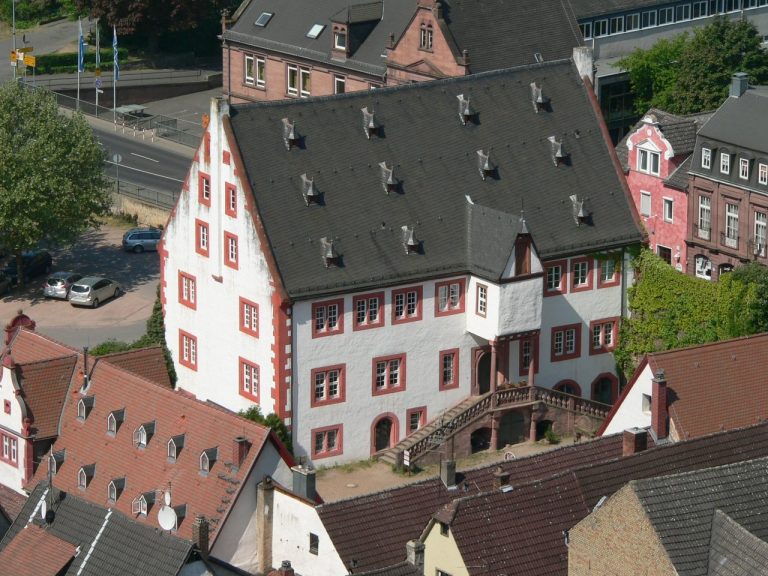
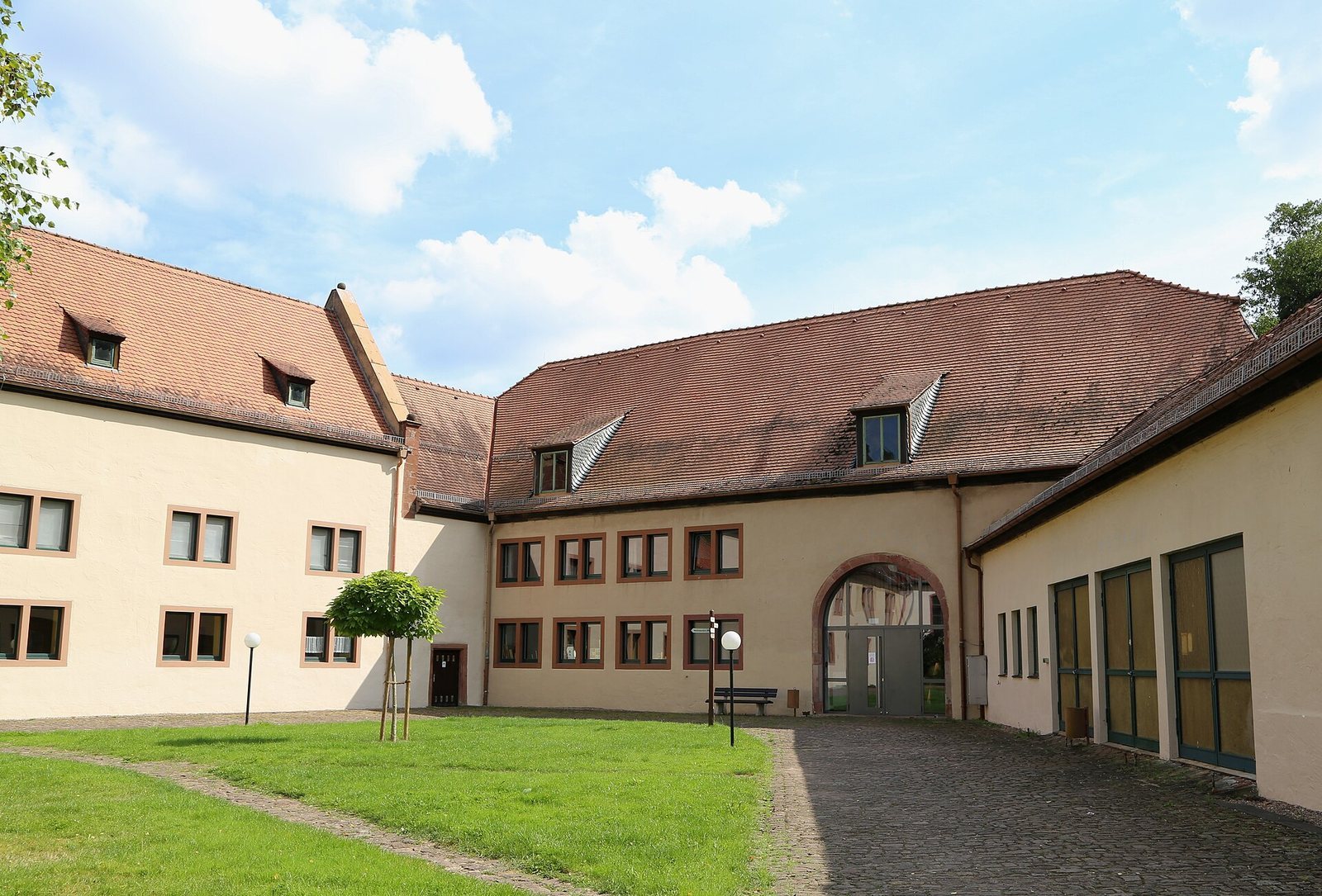
The Gymnasium Fund, administered by the Aschaffenburg Foundation Office, has owned the former monastery complex since 1814. Major repairs in 1973–74 prepared it for educational use. Since 1974, the fund has operated a vocational training and residential school for young people, as well as the private Elsava School for children and adolescents with substantial educational and behavioral needs, which includes a special-education day facility. Pilgrimages no longer take place in their former form, but annual services are held on 20 January for St. Sebastian’s Day and on 14 September for the Feast of the Exaltation of the Cross.
Local traditions
One local tale links the name Himmelthal, or “Valley of Heaven,” to Johanna, the daughter of a knight said to have lived at Wohlburg on Wohlberg. Her harp playing and singing were said to be accompanied by church bells and lily-of-the-valley flowers, while the setting sun lit the surrounding hills and vineyards. The monastery at the foot of the hills was then given its name.
Another legend tells of Sister Agnes, who planned to flee with a huntsman. A storm flooded the Elsava and swept away its bridges and crossings. The huntsman drowned while attempting to cross the river, and Agnes escaped the convent. In a flash of lightning, she supposedly saw the devil in the huntsman’s place. The following morning, her half-burned veil was found.
Remains
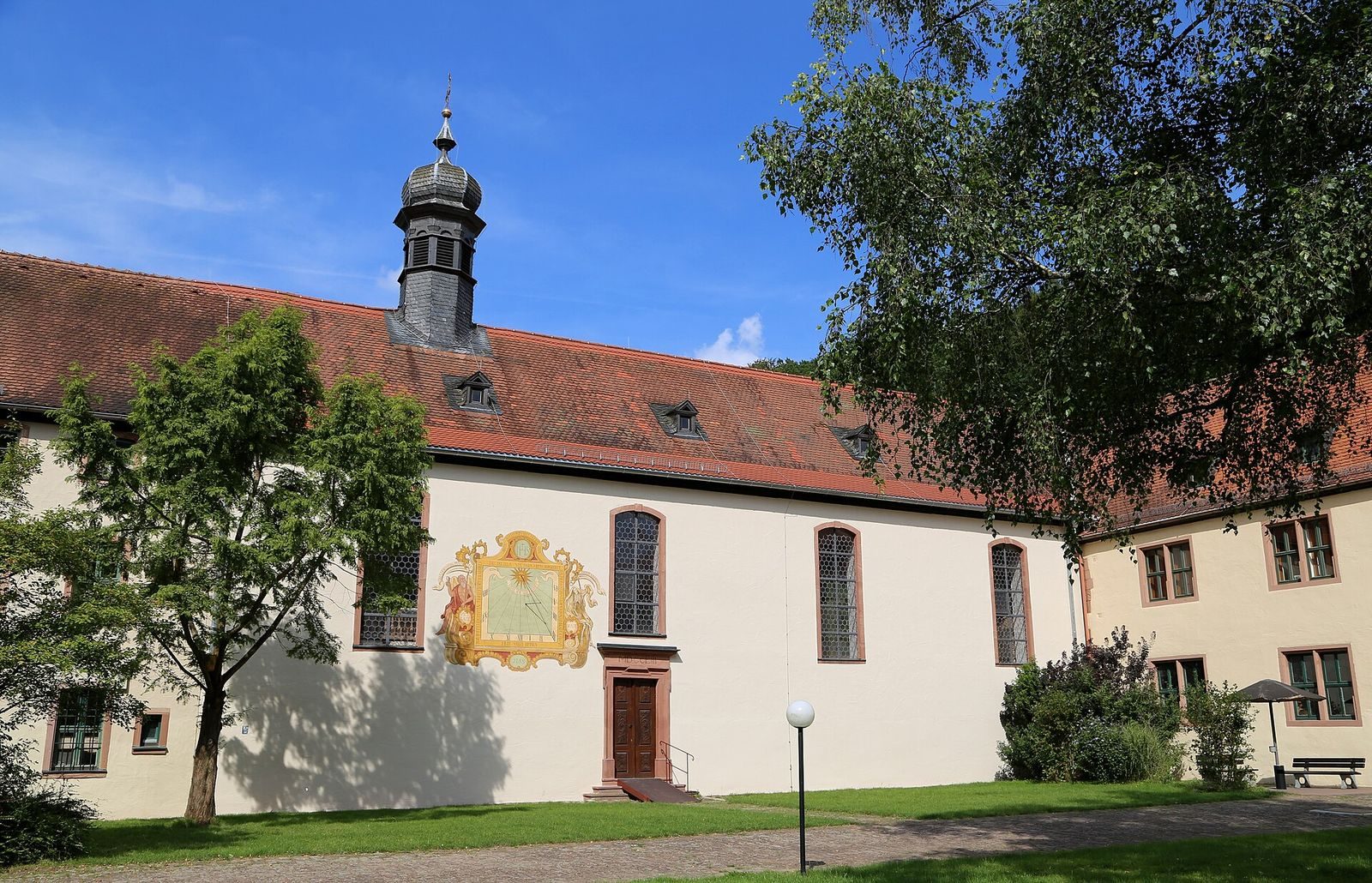
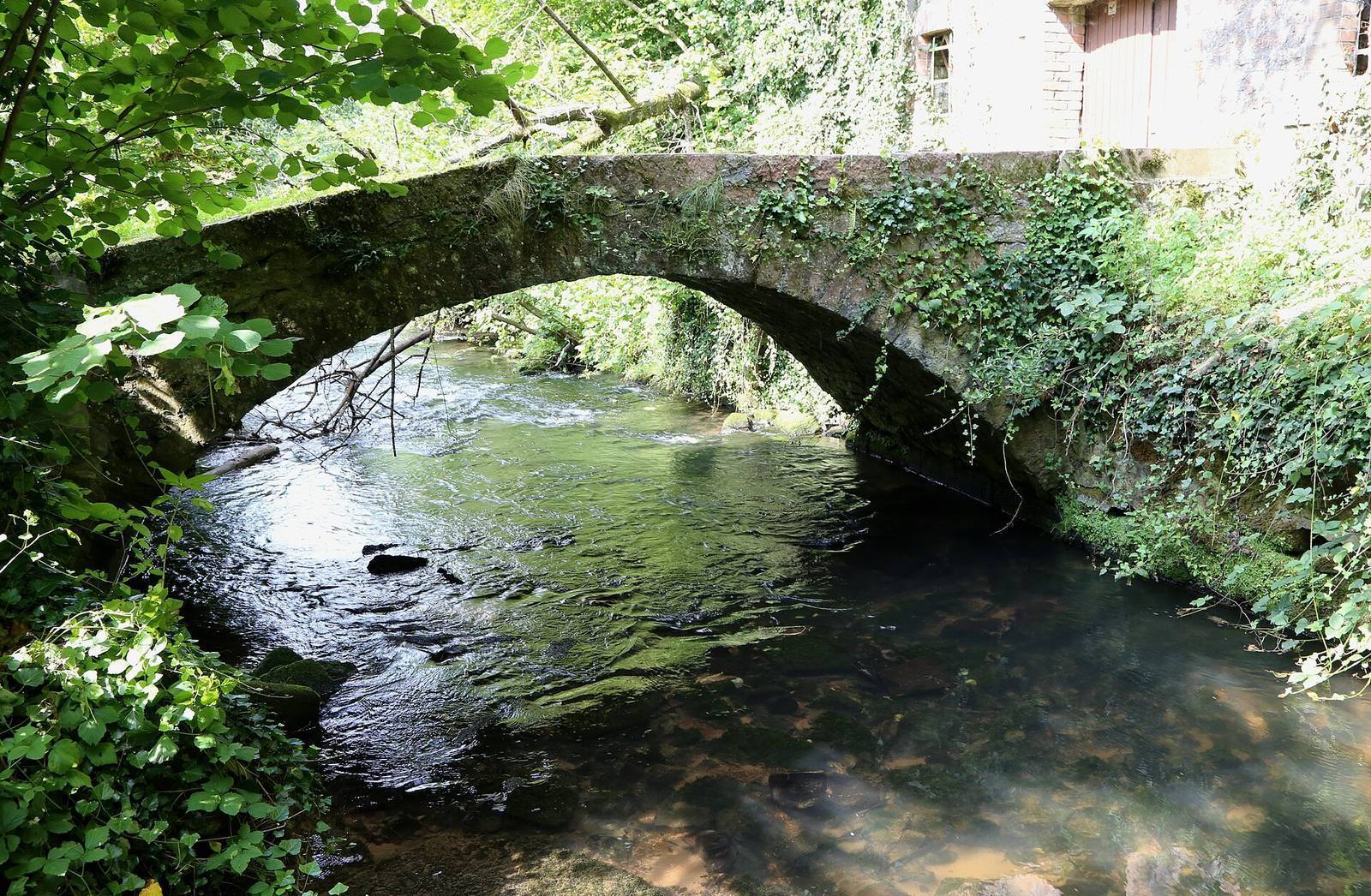
The monastery stands where the Elsava leaves the Spessart and reaches the Main plain. Near the complex, the valley narrows between steep, wooded hills. Wohlberg rises to the north, and the former Wohlburg stood on the hill. The surviving features include a church built on the foundations of the earlier monastery church, parts of the monastic buildings, and objects now kept elsewhere.
Church and associated features
Pilgrimage church and organ
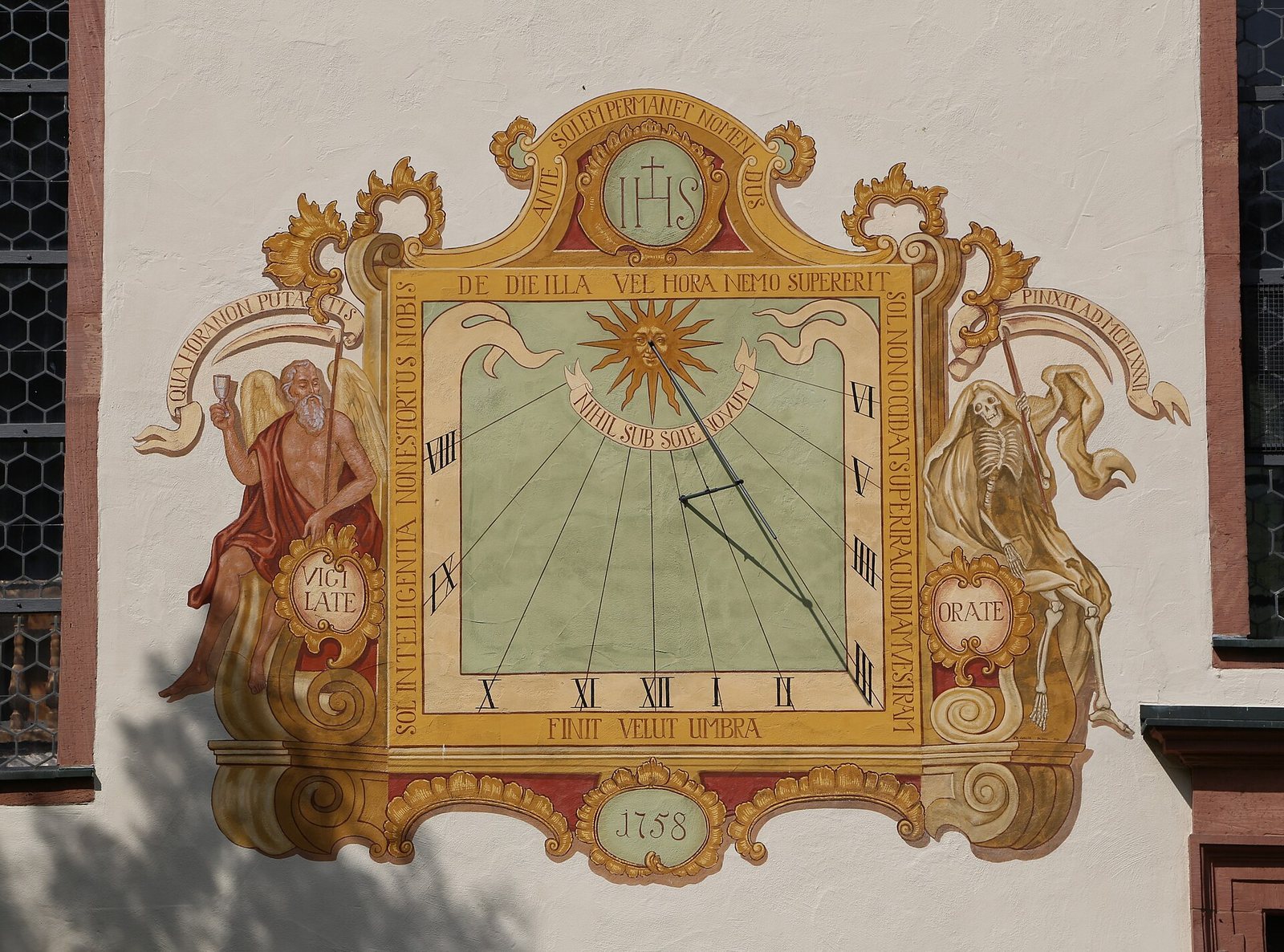
The earliest monastery church was built soon after the convent’s foundation. In 1753, a Baroque pilgrimage church dedicated to St. Sebastian replaced it on the earlier foundations. Rudolf Vill of Klingenberg was its builder. The church retains original fittings, including an organ made in 1757 by Johann Conrad Wehr of Marktheidenfeld; the instrument remained in the church into the early twenty-first century.
Passage inscription
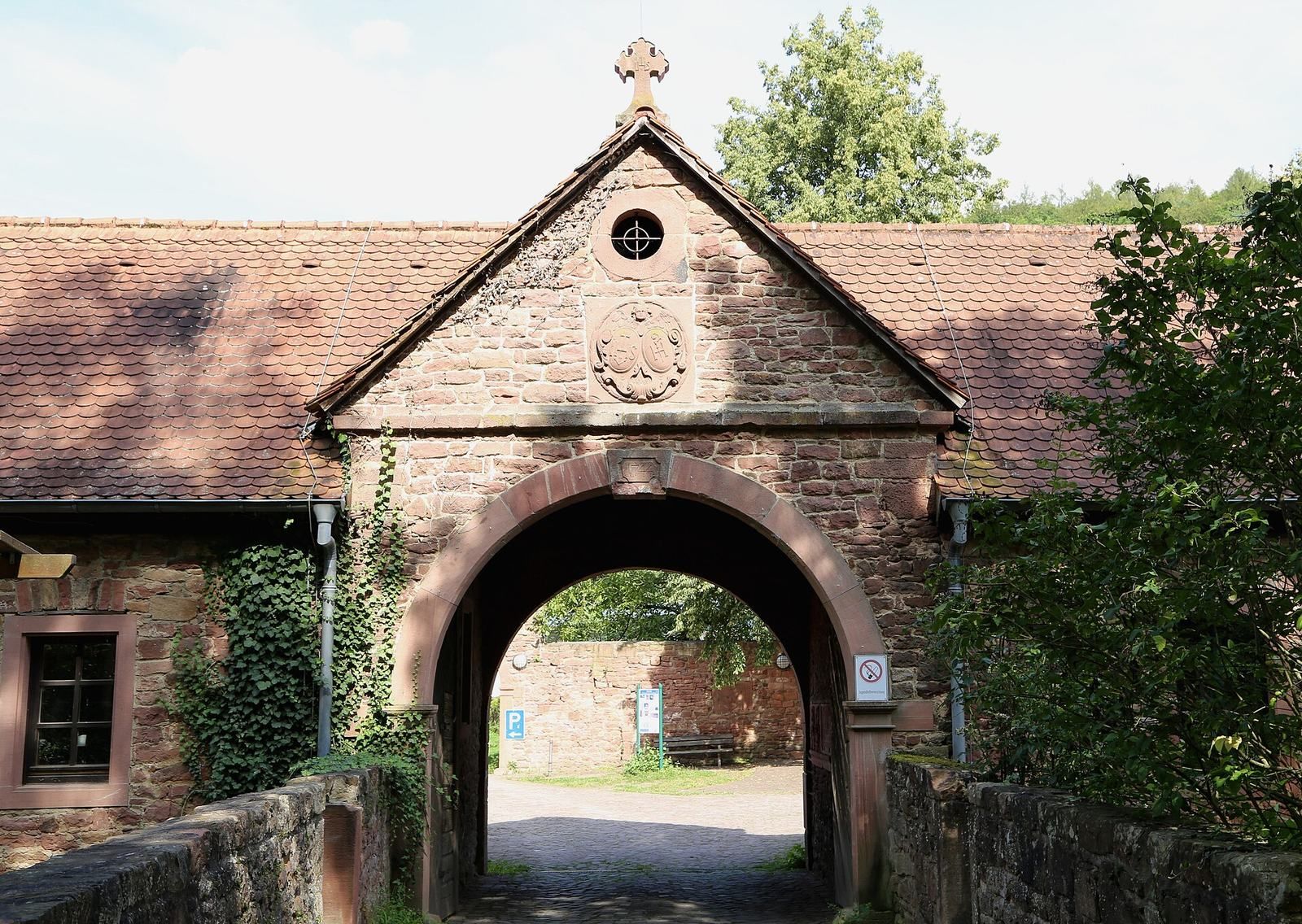
A combined coat of arms of the Geipel von Schöllkrippen and von Wasen families is set into the south wall of a passage leading to the monastery’s outbuildings. An inscription dated 1583 names Anna Geipel von Schöllkrippen and asks God to grant her a blessed rule and receive her into His hands.
Stone in the monastery barn
A stone set into the monastery barn depicts the devil gripping a nun with his claws. Local tradition connects the image to the place where Sister Agnes’s veil was found, and the stone remains visible in the barn.
Monastery panels
Eighteenth-century panels depicting the monastery’s holdings are now in the Stiftsmuseum in Aschaffenburg.