Heldenburg: A Medieval Ducal Castle in Germany


Site at a Glance
- Rating
- 4.5
- Popularity
- Low
- Country
- Germany
- Primary era
- Medieval
- External website
- Open
- Eras represented
- Medieval
- Civilizations
- Holy Roman Empire
- Site type
- Military
- Remains
- Castle
On this page14 sections
History
Medieval origins and the salt spring
Heldenburg, also known as Salzderhelden Castle, is a medieval hilltop castle ruin in Salzderhelden, Germany. Built between about 1100 and 1200, or by the thirteenth century at the latest, it protected the salt spring below the castle, around which the Salzderhelden saltworks developed. The builders may have been the Counts of Dassel or the Welf dukes, a major German ruling dynasty whose branches governed territories in northern Germany.
A document dated 22 July 1306 records that the nuns of Fredelsloh Monastery could retain 20 marks of silver against two salt pans near the castle. This reference predates the previously accepted first documentary mention of Salzderhelden Castle, which had been dated to 1320.
Residence of the Grubenhagen dukes
In 1291, the castle came into the possession of Duke Henry the Miraculous within the newly established Welf Principality of Grubenhagen. He made it his principal residence and died there in 1322. Its position near the salt spring, Grubenhagen Castle, and the town of Einbeck helped establish Salzderhelden as a residence of the Grubenhagen dukes. The dukes later acquired the byname “of Salzderhelden.”
A major tournament was held at the castle in 1305. From the fifteenth to the sixteenth century, Salzderhelden was one of the four non-urban mints in the Principality of Grubenhagen, alongside Einbeck, Osterode, and St. Andreasberg.
Henry the Miraculous’s three sons initially governed Grubenhagen jointly. Henry the Greek later lost the southern territory around Duderstadt after pledging it to the archbishop of Mainz in return for financial support connected with his journeys to the Orient. Beginning in 1331, he also pledged parts of his remaining authority. In 1342, he transferred his rights in Hamelin, Einbeck, Osterode, and other Grubenhagen territories to the archbishop in exchange for a life annuity and withdrew from government.
When Duke Albert I of Brunswick-Grubenhagen took power at Salzderhelden in 1361, his seal showed a horse facing right. This heraldic motif later developed into the Saxon horse, which became the coat-of-arms symbol of Lower Saxony.
Sieges and late medieval alterations
In 1365, Landgrave Frederick of Thuringia besieged the castle with approximately 18,000 men. The defenders used a cannon and inflicted such heavy losses that the besiegers soon withdrew. The event was reportedly the first use of artillery in the defence of a castle in the German lands.
Landgrave Louis the Peaceful of Hesse mounted another siege in 1448. Local tradition relates that Elisabeth, abbess of Gandersheim and sister of Duke Henry III of Grubenhagen, was staying inside the castle. Women’s clothing was allegedly hung from the windows, prompting the besiegers to withdraw because they were unwilling to fight women.
At the end of the fifteenth century, representative half-timbered alterations were made while the castle served as a residence for a duke’s widow. The towns of Einbeck and Osterode resisted a levy for the work for a long period because the duke was impoverished. A Welf partition treaty of 1481 shifted the centre of rule eastward to Herzberg Palace.
Decline of the residence
In 1590, Duke Philip II of Brunswick-Grubenhagen undertook major modernization work. The castle still appeared highly representative in a 1654 engraving by Merian, but its buildings deteriorated during the seventeenth century because the site was used only sporadically. In 1596, the staff included 11 officials, among them a court marshal, and 14 other employees, including gatekeepers, servants, and herdsmen. The last documented temporary presence of a Welf duke was that of John Frederick of Brunswick-Calenberg in 1675.
Philip II died on 4 April 1596, ending the Grubenhagen line. Duke Henry Julius of Brunswick-Wolfenbüttel initially claimed the territory, leading to prolonged succession disputes. After a judgment by the Imperial Chamber Court in 1617, the inheritance passed lawfully to the Lüneburg branch of the Welfs. Henry Julius’s son, Duke Frederick Ulrich, transferred the Grubenhagen inheritance to Christian the Elder, Prince of Lüneburg.
Otto Friedrich von Moltke, the last known resident, lived at the castle from 1680 to 1686 as drost, a high-ranking territorial official, chief forester, and master of the hunt. He was executed in Hanover for high treason in 1692 after becoming involved in a conspiracy against a succession law of 1683.
The castle was uninhabited from the eighteenth century. In 1767, the responsible building authorities considered it too badly deteriorated for residential use. A building-inspection official reported in 1799 that it had collapsed or been cleared away and that no building or granary remained there.
Excavation and conservation
Castle festivals attracted large crowds in the 1950s, when the castle tavern also housed a museum of knightly armour. The part of the castle containing the restaurant was later sold by the state of Lower Saxony. Comprehensive conservation took place from 1983 to 1988. Since 1984, the Heldenburg Castle Association has overseen the site, organized excavations, held services in the castle church, and arranged castle festivals.
Since 2014, the Lower Saxony State Office for the Preservation of Monuments has supported renewed conservation. The work has included repairing a visitor stairway and a retaining wall, securing the castle walls and eastern enceinte wall, and installing a circuit with information panels about the castle and its settlement.
Remains
Layout and defensive works
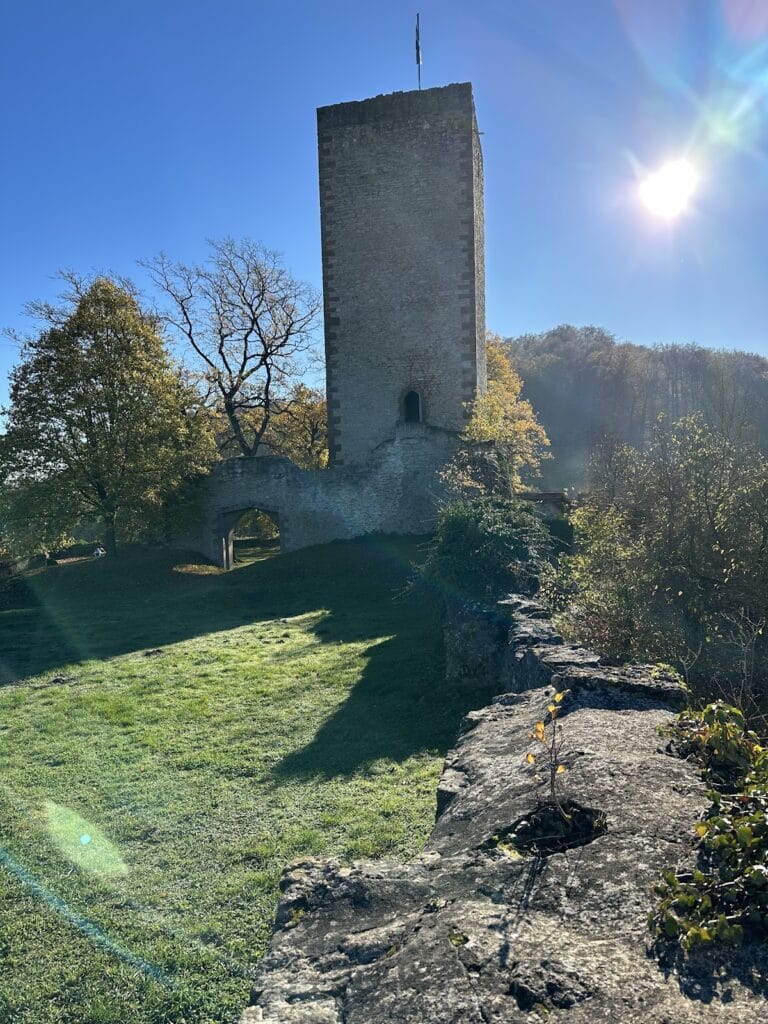
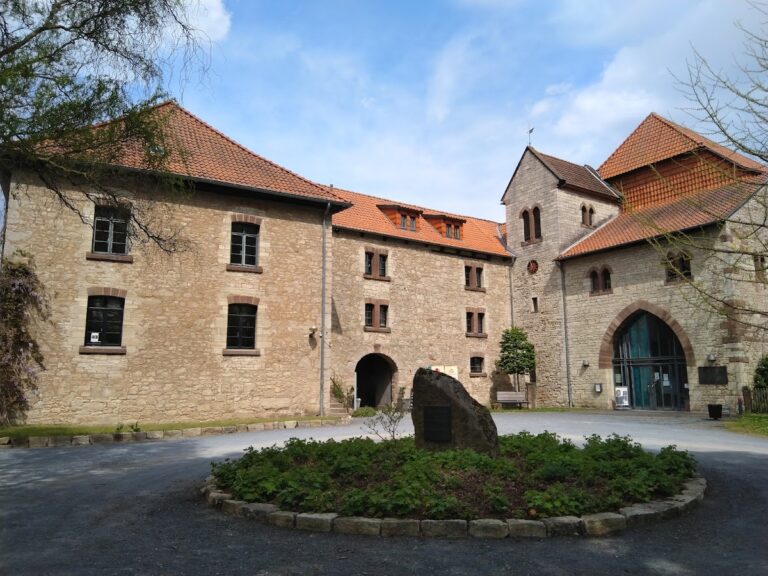
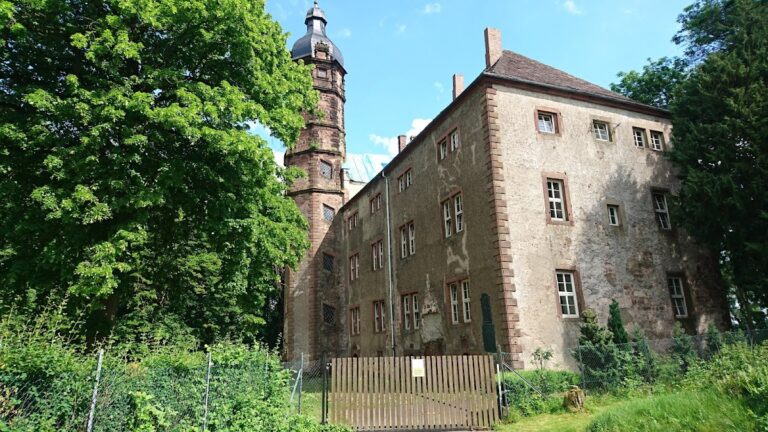
The surviving remains occupy the slope of the Kleiner Heldenberg and form the fragmentary remains of a closed four-wing castle arranged around a square courtyard. The hilltop complex now consists chiefly of masonry fragments, partial walls, and earthworks. Its ramparts remain prominent, while the defensive walls include the eastern enceinte wall, an enceinte being a wall enclosing a fortified site.
The castle well lies almost centrally in the courtyard. A stone circle marks its surface, and excavation revealed a masonry-lined shaft 3.5 metres in diameter beginning at a depth of 2.2 metres. For safety reasons, the shaft was excavated only a few decimetres below that level.
Principal buildings
Palas
The surviving palas, the main residential and representative building of a medieval castle, includes a substantial wall containing a latrine and a fireplace. A large excavation exposed the southern part of the princely residence, where the former floor lay beneath a rubble layer 2.2 metres thick.
Castle chapel
A castle chapel occupied the first floor of one of the surviving buildings. Excavations in April and May 2007 exposed its basement. Beneath the chapel, work in 2006 revealed a lower structure belonging to an earlier building, apparently a guardroom, although that interpretation remains provisional.
Stair tower and castle tower
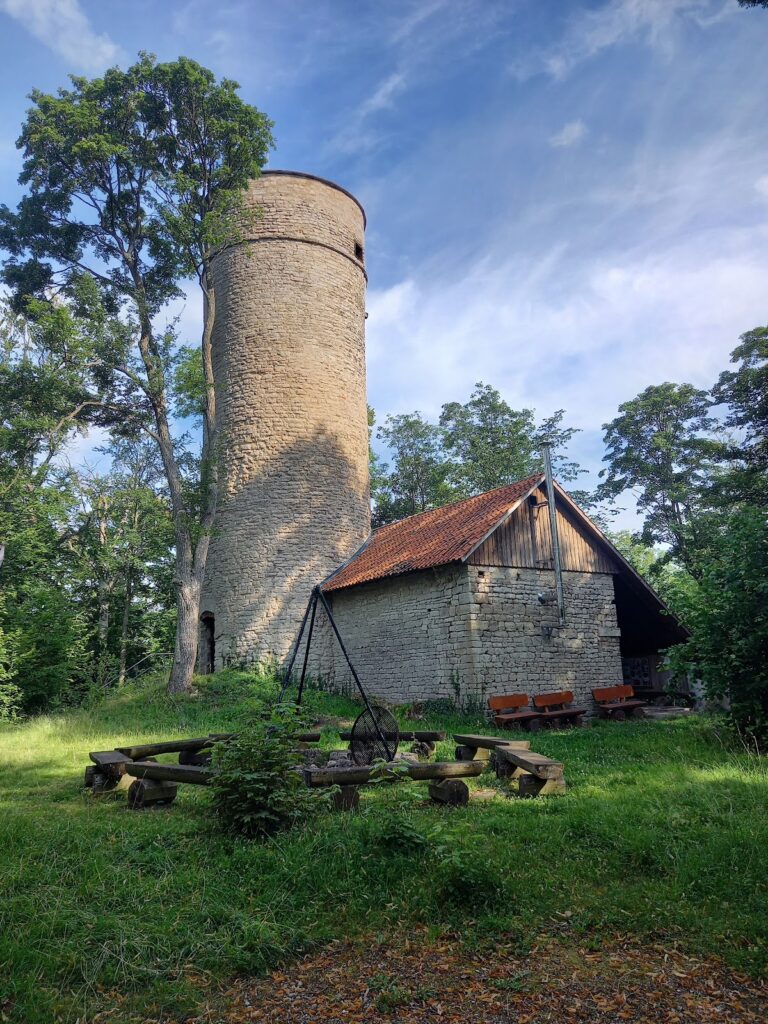
The surviving buildings also include a spiral-stair tower with 49 steps and a separate castle tower. Former walking surfaces were exposed near the castle gate and inside one building during excavations in 2006.
Beer cellars
Two former beer cellars survive among the castle remains, forming part of the complex’s preserved service and storage spaces.
Archaeological finds and later interpretation
Excavations have produced stirrups, axes, tripod cooking vessels, combs, stove tiles, bull’s-eye window panes, other window remains, and fragments of coloured plaster. These finds come from campaigns carried out by the archaeological preservation service of the city of Einbeck, including work in 1998, two campaigns inside the castle in 2006, and further excavations in April and May 2007.
Looting excavations in the 1950s disturbed the former kitchen area and chapel. Some medieval pottery sherds resulting from that activity were transferred to the Einbeck Municipal Museum in 1954. Modern frescoes depicting the castle’s history are located in the Burgschänke restaurant at the entrance to the castle grounds.
Nearby sites