Hejde Church: A Medieval Lutheran Church on Gotland


Site at a Glance
- Rating
- 3.8
- Popularity
- Very Low
- Country
- Sweden
- Primary era
- Medieval
- External website
- Open
- Eras represented
- Medieval, Early Modern
- Civilizations
- Swedish
- Site type
- Religious
- Remains
- Church
On this page14 sections
History
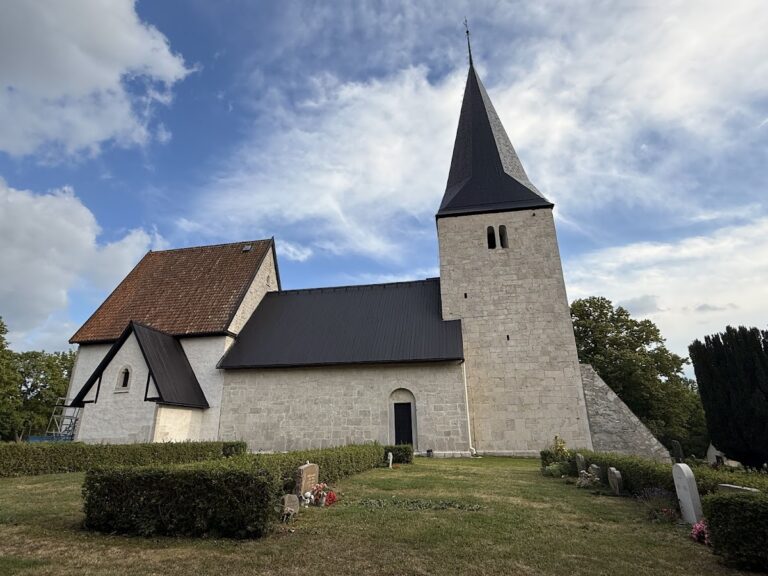
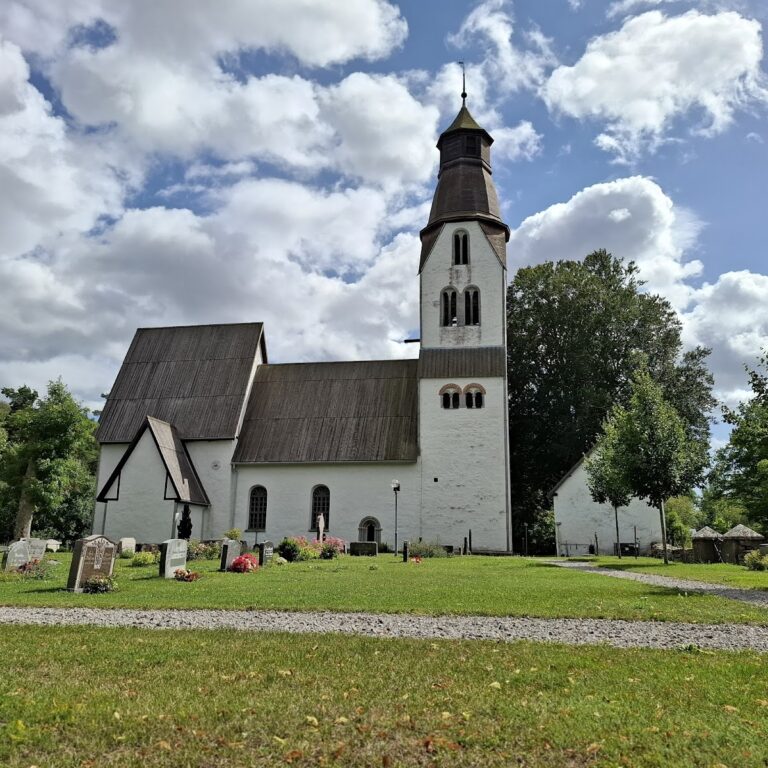
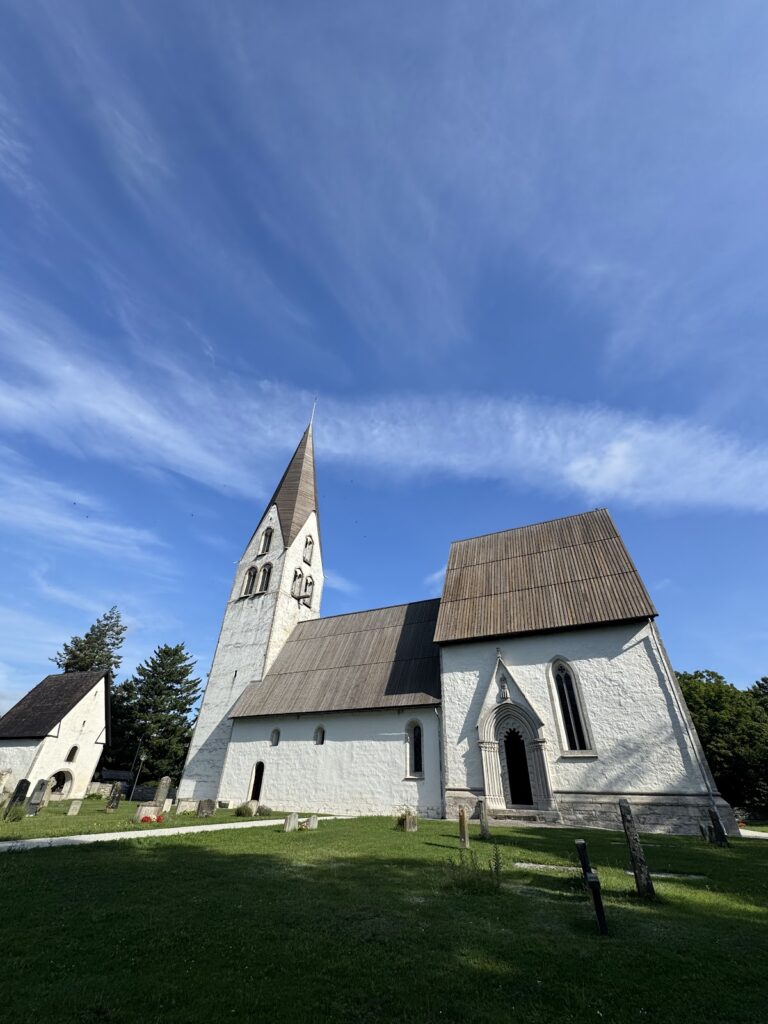
Hejde Church is a medieval Lutheran church in Sweden, located in central Gotland and belonging to the Church of Sweden’s Diocese of Visby. Its tower and nave were built in the mid-thirteenth century, while the present choir developed from an earlier Romanesque predecessor. The building is an example of Gotland’s saddle church type, in which a tall Gothic choir is joined to an older, lower nave and tower.
Medieval development
A smaller Romanesque choir, possibly ending in an apse, stood before the present choir. The choir was first remodeled in the mid-fourteenth century. Proposals to enlarge the nave and replace the tower with a more powerful structure were never completed, leaving the church with the combination of older and later elements that defines its form.
The church’s medieval history also includes a fire during a procession on Easter Saturday. Runestone G 171 refers to this event, and the year has been identified as 1492 through an Easter table, a chronological table used to calculate the date of Easter. The inscription therefore links a surviving physical object with a specific episode in the church’s history.
The name and modern interventions
The name Hejde appears first as Heithum in a fourteenth-century copy. This form is an artificial dative derived from the Gotlandic word hajd, meaning “heath.” Runestone G 171 had been missing since 1854 before it was rediscovered beneath the choir’s wooden floor during the 1976 interior renovation. It had probably been placed there during the 1930s renovation, and its recovery allowed parts of the inscription’s earlier reading to be revised.
Architect Erik Fant, a Swedish architect who lived from 1889 to 1954, directed a restoration in 1935–1936. The church was renovated again in 1976 and underwent further renovation in 1985–1986. These interventions shaped the present condition of the building while also bringing the concealed runestone back into view.
Remains
Hejde Church is whitewashed and covered by a pitched roof with two sloping sides. Its layout combines a lower, older nave and tower with a taller Gothic choir, the arrangement associated with the Gotlandic saddle church type. The surviving building includes decorated entrances, an unusual rib vault, medieval wall paintings, stained glass, furnishings, and sculptural works from several periods.
Building and entrances
Tower and south portals
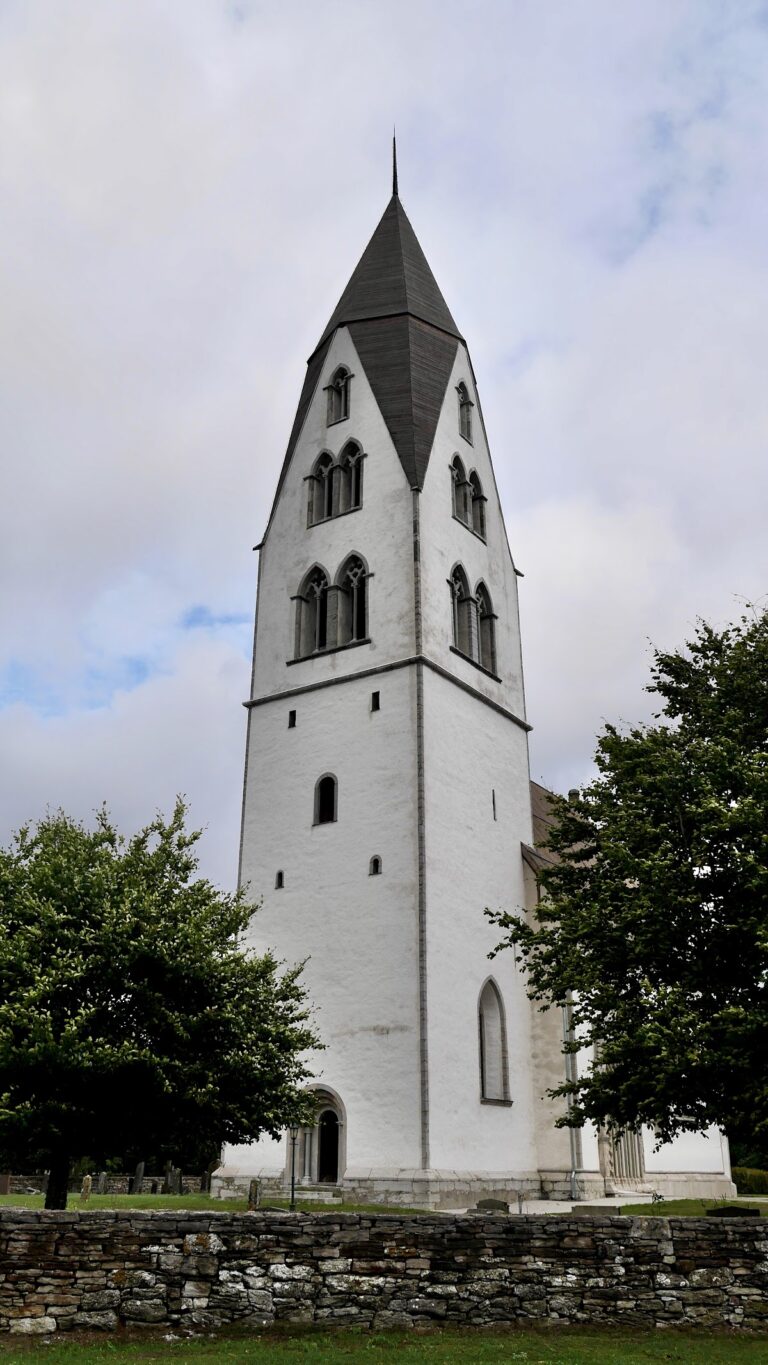
The tower has galleries on its north and south sides. Each face contains two bell openings divided by colonnettes, or small columns. On the south facade, the tower portal serves as the main entrance. Its capital bands carry foliage ornament, giving the doorway a carved decorative frame.
Choir portal
The larger choir portal is weathered, but its western capital band retains winged dragons. These carvings resemble those on the contemporary tower portal at Lärbro and have been associated with the stone sculptor or workshop known as Egypticus, a name connected with medieval work in Gotland’s churches.
Vaults and sacristy
The nave contains an unusually constructed rib vault, a ceiling whose framework is formed by projecting masonry ribs. The ribs rise from corner colonnettes with finely carved foliage capitals. In the choir, corresponding supports take the form of human heads and a monster. The choir vault appears to have been made in connection with the vaulting of the choir itself. A sacristy, a service room for worship preparations and liturgical equipment, was added in 1795.
Paintings, glass, and furnishings
Medieval lime paintings
Purely ornamental medieval lime paintings from the thirteenth and fourteenth centuries decorate the church. The nave paintings date from the mid-thirteenth century and are concentrated in the vault and on the wall above the tower arch. The paintings in the choir vault appear to have been created when that vault was constructed.
Stained-glass panels
Well-preserved medieval stained-glass panels remain in the eastern choir window. Probably made during the second half of the fourteenth century, they use an unusually bright palette dominated by blue. Their scenes include the Fall of Man, the Expulsion from Paradise, Adam and Eve at work, the Annunciation to the Shepherds, a fragment of the Annunciation to Mary, the Flagellation of Christ, the Crucifixion, the Resurrection, and Christ giving a blessing. They are regarded as the latest medieval stained-glass works produced on Gotland.
Altarpiece and triumphal cross
The sandstone altarpiece is probably the work of Jesper Gertson Smitt, a seventeenth-century sculptor associated with Burgsvik on Gotland. An inscription dates it to 1684, and its relief depicts the Last Supper. The triumphal cross is probably a north German work from the beginning of the sixteenth century.
Pulpit, pew, and baptismal font
The pulpit dates from around 1700. It was repaired and painted in 1770–1773, when a cartouche bearing the name cipher of Gustav III was added. Gustav III was king of Sweden from 1771 to 1792, and a name cipher is a monogram or abbreviated royal signature. A seventeenth-century pew stands in the choir.
The sandstone baptismal font beside the tower arch is attributed to Byzantios, an anonymous medieval stone master active on Gotland during the second half of the twelfth century. Its bowl carries reliefs of a centaur, a winged angel, an asp-rider symbolizing weak humanity, a peacock, soldiers fighting as symbols of good and evil, David and the lion, and a figure representing licentiousness. Traces of paint remain on the stone and may be original. The font is compared with works at Atlingbo, Eskelhem, Garde, Guldrupe, Hogrän, Sanda, Träkumla, Vamlingbo, Väte, and Öja.
Runestone G 171
Runestone G 171 was found beneath the choir’s wooden floor. Its inscription includes a star-shaped H-rune, a form apparently used in the Middle Ages only on Gotland, although later examples are also known from Iceland and among the Dalecarlian runes of Upper Dalarna. Together with its reference to the 1492 fire, the stone provides evidence for both the church’s medieval history and the regional development of runic writing.