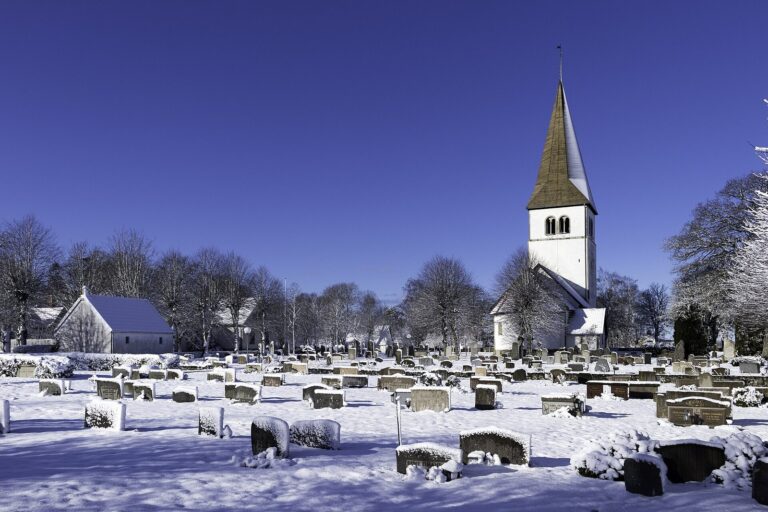
Lojsta Church: A Medieval Parish Church on Gotland
Site at a Glance
- Country
- Sweden
- Primary era
- Medieval
- Eras represented
- Medieval, Early Modern, Modern
- Civilizations
- Danish, Swedish
- Site type
- Religious
- Remains
- Church
On this page15 sections
History
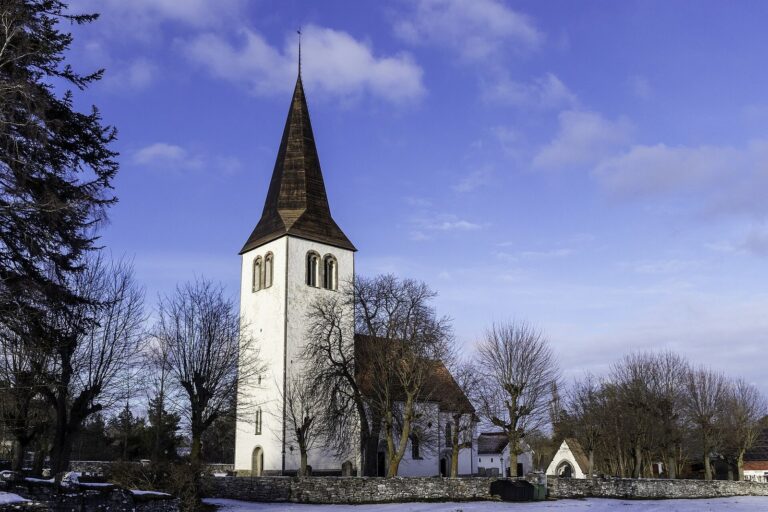
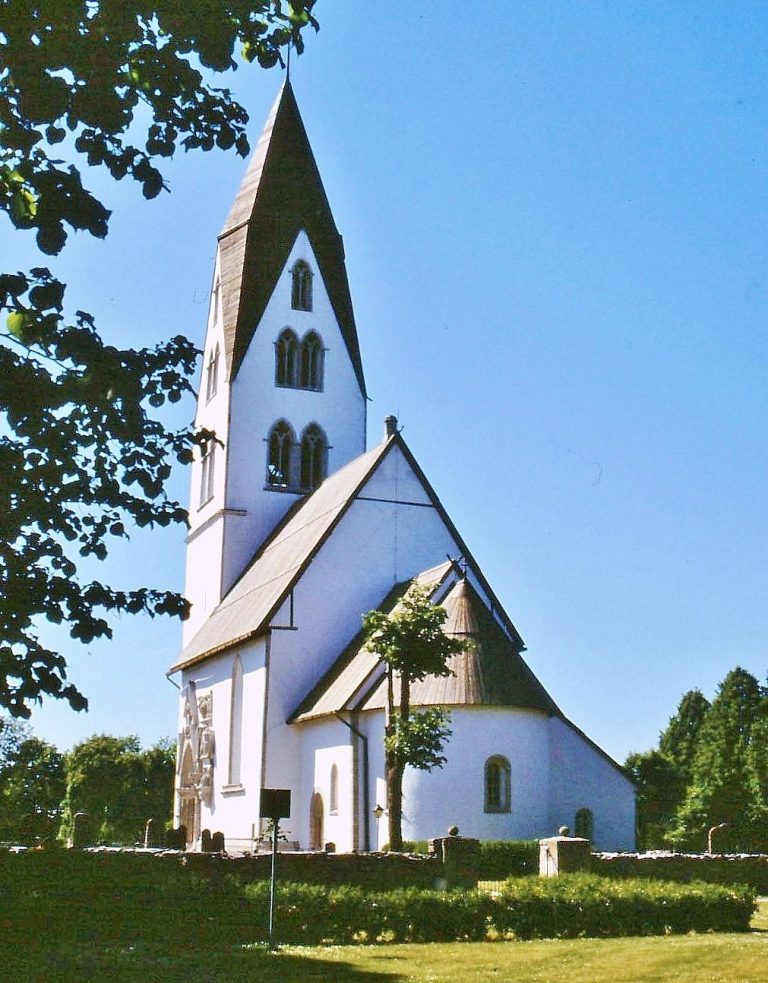
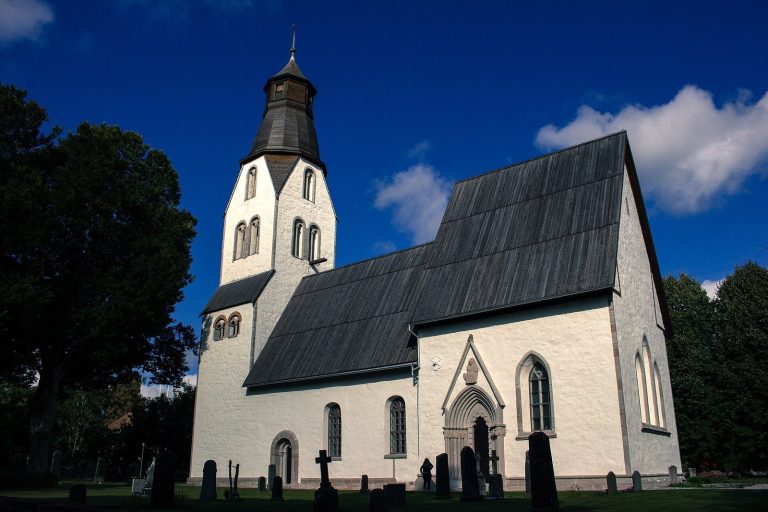
Lojsta Church is a parish church in Lojsta, on the Swedish island of Gotland. It belongs to Lojsta parish, a local congregation in the Diocese of Visby, a regional church administration within the Lutheran Church of Sweden. Its consecration is dated to 1200, while its surviving Romanesque stone nave and choir were built together in the mid-13th century.
Early Church and Stone Building
The first church at Lojsta was probably a simple wooden building. It likely served the congregation while the later stone church was being built. The nave, the main area for the congregation, and the choir, the area near the altar, were erected as a single building phase in the mid-13th century.
Medieval Reconstruction
Further rebuilding took place in the first half of the 14th century, when the church was substantially altered. The interior was probably changed during this work as well.
Renovation and Organ Changes
The church was renovated in the 1860s and again in 1957. At a visitation in 1896, Bishop Gezelius von Schéele prompted the purchase of an organ from Gävle Organ and Piano Factory. That instrument was replaced in 1924 by one from Hammarberg’s Organ Builders. A mechanical organ was built in 1990.
Remains
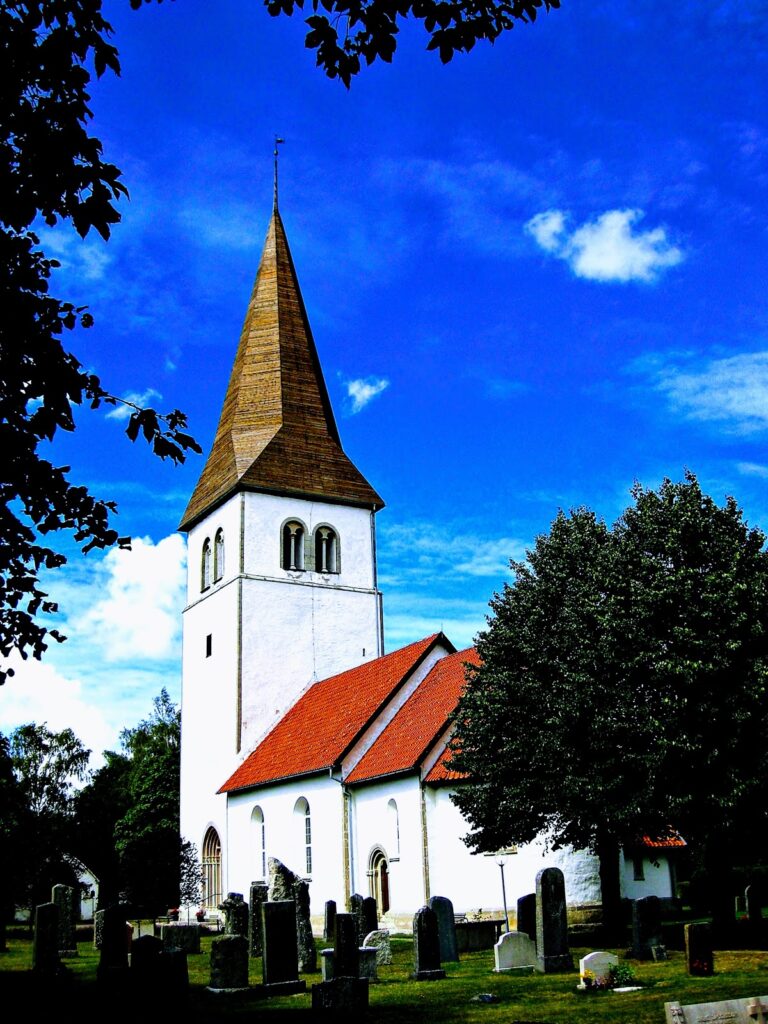
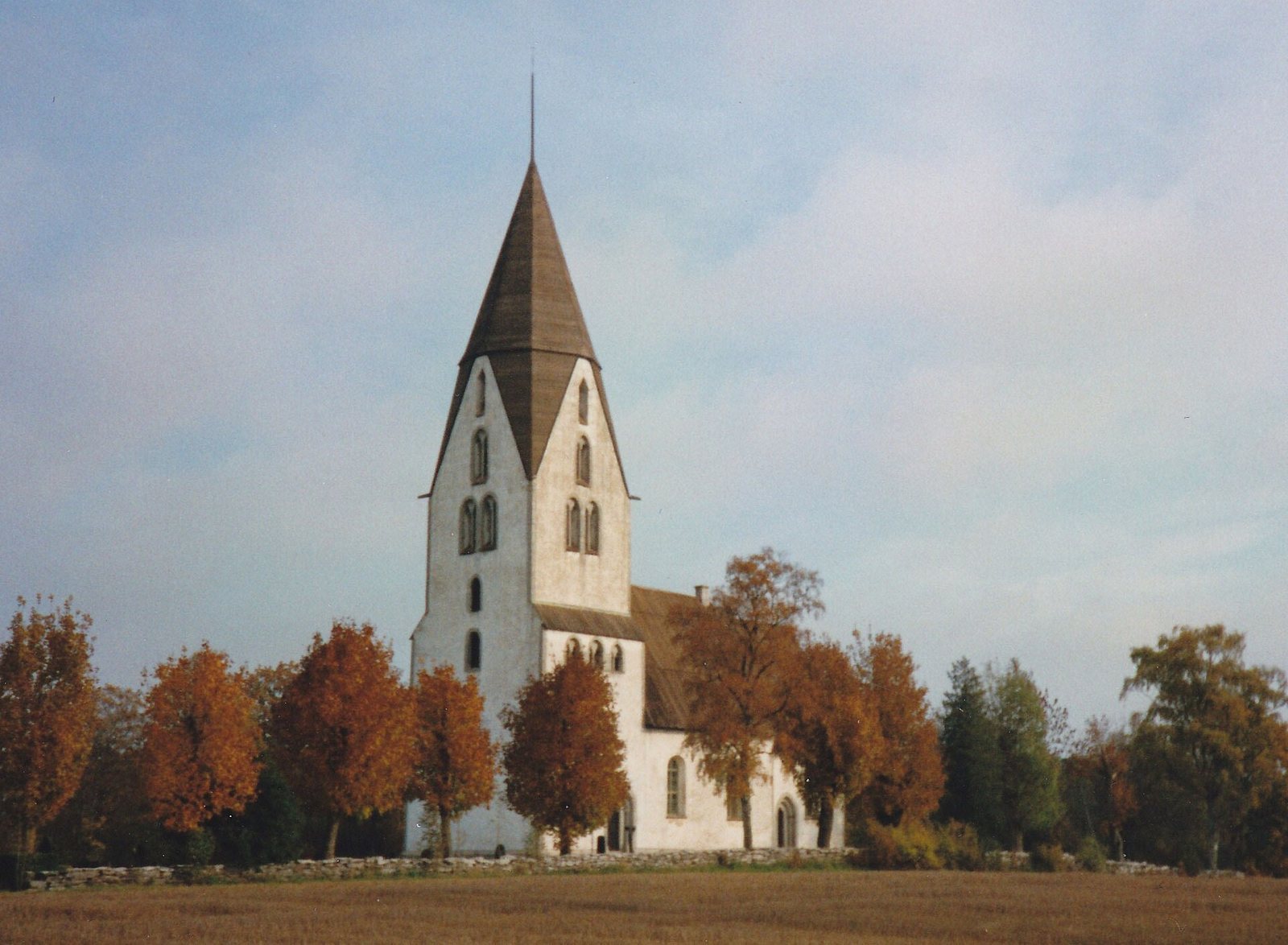
The well-preserved church brings together Romanesque and Gothic architecture. Its medieval core includes a limestone nave and choir, alongside the substantial tower. Beams from the earlier wooden church are incorporated into the nave’s western wall.
Tower and Nave-to-Choir Opening
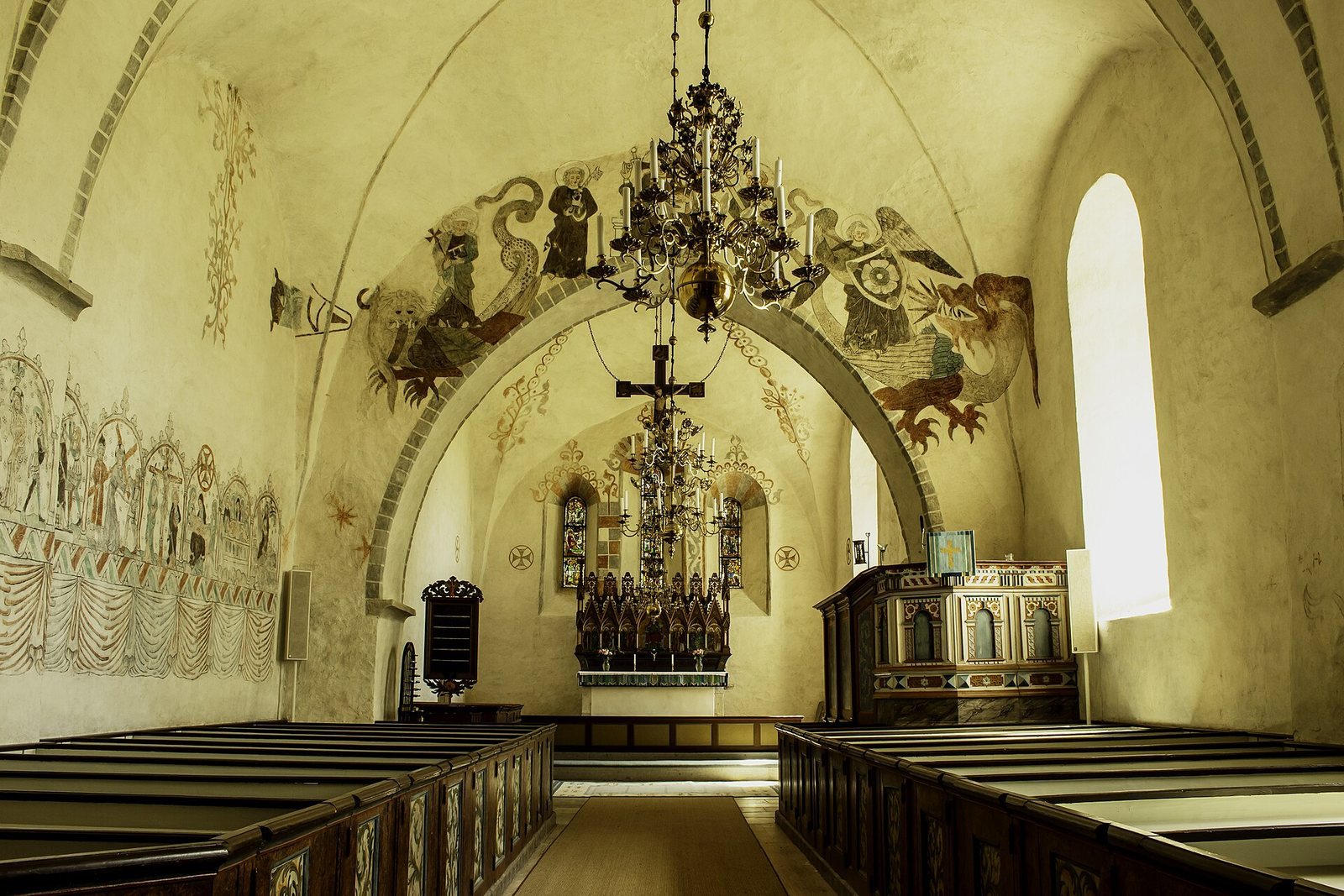
The present tower, built in the first half of the 14th century, is a high Gothic gallery tower, with a gallery in its upper part. The opening between the nave and choir, known as a triumphal arch, was widened and given a pointed shape. The vault above it dates to the church’s 14th-century modernization. During the 1860s, the windows were remade and replaced, except for those in the choir.
Medieval Decoration
Wall Paintings
Four groups of medieval wall paintings decorate the interior. The earliest, contemporary with the nave and choir, consist of ornamental designs. Above the arch, paintings from the mid-14th century show Christ judging the world, with Peter and Paul, the archangel Michael, and Saint Margaret. They are attributed to Egypticus or his workshop, a conventional name for a medieval artist or workshop. Passion scenes on the north wall date to the 15th century and are attributed to the Master of the Passion of Christ, another conventional name for an artist whose identity is unknown. Fragmentary paintings on the south wall, dated 1520, depict Saint George and the dragon.
Choir Stained Glass
Three windows in the eastern choir wall contain medieval stained glass dating to the mid-13th century. All but one pane is original. The late-Romanesque scenes represent ten episodes from the life, death, and resurrection of Christ. Medieval stained glass of this kind survives in a little over thirty churches in Sweden.
Furnishings and Memorials
Baptismal Font and Crucifix
A limestone baptismal font from the 12th century is severely weathered. The 13th-century triumphal crucifix, a large cross associated with the opening between the nave and choir, is probably local work.
Altar and Retable
The medieval limestone altar bears five consecration crosses, marks associated with its ritual dedication. Behind it stands a richly carved wooden retable, an ornamental structure behind an altar, from the 14th century. Its seven pointed gables frame Christ enthroned among the apostles. The altarpiece was repainted in the 19th century.
Pulpit and Seating
The pulpit dates to the late 17th century and was painted in 1749. A 17th-century choir bench has painted acanthus, a stylized leaf pattern. The 18th-century pews are set in two enclosed blocks.
Choir Tombstone
A tombstone set into the choir floor marks the grave of a man who died in 1342 and a woman who died in 1344.
Organ
The earlier organ had seven stops, two hand-played keyboards, and a pedal keyboard. Its facade, designed by Swedish architect Anders Roland, remains with the mechanical organ built later.