Heinzenburg: A Medieval Castle Site and Evangelical Church in Poland
Site at a Glance
- Popularity
- Medium
- Country
- Poland
- Primary era
- Medieval
- Eras represented
- Medieval, Early Modern, Modern
- Civilizations
- German, Holy Roman Empire, Kingdom of Bohemia, Kingdom of Prussia
- Site type
- Military
- Remains
- Castle
On this page7 sections
History
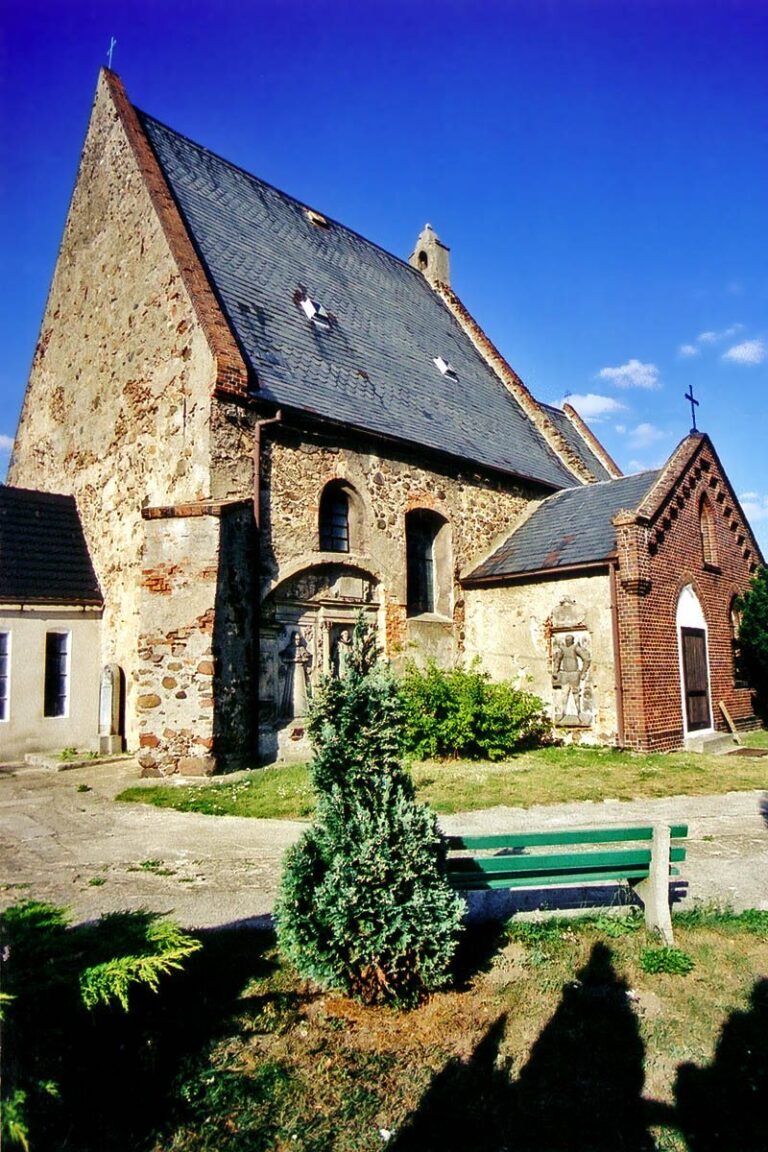
Heinzenburg is a former castle site and Evangelical church in Jędrzychów, Poland. It stood at a crossing of medieval trade routes leading to Kotzenau, Lüben, and Polkwitz, and an earlier fortification may have occupied the site. Tradition dates the castle’s construction to 1295 and credits Henry III of Głogów, a Silesian Piast duke. The Piasts were a medieval ruling dynasty in Poland and Silesia. Another tradition says Henry I, known as Henry the Bearded, destroyed an earlier castle and built a new stronghold, called Heinzenburg or Heinrichburg.
Medieval stronghold
The castle passed to Sigismund Christopher von Rottenberg in 1331. In 1361, Henry V of Głogów-Sagan sold it along with Polkowice and Chobienia. A 1409 fief letter, a document concerning a feudal grant or tenure, mentions an altar in the castle. This indicates that it contained a house chapel, or private chapel within a residence. About ten years later, Hussite forces destroyed the stronghold. The Hussites followed the religious reformer Jan Hus, and the castle was later rebuilt.
In 1488, after Matthias Corvinus, king of Hungary, took Głogów, Jan II of Żagań sought refuge at Heinzenburg. He was the last Piast duke of Głogów-Sagan. In 1509, Leonhard and Christoph von Schkopp acquired Heinzendorf and its associated estates, which their family held until the Thirty Years’ War, the major European conflict of 1618–1648.
Destruction and church foundation
On 12 September 1642, Austrian forces burned the castle. Swedish forces later destroyed it, and it was not rebuilt as a castle. Christian von Busse, a senior royal administrative official at Głogów, acquired the estates and castle ruins in 1744. He established an Evangelical church on the site in 1750. The church was consecrated on the third Sunday of Advent in 1751.
The church served the estate of Neuguth and Evangelical congregations in Heinzenburg, Heinzendorf, Herbersdorf, Neudorf, and Neuguth. Worship continued there until 1945. In 1842, the Liegnitz banker Prausnitzer acquired the estates and church; afterward, the royal government became the church’s patron. The building was restored in 1903.
Damage and rebuilding
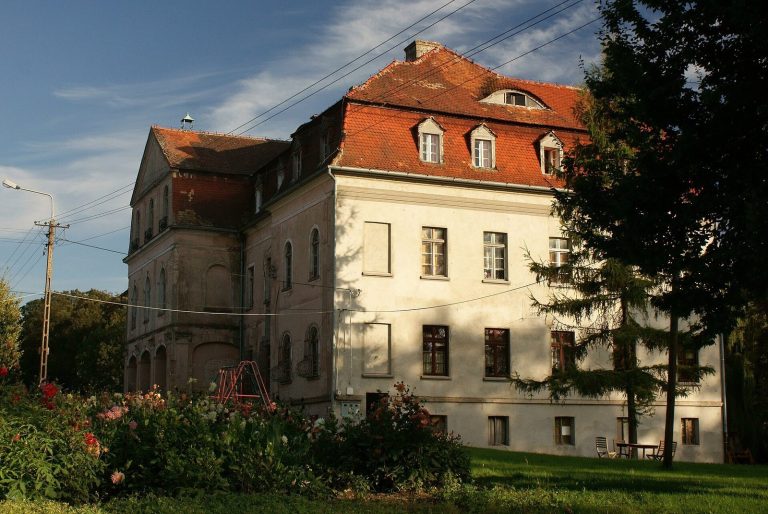
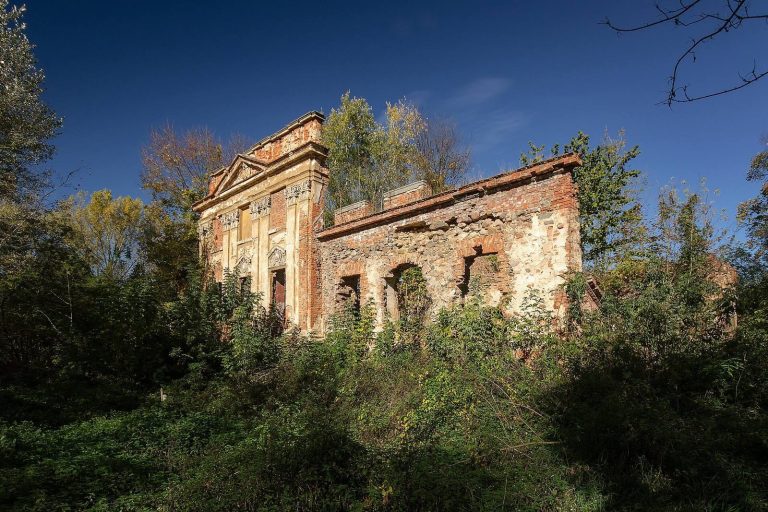
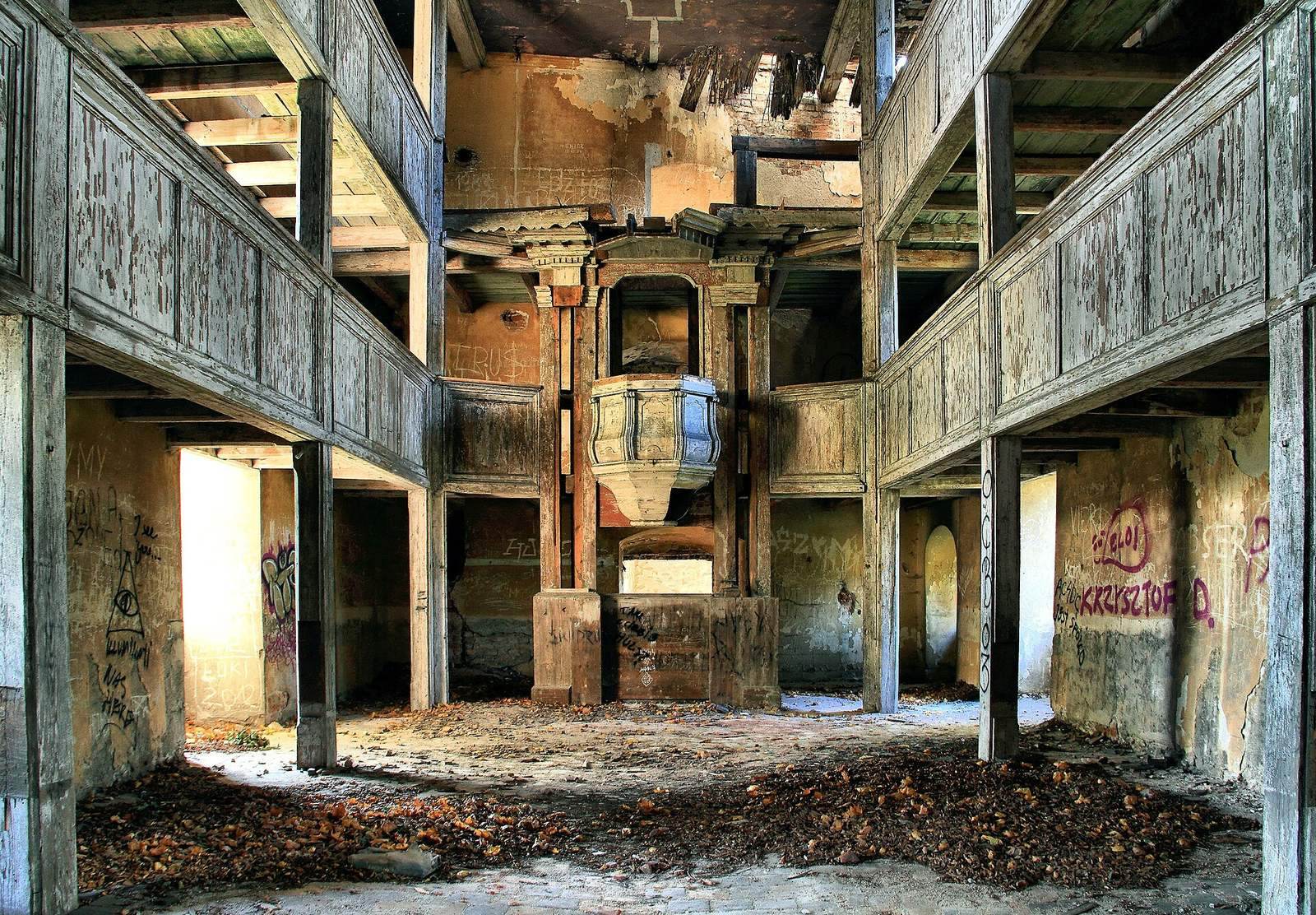
The church suffered severe damage toward the end of the Second World War. It fell into increasing disrepair after the war and became the property of the Roman Catholic parish in Szklary Górne. In 1960, the castle ruins were entered in the Lower Silesian Voivodeship’s monument register. Ownership of the ruins passed to the Nowe Kazamaty Association of Motyl on 31 March 2015. A foundation was established in 2019, when rebuilding of the church and former castle began.
Remains
The former castle and church occupy a natural rocky rise in Nowinki, part of Jędrzychów. The castle was classified as a lowland castle, meaning a fortification set in relatively low terrain rather than on a prominent hilltop. An oval stone wall enclosed the complex.
Castle remains
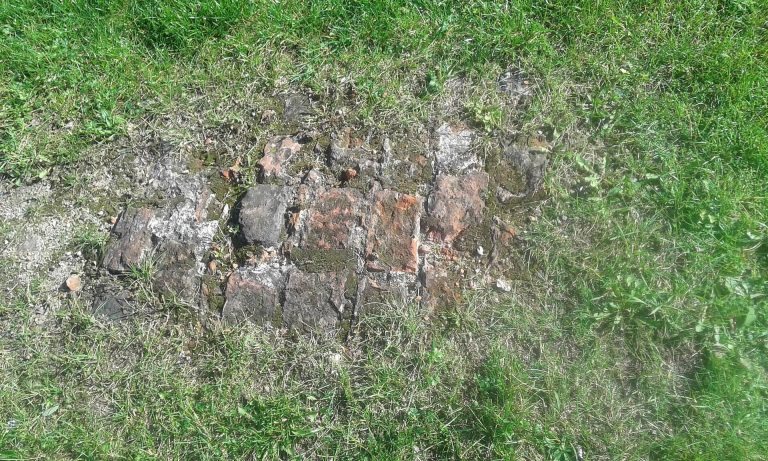
The castle had a four-sided plan, additions on two sides, and three storeys. Its roof was a broken hipped form, with sloping sides interrupted by a change in angle. By the beginning of the twenty-first century, vaulted rooms and traces of a moat remained. Some rooms had Gothic vaults, or ceilings in the Gothic style. A ground-floor room served as a burial chapel for local nobility.
Bell tower
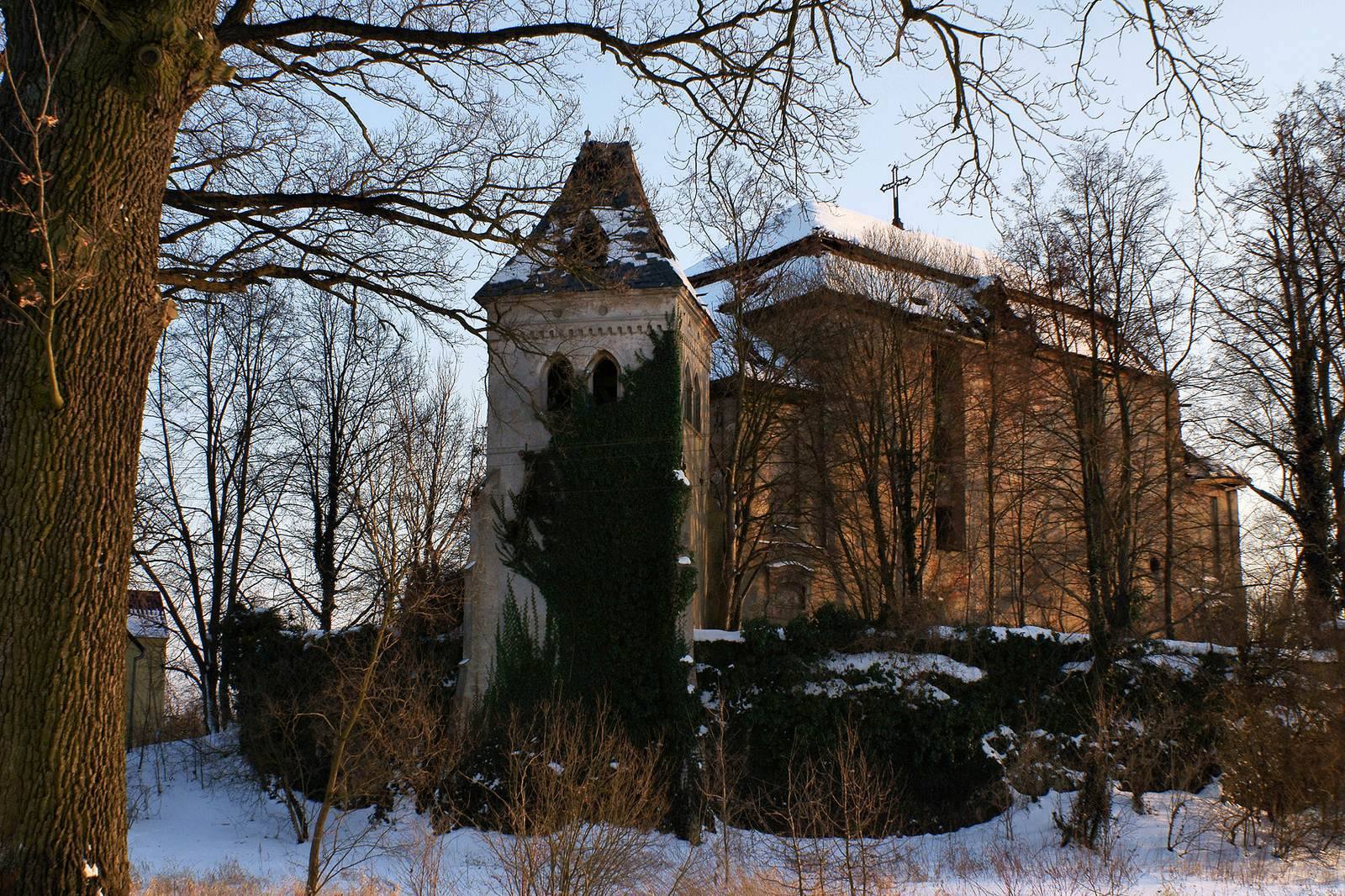
A free-standing Neo-Gothic bell tower, built in a revival of Gothic forms, stands on the north side of the oval enclosure. It measures about six metres wide and five metres deep. Four buttresses support its walls; the two at the rear extend beyond the enclosure wall. An inscription on the tower reads “Glory to God” and bears the date 1881.