Heggbach Abbey: A Cistercian Nunnery and Monastic Estate in Germany
Site at a Glance
- Popularity
- Medium
- Country
- Germany
- Primary era
- Medieval
- Eras represented
- Medieval, Early Modern
- Civilizations
- Holy Roman Empire
- Site type
- Religious
- Remains
- Monastery
On this page17 sections
History
Heggbach Abbey is a former Cistercian nunnery on a ridge northeast of Maselheim, Germany. Its convent received a parish church in 1231 and belonged to the Cistercian order by 1234, though an earlier monastic community before 1175 is now considered unlikely. A foundation tradition links Heggbach to a Beguine house established near Maselheim by two noblewomen of Rosenberg and Landenberg. Beguines were religious women who lived in communities without joining a formal monastic order.
Formation and early growth
Eberhard of Rohrdorf, abbot of Salem Abbey, helped turn the women’s community into an endowed institution and bring it into the Cistercian order. In 1231 Konrad II of Tegerfelden, Bishop of Constance, gave the convent the parish church at Heggbach. The sisters could appoint its priest and receive its revenues. Pope Innocent IV formally incorporated the abbey in 1248, confirmed its privileges and substantial independence from the diocesan bishop, and recognized its superior as an abbess.
The settlement at Heggbach probably belonged entirely to the abbey by 1248 and became an agricultural estate. It may have been deserted: the parish church had no parishioners assigned to it in 1231. Donations and purchases enlarged the abbey’s holdings, first through grants from the counts of Grüningen, Berg, and Kirchberg, and later through local noble families and Biberach’s Gräter family. The Freyberg and Baustetten families established burial places at the abbey.
Territorial expansion and imperial standing
The abbey built up a wide portfolio of land, rights, and revenues. It acquired a watermill at Maselheim in 1245 and, by 1269, held all the land there as well as lower-court and church-patronage rights. Church-patronage rights gave a landholder a role in choosing the parish priest. It gained nearly all of Sulmingen between 1275 and 1307, with judicial rights there by 1290, and held Ringschnait temporarily in 1293. After 1300 it began selling remote properties to consolidate its territory.
Further acquisitions included a tithe at Baltringen in 1396 and church-patronage rights at Burgrieden in 1420. In 1442 the abbey bought Mietingen and Wennedach from Konrad von Freyberg for 11,720 gulden. It financed the purchase by selling other assets, including tithes at Großschafhausen and Orsenhausen, acquired in 1401–04. A dispute with Buchau Abbey over its serfs at Mietingen ended in an agreement in 1569. The abbey bought two-thirds of Baustetten in 1491 and 1503, paying Hans Schad 1,920 gulden for the first portion and the lords of Essendorf 1,307 gulden for the second. The remaining third, held by the Neidhart family of Ulm, passed to Biberach’s alms administration in 1584.
Heggbach’s territory eventually included Maselheim, Mietingen, Sulmingen, Wennedach, two-thirds of Baustetten, and farms at Stein, established in 1456. It retained revenues from Baltringen, Bronnen, and Burgrieden, as well as vineyards concentrated around Markdorf. The vineyards were jointly held with Gutenzell Abbey until 1504. In 1578 Heggbach sold six farms and eight smallholdings at Laupheim for 10,000 gulden, and it gradually disposed of most other properties that carried no sovereign rights. In 1802 its territory covered about 50 square kilometres and had roughly 2,000 inhabitants, with annual income estimated at 12,000 gulden. A separate late-eighteenth-century account gives 116 estates and 1,718 inhabitants.
Heggbach held imperial immediacy, meaning it was directly subject to the Holy Roman Empire rather than an intermediate territorial ruler. It had this status before 1429 and retained it into the early modern period. The abbey joined the Swabian Circle, a regional administrative and defensive association, in 1500 and appeared in the Imperial Register, which listed estates and their obligations, in 1521. Through the Swabian Imperial Prelates’ College, it held a seat and a collective vote at Imperial and Circle assemblies. Emperor Frederick III transferred the abbey’s protective guardianship to the Imperial City of Biberach in 1481. In 1576 Emperor Rudolf II exempted it from foreign courts.
Convent life and jurisdiction
Except during and just after the Thirty Years’ War, the convent generally housed about 25–30 choir nuns and 10–12 lay sisters. Choir nuns took part in the convent’s religious services, while lay sisters usually carried out manual and domestic work. Before 1500, about one-third of the nuns came from noble or patrician families; from 1500 to 1630, roughly one-fifth did. Later, most came from burgher and farming families, chiefly in Upper Swabia. Abbesses are known from 1248 and were elected for life from 1416. A prioress and subprioress assisted the abbess, alongside officers responsible for the estate, church objects, and care of the sick. From 1429 the chief administrative officer was called the steward, later also the chief official.
Salem’s Cistercian abbots oversaw Heggbach’s spiritual affairs. They represented it within the order, inspected the convent, supervised abbess elections, and sent a monk to serve as confessor. In 1752 Abbot Anselm II Schwab ended this arrangement, and the abbot of Kaisheim took over until the abbeys reached an amicable settlement in 1765.
The abbey’s judicial powers developed over several centuries. In 1429 King Sigismund granted the abbess her own court within the precinct; before then, Salem had exercised lower justice for Heggbach. Lower justice dealt with less serious local cases, while high justice covered grave crimes and capital jurisdiction concerned offences that could carry the death penalty. The Swabian bailiwick initially reserved capital cases to itself. After the abbey acquired Mietingen, a dispute over this authority was settled in Heggbach’s favour in 1491. In 1606 Archduke Maximilian III assigned Salem high and criminal jurisdiction across the abbey’s territory, administered through Salem’s office at Schemmerberg, while Heggbach retained lower justice.
In 1741 Heggbach and Gutenzell challenged Salem’s division between high and lower justice. A 1764 compromise gave Salem authority over homicide, rape, arson, serious theft, and certain other specified offences; Heggbach could not impose death sentences. Village courts operated from 1518 at Heggbach, with authority also covering Maselheim and Sulmingen, and at Mietingen, including Wennedach, and Baustetten. Under a 1598 agreement with Biberach, the abbey chaired the Baustetten court for two years and the city for one. From 1637 the Heggbach court also served Mietingen. In the eighteenth century, appeals went first to the regional court at Altdorf and then to the court at Innsbruck.
Conflict and recovery
During the German Peasants’ War, a widespread uprising in German-speaking territories in 1524–25, peasants from the Baltringen band looted Heggbach on 27 March 1525 and took its food supplies. Their complaints had called for an end to serfdom, forced labour, and the small tithe. Ulrich Schmied of Sulmingen, their leader, is credited with restraining the group from violence and arson; a red cross was placed on the main gate. In 1529 Biberach citizens tried to persuade the nuns to adopt Lutheran teaching, a Protestant tradition based on Martin Luther’s teachings, but Abbess Walburga Bitterler refused.
Biberach, which had adopted the Reformation, also tried to introduce Protestant teaching in Burgrieden in 1531. The city held secular authority there, while Heggbach held church-patronage rights. During the Schmalkaldic War, a mid-sixteenth-century conflict between the emperor and Protestant forces, Biberach occupied the abbey from August to December 1546 and prevented Catholic worship. The city formally gave up its claims in Burgrieden in 1548.
As Swedish troops approached during the Thirty Years’ War, a European conflict from 1618 to 1648, the abbess and convent fled in 1632. Some nuns remained in exile until 1649. Swedish and French incursions brought repeated looting between 1632 and 1647. On their return, the nuns found the buildings and fields neglected but structurally intact. After repairs, the church was reconsecrated in 1656.
Dissolution and later use
Secularization dissolved the abbey in 1803. Rudolf Waldbott von Bassenheim received most of its territory, while Mietingen and Sulmingen went to the counts of Plettenberg-Mietingen. Both lordships passed to Württemberg in 1806. The nuns received pensions and could remain at the abbey for life, but the community could accept no new members. The last abbess, Maria Anna Vogel, died in 1835, and the last convent sister died in 1846.
Count Hugo Waldbott sold the buildings and remaining lands in 1875 to Prince Franz von Waldburg-Wolfegg-Waldsee, who gave the abbey to the Sisters of Mercy of Reute in 1884. They established a care institution for people with epilepsy, intellectual disabilities, and illnesses then considered incurable. The institution continued as the Heggbach care facilities. Since 2000 the site has formed part of the St. Elisabeth Foundation.
Remains
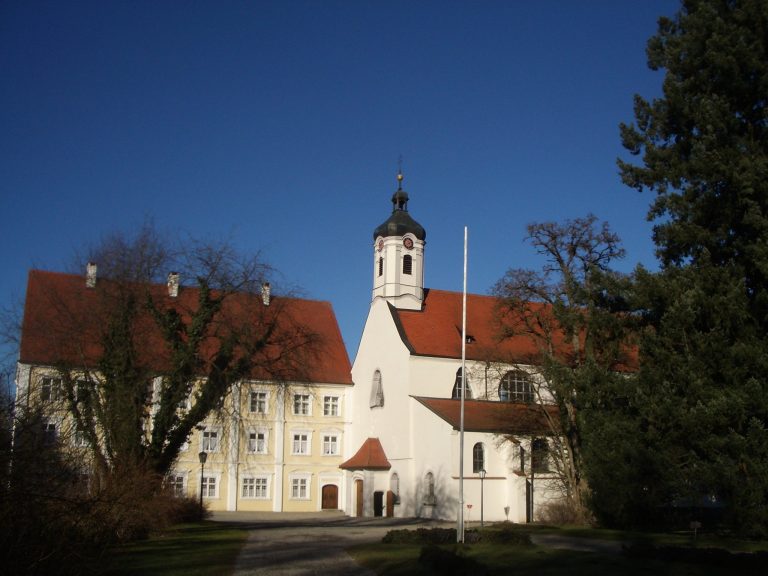
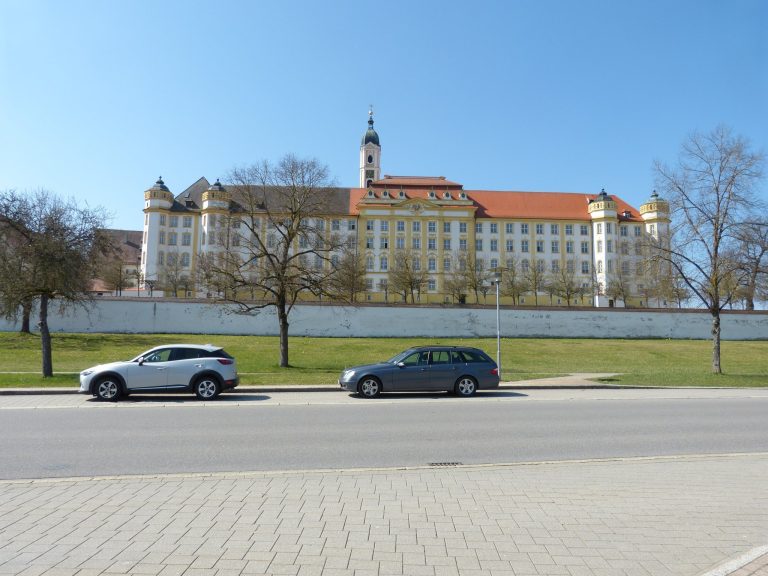
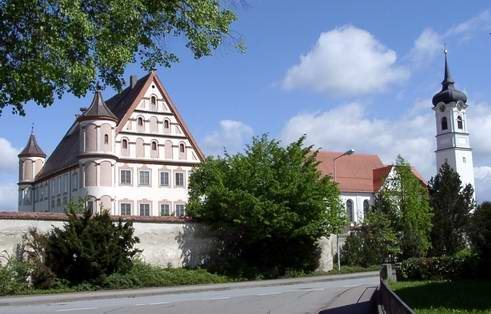
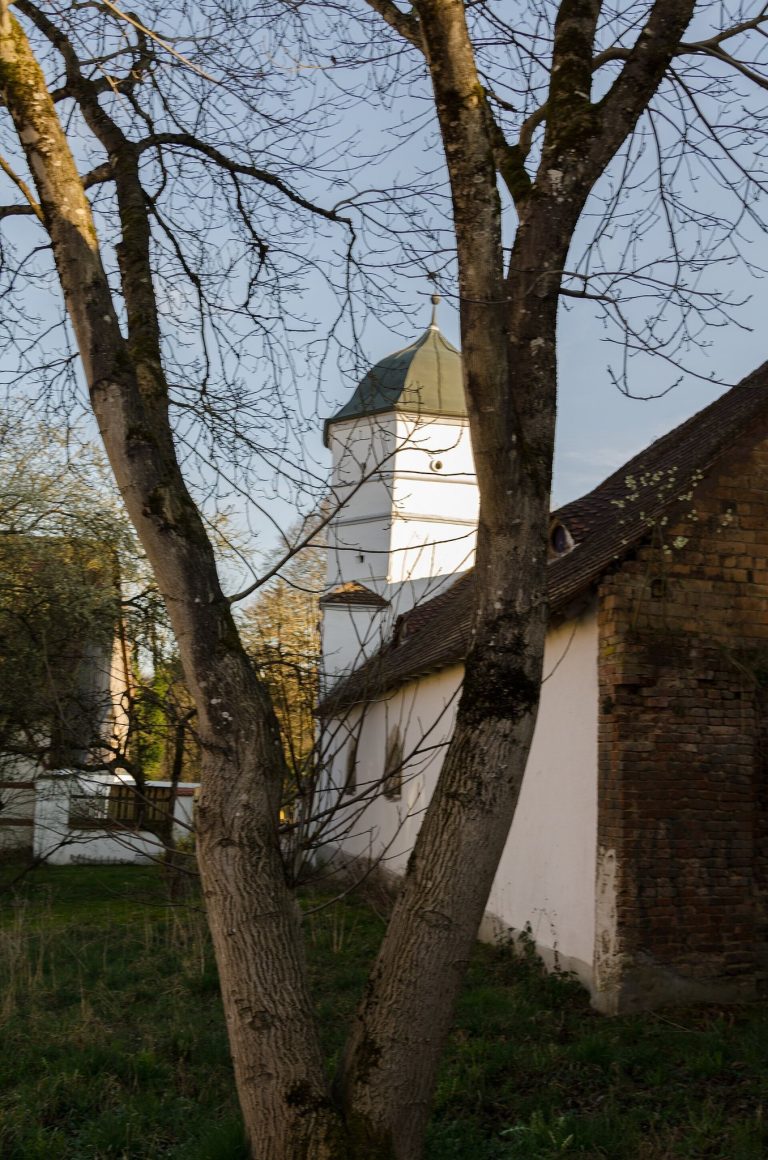
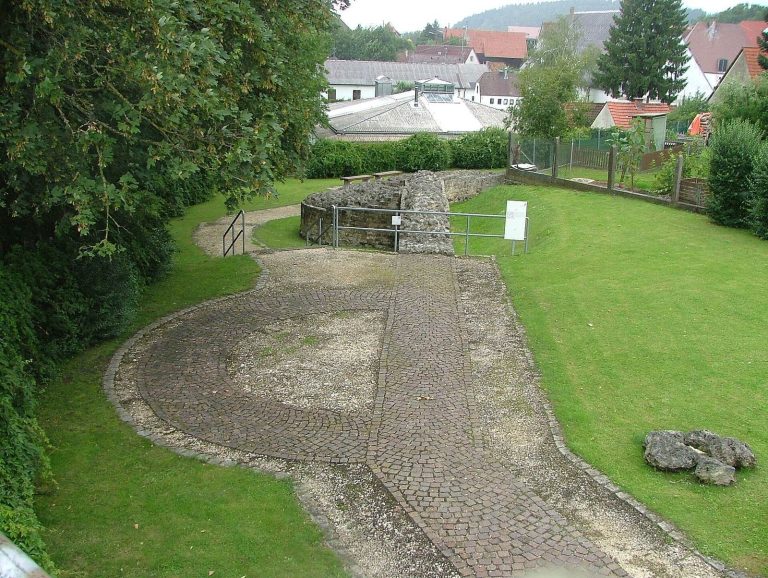
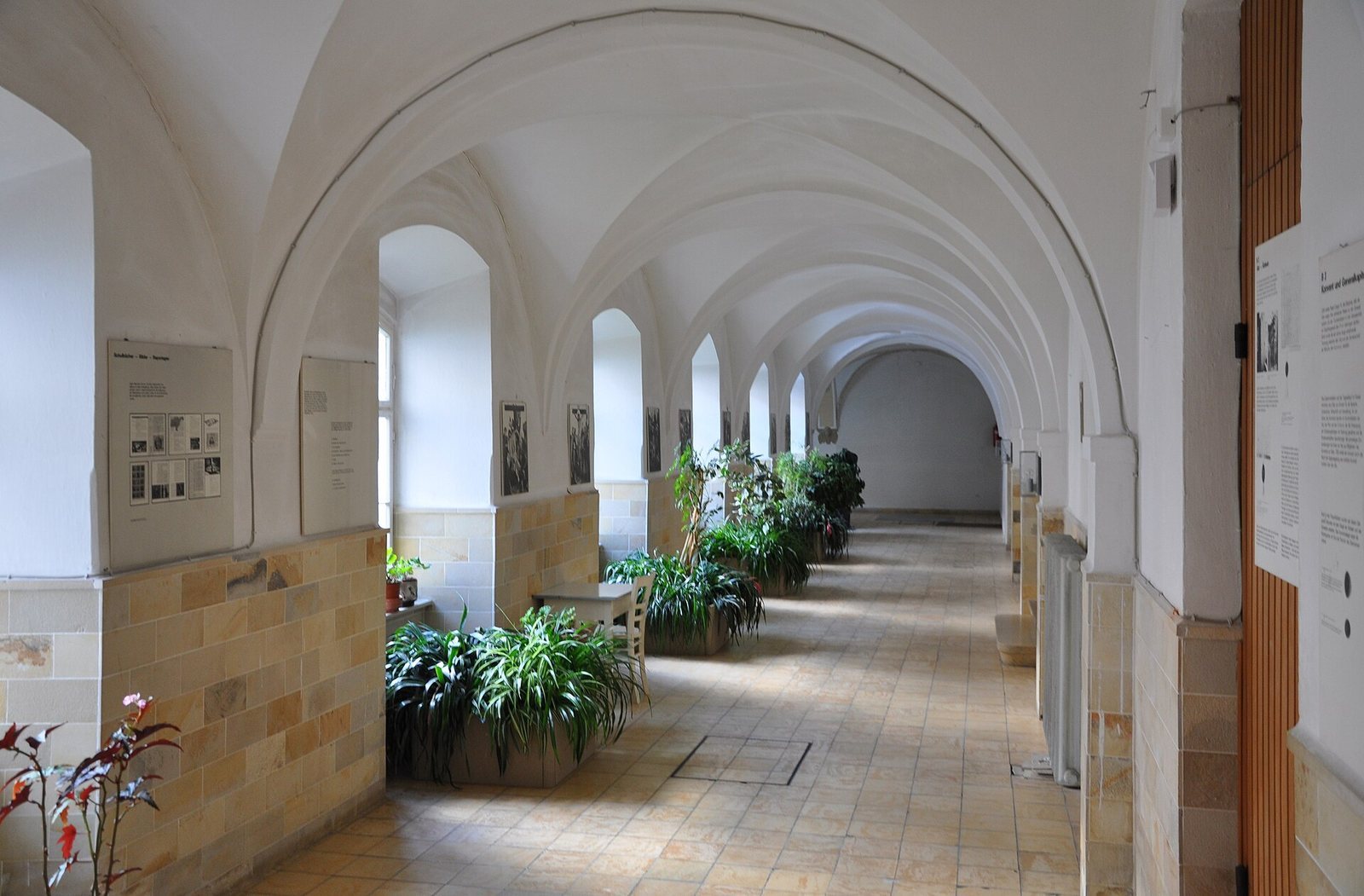
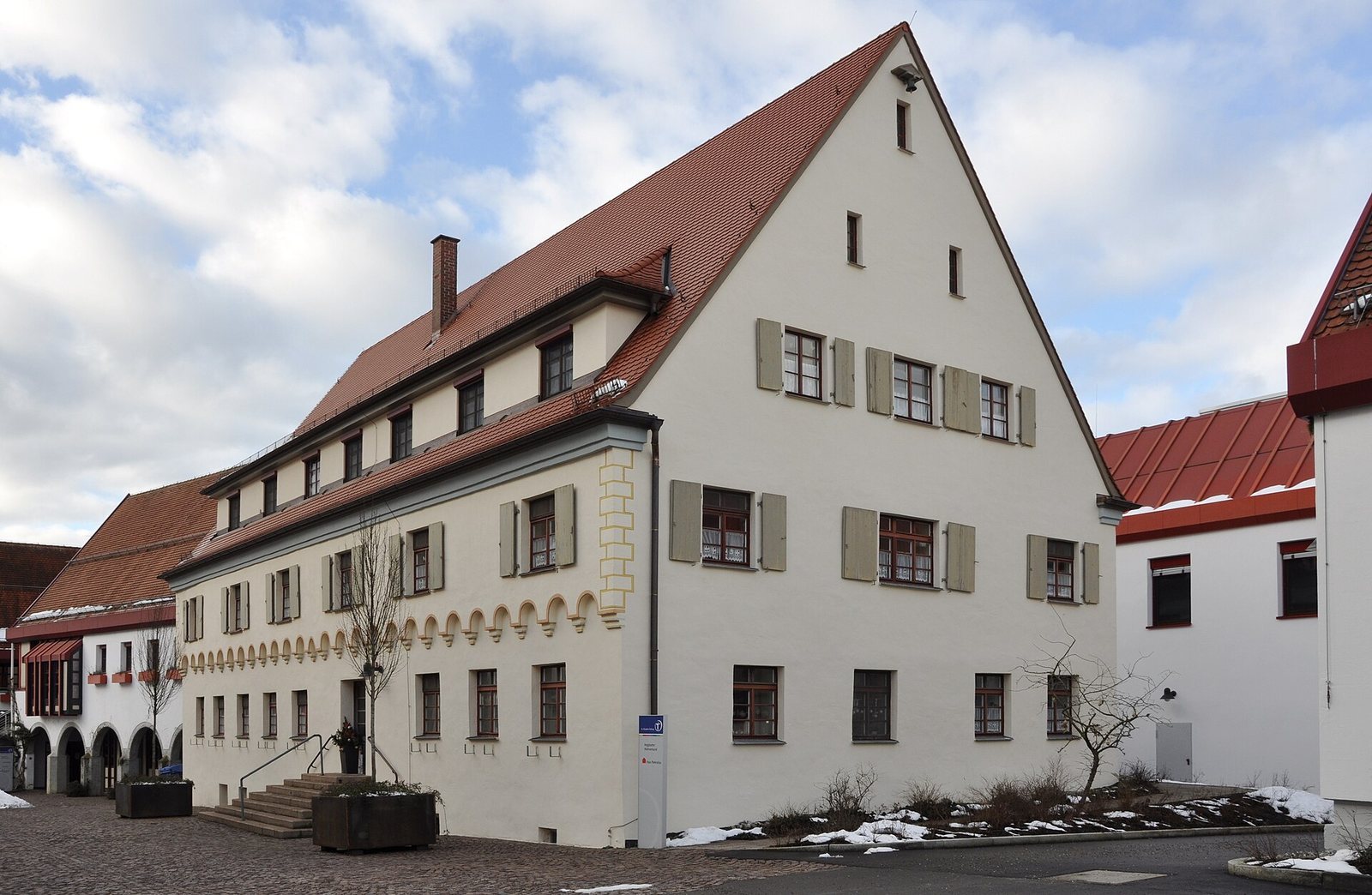
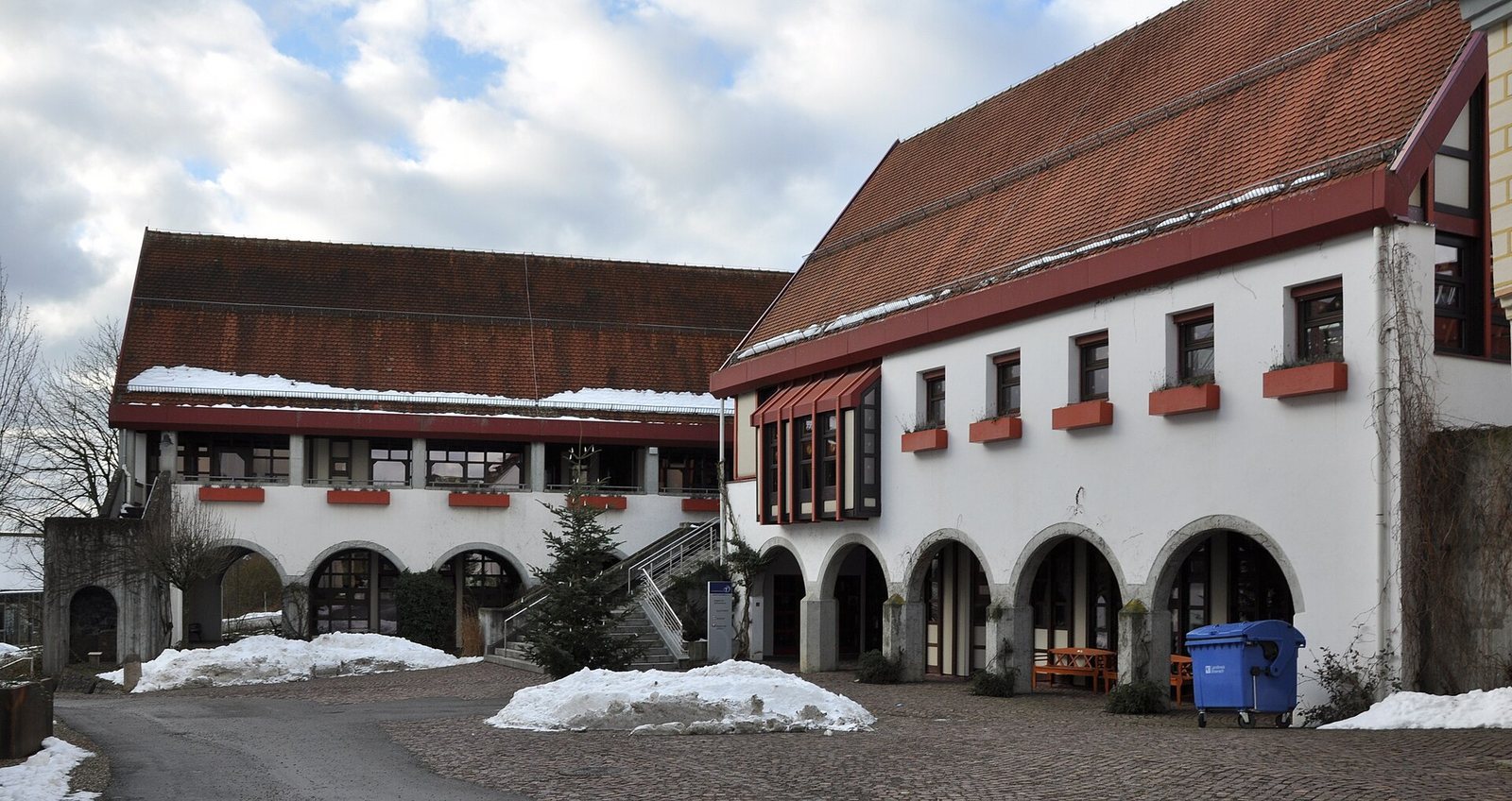
The abbey stands on a ridge northeast of Maselheim. Its complex developed around the cloister, with an outer enclosure containing nearby buildings. The surviving fabric includes medieval features and later Baroque and Rococo work. The core buildings remain, adapted for later uses and accompanied by newer construction.
Enclosure and monastic layout
The bakery, brewery, and smithy stood inside the outer wall, while the brickworks and a mill with a sawmill were set apart from the enclosure. The nunnery’s basic plan seems to have taken shape close to its foundation, followed by major building work under Abbess Halwig Wachsgäb from 1312 to 1322. Restoration work in 1980 identified late Romanesque round-arched windows and the enclosure’s northern entrance. Similar window openings survive above the cloister vaults, where they were later blocked with brick.
Churches and chapels
Abbey church
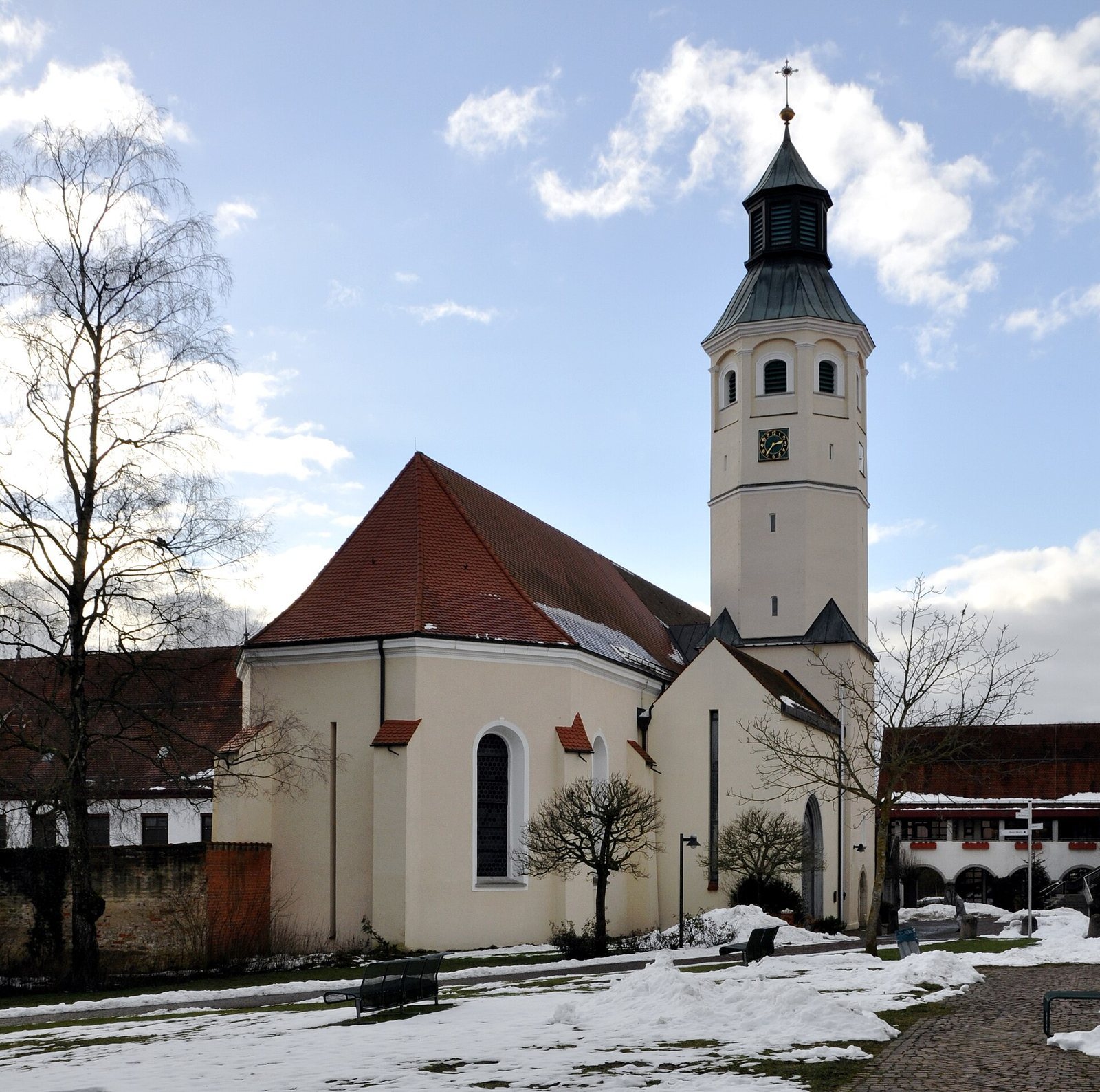
The abbey church was redesigned in the early fourteenth century and dedicated to Our Lady, meaning Mary, and Saint George. The large church was consecrated in 1343. Abbess Elisabeth Kröl provided a new altar dedicated to Mary in 1467. During Agnes Sauter’s abbacy, the church gained further altars, a chapel in the chapter house, and an extended west wing. A fire destroyed the church and east wing in 1893.
Saint Agnes and Saint Anne chapels
A chapel dedicated to Saint Agnes was added and consecrated in 1500. The Freyberg family’s Chapel of Saint Anne followed, with its consecration in 1528.
Saint Pancras church
The former parish church of Saint Pancras stood north of the abbey church. It remained in use after the convent received the parish church and later served as a cemetery church.
Later building phases
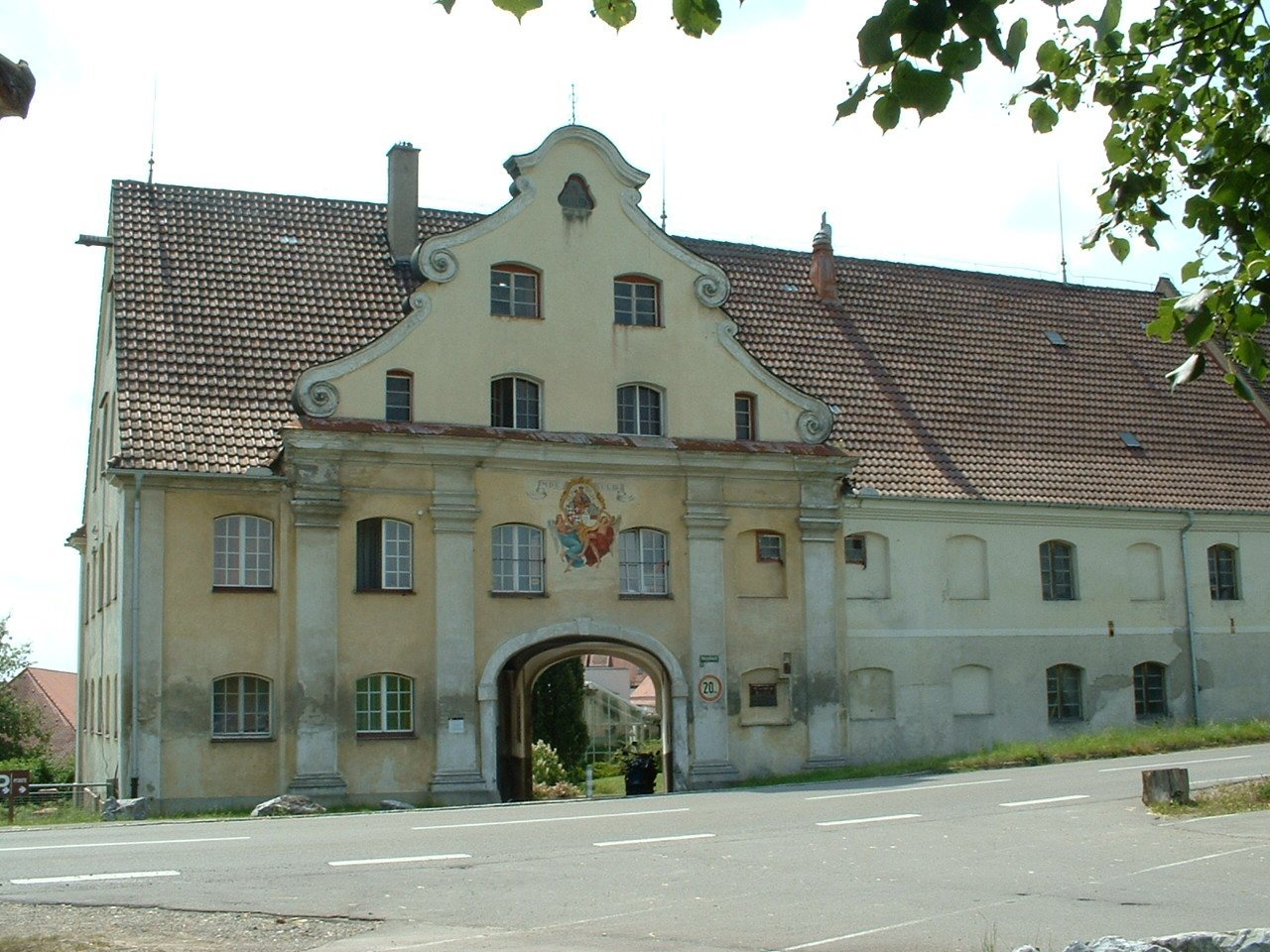
Baroque alterations were carried out between 1687 and 1716. Further interior changes in Baroque and Rococo styles took place in the eighteenth century under Abbesses Maria Caecilia Constantina Schmid and Maria Aleydis Zech, when a gatehouse was also built. The monastic buildings underwent further alterations under Abbess Margareta Hautmann.
Agricultural estate
Around 1800, the abbey’s estate included about 250 Jauchert of arable land, 100 Tagwerk of meadow, 60 Jauchert of gardens, a small vineyard, and 3,000 Jauchert of woodland. Jauchert and Tagwerk were regional land measures whose values varied by locality.
Sculpture and surviving art
Madonna
A Madonna, an image of the Virgin Mary, survived the 1893 fire. It probably dates to around 1470 and is associated with the Ulm School. Suggested attributions place it in the circle of Hans Multscher, the Master of the Tiefenbronn Altarpiece, or Jörg Syrlin the Elder.
Christ Child
A figure of the Christ Child was made for the Cistercian nunnery by Gregor Erhart around 1500. It has belonged to the Museum of Arts and Crafts in Hamburg since 1953.