Kuhab Caravanserai: A Safavid-Era Stop for Traveling Caravans
Site at a Glance
- Popularity
- Medium
- Country
- Iran
- Primary era
- Early Modern
- Eras represented
- Early Modern
- Civilizations
- Safavid
- Site type
- Economic
- Remains
- Caravanserai
History
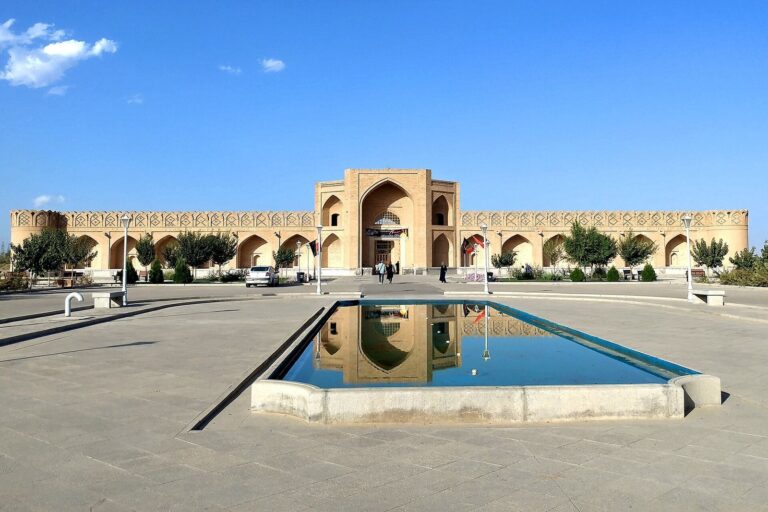
Kuhab Caravanserai is a Safavid-era lodging place for traveling caravans in Natanz, Iran. It was built during the reign of Shah Abbas I, a Safavid ruler of Iran who reigned from 1588 to 1629. Its builder, Mir Abu al-Ma’ali Barzroudi, was a close high-ranking official of the shah and a court scribe. The caravanserai officially opened in 1620.
Iran registered the building as a national monument in 1977. Its most recent restoration took place in the twenty-first century.
Remains
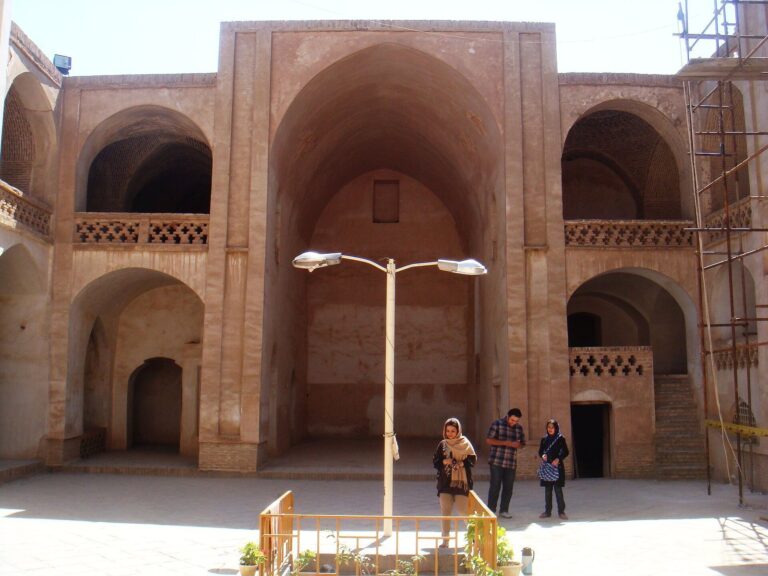
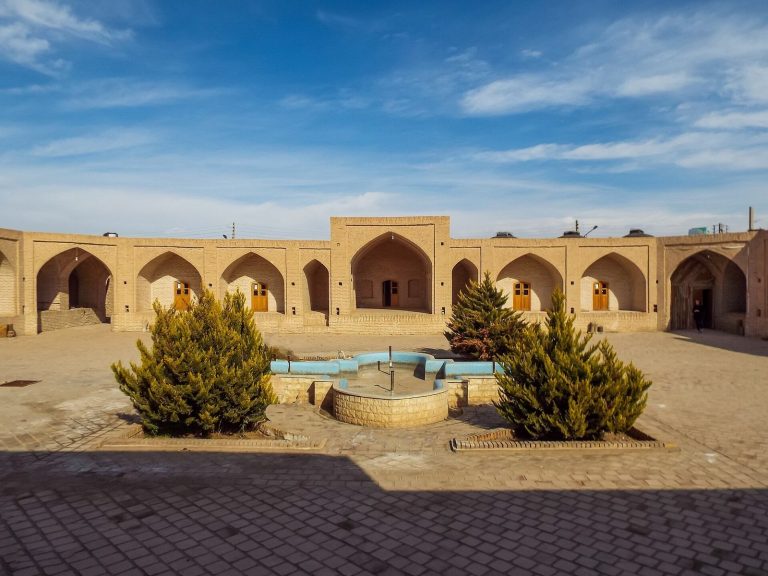
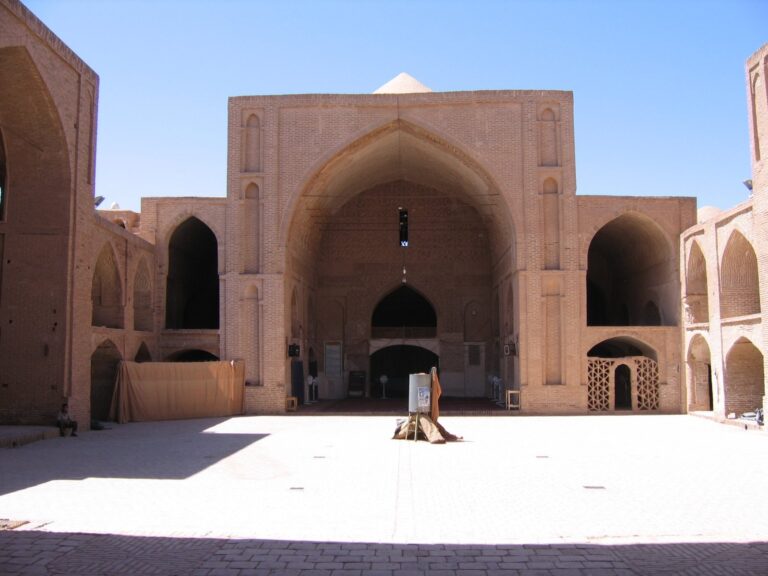
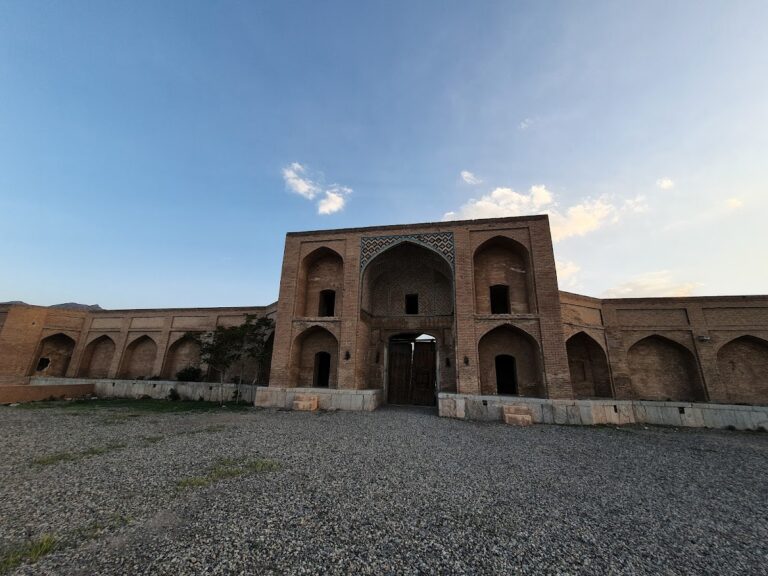
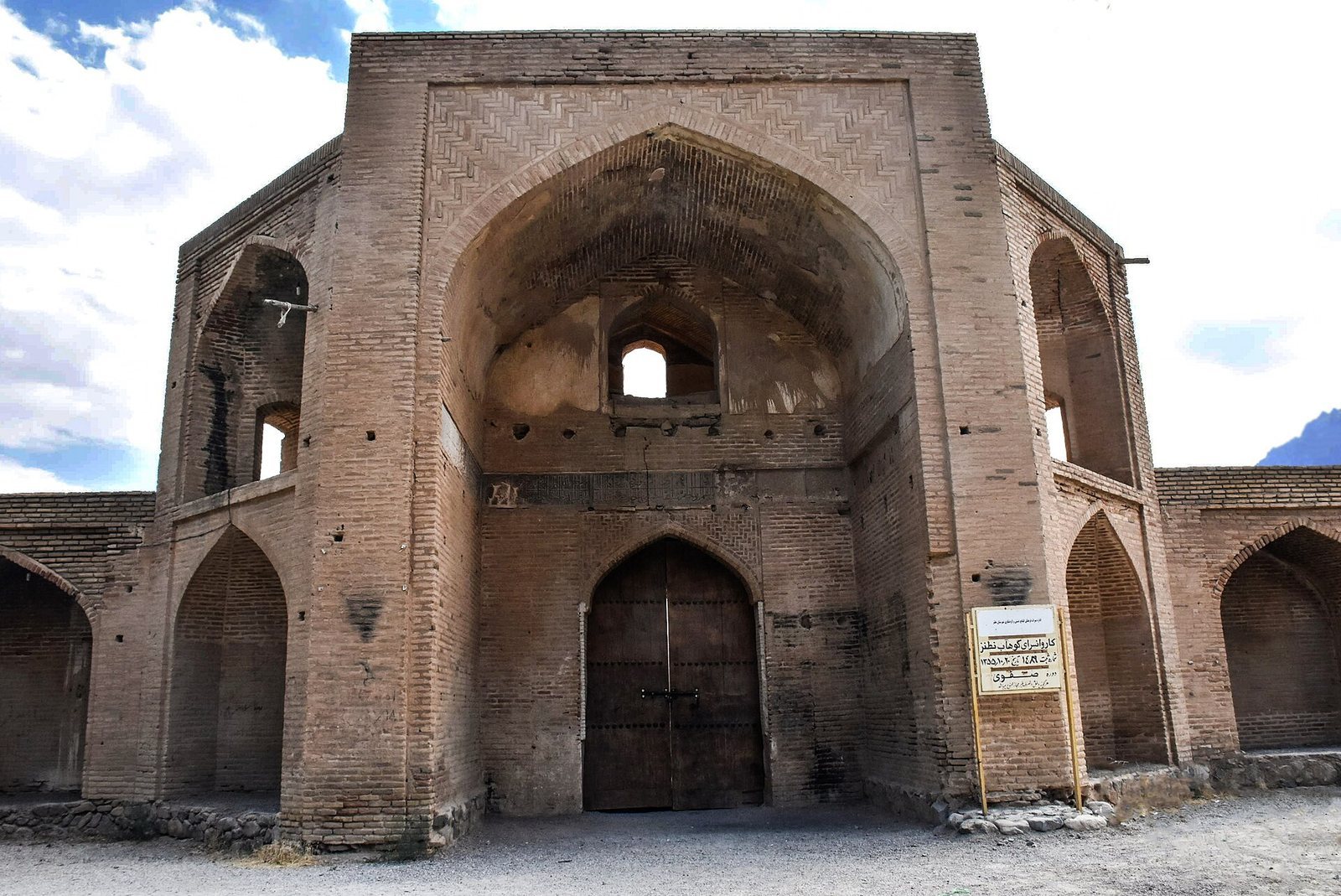
The rectangular complex covers 4,700 square metres and stands 1,681 metres above sea level. Its four-iwan plan has four iwans, vaulted halls open on one side, and a forecourt. The entrance portal bears a stone inscription in thuluth, a formal Arabic calligraphic script; part of the inscription is damaged. The building is made of brick and rubble stone, joined with partially crushed gypsum mortar.