Haus Steinfurt: A Moated Manor House in Drensteinfurt, Germany
Site at a Glance
- Popularity
- Medium
- Country
- Germany
- Primary era
- Early Modern
- Eras represented
- Early Modern, Modern
- Civilizations
- Holy Roman Empire, Kingdom of Prussia
- Site type
- Domestic
- Remains
- Castle
On this page5 sections
History
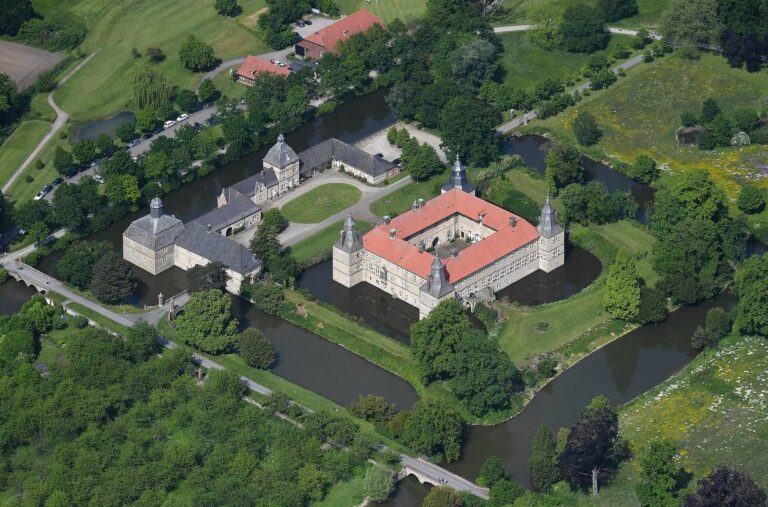
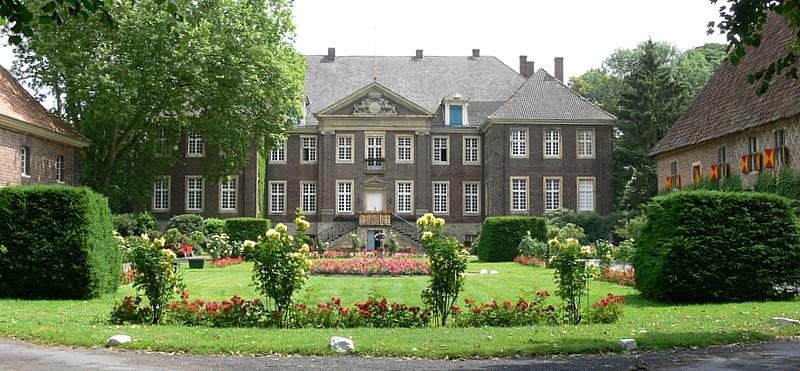
Haus Steinfurt is a moated manor house in Drensteinfurt, Germany, built between 1707 and 1709 for Baron Johann Matthias von der Recke to secure a ford across the Werse. The new house replaced a medieval fortified house and castle.
Medieval ownership and inheritance
Lubbert von Steinfurt, who held the main estate as a fief, is first recorded in 1177. Around 1200, the Lords of Rinkerode received it as a fief. The nobles of Volmestein acquired the estate through marriage in 1324, and in 1429 the marriage of their heiress, Neyse (Agnes), transferred it to the von der Recke zu Heeren, a noble family from the County of Mark.
In 1468, the von der Recke family divided into the Steinfurter and Heessener branches. In 1480, Johann von der Recke ended the estate’s feudal subordination to Osnabrück and held it outright as property, rather than land owed to a feudal lord.
Confessional change and the new manor house
The Steinfurter branch became Protestant in 1533 and converted to Catholicism in 1651. This change helped the family rise among the most prominent landed noble houses whose members could qualify for cathedral chapters, the clerical bodies attached to cathedrals, in the Prince-Bishopric of Münster, an ecclesiastical territory governed by a prince-bishop.
Baron Johann Matthias commissioned architect Lambert Friedrich Corfey to build the new manor house between 1707 and 1709. In planning his succession, Johann Matthias first named his son Ferdinand Wilhelm Joseph, who served in the Münster government, as sole heir. After Ferdinand Wilhelm married Maria Franziska Theresia Gudula von Wolff-Metternich, Johann Matthias instead made their son Franz Arnold his universal heir, leaving Ferdinand only the portion guaranteed to him. Their bitter dispute ended with the estate divided.
Inheritance and later ownership
Franz Arnold died without children, and his share went to his youngest sister, Anna Maria Theresia von der Recke. Her marriage to Franz Kaspar Ferdinand von Landsberg zu Erwitte brought Haus Steinfurt into the von Landsberg zu Erwitte family. Ferdinand Wilhelm Joseph’s share passed to his eldest daughter, Maria Berhardine, wife of Clemens August I von Droste zu Hülshoff. She was the musically gifted grandmother of the poet Annette von Droste-Hülshoff. Maria Berhardine did not assert her claims in time during later disputes, and the inheritance passed out of the Droste-Hülshoff family. The von der Recke zu Stockhausen, who would have had a claim to the Volmestein fief under feudal law, settled their dispute by agreement in 1810.
Engelbert von Landsberg-Erwitte, the heir, died without children in 1810. The house then passed to a grandson of his brother Clemens August, who had married the heiress Anna Theresia von Velen in 1757. In October 2009, Ignatz-Wessel Baron von Landsberg-Velen left the castle to his daughter Marie-Antoinette.
Remains
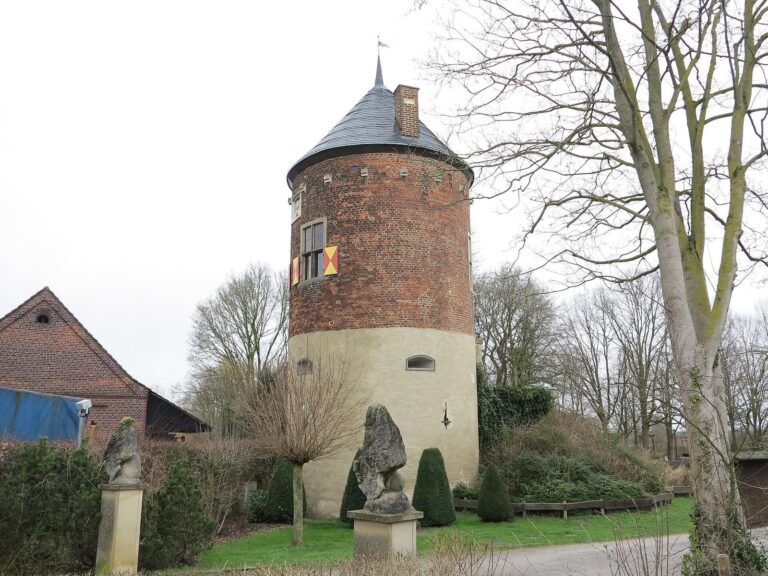
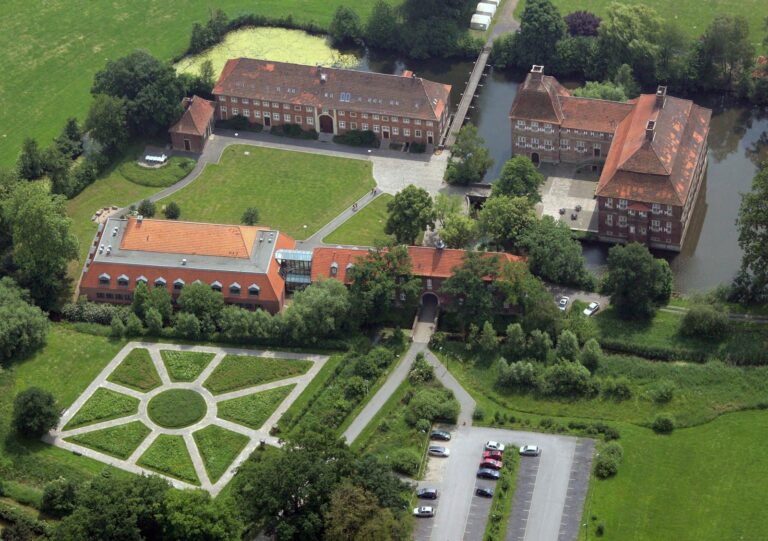
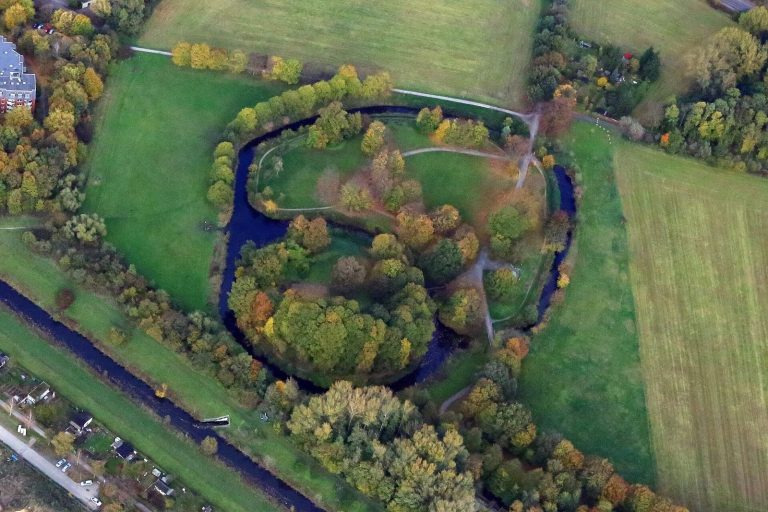
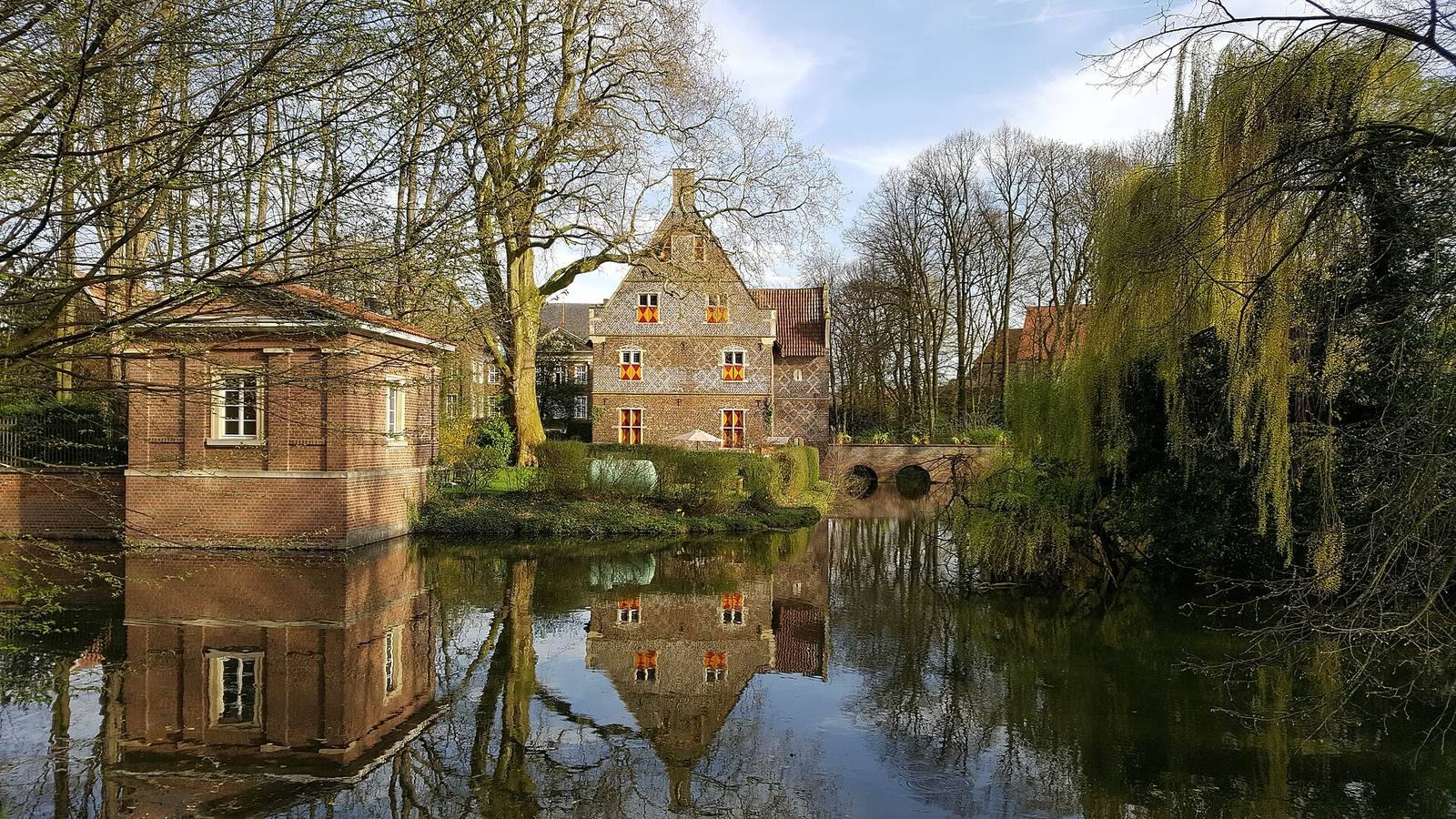
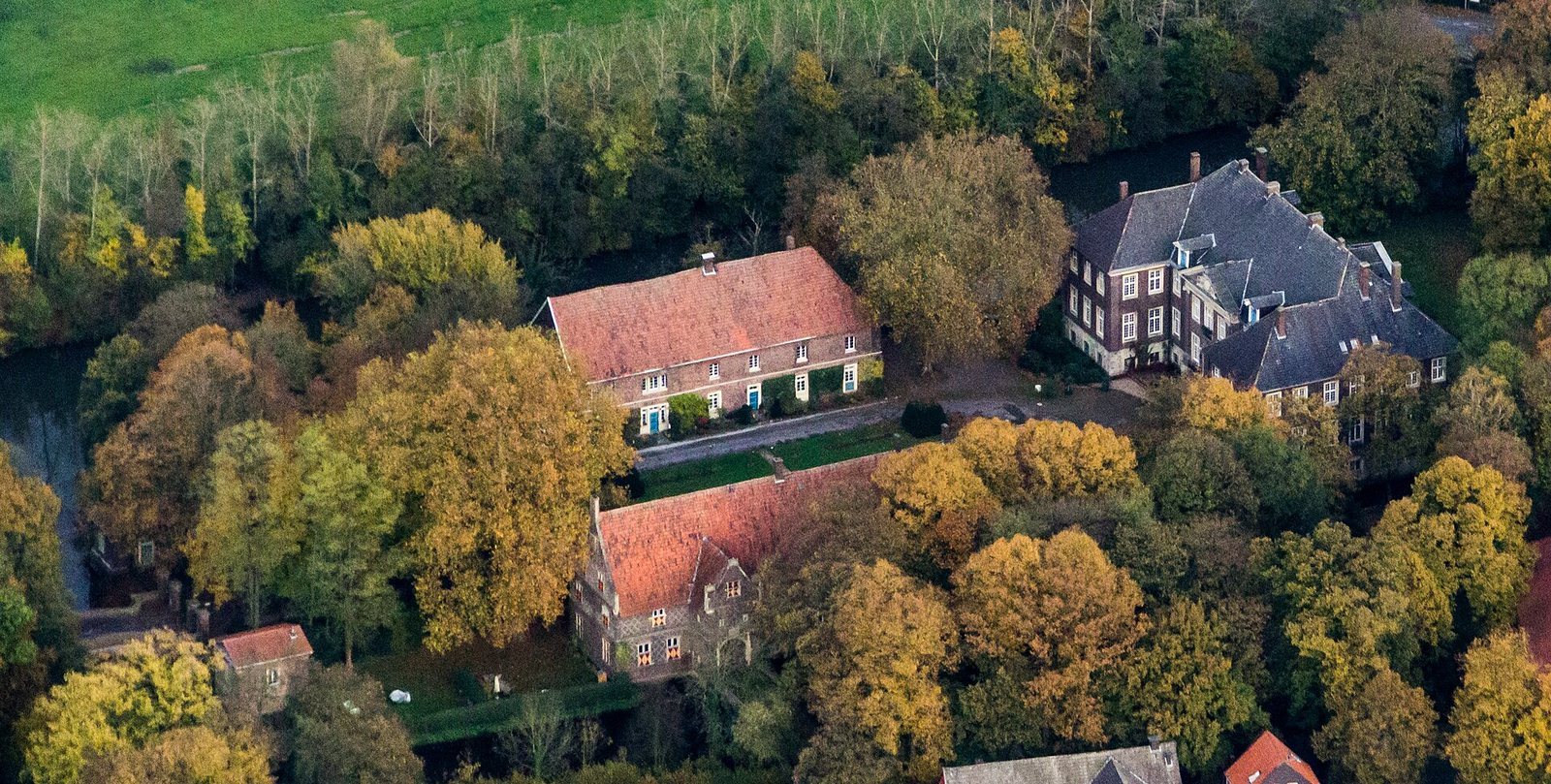
The complex includes the principal manor house, a moat system incorporating the Werse, and buildings in an outer bailey, an enclosed area beyond a castle’s main enclosure that often held supporting buildings. A bridge from the park crosses the moat toward the main gate, which is flanked by gatehouses. A watermill stands before the bridge.
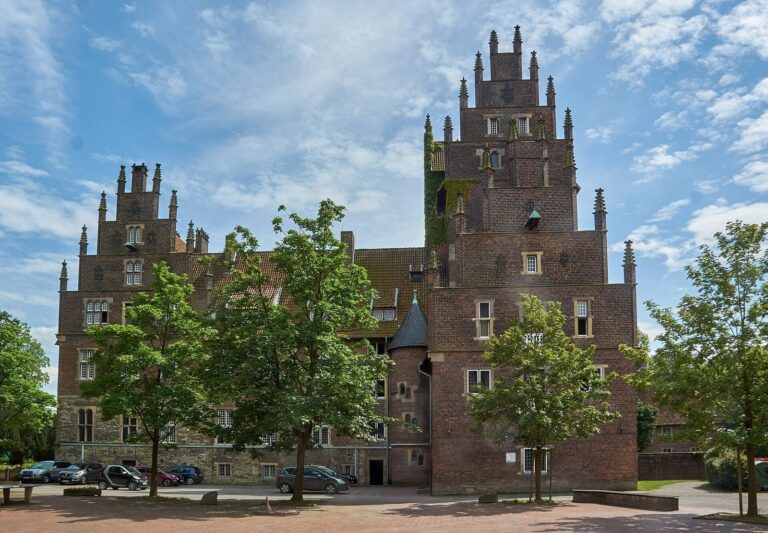
The gatehouse in the right wing, dated to 1583–1591, is the oldest part of the complex. Two smaller gatehouses were built in 1829–1830 by Heinrich Johann Freyse, Krefeld’s municipal architect and a pupil of the Prussian architect Karl Friedrich Schinkel.