Haus Klein-Schonebeck: A Late-Medieval Knight’s Seat in Germany
Site at a Glance
- Rating
- 4.4
- Popularity
- Very Low
- Country
- Germany
- Primary era
- Early Modern
- Eras represented
- Early Modern
- Civilizations
- Holy Roman Empire
- Site type
- Military
- Remains
- Castle
On this page4 sections
History
Haus Klein-Schonebeck is a late-medieval castle and knight’s seat, a landed residence associated with a noble household, in Nottuln, North Rhine-Westphalia, Germany. Its beginnings date to the late 14th century. The estate probably formed through the consolidation of two farms.
A branch of the old Schonebeck noble family lived at the estate as the family became increasingly impoverished. Its history is difficult to distinguish from that of the family branches based at Haus Groß-Schonebeck and Haus Nienberge. In 1550, the estate passed to the von Brabeck family. Later owners included the lords von Aschebrock and von Westerholt.
Remains
Residence and additions
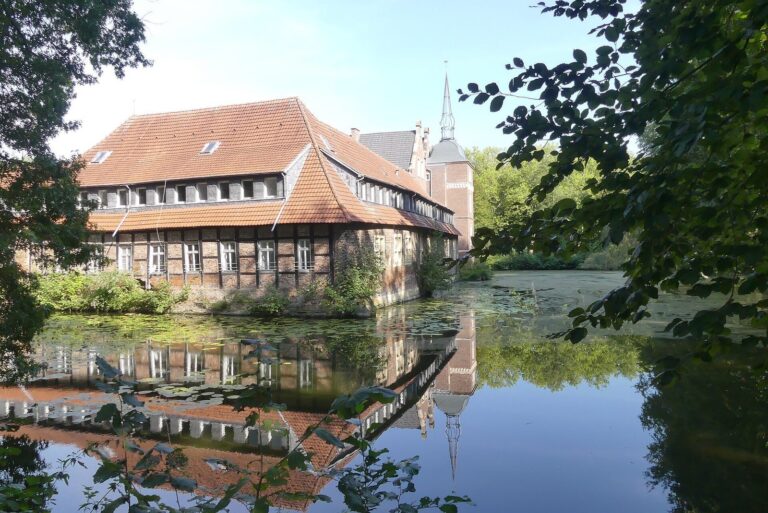
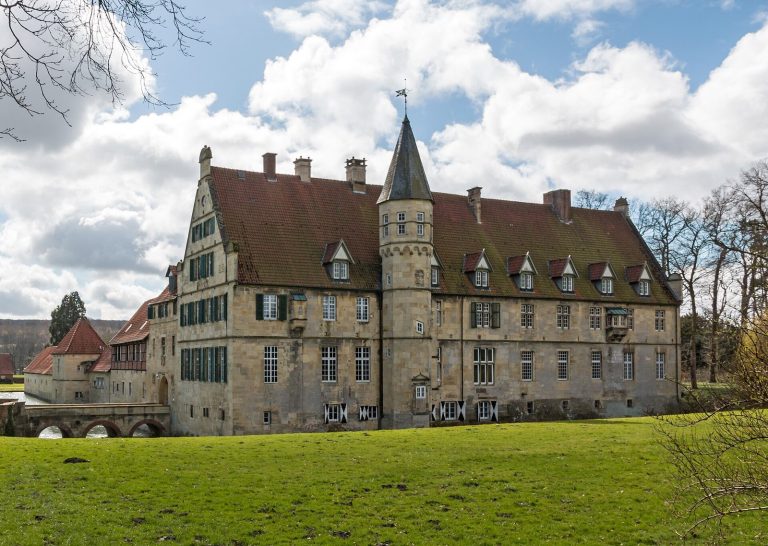
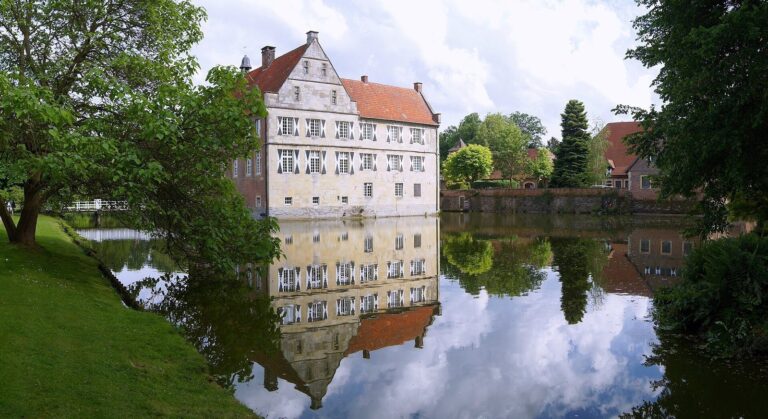
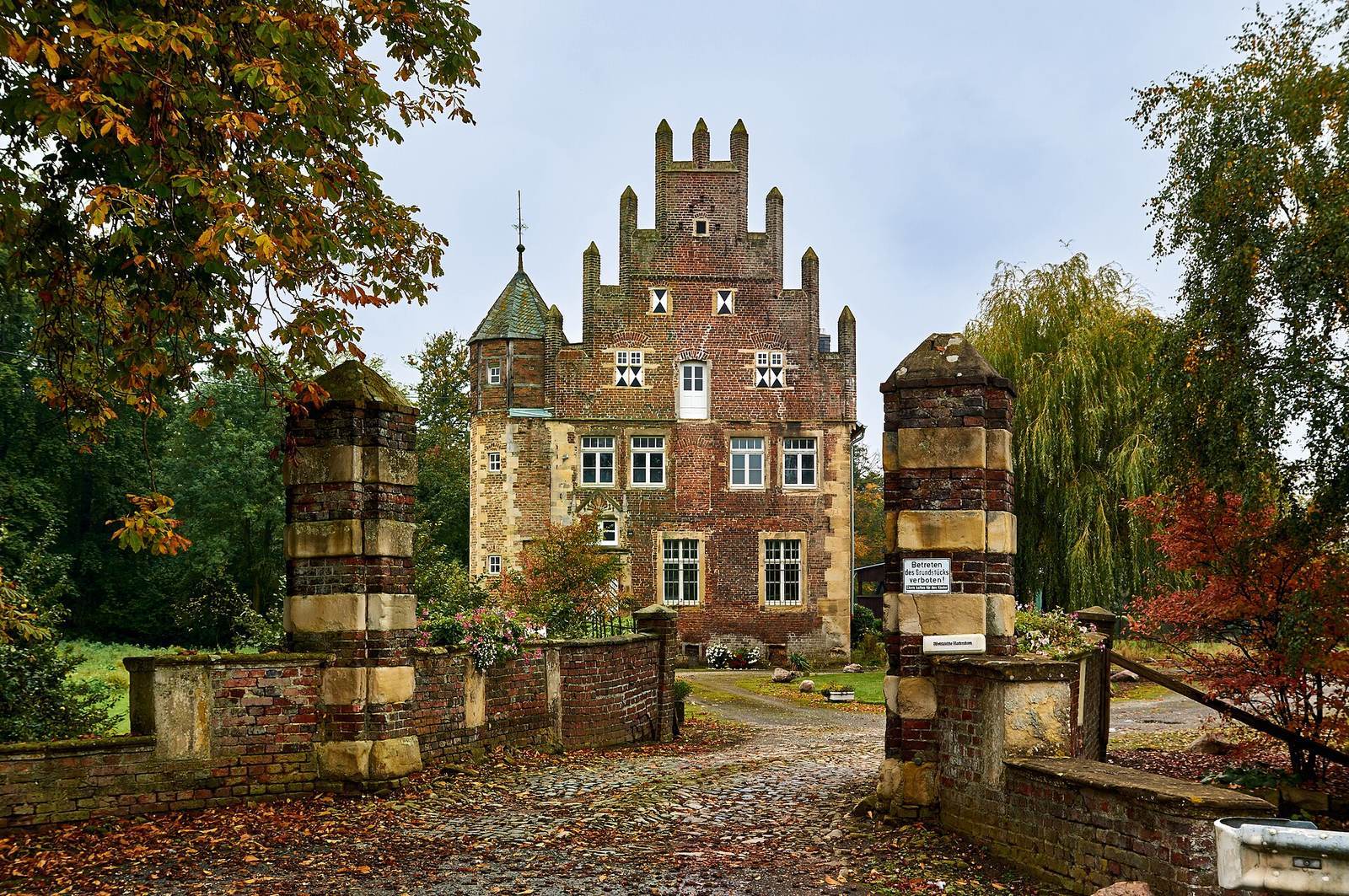
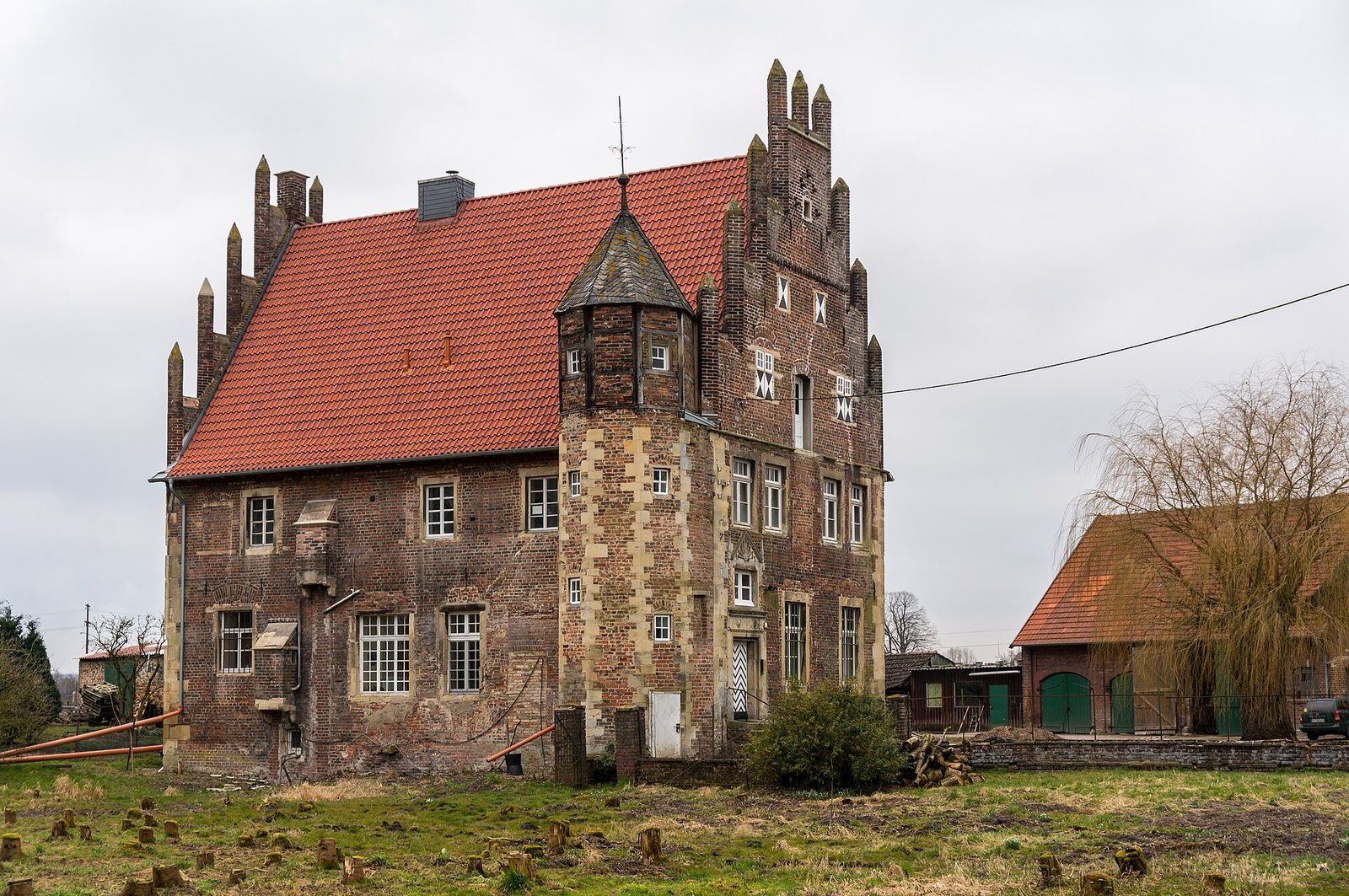
The site centers on a rectangular brick main house with dressed-stone details, set in a manor pond. Built around 1520, the house was extensively remodeled in 1587, when a stair tower was added. An 18th-century extension projects from the south side, supported by piers set into the pond. A land-survey map from 1826 depicts a barn on the street-facing side of the house.
Moats and surrounding grounds
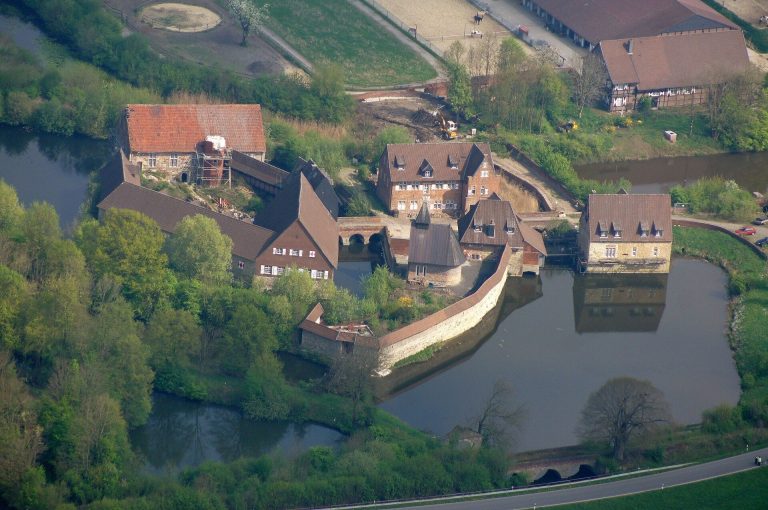
The manor pond continues as a moat around the outer bailey, the area beyond the principal residence. A narrow wooden bridge provided access. The moats have since silted up, but a second ring farther south remains discernible in the terrain; it was already shown as dry on a land-survey map. A map from 1834 also marks a field called Lusmannshof south of the house, enclosed by a moat.