Hasbach Palace in Białystok: An Industrialist’s Neo-Renaissance Residence
Site at a Glance
- Rating
- 4.5
- Popularity
- Medium
- Country
- Poland
- Primary era
- Modern
- Eras represented
- Modern
- Civilizations
- Russian
- Site type
- Domestic
- Remains
- Elite Residence
On this page6 sections
History
Construction and family residence
Hasbach Palace in Białystok is a Neo-Renaissance residence in Poland, built in the 1880s by industrialist Ewald Hasbach in a nineteenth-century revival of Renaissance forms. Ewald owned a nearby weaving mill and built the palace as his home. As the family’s income grew, his son Arthur remodeled the residence in 1905–1907.
After the First World War, the weaving mill was converted into a plywood factory.
War and later uses
In 1944, Germans burned most of the factory buildings but left the palace untouched. Its preservation is credited to Arthur’s brother Erwin, an ethnic German living outside the German Reich, a status that carried political and racial connotations under Nazi rule.
After the Hasbach family left in 1944, the palace became a center for training political personnel. Factory workers later lived there, while a post office and kindergarten occupied the ground floor. It now houses the Voivodeship Office for the Protection of Monuments in Białystok and is administered by the Podlaskie Voivodeship Conservator of Monuments. A voivodeship is a province-level administrative region in Poland.
Remains
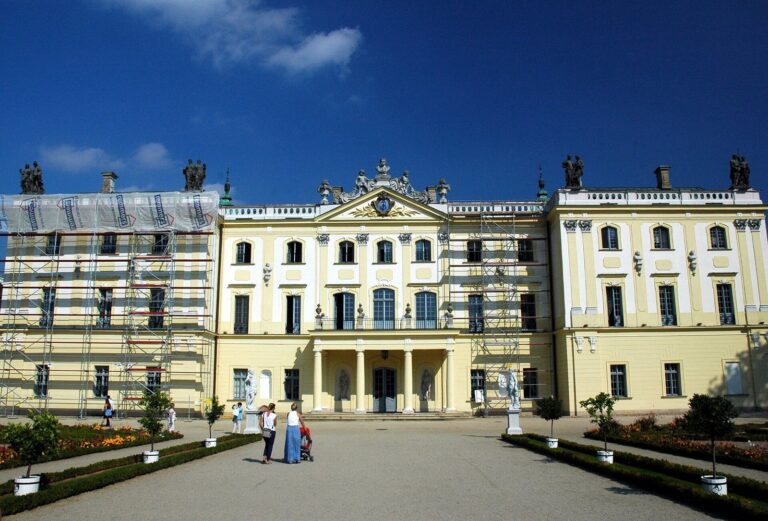
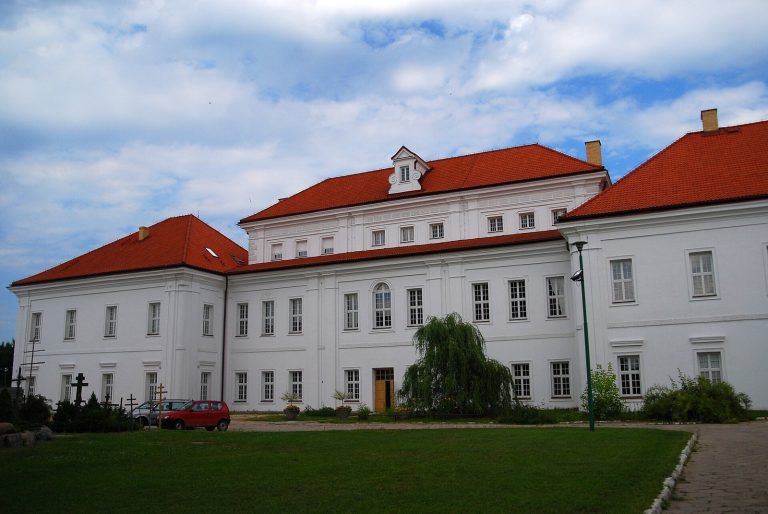
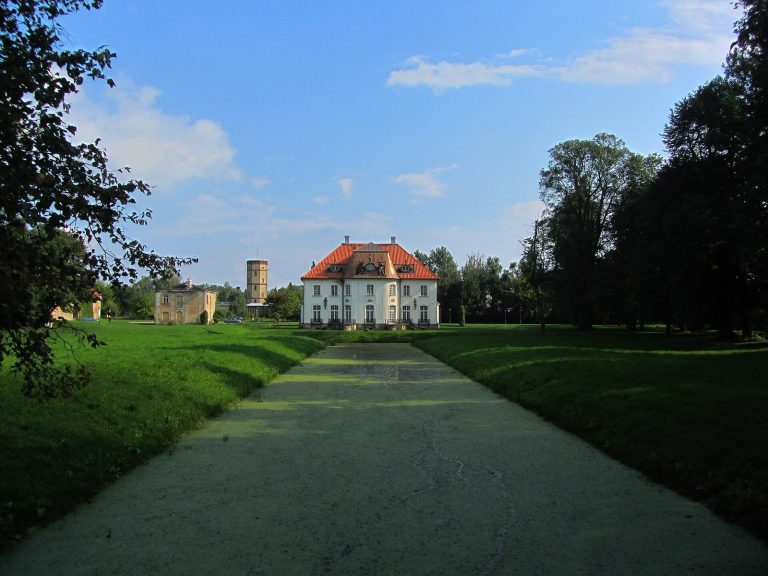
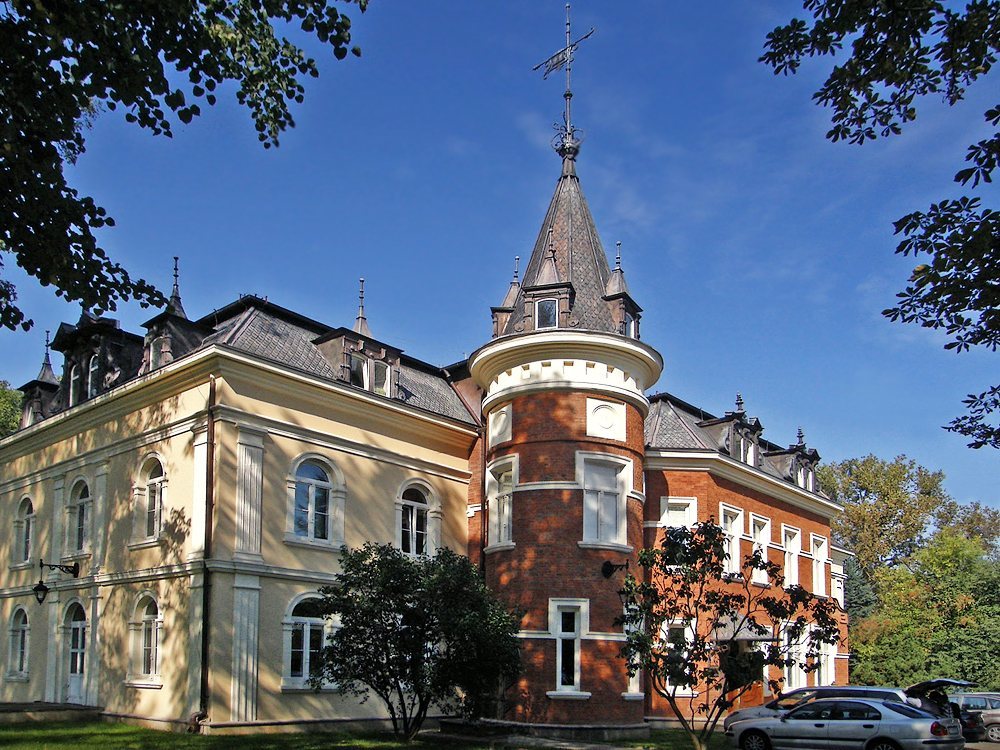
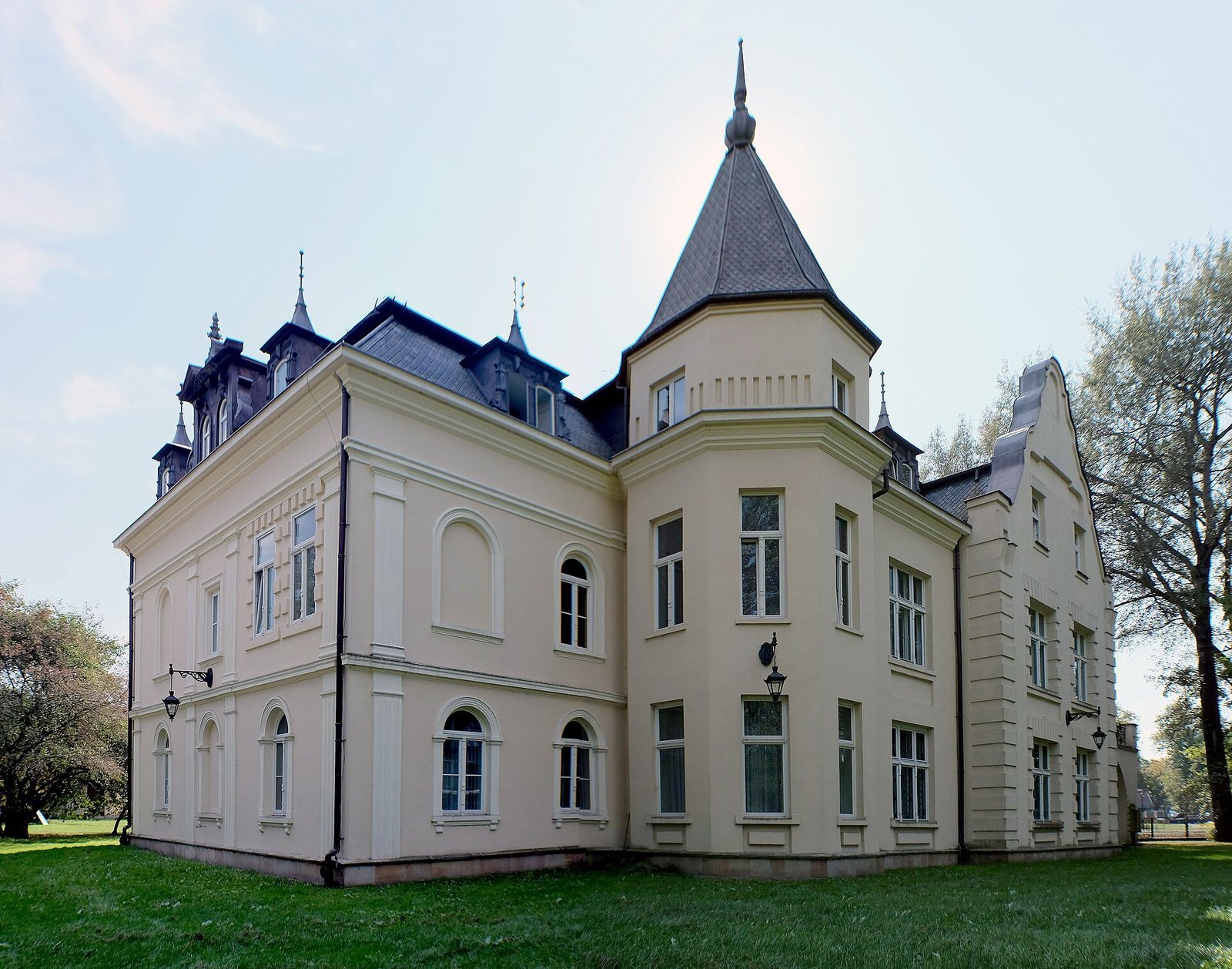
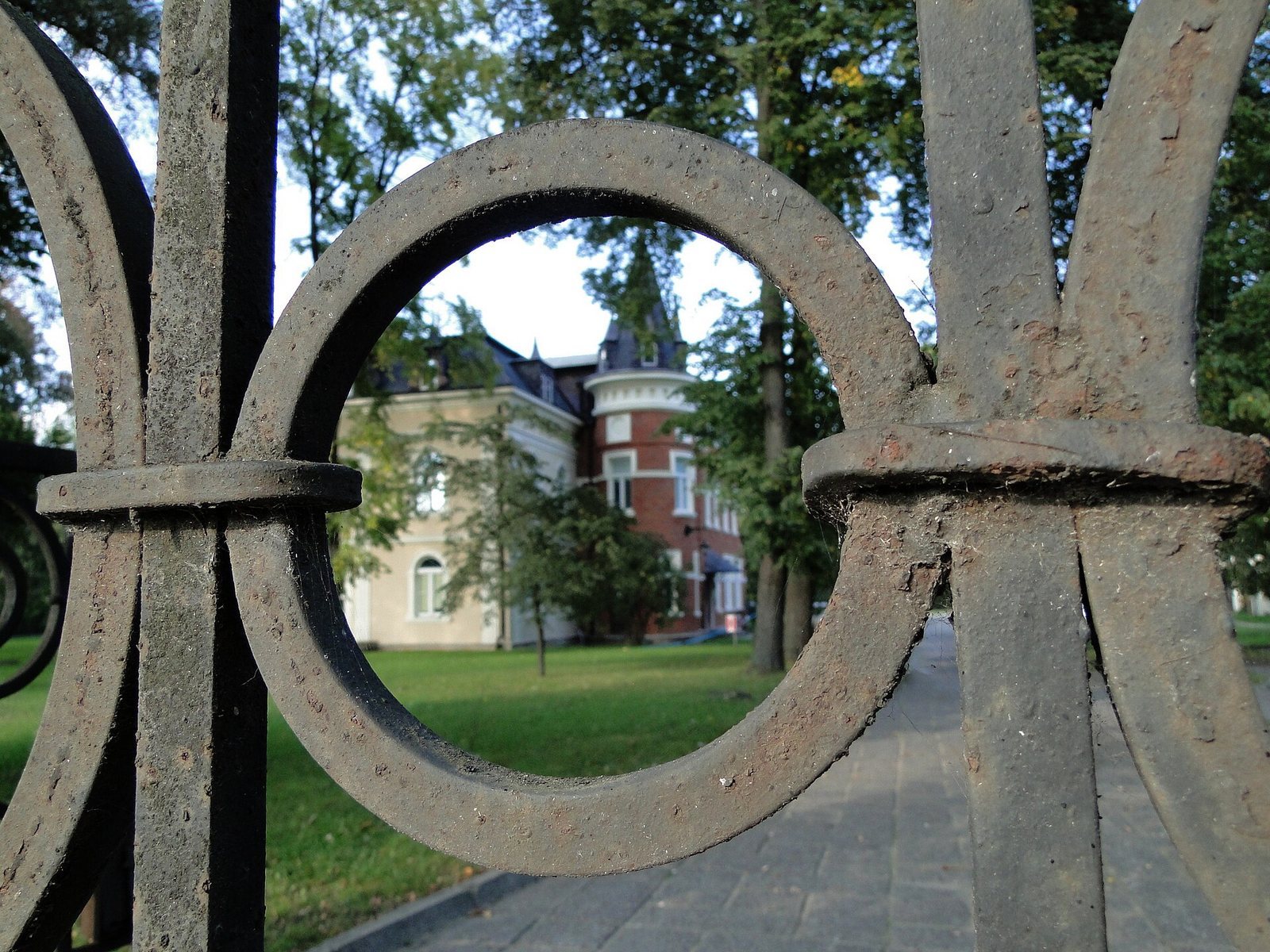
The palace stands in Białystok’s Dojlidy district, opposite nineteenth-century factory walls. Its exterior combines French, Dutch, and Tuscan Neo-Renaissance styles, while the interior is eclectic, bringing together elements from different styles.
Palace
Arthur Hasbach’s remodeling added two projecting sections with towers and another storey beneath a mansard roof, a roof with two slopes on each side and dormer windows. Original stoves and fireplaces have been preserved inside.
Grounds and factory walls
A small garden and landscape park surrounded the residence. Opposite the palace, nineteenth-century factory walls now house a plywood manufacturing plant.