Hariharalaya: An Ancient Khmer Capital and Pre-Angkorian Center
Site at a Glance
- Popularity
- High
- Country
- Cambodia
- Primary era
- Medieval
- Eras represented
- Medieval
- Civilizations
- Khmer
- Site type
- Settlement
- Remains
- City
On this page10 sections
History
Hariharalaya was an ancient Khmer city and capital of the Khmer Empire in the Roluos area near present-day Siem Reap, Cambodia. An important pre-Angkorian center, it flourished from the late eighth into the ninth century, and its temples are associated with the Preah Ko style, an early Khmer architectural style named for the Preah Ko temple. The city took its name from Harihara, a Hindu deity combining aspects of Vishnu and Shiva, and Khmer rulers built temples there in honor of Hindu deities.
Jayavarman II and the early capital
Toward the end of the eighth century, Jayavarman II conquered extensive territory near Tonle Sap and made Hariharalaya his capital for at least part of his reign. In 802, he declared himself universal monarch, a claim to supreme sovereignty, at Mahendraparvata on Phnom Kulen, not at Hariharalaya. He later returned to the city and died there in 835.
A king named Jayavarman also established a subordinate capital for Hariharalaya.
Royal building and the move to Yaśodharapura
Jayavarman III and Indravarman I succeeded Jayavarman II. They completed the Bakong and constructed Indratataka Baray, a large artificial reservoir associated with the city.
Indravarman I’s son and successor, Yasovarman I, moved the capital in 889 to Yaśodharapura, a new city founded at the site of Angkor Thom, north of modern Siem Reap. He also built a new royal temple at Phnom Bakheng, and Hariharalaya was abandoned. Yaśodharapura endured until the 1170s, when invaders from Champa, a historical polity in mainland Southeast Asia, sacked it.
Rediscovery and legacy
In 1860, a French engineer discovered the ancient structures and brought them to wider attention. Hariharalaya’s surviving remains are evidence of ninth-century Khmer and Hindu cultural influence.
Remains
Temple group and reservoir
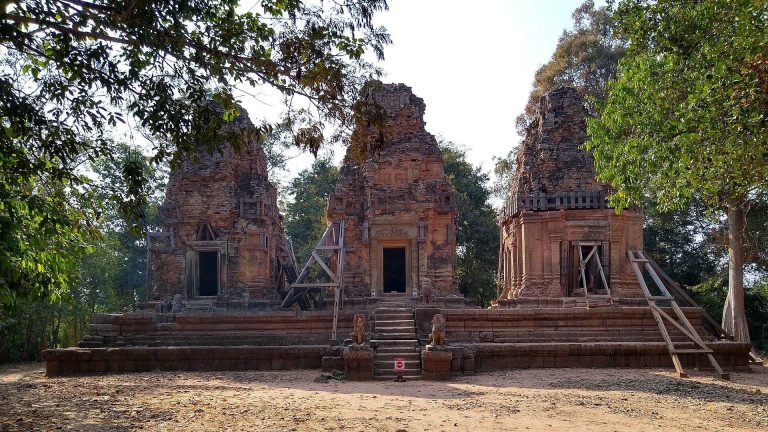
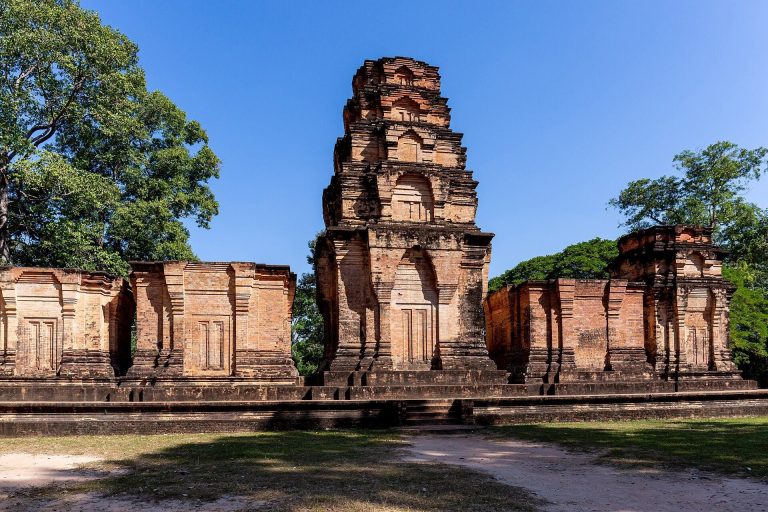
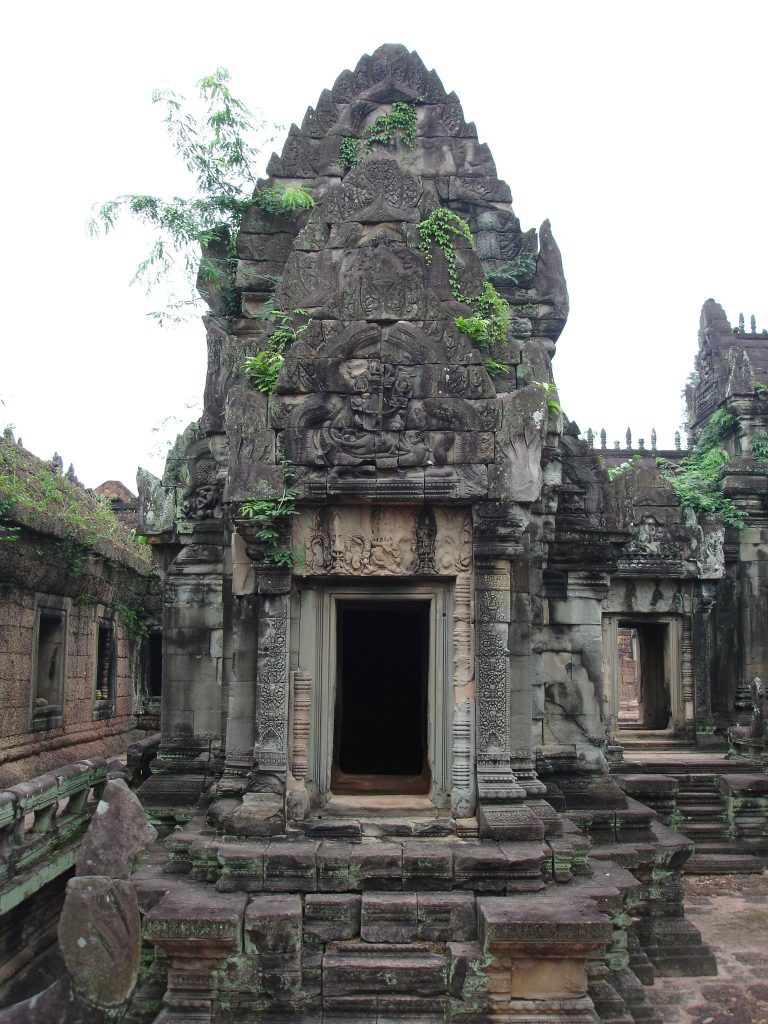
The surviving remains include the royal temples Preah Ko, the Bakong, and Lolei, along with the reservoir Indratataka. The temple buildings use sandstone, laterite, and brick.
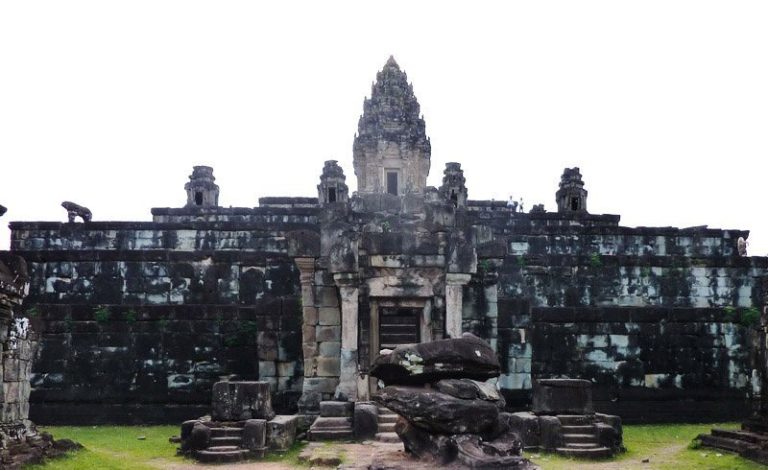
Bakong
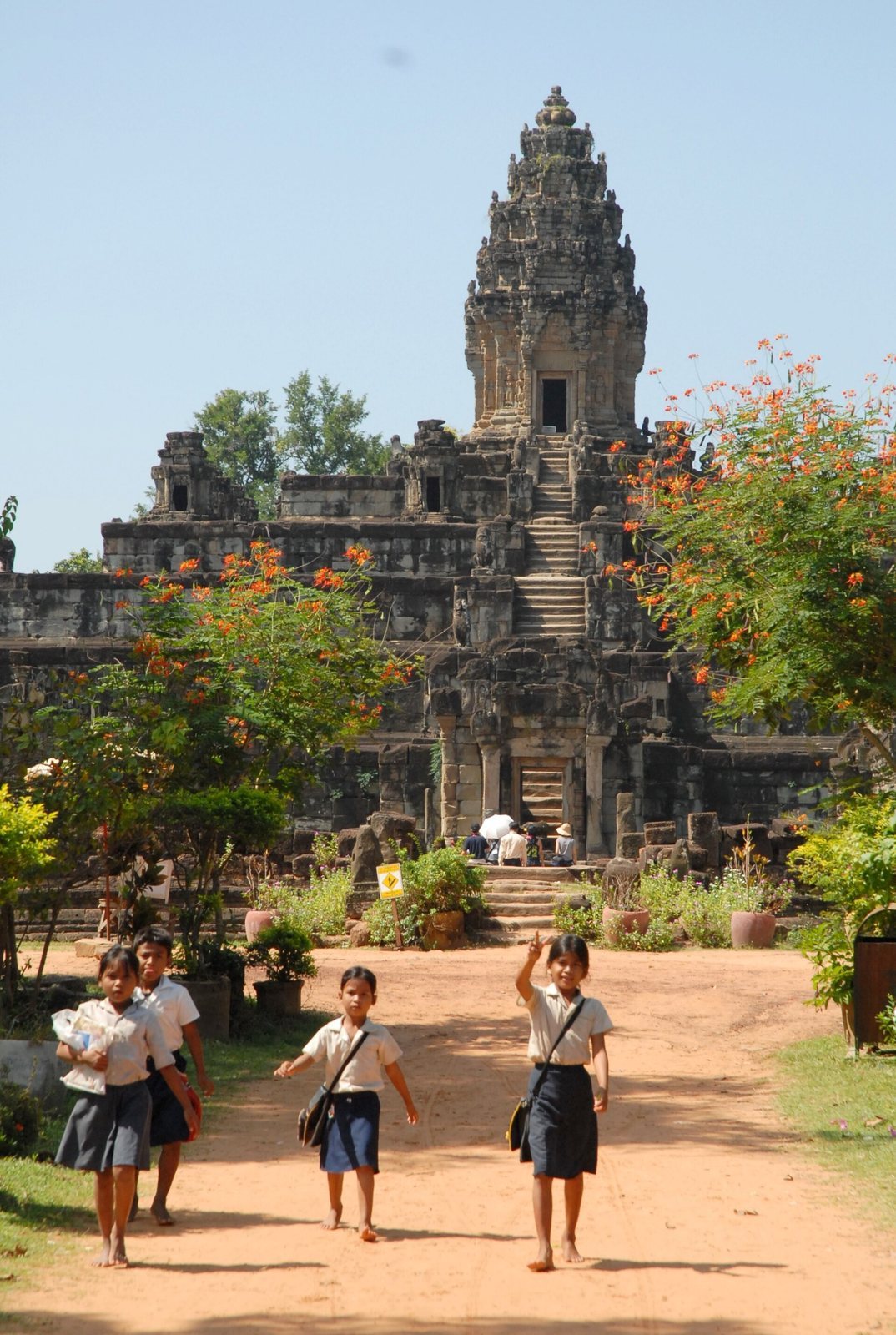
The Bakong is a royal temple-mountain, a Khmer temple form representing Mount Meru, the sacred mountain at the center of Hindu and Buddhist cosmology. Its principal religious emblem was a lingam, a ritual emblem of Shiva, called Sri Indreshvara. Indravarman I consecrated it in 881.
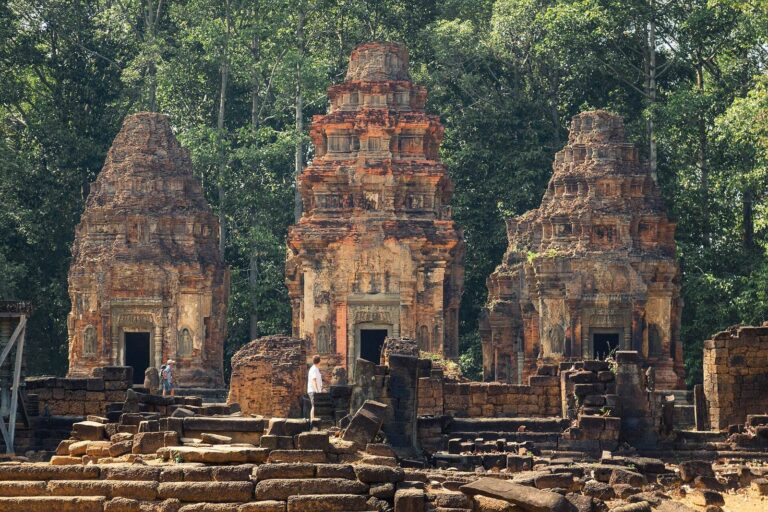
Preah Ko
Preah Ko means ‘Sacred Bull.’ Indravarman I built and dedicated this temple in 880.
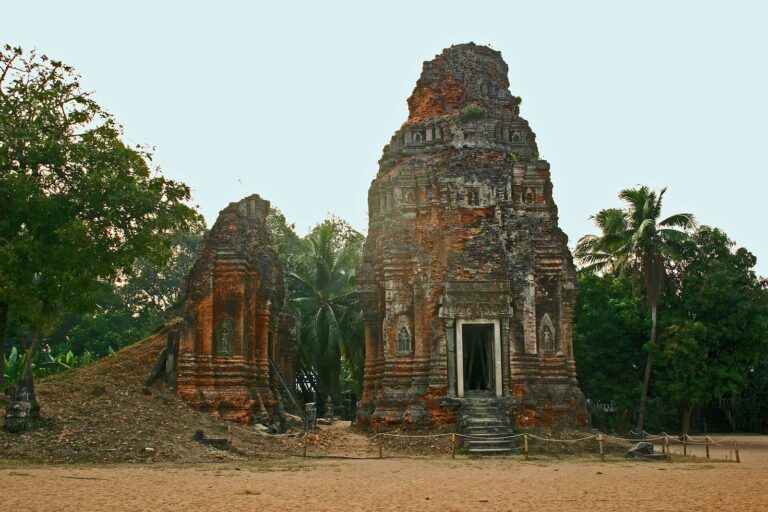
Lolei
Yasovarman I built Lolei in 889. It stands on an artificial island in the middle of Indratataka. Its name may be a later altered form of Hariharalaya.
Indratataka Baray
Indratataka is a large artificial reservoir associated with Hariharalaya.