Hamdallah Mustawfi Mausoleum: An Ilkhanid Tomb in Qazvin
Site at a Glance
- Popularity
- Medium
- Country
- Iran
- Primary era
- Medieval
- Eras represented
- Medieval, Modern
- Civilizations
- Ilkhanate, Mongolian
- Site type
- Religious
- Remains
- Tomb
On this page8 sections
History
The Hamdallah Mustawfi Mausoleum is an Ilkhanid-period tomb in Qazvin, Iran, built for the Persian historian and writer Hamdallah Mustawfi. He served as a mustawfi, an official responsible for financial administration, during the Mongol era. The mausoleum belongs to the Ilkhanid period, when a Mongol dynasty ruled Iran and surrounding lands, and is classified in the Azeri style, a category in medieval Iranian architecture.
Mustawfi and the Ilkhanid period
Mustawfi’s writing quotes a Quranic injunction to obey God, the Messenger, and those in authority. It also praises Chinggis Khan, founder and ruler of the Mongol Empire, as sent by God to act as an instrument of divine wrath. Mustawfi’s grave was treated as an imamzadeh, a shrine or tomb associated with a descendant of an imam; this treatment has been linked to the dome over the grave.
Repairs and protection
During the 14th century of the Solar Hijri calendar, the solar calendar used in Iran, local residents enclosed the ruined mausoleum precinct with a wall and made minor repairs. A major restoration followed in 1319 Solar Hijri. In 1940, the mausoleum was registered as an Iranian national heritage site.
Remains
Mausoleum and precinct
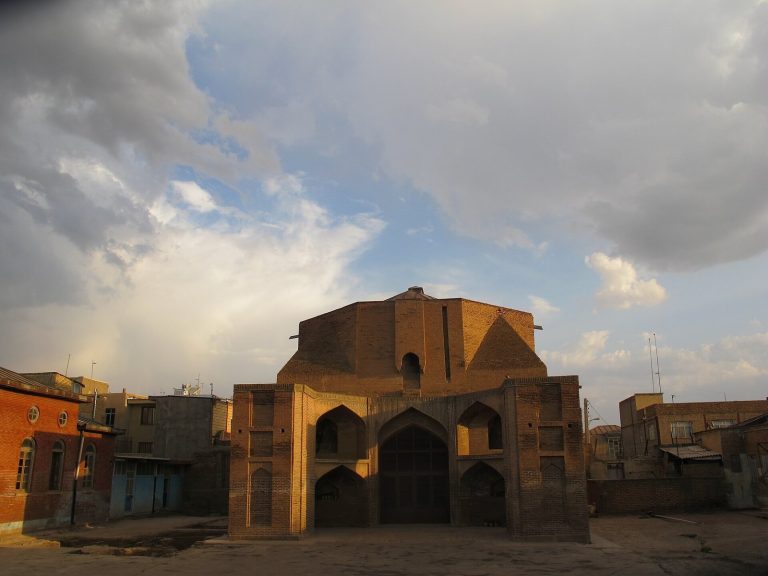
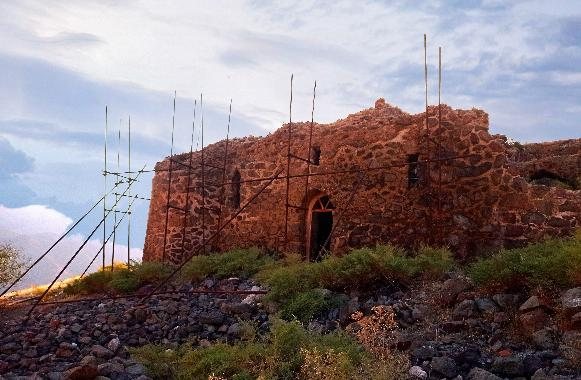
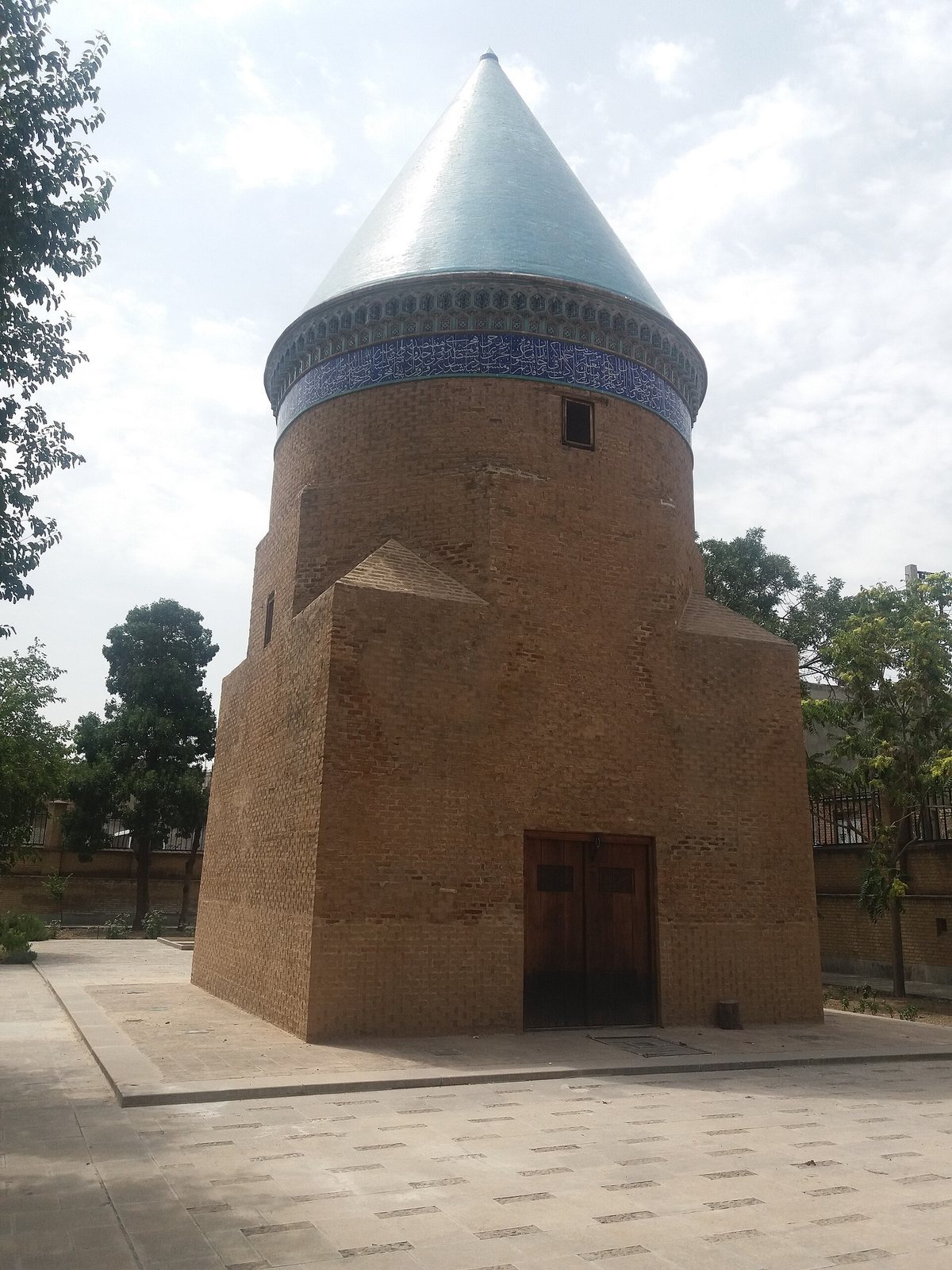
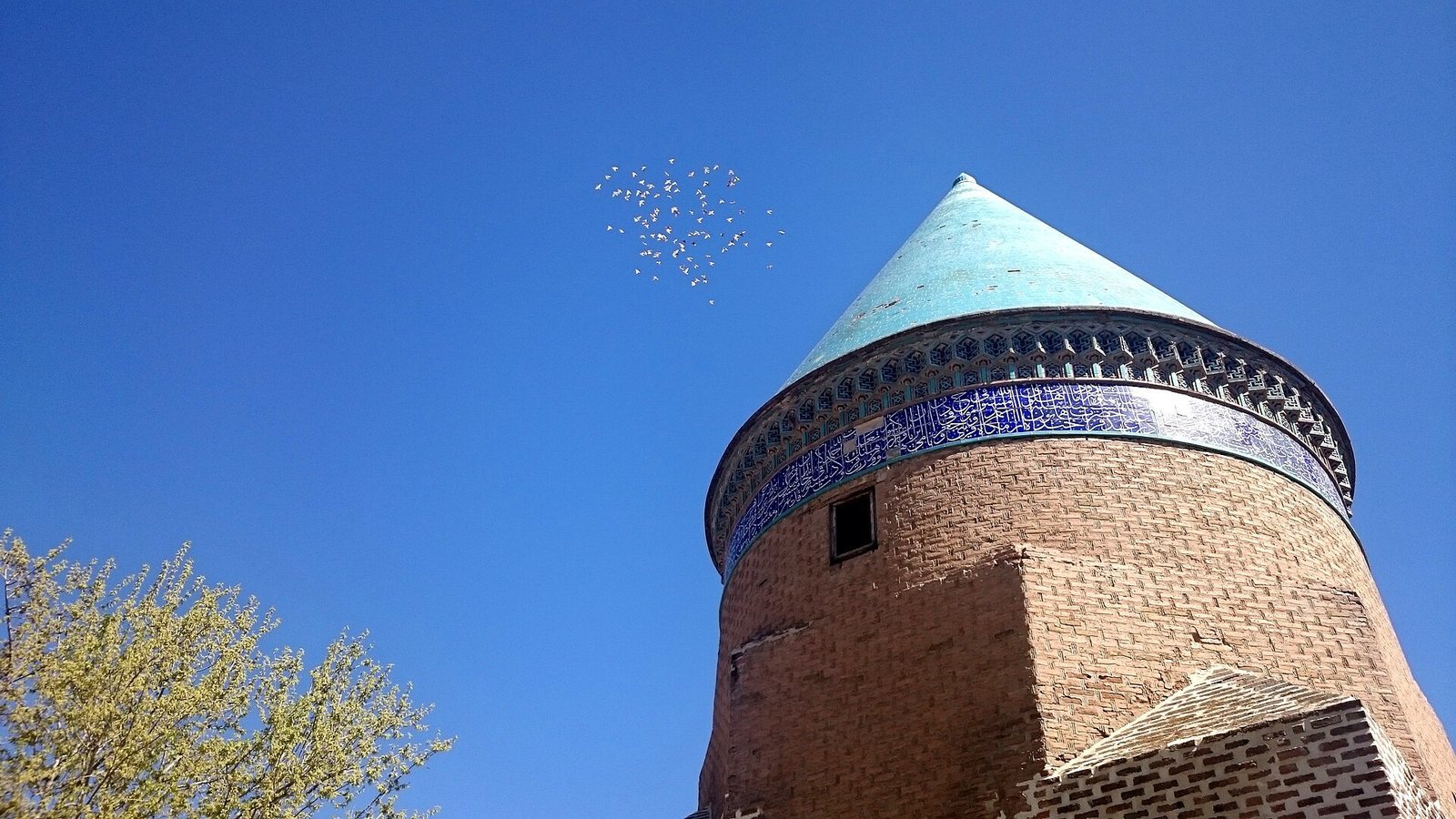
The mausoleum stands east of Qazvin, beyond an open space between two shrines. Its precinct covers about 280 square metres, while the building occupies approximately 40 square metres. The brick structure is a small tower with a square plan that changes to an octagon beneath a conical dome.
Tower and dome
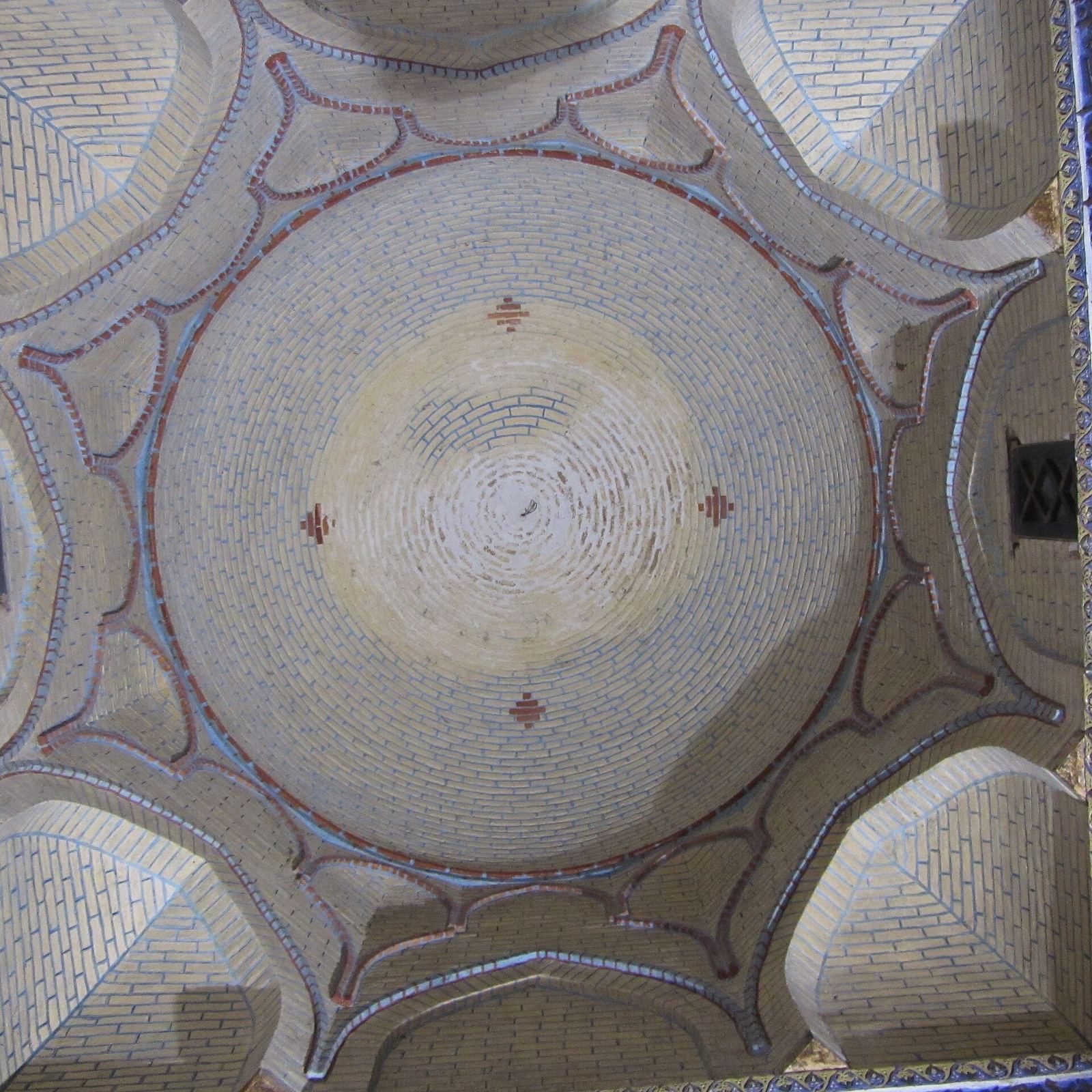
Four squinches, structural supports that carry a dome above a square room by bridging its corners, create the transition from the tower’s square lower plan to its octagonal upper section. The brick exterior has impressed joints associated with Ilkhanid construction. The dome was originally built of brick and later received a tile covering. Tiered, niche-like muqarnas ornament runs around its lower edge and has been repaired.
Inscriptions and interior decoration
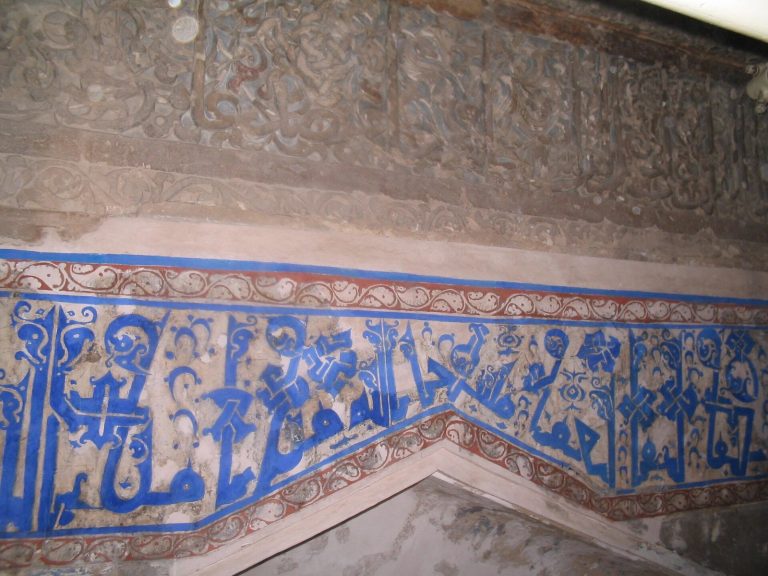
Two inscriptions on the entrance façade read, “There is no god but God, the true, manifest King” and “Muhammad is the truthful, righteous, trustworthy Messenger of God.” Inside, plain turquoise tiles decorate the space. A circular inscription in stucco beneath the dome’s supports contains a Quranic chapter, written in Naskh, a script used for Arabic and Persian. Lapis-blue tiles on the dome and its supports carry a short account of Mustawfi’s life, ancestry, and writings.
A separate inscription on the tomb gives a brief biography, names three works by Mustawfi, and describes him as a great scholar of the eighth century of the Hijri calendar. It is written in Kufic, an early angular style of Arabic calligraphy.
Entrance and service spaces
The lower part of the original entrance door had an interlaced floral carving. One of its carved leaves is now in the National Museum of Iran, and a newly made door was installed at the mausoleum. At the northern corner of the building are two rooms and two underground spaces built for the guards, as well as a pool and a water cistern.