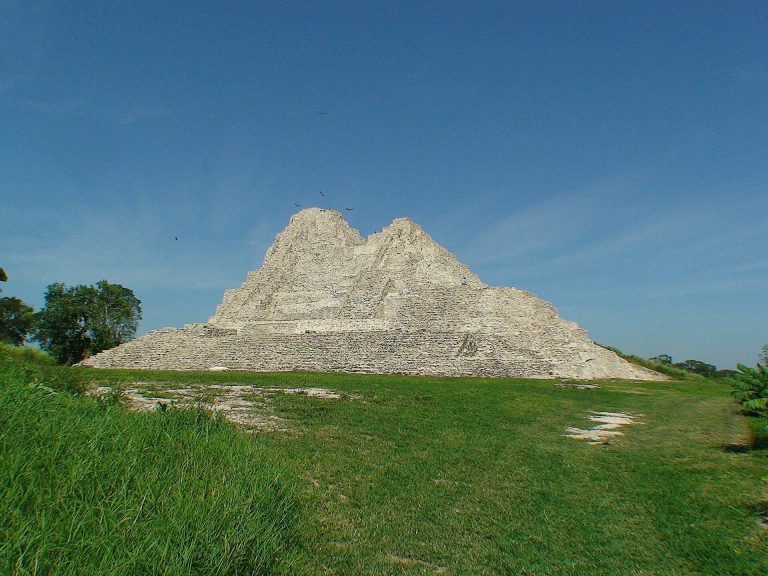
Aguada Fénix: A Preclassic Maya Ceremonial Complex in Mexico
Site at a Glance
- Rating
- 4.4
- Popularity
- Very Low
- Country
- Mexico
- Primary era
- Bronze Age
- Eras represented
- Bronze Age
- Civilizations
- Maya
- Site type
- Religious
- Remains
- Sanctuary
On this page10 sections
History
Aguada Fénix is a large Preclassic Maya archaeological site in Balancán, Tabasco, Mexico, near the San Pedro River and the Guatemalan border. The Maya built its principal ceremonial complex between approximately 1000 and 800 BC, during the formative era before the later florescence of Maya civilization. Its scale and design provide evidence for the development of larger Maya communities, ceremonial traditions, and early forms of organized society.
Discovery and Early Investigation
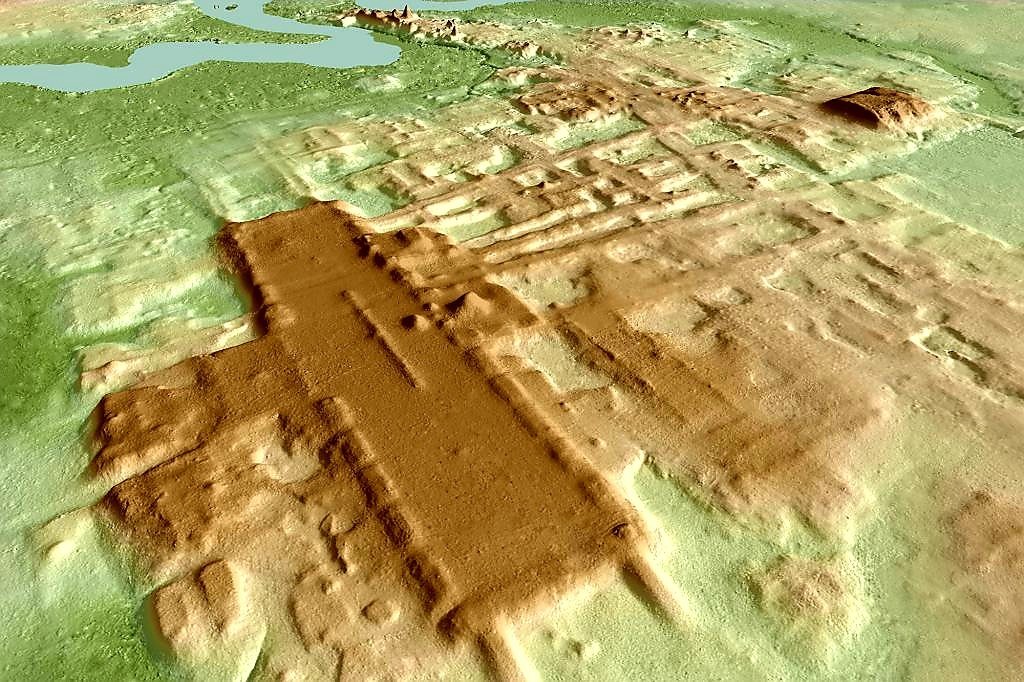
The site was identified during investigations in 2017 and publicly announced in June 2020 by Takeshi Inomata of the University of Arizona. Mexican government surveys using LiDAR, an airborne laser-mapping method that can reveal structures beneath vegetation, first covered about 3,000 square kilometers. A later, higher-resolution survey of 110 square kilometers identified 21 ceremonial sites, with Aguada Fénix the largest of them.
Mapping and excavation formed part of the Middle Usumacinta Archaeological Project, which examines relationships between Maya lowland communities and the Olmec region, the Gulf Coast area associated with the Olmec civilization. The work also traces social change during the Preclassic period. Excavations established construction dates and methods and recovered pottery, jade axes, carved stones, and other objects.
Construction, Use, and Abandonment
Radiocarbon evidence places the principal construction between approximately 1000 and 800 BC. The monument was built through successive stages, with layers of clay and other soils arranged in a checkerboard pattern. Seven principal construction stages have been identified, five of them dating between 1000 and 800 BC. The main building effort ended around 800 BC, and Aguada Fénix was probably abandoned around 750 BC for an unknown reason.
No later construction took place at the complex. Jungle subsequently covered parts of the area, while sections were converted from the twentieth century onward to pasture and cattle-ranching use. Finds and the organization of the ceremonial complex have led archaeologists to interpret Aguada Fénix as a destination for large gatherings from surrounding communities rather than a settlement primarily organized around domestic occupation. The scale of the platform may also reflect extensive communal labor, although that interpretation remains a hypothesis. Estimates place the construction effort at approximately 10 to 13 million person-days, meaning the equivalent of one person’s work for one day.
Regional Connections and Social Change
Aguada Fénix has influenced interpretations of the relationship between Maya and Olmec societies. Its construction indicates that these traditions developed at least partly contemporaneously rather than in wholly separate chronological stages. The complex shares design features with the Olmec centers of San Lorenzo and La Venta, several hundred kilometers to the west, and with the Maya site of Seibal in Guatemala.
These similarities point to intensive interaction among Pre-Columbian societies in southern Mexico and neighboring regions. The site has also been interpreted as evidence for the Maya transition toward more settled life, pottery use, larger communities, and the early development of Maya city-states. The pattern of finds has prompted the hypothesis that social inequality was less pronounced at Aguada Fénix than at major Olmec centers, where high-status sculptures are more common.
Remains
Aguada Fénix is organized around a vast, flattened rectangular platform built on a natural rise of bedrock. The platform extends approximately 1,400 meters from north to south, measures about 400 meters across, and rises 10 to 15 meters above the surrounding ground. Square wings attached to its central axis create a cruciform plan. The estimated volume is approximately 3.2 to 4.3 million cubic meters.
Main Ceremonial Platform
Cruciform Platform
The principal platform is oriented north to south and was constructed gradually through repeated additions of clay and other soils. The checkerboard arrangement of these layers reflects the complex’s successive building events. Its form resembles structures at San Lorenzo and La Venta in the Olmec region and at Seibal in Guatemala, linking the monument’s physical design with wider architectural traditions.
Usumacinta Arrangement
The platform follows the Middle Formative Usumacinta pattern, an architectural arrangement in which a rectangular area is bounded by mounds on four sides. Within the complex are a central E-shaped mound, whose components form a plan resembling the letter E, and an elongated platform on the eastern side. Nine raised causeways, deliberately built routes connecting parts of a complex, extend toward different areas of the site.
Wider Complex and Water Features
The ceremonial complex includes nine massive causeways, several reservoirs for storing water, and smaller structures. Some of these structures repeat the arrangement of the main complex on a reduced scale, with examples measuring less than 400 meters in length. Parts of the site remain wooded, while other sections are used as cattle pasture.
Deposits of shells, animal bones, and ceramics within the underlying bedrock predate construction of the ceremonial complex. Pottery associated with the building period resembles ceramics from Maya sites more closely than those from Olmec centers. Obsidian recovered at Aguada Fénix came from Maya sources in Guatemala rather than from the Mexican sources linked with Olmec centers farther north.
Offerings, Burials, and Objects
Jade axes and other symbolic or ceremonial objects were placed in the center of the plateau. Excavations also recovered pottery vessels, decorative and functional objects, and carved stones in animal forms. The known sculpture from the site is a limestone animal image that may represent a white-lipped peccary or a coatimundi.
Four offerings or burials have been identified within the complex. One burial contained a person whose sex and age could not be established because the skeleton was poorly preserved. The individual was placed with the knees drawn toward the chin, a position that forms part of the site’s funerary evidence.