Mamure Castle: A Medieval Coastal Fortress in Türkiye


Site at a Glance
- Rating
- 4.6
- Popularity
- Medium
- Country
- Turkey
- Primary era
- Medieval
- External website
- Open
- Eras represented
- Classical, Medieval
- Civilizations
- Byzantine, Kingdom of Cilicia, Roman, Seljuk
- Site type
- Military
- Remains
- Castle
On this page11 sections
History
Mamure Castle is a medieval coastal fortress in Türkiye, about 6 km east of Anamur on the Mediterranean coast. Its earliest known fortification was a fourth-century Roman stronghold built to protect the coast from pirates. The site was repeatedly redesigned during the Byzantine period and the Crusades, before rulers of the Armenian Kingdom of Cilicia substantially rebuilt it on the Roman foundations.
Armenian and Seljuk Rule
The fortress formed part of the Armenian Kingdom of Cilicia, a medieval Armenian state centered in southeastern Anatolia and the northeastern Mediterranean, between 1190 and 1380. During the reign of King Leo II, Anemur was held by the prince Halkam. The fortress changed hands in 1221, when the Seljuk sultan Alaeddin Kayqubad I captured it. The Seljuks, a Turkic Muslim dynasty that ruled much of Anatolia through the Sultanate of Rum, expanded the castle and strengthened its defenses.
King Leo III recaptured the fortress in 1284. The Karamanids later took control, although the exact date of their conquest is uncertain. A wall inscription connects the capture with the rule of beylerbey Badr al-Din Mahmud, a high-ranking provincial governor who governed from 1300 to 1308. After Mahmud repaired the fortress, it was renamed Mamure, a name meaning “prosperous” or “flourishing.”
Ottoman and Later Use
The Ottoman Empire annexed Mamure Castle in 1475. By that time, the fortress had acquired nearly its modern form, although further repairs took place in the fifteenth, sixteenth, and eighteenth centuries. Its defensive importance gradually declined, and from the eighteenth century it was used as a caravanserai, a roadside establishment offering lodging and services to traveling caravans.
Mamure Castle is recognized as an archaeological monument and is maintained as a museum. Its present condition is described as stable, preserving evidence of the successive Roman, Byzantine, Armenian, Seljuk, Karamanid, and Ottoman phases of the site.
Remains
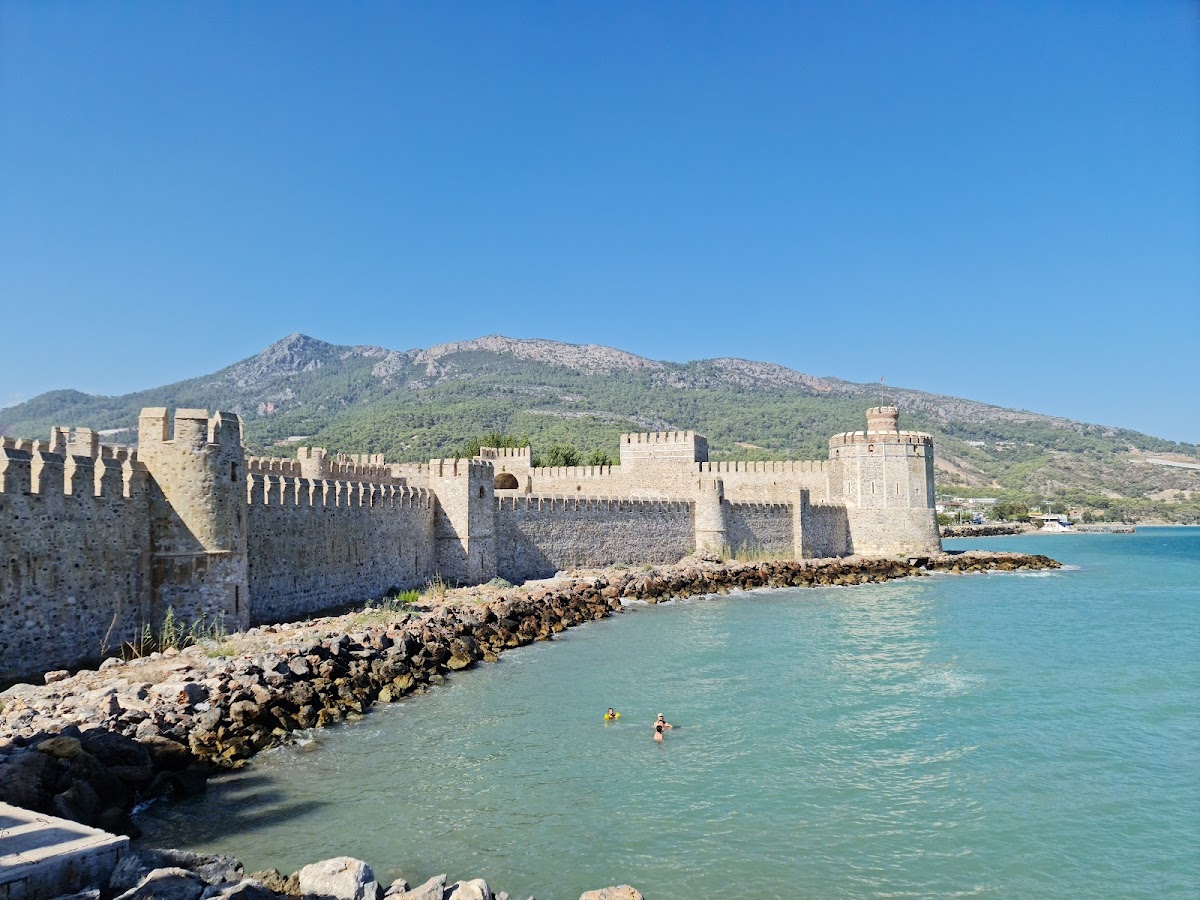
Mamure Castle occupies approximately 23,500 square metres beside the Mediterranean. A moat surrounds the fortress, while its exterior walls extend for about 580 m. The fortification is organized into three connected sections: the western Inner Fortress, or citadel, the northern Outer Fortress, and the eastern Inner Courtyard. The citadel is the strongly fortified inner part of the larger castle and stands on a rocky hill at the western side of the associated urban area. The coastal walls face the sea.
Fortifications and Internal Features
Walls, Towers, and Passages
The walls and towers follow medieval military principles, and the fortress contains 39 towers and bastions. In places, the citadel walls reach 6 m in thickness. Several defensive towers remain standing, while numerous underground passages and a cistern survive within the complex.
Outer Fortress Complex
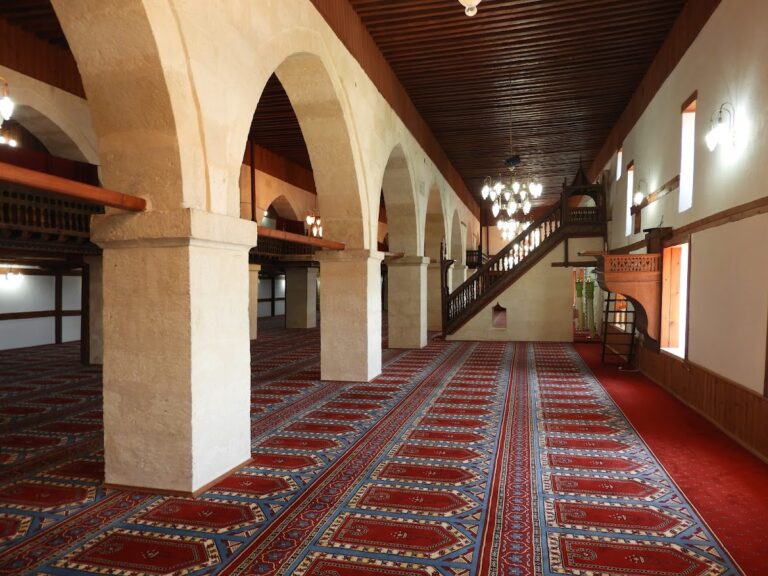
The Outer Fortress contains a mosque and the ruins of a hammam, a traditional heated bathhouse. This small religious and bathing complex is also associated with the western courtyard. A Greek inscription is positioned above one of the entrances.
Lighthouse Tower
A lighthouse once stood in the principal southeastern tower. Remains of the lighthouse are preserved in the southern courtyard, linking one of the fortress’s major towers with its coastal position.
Associated Urban Remains
Bath and Mosaic Floor
About 20 m in front of the main entrance, the remains of a bath survive with a mosaic floor. The feature forms part of the archaeological remains associated with the castle and its surrounding settlement.
Necropolis and Public Buildings
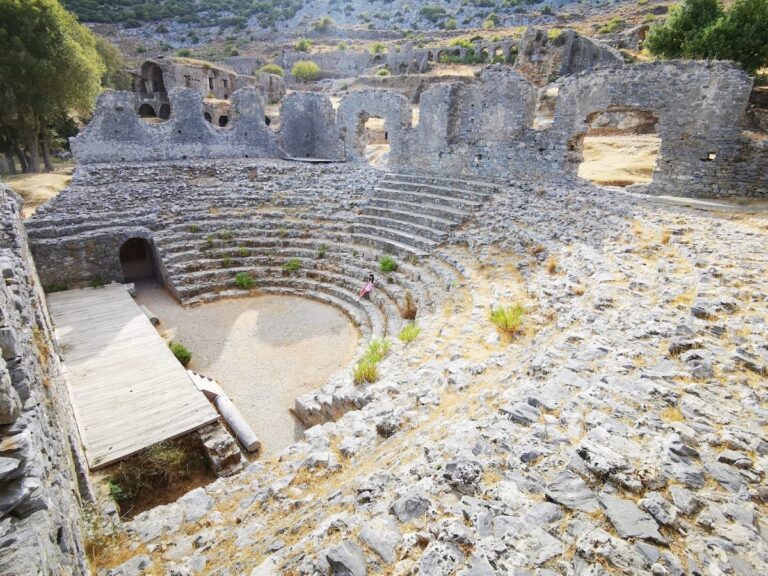
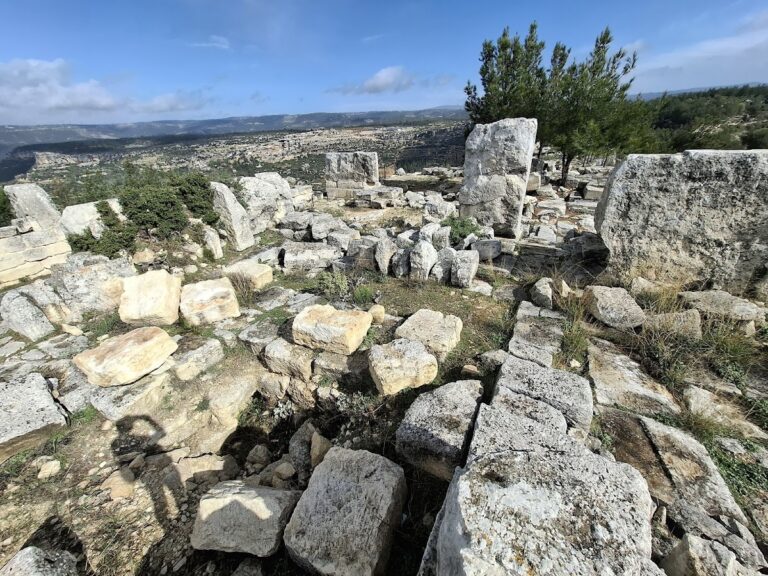
The associated urban area contains remnants of walls, cisterns, an extensive cemetery, and traces of theatrical buildings. The surviving necropolis includes several structures, among them vaulted tombs, providing further evidence of the settlement around the fortress.