Beijing Guozijian: China’s Highest State Academy
Site at a Glance
- Rating
- 4.6
- Popularity
- Medium
- Country
- China
- Primary era
- Early Modern
- Eras represented
- Medieval, Early Modern
- Civilizations
- Ming, Qing
- Site type
- Civic
- Remains
- University
On this page13 sections
History
Beijing Guozijian, in China, was the highest state educational institution, preparing students for senior government service. Its history followed a succession of academies in the Beijing region, and the complex’s surviving buildings largely reflect the Ming and Qing dynasties.
Earlier academies in the Beijing region
In 938, the Liao established a national academy at Youzhou after making the city their southern capital. When the Jin made the city their central capital in 1153, they established a Guozijian there. The Yuan later built the Dadu Guozijian in 1306.
Ming state academy and imperial teaching
In the early Ming, the academy was abandoned and converted into Beiping Prefectural School, then the leading school in the Beijing area. After the Yongle Emperor transferred the capital from Nanjing to Beijing, the school became Beijing Guozijian; the Nanjing Guozijian continued to operate. Major rebuilding and renovation followed during the Yongle and Zhengtong reigns.
The academy taught students known as jiansheng, preparing them for senior government service. Its curriculum centered on memorizing and interpreting the Confucian classics, foundational texts of Confucian thought and education. The academy system also supplied model printing blocks to provincial and prefectural schools, which used them to prepare students for imperial examinations, state-administered tests for selecting officials. Its administration included a director, a dean of studies, and a proctor.
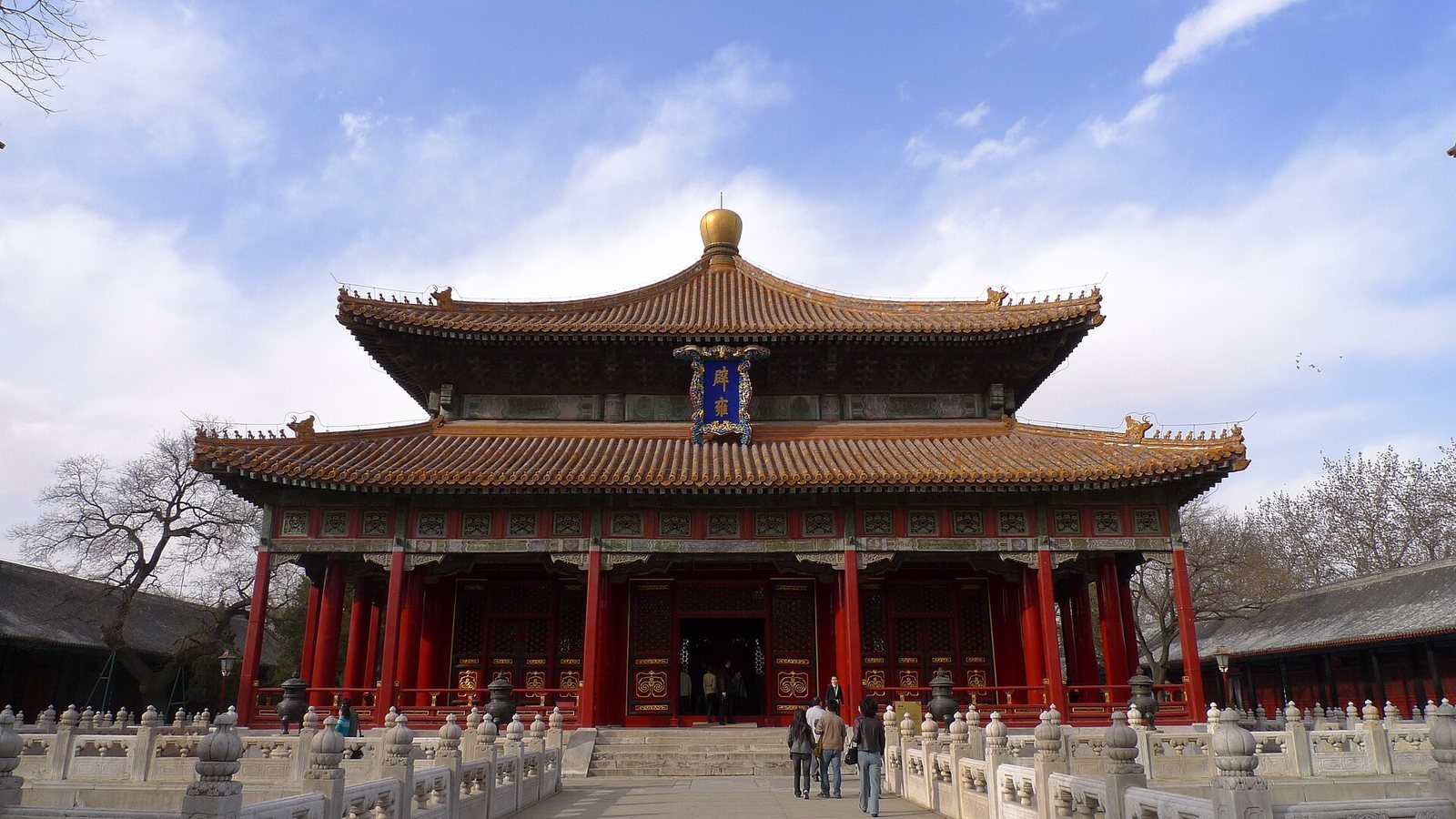
Emperors also used the academy for lectures on the classics. Before Biyong was built, Yiluntang served as a lecture venue. Later, newly enthroned emperors lectured at Biyong to demonstrate the central government’s commitment to higher education.
Closure and later uses
During the Hundred Days’ Reform, a brief late-Qing effort to reform the state and its institutions, most of the academy’s educational and administrative duties passed to the Imperial University, now Peking University. Guozijian closed in 1905, the last institution of its kind in China to do so.
In 1912, the Republic of China’s Ministry of Education established a preparatory office for the National History Museum at the site. The office moved to the Forbidden City in 1918. After 1949, the complex housed the Capital Library and Beijing Children’s Library. Yiluntang became a reading room, while the six halls served as book stacks; the Capital Library left in 2003. The complex later housed the China Education Museum, and the Confucius Temple and Guozijian Museum was established there in 2008.
Guozijian was designated a National Key Cultural Relics Protection Unit in 1961.
Remains
Plan and courtyards
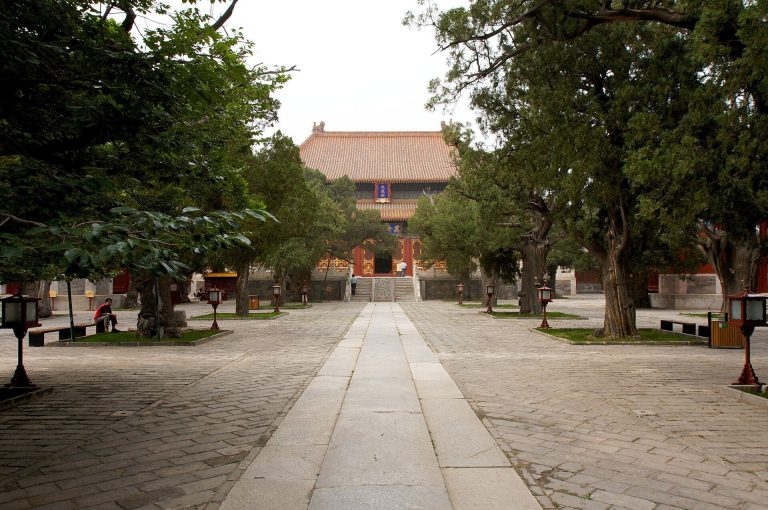
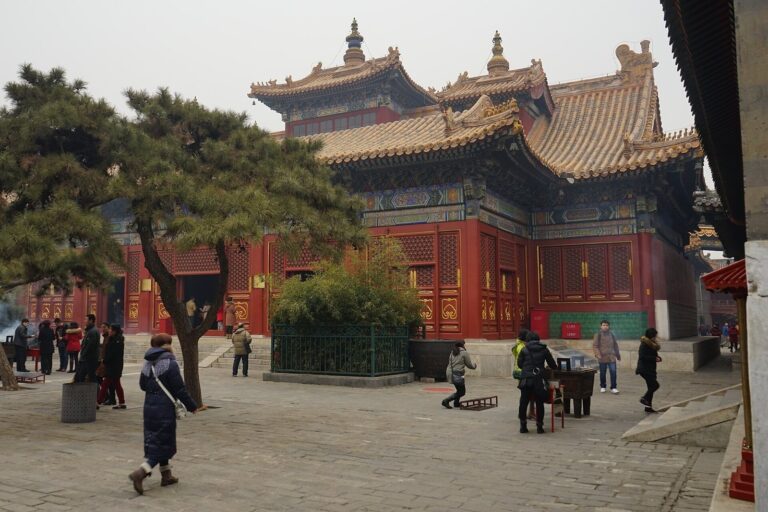
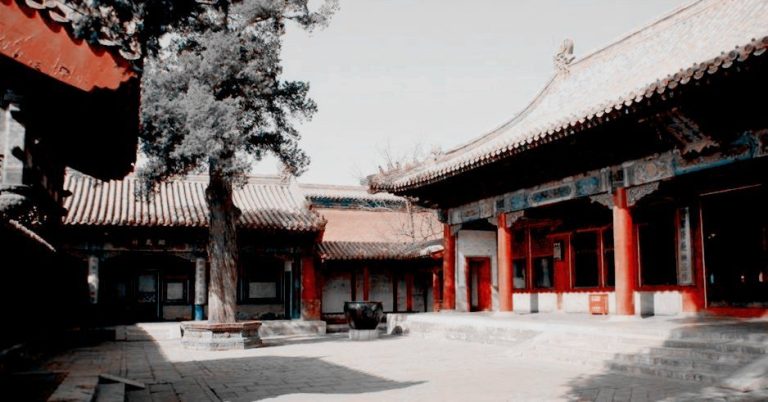
The complex stands on Guozijian Street, formerly called Chengxian Street, and covers more than 10,000 square metres of building area. It faces south and is organized along a central north–south axis. The Confucius Temple lies to its east, separated from the academy by a single wall. Their arrangement follows the traditional pattern of temple on the left and school on the right. The buildings on either side of the central axis are laid out symmetrically. Most of the surviving structures date from the Ming and Qing; a small number of Yuan-era buildings remain, while warfare around the end of the Yuan and beginning of the Ming destroyed much earlier fabric.
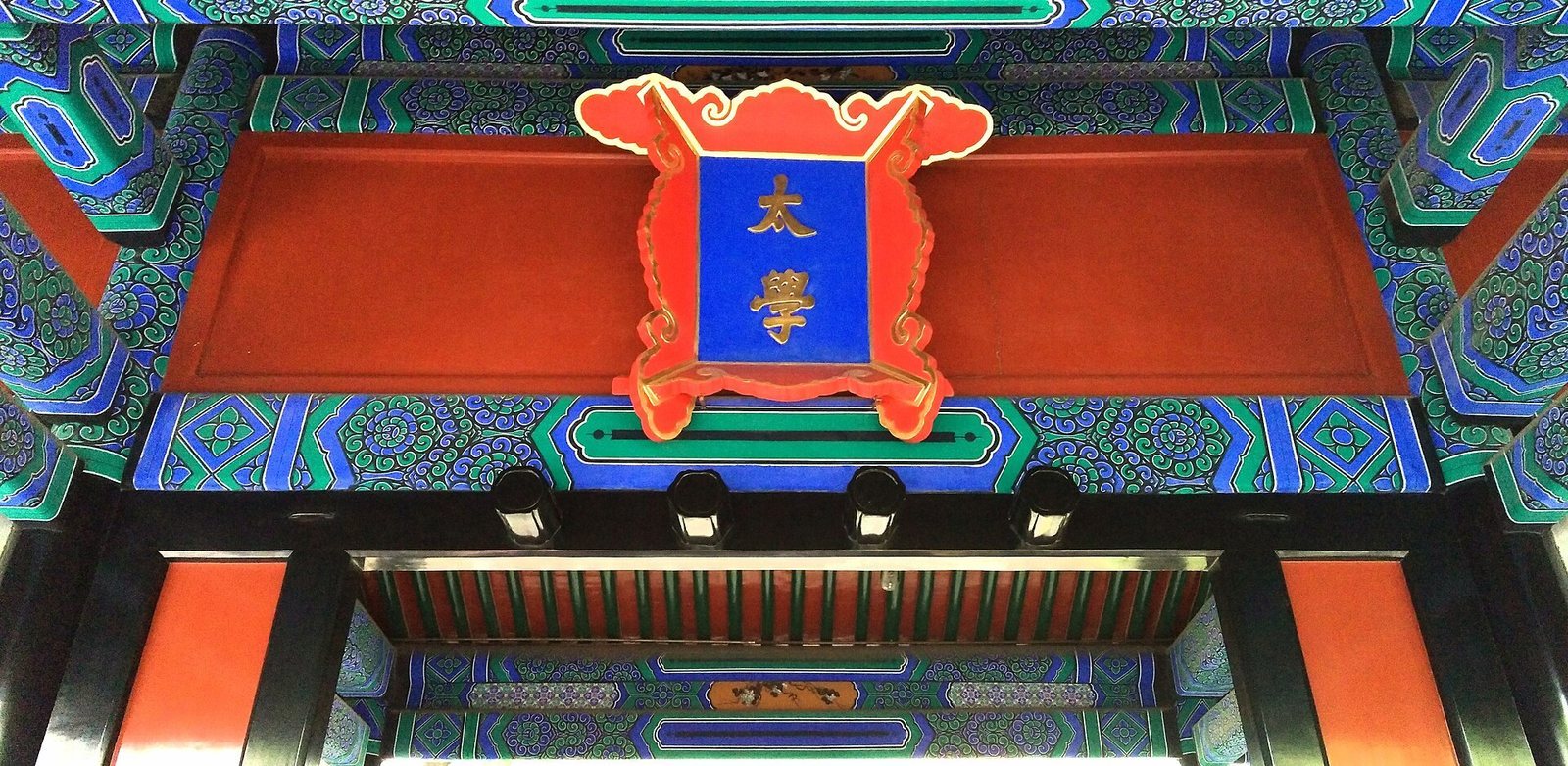
The central sequence runs from Jixian Gate through Taixue Gate and the Glazed Archway to Biyong, Yiluntang, and Jingyiting. Inside Jixian Gate, a courtyard has a well pavilion on each side. A gate in its eastern side connects the academy with the Confucius Temple.
Buildings along the central axis
Jixian Gate and courtyard
Jixian Gate forms the complex’s front entrance. Its courtyard contains the two well pavilions, while the eastern gate provides a connection to the neighboring Confucius Temple.
Glazed Archway
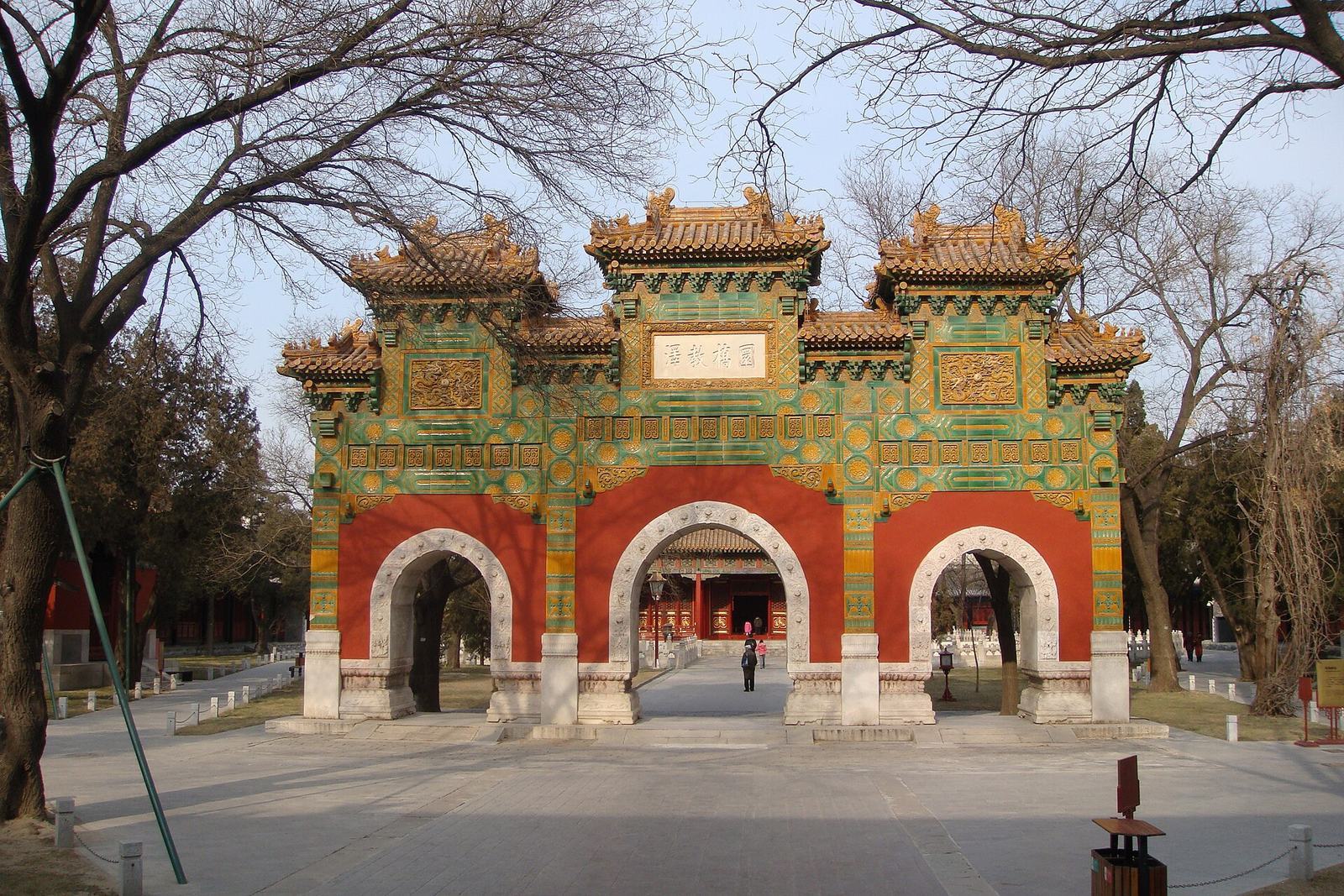
Built in 1783 inside Jixian Gate, the Glazed Archway has three openings divided by four columns and seven roof tiers beneath a glazed roof with sloping sides on all four faces. Its front inscription praises the beneficial influence of education, while the inscription on the rear presents an exemplary standard for learning. It is the only glazed archway in Beijing not associated with a temple.
Biyong
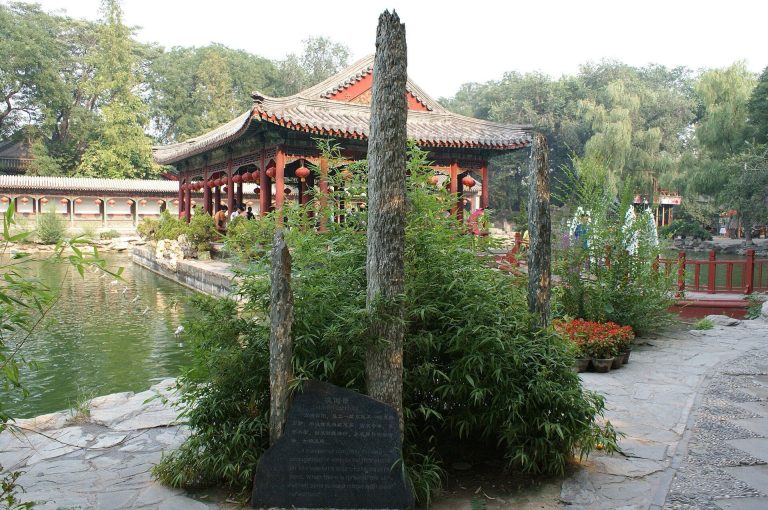
Biyong, built during the Qianlong reign, is the complex’s central building. A square hall with two tiers of eaves and a pyramidal roof stands on a raised square platform in the middle of a circular pond. Each of its four entrances is reached by six steps. Covered corridors surround the hall, and bridges across all four sides of the pond connect it with the courtyard. The square platform and round pond represent the square earth and the round heavens.
The six halls
Six halls, containing 33 rooms altogether, stand in two groups on either side of Biyong. They served as classrooms for gongsheng, selected or recommended students known as tribute students, and for jiansheng, students enrolled at the academy. Their names translate as the Hall of Following One’s Nature, Hall of Sincere Intent, Hall of Honoring Aspirations, Hall of Cultivating the Way, Hall of Righteousness, and Hall of Broadening One’s Studies.
Yiluntang
Yiluntang stands north of Biyong. Known as Chongwen Pavilion during the Yuan, it was rebuilt and renamed in the Yongle reign. After Biyong was constructed, the hall served as the academy’s library.
Jingyiting
Jingyiting, also called Jingyi Pavilion, lies behind Yiluntang in the third courtyard. Built during the Ming, it includes side rooms for the academy’s director and dean of studies, along with seven imperial edict steles. The director used the pavilion as an office.