Gunung Wukir: An Early Eighth-Century Shivaite Temple in Central Java
Site at a Glance
- Rating
- 4.6
- Popularity
- Low
- Country
- Indonesia
- Primary era
- Medieval
- Eras represented
- Medieval
- Civilizations
- Unclassified
- Site type
- Religious
- Remains
- Temple
On this page10 sections
History
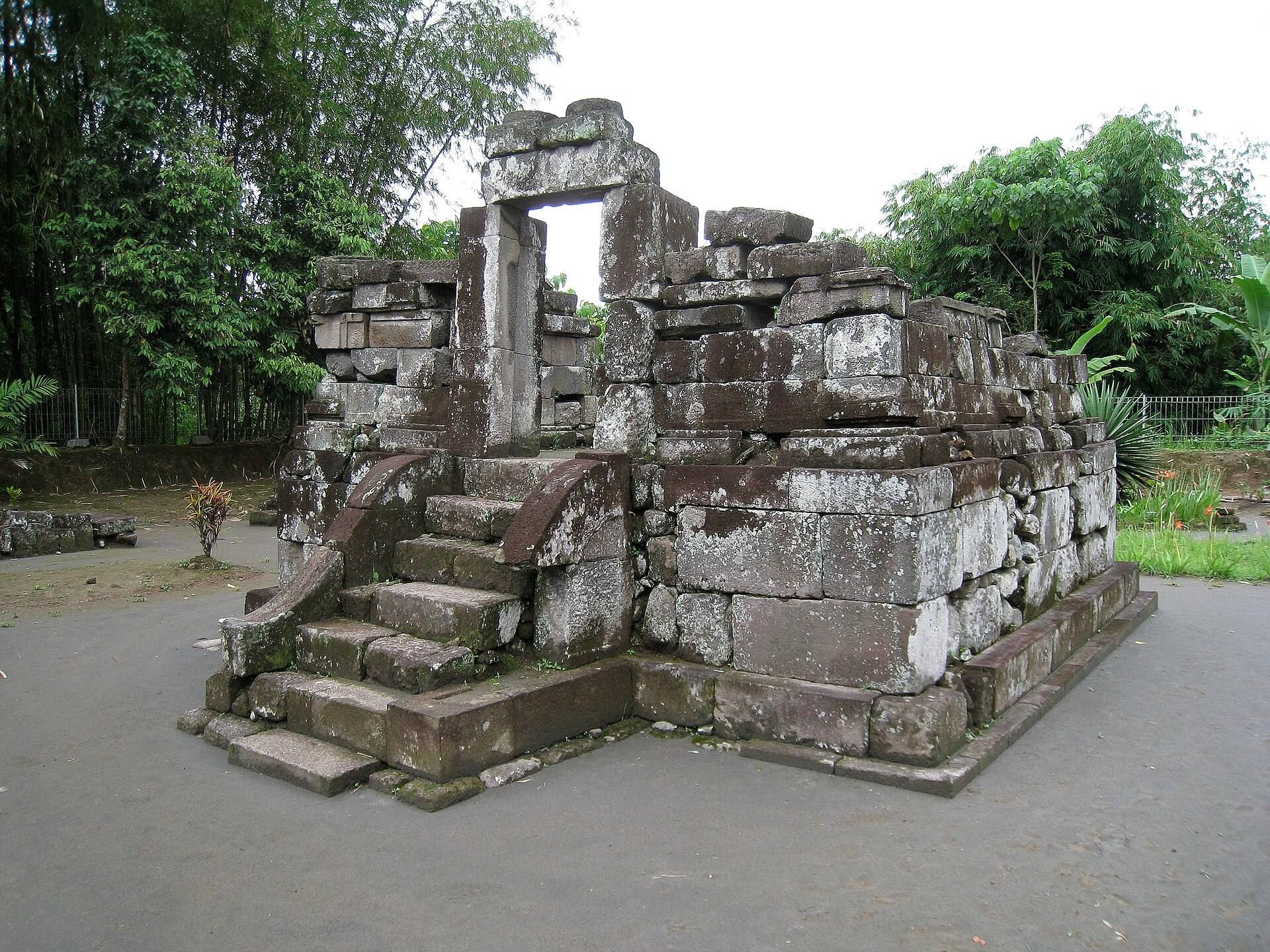
Gunung Wukir is a Shivaite Hindu temple in Canggal, Central Java, Indonesia, founded in 732 during the early eighth century under King Sanjaya of the Ancient Mataram kingdom. Standing on Wukir Hill on the western slopes of Mount Merapi, the temple is regarded as the first structure attributed to Ancient Mataram and is considered the oldest surviving temple in southern Central Java.
Foundation under Ancient Mataram
Ancient Mataram was an early medieval kingdom based in Central Java, distinct from the later Islamic Mataram Sultanate. It ruled the region from 732 until around the middle of the tenth century. Gunung Wukir is closely connected with the kingdom’s formation and provides an early expression of its Shivaite religious tradition.
The temple is also known as Canggal Temple or Shivalinga. The name Shivalinga may reflect its original identity, while Kunjarakunja is another possible ancient name associated with the site.
The Canggal inscription
The Canggal inscription was found among the temple ruins in 1879. It states that, on Sanjaya’s order, a lingam was erected in the country of Kunjarakunja on the island of Java. The inscription describes that land as rich in grain and gold mines. A lingam is an aniconic Hindu symbol of Shiva, commonly associated with generative power. The inscription provides the principal historical link between the temple, Sanjaya, and the early Ancient Mataram kingdom.
Remains
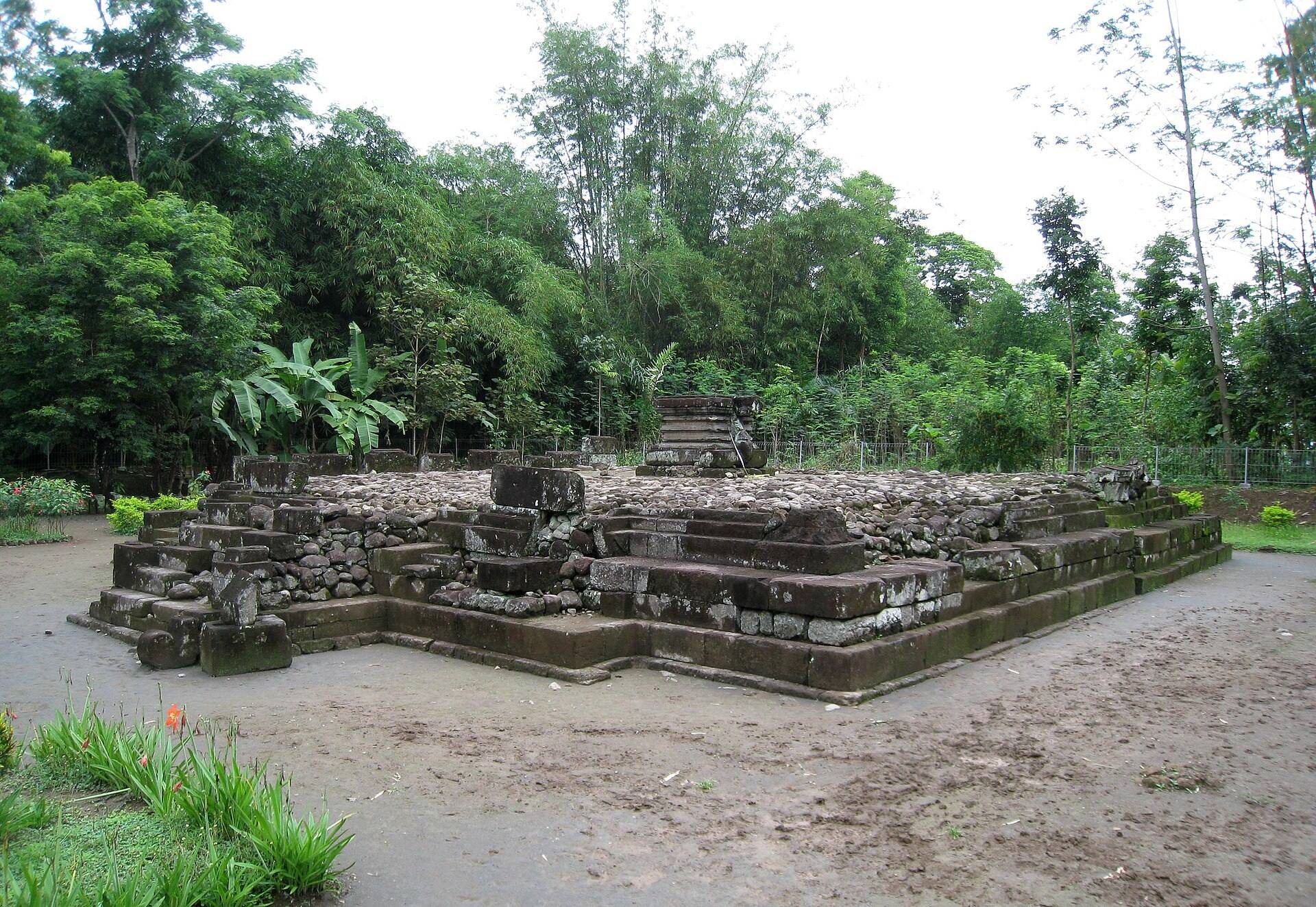
The compound covers approximately 50 by 50 metres and is built from andesite stone. At least one principal temple and three smaller subsidiary shrines occupy the complex, with the smaller structures arranged in a row before the main temple. Surviving architectural and sculptural remains identify the site as a Shivaite temple complex.
Temple structures
Main temple
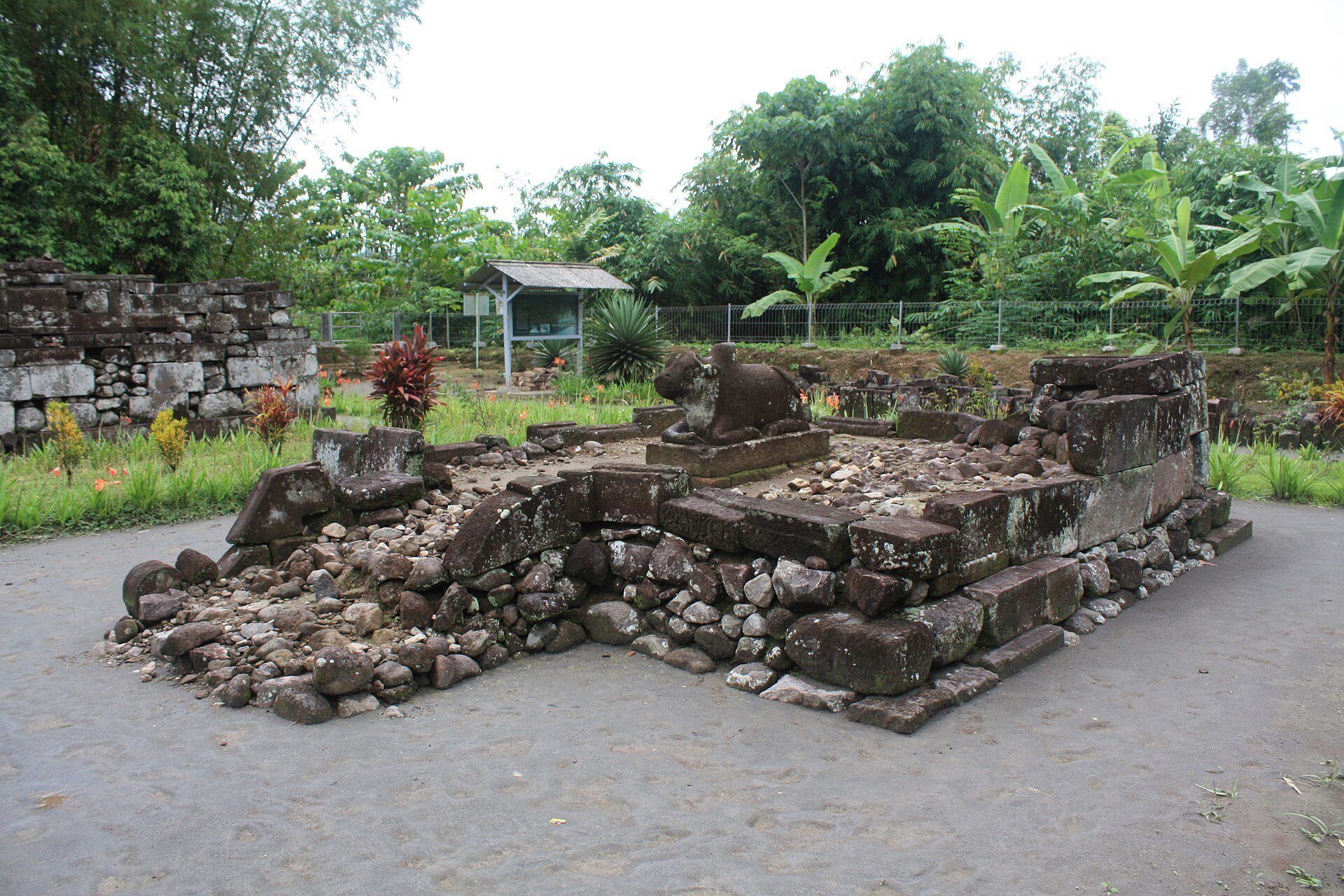
The main temple survives as a ruin. Its base remains in place, while the body and roof have disappeared. The surviving foundation forms the central architectural element of the compound and preserves the position of the principal shrine.
Subsidiary temples
Three smaller perwara temples stand in a row in front of the main shrine. A perwara temple is a subsidiary sanctuary arranged in relation to a principal temple. Their position identifies them as complementary or guardian structures within the compound.
Sculptural and inscribed remains
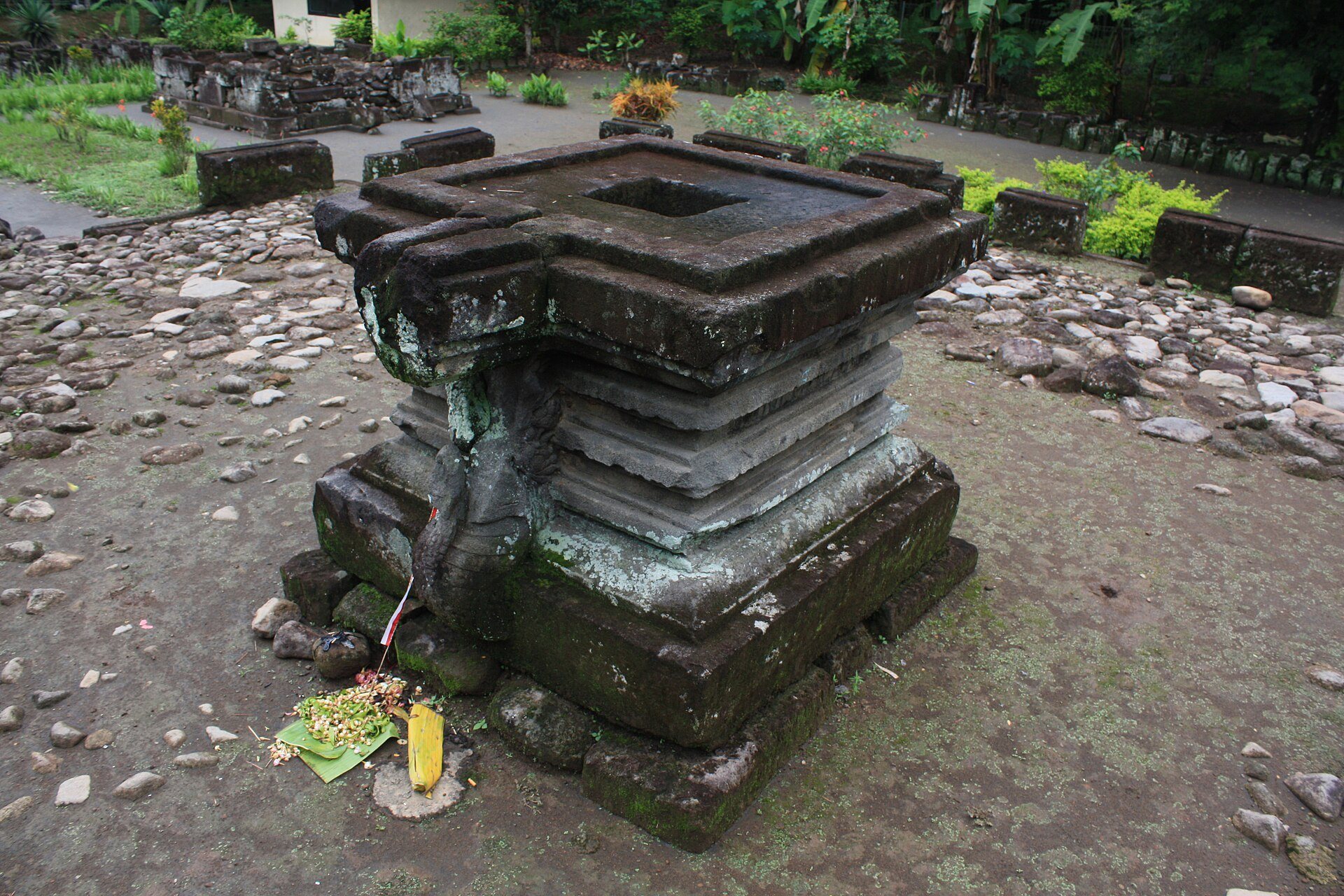
Yoni pedestal
A yoni pedestal survives among the archaeological remains. The yoni is the base traditionally installed with a lingam, Shiva’s symbolic form. The lingam that once occupied this pedestal is no longer present.
Nandi statue
The complex also contains a statue of Nandi, the sacred bull regarded in Hindu tradition as Shiva’s vehicle. Together with the yoni pedestal and the Canggal inscription, the statue helps identify the religious character of the temple.