Rangkut Banasram Pilgrimage Monastery: A Buddhist Heritage Site in Bangladesh
Site at a Glance
- Rating
- 4.9
- Popularity
- Very Low
- Country
- Bangladesh
- Primary era
- Classical
- External website
- Open
- Eras represented
- Classical
- Civilizations
- Mauryan
- Site type
- Religious
- Remains
- Monastery
On this page8 sections
History
Rangkut Banasram Pilgrimage Monastery is a Buddhist monastery in Rajarkul Union, Ramu Upazila, Cox’s Bazar District, Bangladesh. Also known as Ramkot Banashram and Rangkut Monastery, its origin is traditionally attributed to Ashoka, the third emperor of the Mauryan dynasty, and placed in the third century BCE. It is regarded as one of Bangladesh’s oldest Buddhist monasteries and is traditionally associated with one of the 84,000 Buddhist stupas linked to Ashoka.
Traditions of the Buddha and Ashoka
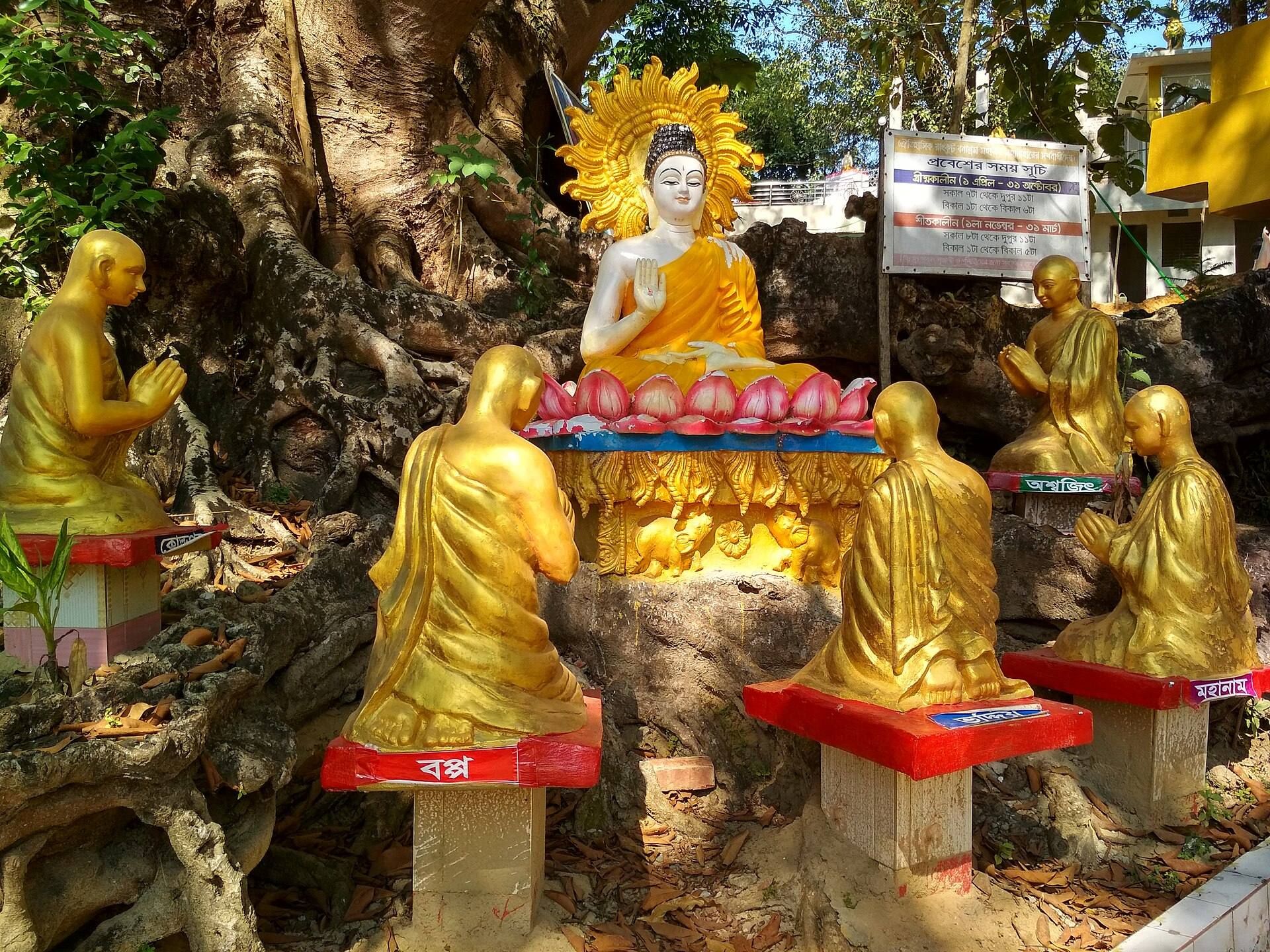
Local Buddhist tradition places Gautama Buddha at the site in the sixth century BCE, during the reign of the Rakhine king Chenda Thuriya, dated to 580–528 BCE. Buddha is said to have rested here with Ananda, his attendant and principal disciple, and other followers. According to the tradition, he foretold that a relic from his chest would later be enshrined at the place.
The name Rangkut is traditionally connected with Rakhine-language terms referring to a chest bone and a hilltop. This association reflects the belief that a relic of the Buddha was preserved at the monastery. Ramu was historically linked with Arakan, the region associated with the Rakhine people, and historical traditions describe it as a former regional capital and as a land of yellow flowers.
Buddhist learning and later decline
The monastery’s history is connected with the growth of Buddhist education and culture in the surrounding region. The site is also traditionally associated with Xuanzang, a seventh-century Chinese Buddhist monk and pilgrim whose travel record is important for the study of Buddhist sites in South and Central Asia.
The monastery was damaged during the Mughal attack of 1666. Its existence later declined or became forgotten until the twentieth century. In 1930, the Sri Lankan-based monk Jagat Chandra Mahathero discovered a stone inscription referring to the monastery. Investigation and excavation followed, helping to rediscover the site and support its restoration.
Restoration and continuing religious use
After restoration, Rangkut Banasram became a setting for fairs, religious ceremonies, and other Buddhist festivals. It continues to function as an active Buddhist pilgrimage and religious site. During renovation work around 1966, the religious reformer Prajnajyoti Mahareth remained at the monastery for approximately 20 years. He left in 1988 after becoming the victim of a robbery.
At the foot of the hermitage stands the Jagat Jyoti Shishu Sadan Buddhist orphanage. Its construction involved the destruction of memorial stones associated with descendants of Poeza, also identified as Khijari Dalal, a benefactor of the Rakhine community. The loss caused local regret.
Remains
Hilltop monastery
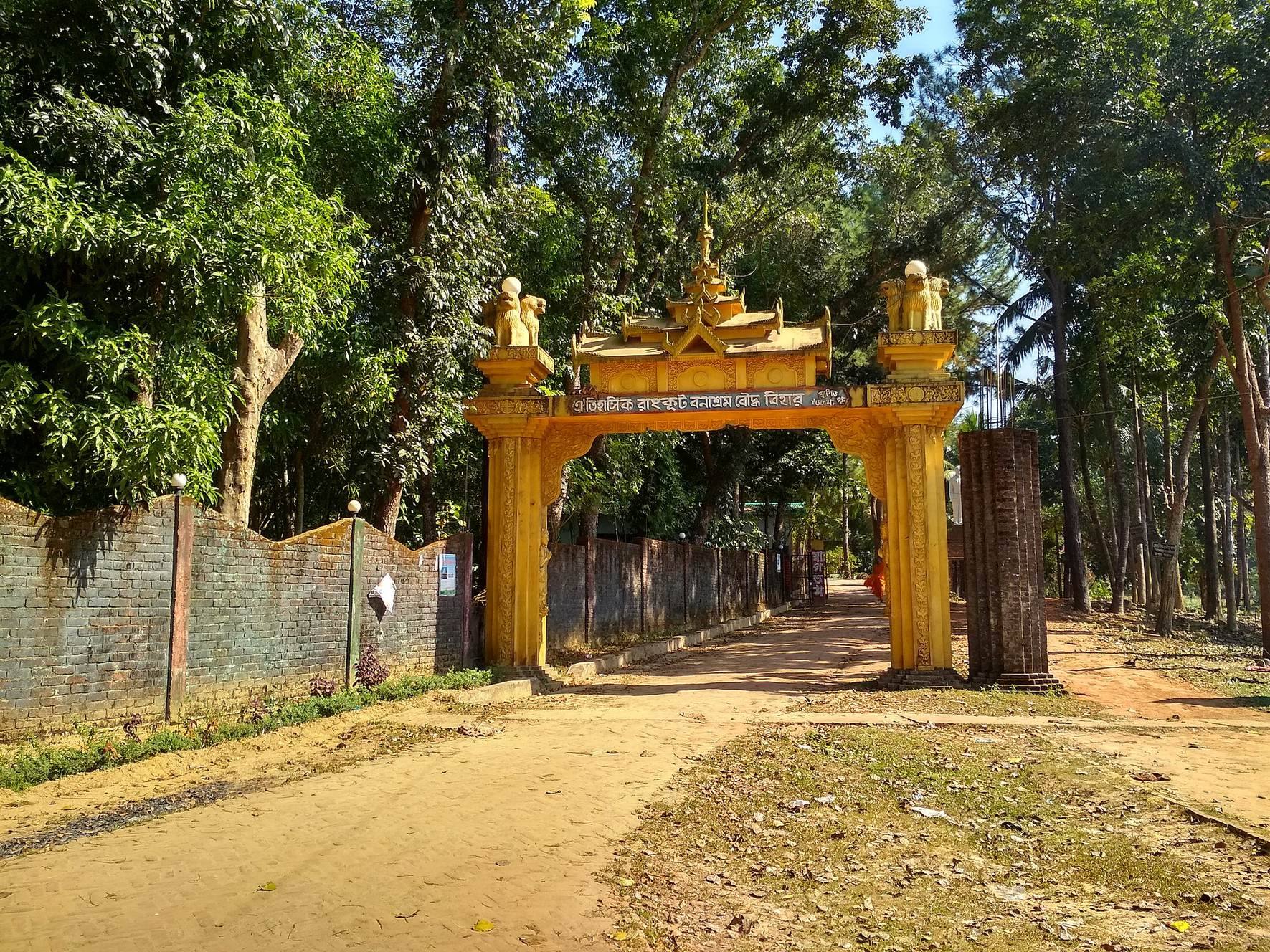
Rangkut Banasram stands on a small hillock in the forested, hilly area of Rajarkul, surrounded by 17 small and large hills. The present monastery occupies a rectangular area measuring approximately 34 by 19 feet, or about 10 by 5.8 metres, and rises approximately 40 feet, or 12 metres, at its top. Its brick construction uses units measuring about 9 by 7 by 2 inches, equivalent to approximately 230 by 180 by 51 millimetres. The entrance is a documented built feature, and the monastery remains in good condition.
Excavation unearthed a large Buddha image shown in the abhaya mudra, a hand gesture symbolizing fearlessness, protection, and reassurance. The image is now enshrined inside the monastery for devotees. Ancient Buddhist structures and artefacts also form part of the surrounding forest hermitage, reflecting the site’s former use as a monastic complex.
Eastern ruins and sculptures
Ruins of a large building lie on the hill east of the monastery. Broken sandstone sculptures are scattered around the ruins, including fragments identified as the Buddha’s footprints and hands. These remains form part of the archaeological landscape associated with the former Buddhist complex.
Religious and commemorative features
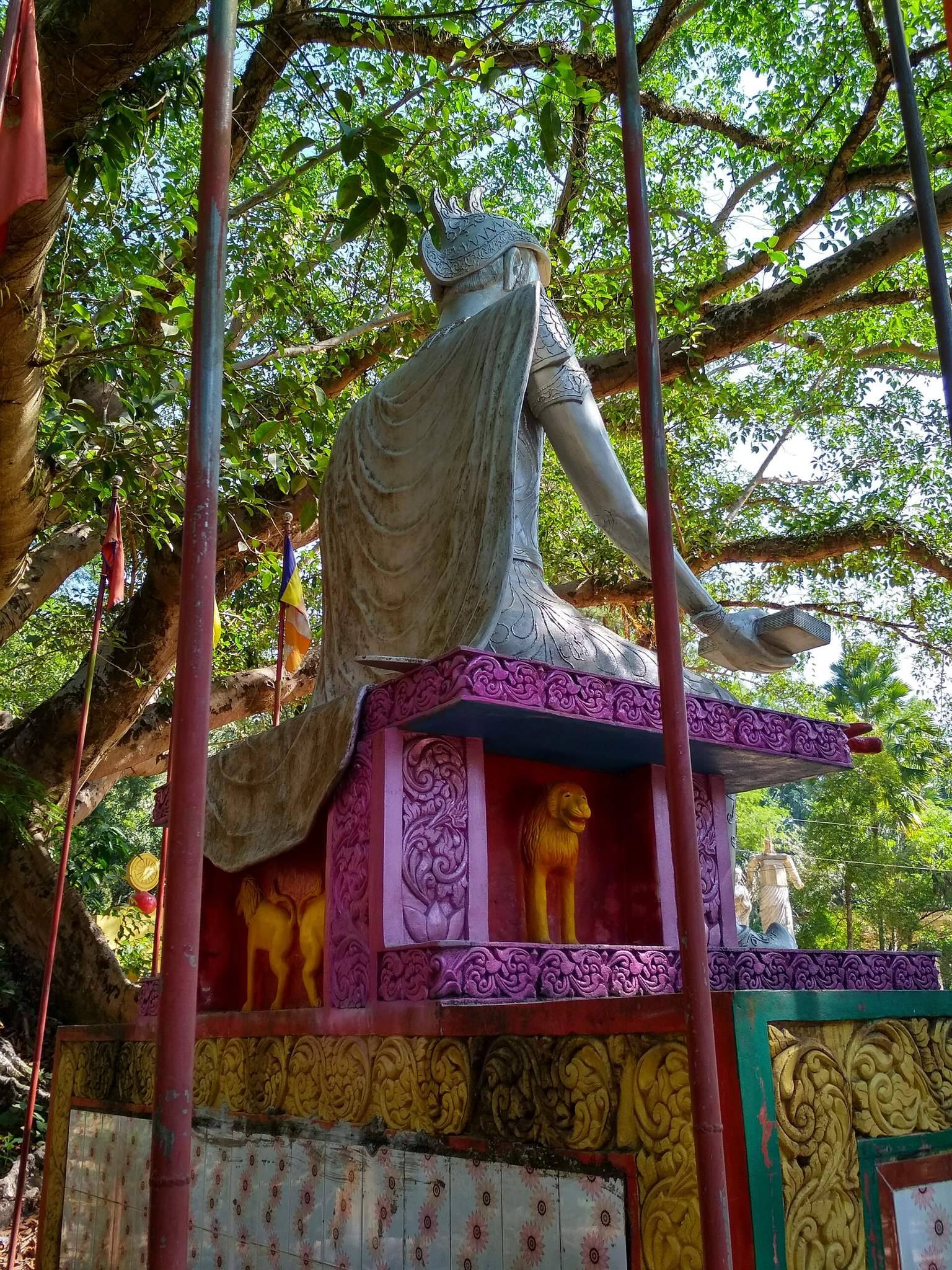
A large banyan tree near the entrance is traditionally associated with Xuanzang and is estimated to be approximately 1,400 years old. The site also includes statues of Ashoka, B. R. Ambedkar, Xuanzang, and a lion. B. R. Ambedkar was an Indian jurist and social reformer who became the principal architect of India’s Constitution.
Symbolic representations of Lumbini and Sarnath are also present. Lumbini is traditionally identified as the Buddha’s birthplace, while Sarnath is associated with his first sermon. Together with the monastery and the archaeological remains, these features contribute to the religious interpretation of the forest hermitage.