Gulbarga Fort: Headquarters of the Bahmani Sultanate
Site at a Glance
- Country
- India
- Primary era
- Medieval
- Eras represented
- Medieval
- Civilizations
- Unclassified
- Site type
- Military
- Remains
- Fort
On this page12 sections
History
Gulbarga Fort in northeastern Karnataka, India, was first built by the Hindu ruler Raja Gulchand and substantially enlarged in 1347 by Ala-ud-Din Hasan Bahman Shah. It became the headquarters of the Bahmani Sultanate, an independent medieval Muslim kingdom in the Deccan, the plateau region of peninsular India, and served as its capital’s stronghold until 1424. Its military architecture drew on West Asian and European styles.
Regional Powers before 1347
By the sixth century, the Rashtrakutas ruled the surrounding region, though not Gulbarga itself. The Chalukyas later recovered power there and ruled for more than two centuries, followed by the Kalachuris of Kalyani until the twelfth century. By that century’s end, the Yadavas of Devagiri and Hoysalas of Halebid held territory in the region, while the Kakatiyas of Warangal controlled the Gulbarga and Raichur districts.
Kakatiya power was subdued in 1321, bringing Gulbarga and the northern Deccan under the Delhi Sultanate, a succession of Muslim dynasties ruling from Delhi. In the early fourteenth century, the area formed part of the dominions of Muhammad bin Tughluq. A revolt by Muslim officers appointed from Delhi led to the establishment of the Bahmani Sultanate in 1347.
Bahmani Capital
As the new sultanate’s founder and first ruler, Ala-ud-Din Hasan Bahman Shah chose Gulbarga as his capital. The city was then known as Ahsenabad, and the fort served as the state’s headquarters. Mosques, palaces and tombs were built within its enlarged defenses. The Bahmani rulers claimed descent from the ancient Sasanian dynasty of Iran.
Sayyid Muhammad Gesu Daraz, a prominent Sufi scholar and religious teacher, came to Gulbarga in 1413. An annual urs, a commemorative observance at a Sufi saint’s tomb, is held there in November and draws devotees from different religious communities. Gulbarga remained the capital until 1424, when the court moved to Bidar for its more favorable climate.
Later Sultanates and Mughal Rule
The Bahmani kingdom weakened and divided into five independent states around the late fifteenth and early sixteenth centuries. The Vijayanagara Empire, a major South Indian kingdom, razed the fort. Yusuf Adil Shah, founder of the Adil Shahi dynasty that ruled the Bijapur Sultanate, rebuilt it after defeating a Vijayanagara ruler, using plunder taken from the empire.
Mughal emperor Aurangzeb captured the fort in 1687 and appointed Asaf Jah I, also known as Nizam-ul-Mulk, governor of the Deccan. As Mughal power declined, Asaf Jah declared independence in 1724 and established Hyderabad State, which included Gulbarga.
Hyderabad and India
The fort and district remained part of Hyderabad State under its Nizams, the state’s rulers, until Hyderabad was annexed to the Dominion of India in 1948. In the 1956 reorganization of states by language, most of Gulbarga district became part of Mysore State, later renamed Karnataka, while two taluks went to Andhra Pradesh.
Remains
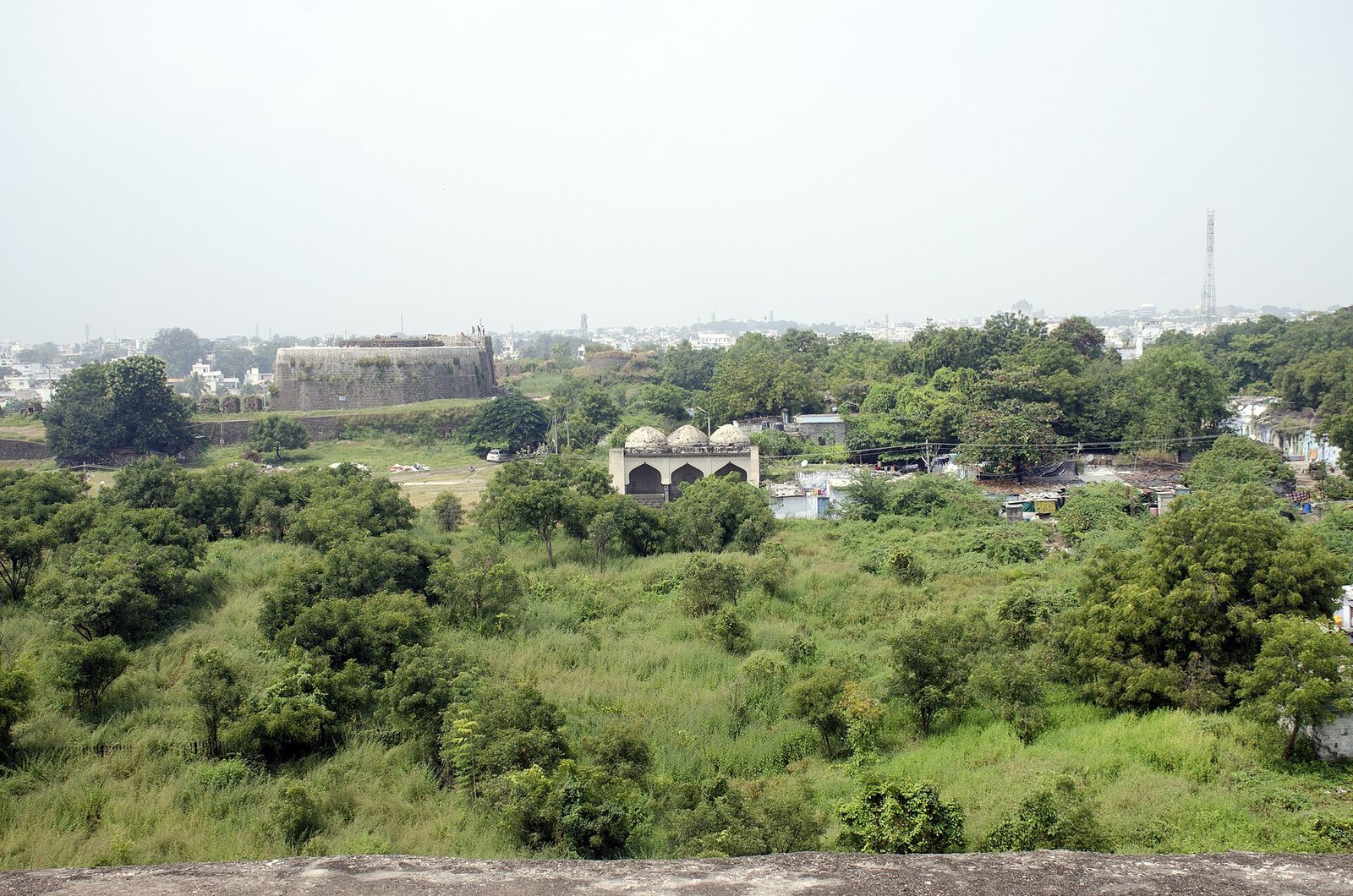
The fort occupies a plateau near the Bhima River in a drought-prone region. Its construction uses basalt and granite bound with lime mortar. The layout combines defensive walls, a moat and a central citadel, while the military design reflects West Asian and European styles.
Fortifications and Artillery
Walls and Citadel
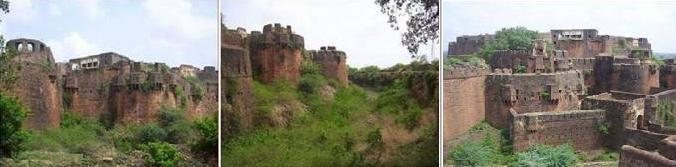
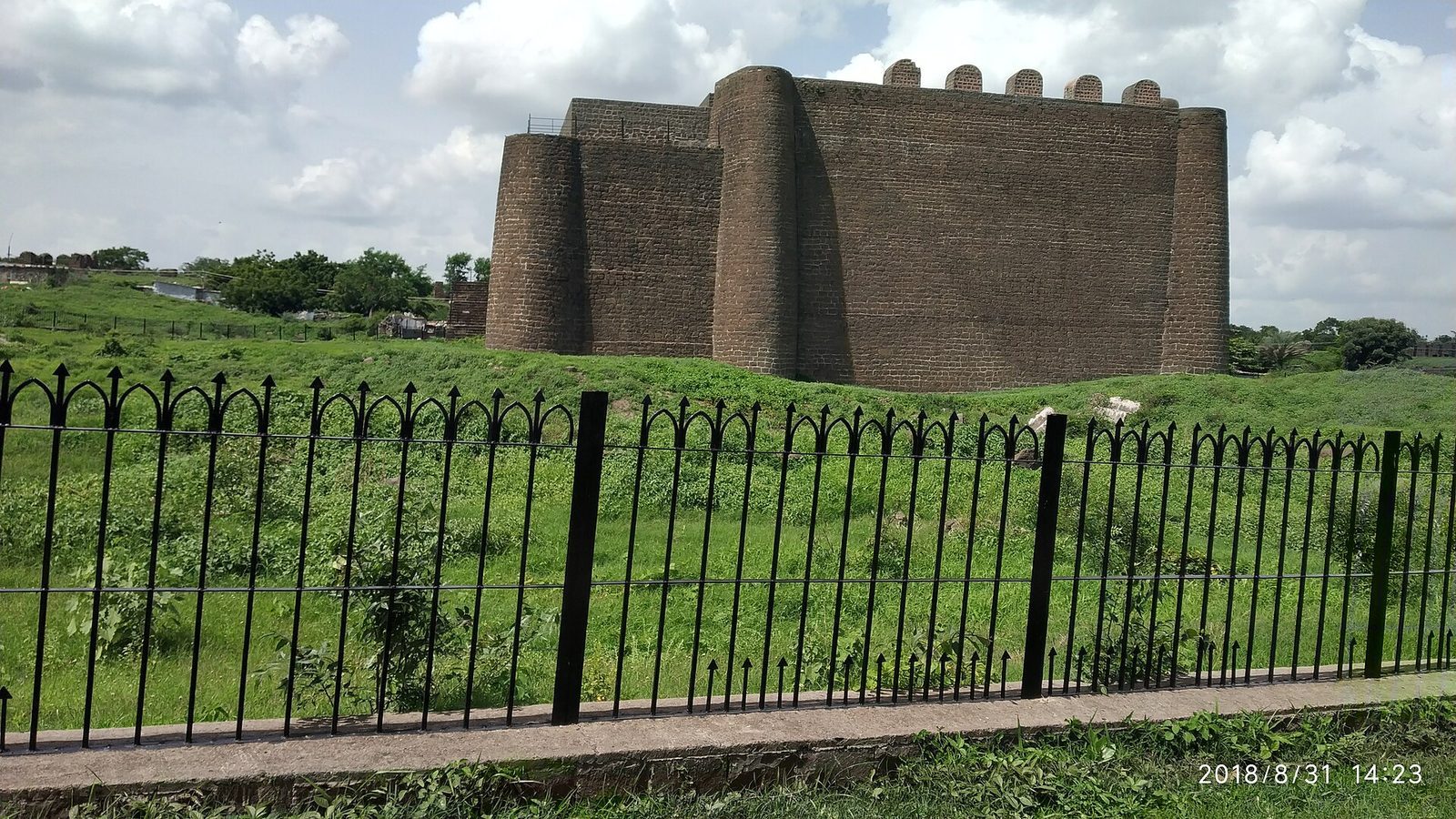
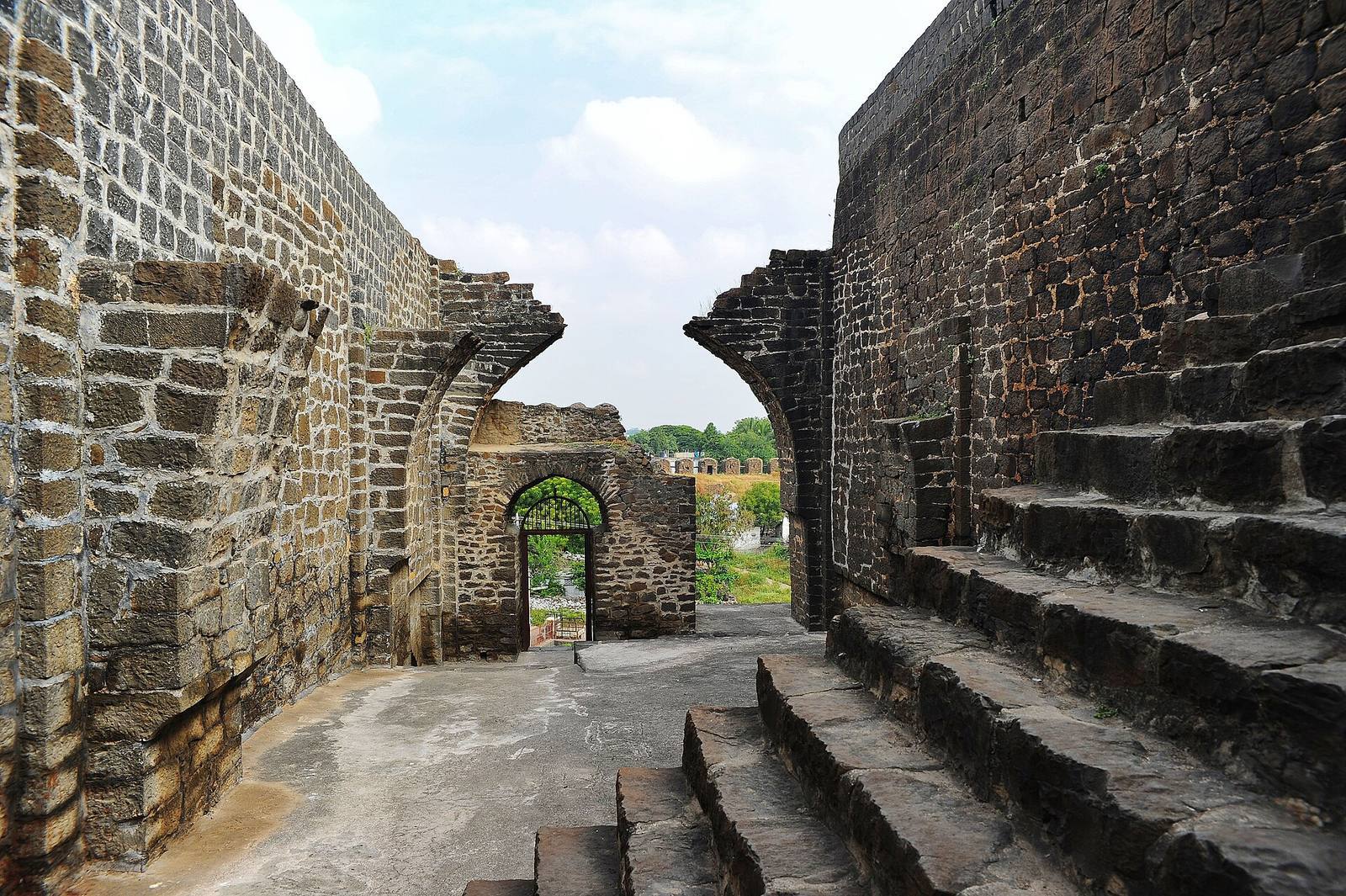
The fort’s perimeter measures about 3 kilometres. Two defensive walls and a moat approximately 30 feet wide surround the complex, with a citadel added at its centre. The fort is now in ruins.
Towers and Guns
Fifteen towers carry 26 guns, each about 8 metres long. The guns remain well preserved. A separate cannon called Bara Gazi Tof is attributed to Turkish manufacture and the fourteenth-century Bahmani period. Made from an alloy of five metals, it measures about 29 feet long, 7.6 feet in circumference and 2 feet in diameter, with a thickness of 7 inches. A claim that it is the world’s longest cannon is also made for a 23-foot cannon at Kaulas Fort. Bara Gazi Tof is filled with mud and small stones.
Religious and Funerary Buildings
Jami Masjid
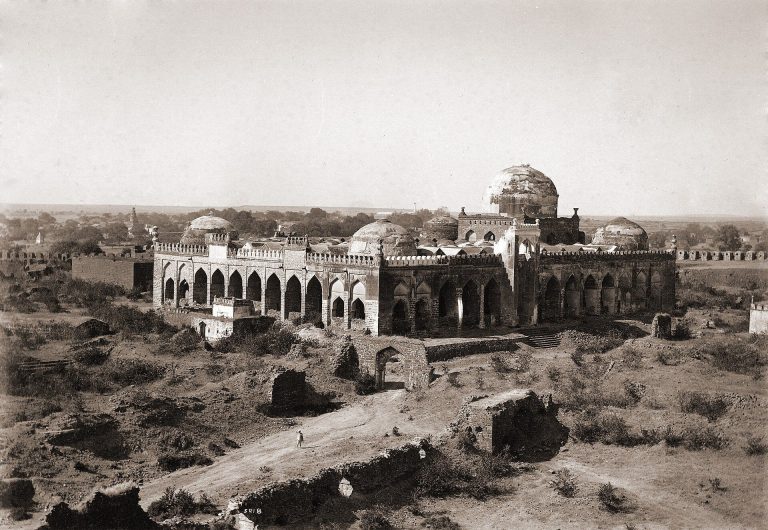
Built in 1367 to commemorate Gulbarga’s years as the Bahmani capital, from 1347 to 1424, the Jami Masjid is one of the earliest mosques in South India. This fully enclosed Persian-style building measures about 216 by 176 feet and has a symmetrical plan modelled on the Great Mosque of Córdoba in Spain. Low rows of arches form passageways around the prayer hall on three sides, arranged as a rectangle with ten interior sections on each of the north and south sides and seven on the east.
The square corner sections carry domes, while low domes over the interior sections rest on curved supports that bridge square spaces. A large dome covers the nine-section space before the prayer niche, which marks the direction of prayer. The mosque has five large domes, one principal dome and four at the corners, as well as 75 smaller domes and 250 arches. The sloping arches have three-lobed interiors and elongated forms. The principal dome rises from a supporting structure above a raised, square wall section that admits light.
Wooden screens once filled the openings in the outer rows of arches, but were removed over time; an arched entrance portal was added on the north face in their place. Deccani Persian inscriptions appear on the walls to either side of the main entrance. After a period in ruins, the mosque is now well maintained.
Tomb of Bande Nawaz
The large tomb complex of Sayyid Muhammad Gesu Daraz, also known as Khwaja Bande Nawaz, follows the Indo-Islamic tradition, which developed in India under Islamic influence. Its shrine arches use Bahmani forms, while paintings on the tomb walls and ceiling show Turkish and Iranian influences. The Mughals also built a mosque near the tomb.