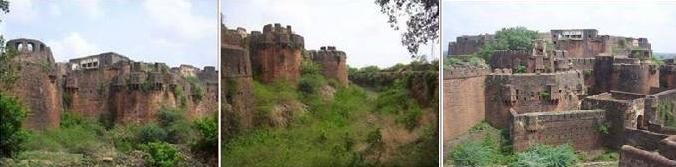
Jama Masjid Gulbarga: A Bahmani Friday Mosque
Site at a Glance
- Rating
- 4.6
- Popularity
- Low
- Country
- India
- Primary era
- Medieval
- Eras represented
- Medieval
- Civilizations
- Deccan Sultanates
- Site type
- Religious
- Remains
- Mosque
On this page6 sections
History
Bahmani Foundation
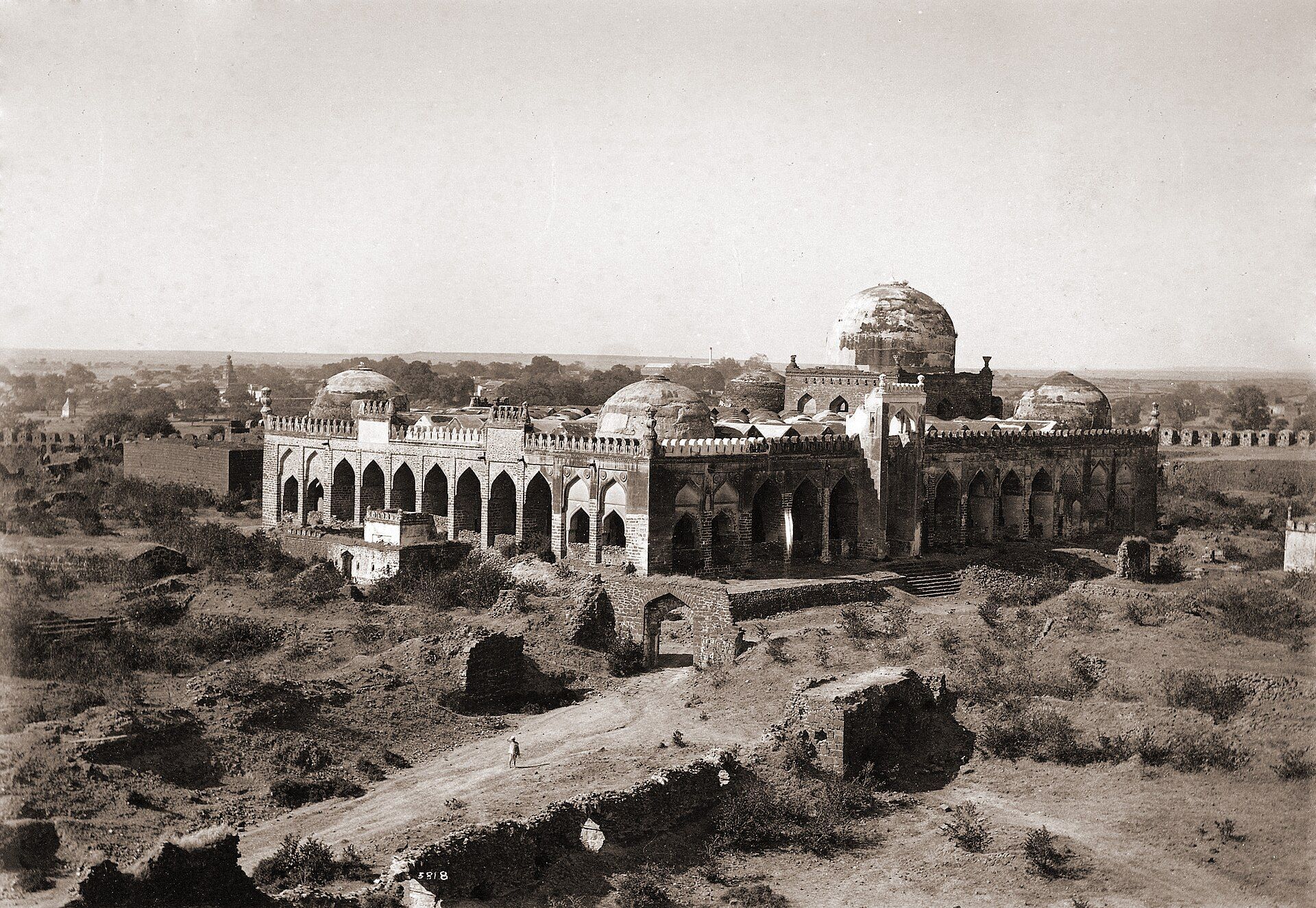
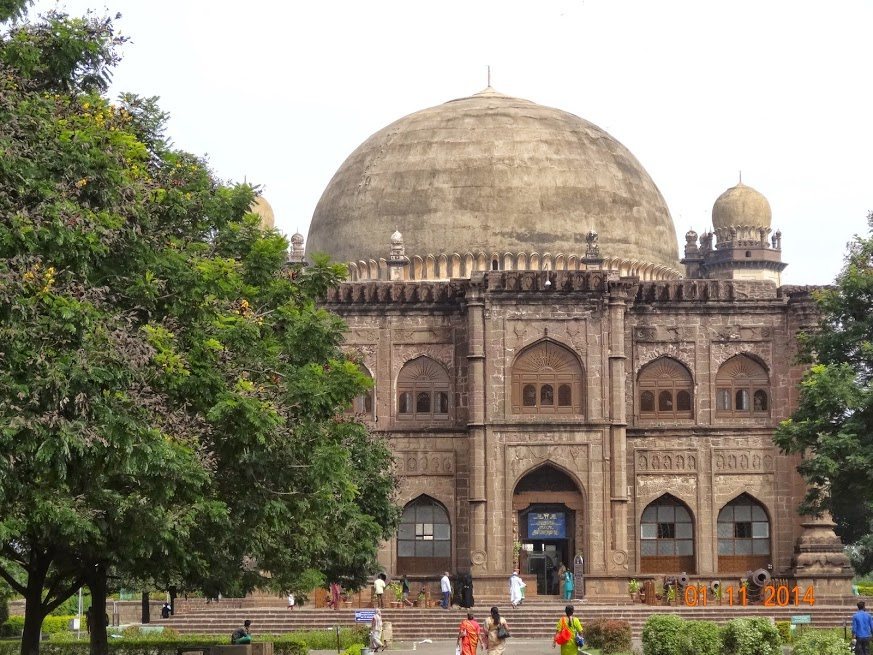
Jama Masjid Gulbarga is a Bahmani Friday mosque in the Gulbarga Fort complex at Kalaburagi, formerly known as Gulbarga, in India. Built in the Islamic architectural tradition, it was completed in 1367 under Sultan Mohammed Shah I of the Bahmani Sultanate, a medieval Muslim state in the Deccan founded in 1347. The building commemorated the establishment of the Bahmani capital at Gulbarga after Mohammed Shah I defeated Kapaya Nayaka, a ruler associated with Warangal.
The Persian architect Rafi designed the mosque within the fort complex. Also known as the Friday Mosque of Gulbarga and the Great Mosque of Gulbarga Fort, it is formally called the Jamia Masjid–Qila-e-Hasham. As a Friday mosque, or jama masjid, it served as the principal mosque for congregational Friday prayer and remains an active place of worship. It is described as one of the earliest Friday mosques in South India.
Heritage Recognition
In 2014, UNESCO added the mosque to its Tentative List under the name “Monuments and Forts of the Deccan Sultanate.” A Tentative List identifies sites that may be considered for future World Heritage nomination, but inclusion does not constitute World Heritage inscription.
Remains
Covered Courtyard and Domes
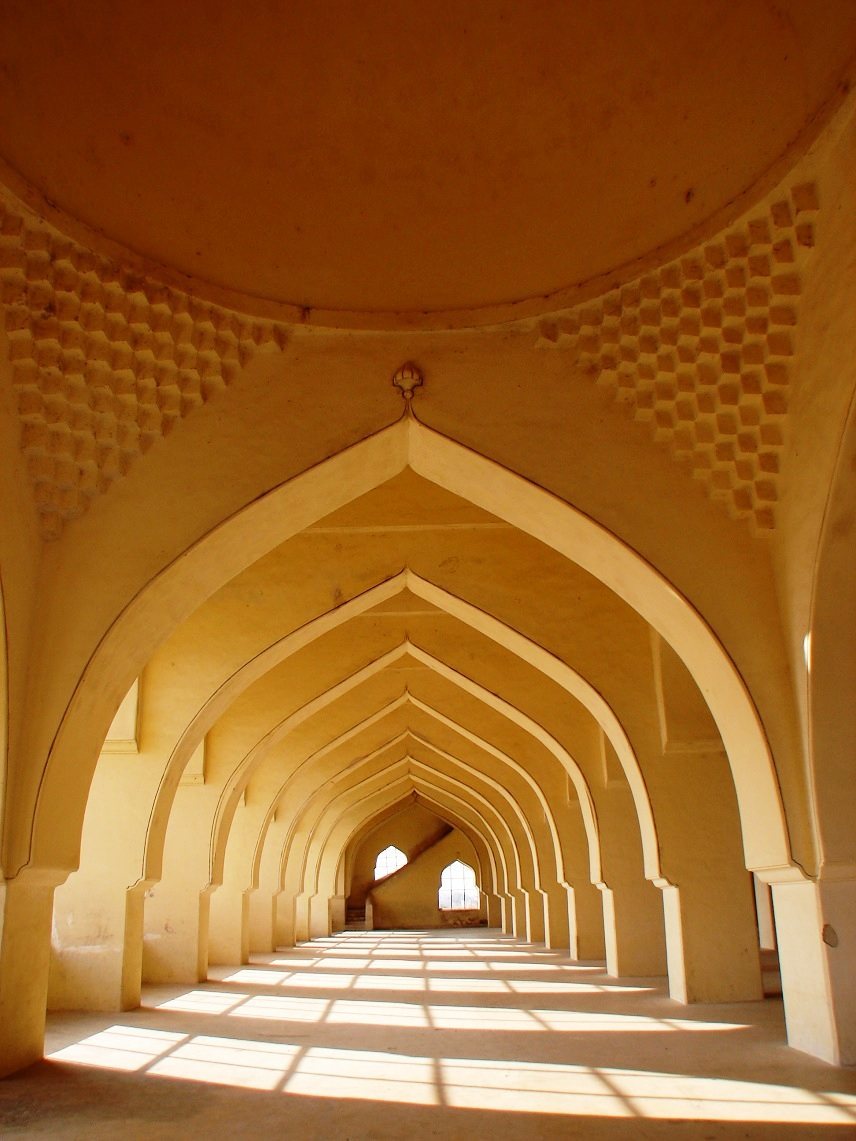
The mosque measures approximately 66 metres in length and 54 metres in width, with a stated capacity of about 2,000 worshippers. Built chiefly from lime brick, its plan resembles a courtyard mosque, but the central courtyard is completely roofed over. Sixty-three small domes cover this space, while four larger domes occupy the corners, giving the building approximately 67 domes in total.
Walls, Openings, and Interior
Jama Masjid Gulbarga has no minarets. Three outer walls are open to sunlight, while the qibla wall, oriented toward the Kaaba in Mecca, is solid. Arches shape the interior, and the entrance is described as Moorish, reflecting architectural traditions associated with Muslim-ruled parts of medieval western Islamic lands, especially al-Andalus in Spain. The building’s covered court and overall arrangement diverge from mosque architecture typical of its period. Its design has also been compared with the Mosque–Cathedral of Córdoba in Spain and the Spanish Mosque in Hyderabad.