Craigdarroch Castle: A Victorian-Era Mansion and Historic Museum in Victoria, Canada
Site at a Glance
- Country
- Canada
- Primary era
- Modern
- Eras represented
- Modern
- Civilizations
- British
- Site type
- Domestic
- Remains
- Castle
On this page14 sections
History
Construction and the Dunsmuir family
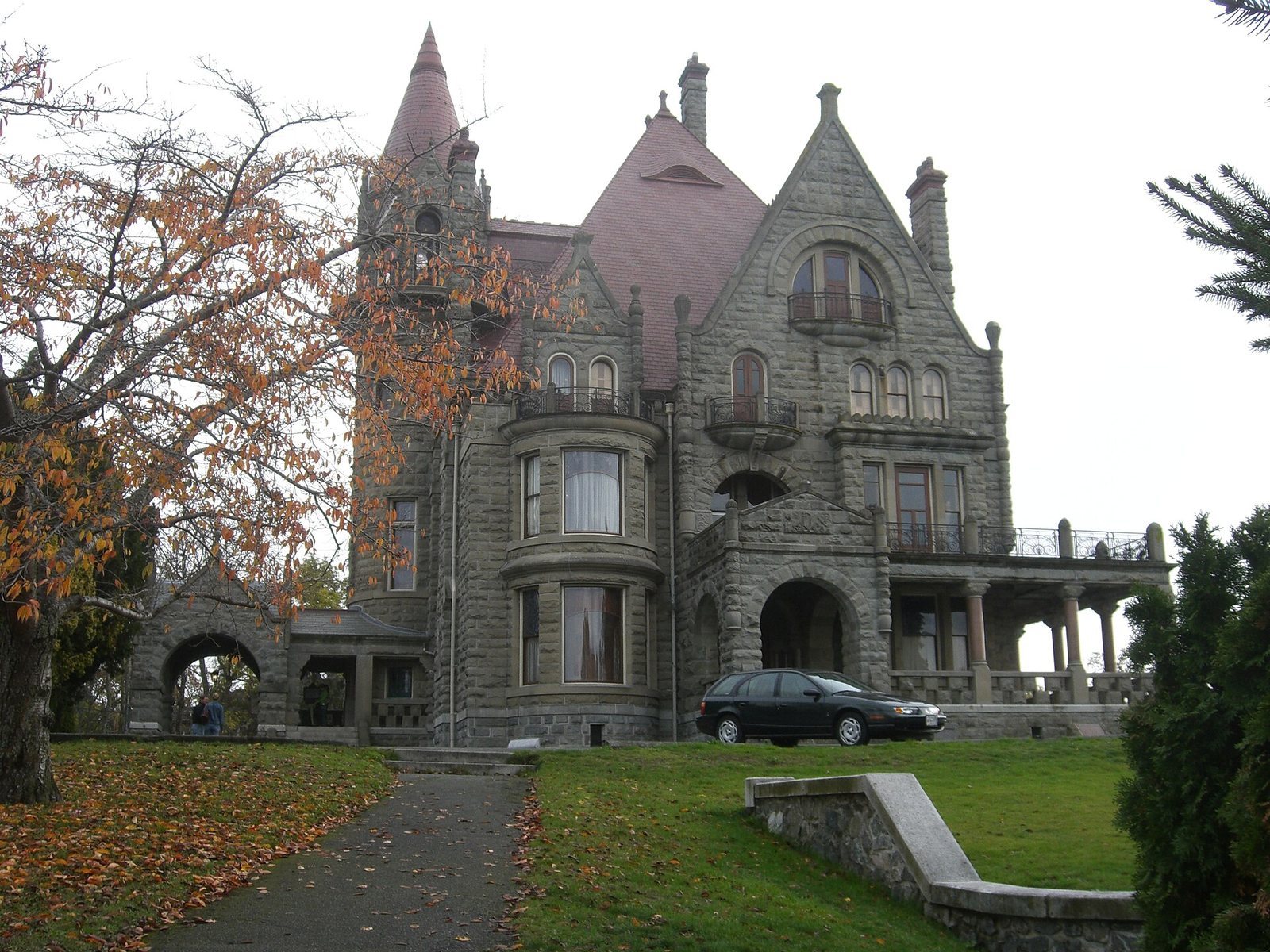
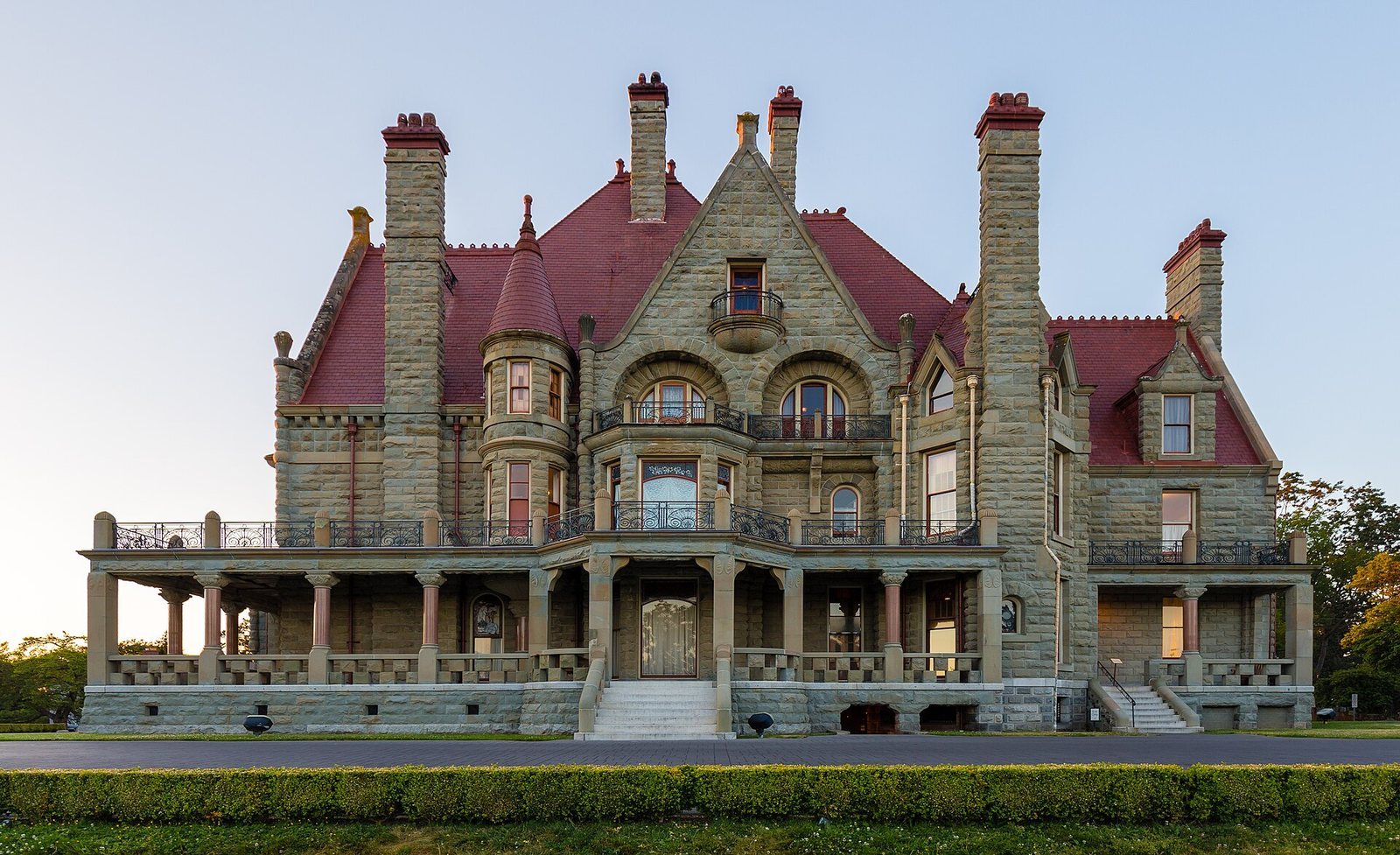
Craigdarroch Castle is a mansion in Victoria, Canada, built for coal magnate Robert Dunsmuir and his wife, Joan, from 1887 to 1890, during the Victorian era, Queen Victoria’s reign from 1837 to 1901. Its Scottish Baronial and Châteauesque styles draw on older Scottish and French aristocratic buildings. The house is also described as a bonanza castle, a large residence built with wealth amassed during North America’s industrial expansion.
Robert Dunsmuir died on 12 April 1889, around 17 months before construction ended. His sons Alexander and James continued the work. The architect died before the building was complete, and a colleague assumed design and supervisory duties in 1890.
The Dunsmuir family lived in the castle from 1890 until 1908. After Joan’s death that year, the estate was sold to land speculator Griffith Hughes for $38,000. Hughes divided the land into lots and used a raffle among purchasers to encourage sales during a slow property market. Solomon Cameron won the castle, mortgaged it to support unsuccessful ventures, and lost it to the Bank of Montreal in 1919.
The family’s belongings were sold at public auction from 21 to 23 June 1909. Auctioneer H. W. Davies prepared a catalogue, which the museum association later consulted when seeking to recover Dunsmuir possessions or acquire comparable objects.
Institutional uses and museum
From 1919 to 1921, the building served as a military hospital. Victoria College, a postsecondary institution, occupied it from 1921 to 1946; the Victoria School Board used it as offices from 1946 to 1968, and the Victoria Conservatory of Music was based there from 1969 to 1979. The castle became a historical museum in 1979.
The Drawing Room, a formal reception space for household members and guests, may also have hosted small family gatherings. During the building’s institutional period it served, in turn, as a hospital recreation room, a college classroom, and a School Board office. Its original painted ceiling was damaged and covered in 1935, when the castle housed Victoria College. Work to restore the ceiling took place from 1995 to 2007.
Craigdarroch Castle was designated a National Historic Site of Canada in 1992, recognizing its national historical importance. The Craigdarroch Castle Historical Museum Society, a private nonprofit organization, owns the building and manages the museum.
Remains
The four-storey mansion has about 2,350 square metres of floor space, 39 rooms, 17 fireplaces, and a tower reached by 87 steps. Its original estate covered about 28 acres and included formal gardens; the present property covers about 1.75 acres, including a lawn to the south. The name Craigdarroch is Gaelic for “rocky, oak place” and refers to the Garry oak meadow ecosystem of Rockland, the Victoria neighbourhood where the castle stands.
Materials and interior finishes
Timber and floors
The A. H. Andrews Company of Chicago supplied interior woodwork and patterned parquet floors, made by arranging pieces of wood into designs. Prefabricated stairs, doors, window frames, and 2,128 wood panels were shipped from Chicago, while window shutters came from the Willer Blind Company of Milwaukee. White oak forms the main hall’s woodwork and staircase; it may have come from Arkansas land owned by Andrews. Other interior woods include Spanish mahogany in the library, western red cedar in the covered entrance and back hall, cherry in a dining room and window sashes, Hawaiian koa in the Drawing Room floor, and American ash in the back stairs. The patterned floors combine ebony, rosewood, walnut, maple, holly, and teak.
Glass, tile, and stone
A substantial group of Victorian stained- and leaded-glass windows remains in its original positions. The original windows are attributed to Pacific Art Glass Works of San Francisco. Minton, Hollins & Co. encaustic tiles, whose patterns are formed from colored clays, cover floors in the castle; the tiled floor in the tower is a particularly notable example. Construction also used British Columbia granite and tiles from San Francisco.
The Drawing Room
Painted ceiling
The Drawing Room ceiling is believed to be the castle’s only ceiling with decorative painting. Restoration uncovered stenciled and hand-painted designs beneath five layers of paint. A small surviving section of stencil below the cornice in the room’s southeast corner provided a pattern for recreating the decoration. The restored work was retouched and sealed with clear, acid-free varnish. The trim was likely cream-colored, with gold-leaf accents on its acanthus leaf designs.
Stained-glass window
A window in the Drawing Room depicts a woman with a swan. It is a replica of an original based on Sir Frederic Leighton’s 1862 painting Odalisque. A snowball damaged the original window in 1927.
Museum collection
The museum preserves more than 9,000 artifacts from the Victorian era. About one-tenth belonged to the Dunsmuir family; the rest are selected objects from the same period.
Gold mesh purse
A 14-carat gold mesh purse in the collection is decorated with diamonds, smooth, rounded rubies, freshwater baroque pearl pendants, and green stones that may be olivines, demantoid garnets, or tsavorites. The initials on its gold frame, LD, are identified with Laura Dunsmuir.
Steinway piano
Alexander Dunsmuir commissioned a Steinway Model B piano measuring 211 centimetres long. Its rosewood case is decorated with inlaid designs of garlands, musical instruments, and foliage. The maker’s name appears on the keyboard cover amid leaf patterns; the legs are also inlaid in the Empire style, a neoclassical decorative style associated with early nineteenth-century France. Foliage and musical instruments decorate the hinged lid and top. A rolled music score is associated with the instrument.
Bronze pedestal
A cast bronze pedestal with a colored surface depicts a bare-armed, bare-torsoed putto, a childlike figure in European art, supporting a cushion and rectangular tray. The base is decorated on all four sides, with a lion’s head on each foot. The object is associated with Robert and Joan Dunsmuir and probably held aesthetic and symbolic meaning within their collection.