Grote Kerk in Workum: A Late-Gothic Church in the Netherlands
Site at a Glance
- Rating
- 4.6
- Popularity
- Low
- Country
- Netherlands
- Primary era
- Early Modern
- Eras represented
- Medieval, Early Modern, Modern
- Civilizations
- Dutch, Habsburg, Habsburg Spain, Holy Roman Empire, Spanish
- Site type
- Religious
- Remains
- Church
On this page15 sections
History
Medieval church and rebuilding
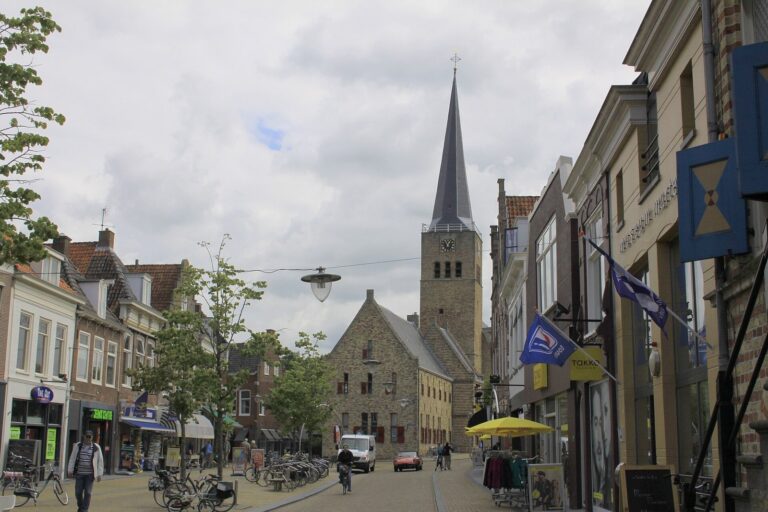
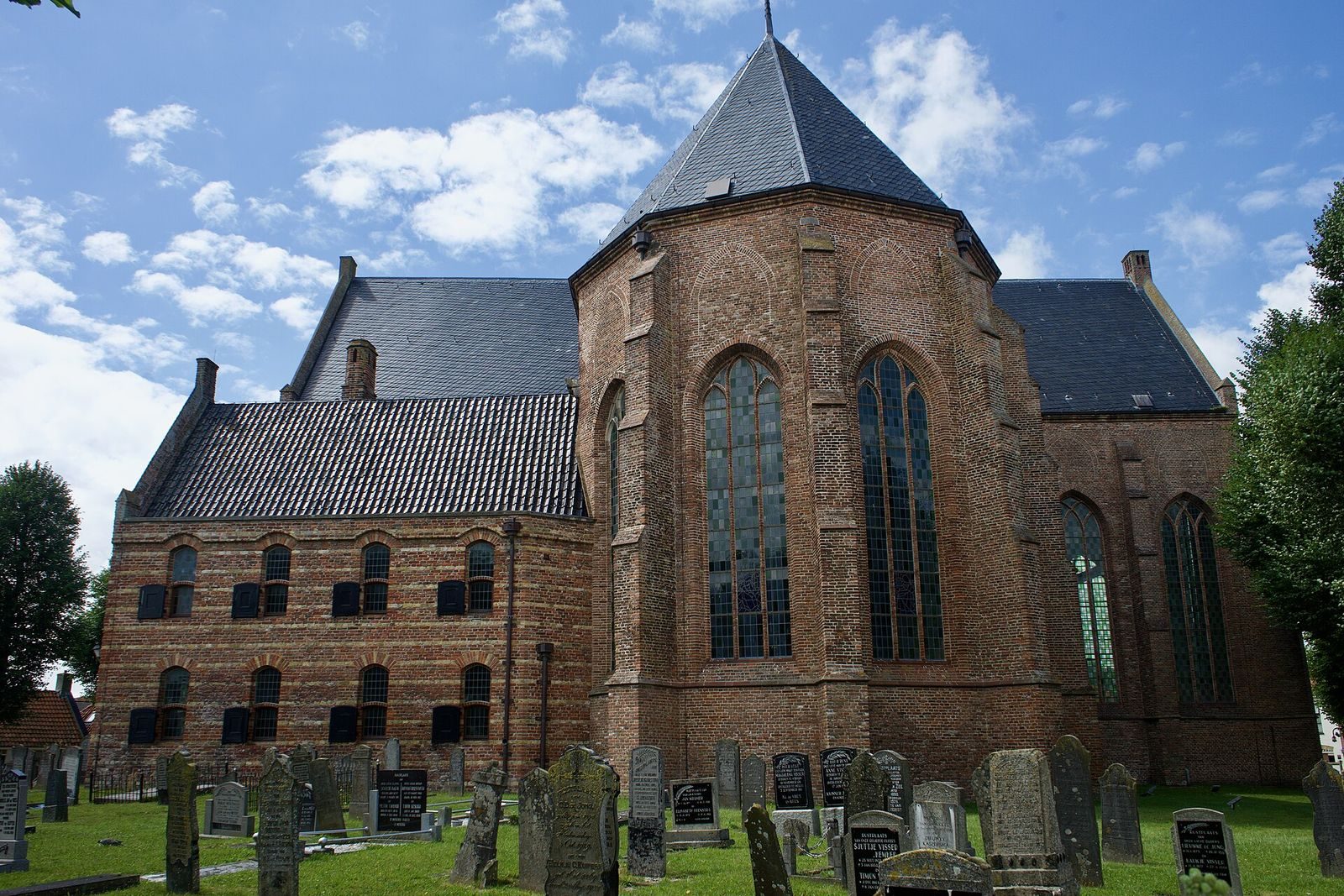
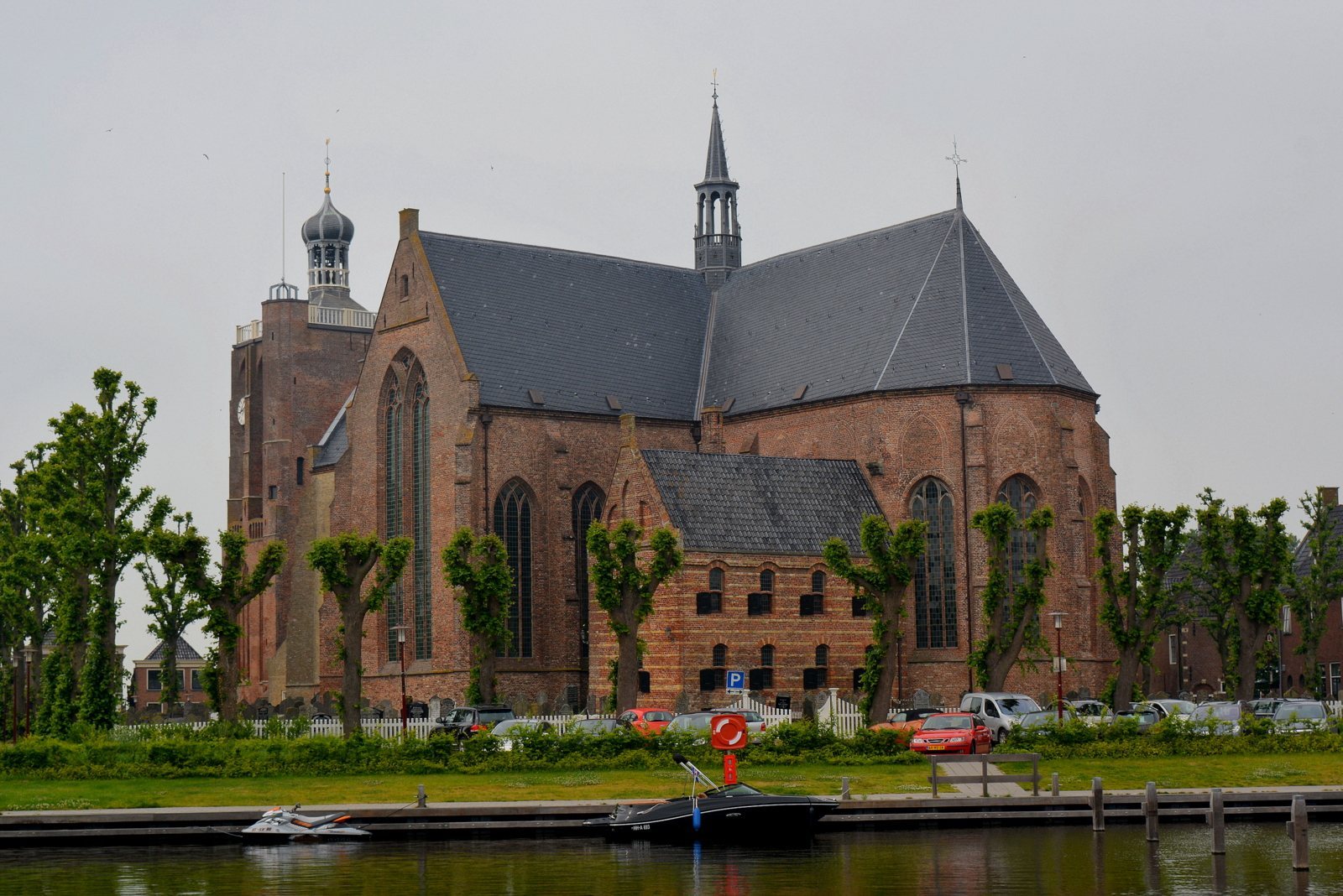
Grote Kerk in Workum is a church in the Netherlands built in the late phase of medieval Gothic architecture. Its present form developed in stages, beginning with a choir built around 1480, and it is described as Friesland’s largest cruciform church.
An earlier church had a single nave and a pointed tower. It appears on Workum’s seal of 1355. The present church grew from this predecessor: a transept followed the choir, and work to replace the old nave with a three-aisled hall began around 1515. Construction paused during the conflict between the Schieringers and Vetkopers, rival political factions in medieval Friesland, then resumed in 1523. In 1560, it was decided to leave the western end of the nave unfinished.
Later changes and continued use
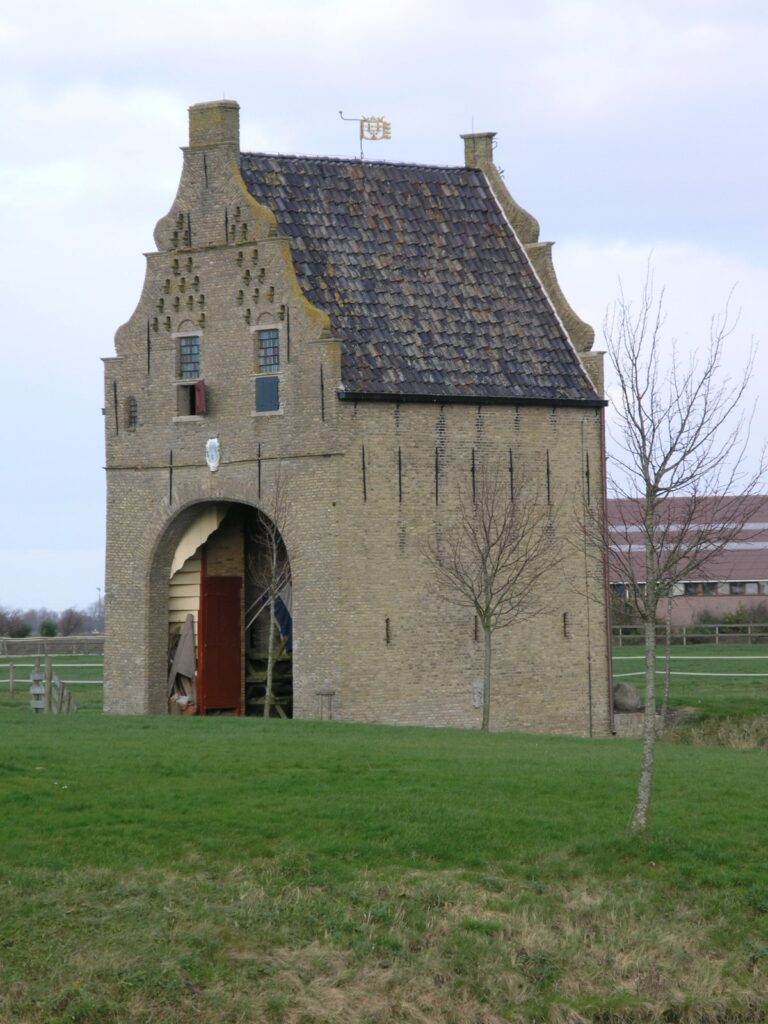
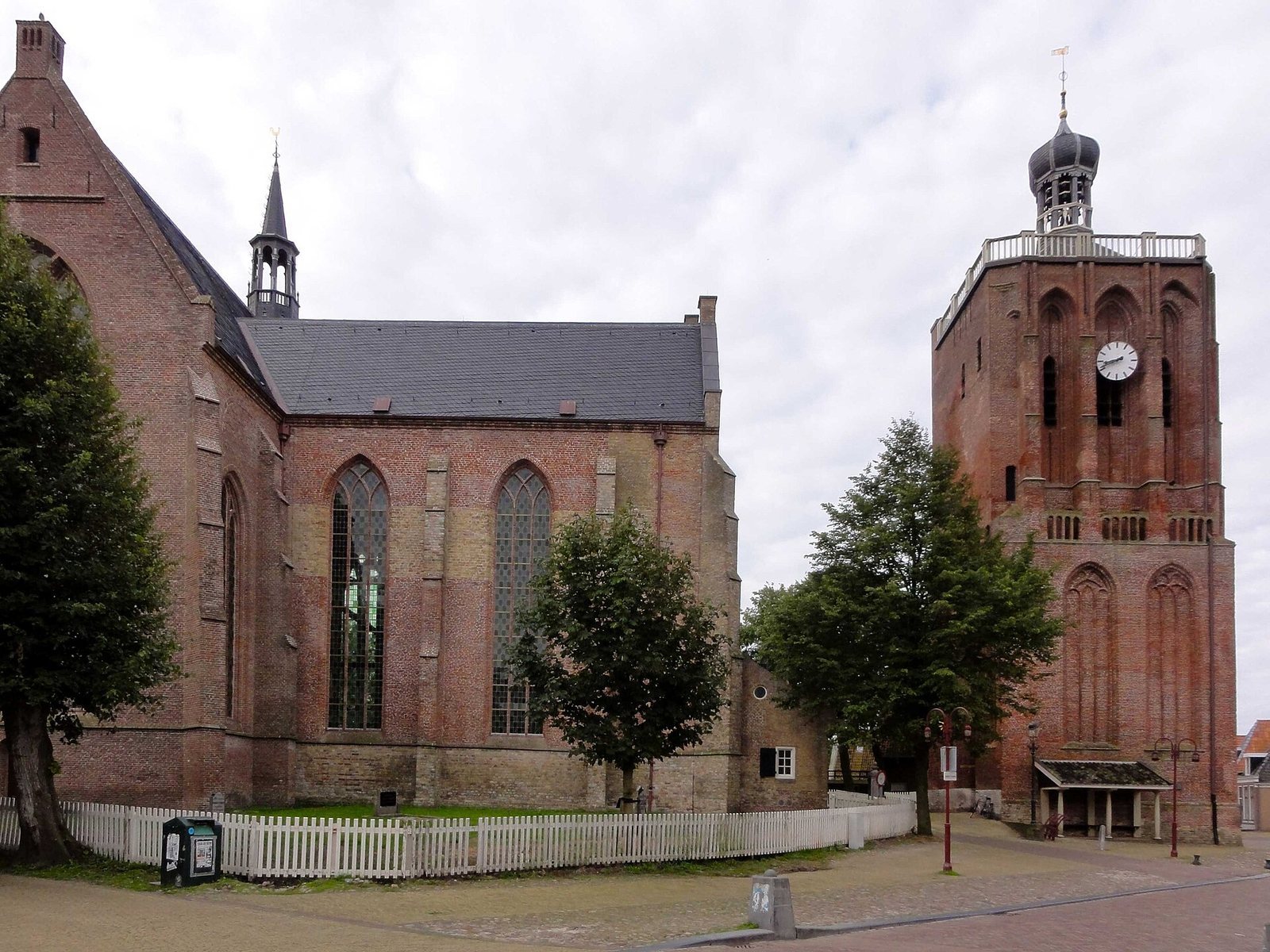
A separate tower was built after 1523 and left unfinished. A wooden wall closed the church’s incomplete western end until 1946. Restoration carried out between 1939 and 1951 led to the loss of parts of the original interior. In 2010, the roof, including its structural frame and slate covering, and the stained-glass windows were restored.
The church is dedicated to Gertrude of Nivelles, a seventh-century Christian abbess and saint. It serves Workum’s Protestant congregation, which belongs to the Protestant Church in the Netherlands, a denomination formed in 2004 through the merger of Dutch Reformed and related churches. The church, sacristy, and tower are protected as national monuments in the Netherlands.
Remains
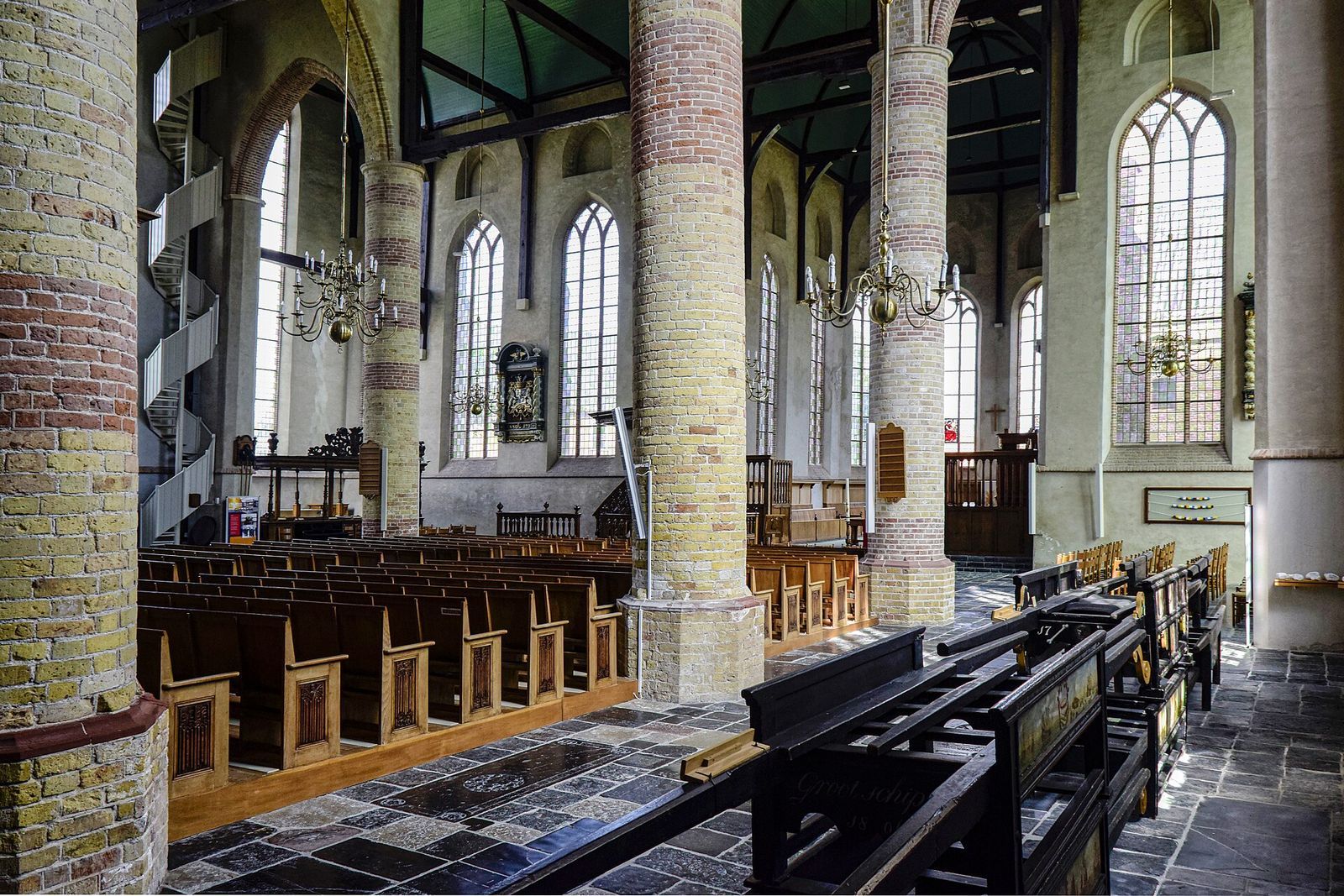
The present church is a three-aisled hall church, with a nave and side aisles of roughly equal height. A choir and transept form the main parts of the plan. The earlier church survives only in its foundations.
Church and adjoining space
Church structure
The church’s hall form brings together its central nave and two side aisles, with the choir and transept extending the main structure. The foundations of the earlier building preserve the physical remains of the single-nave predecessor.
Sacristy
The sacristy stands on the church’s southeast side, between the choir and transept. It also served as Workum’s Latin School, where pupils learned Latin, a language central to education in medieval and early modern Europe.
Detached tower
The freestanding tower has an onion-shaped cupola added to its second stage in 1613. Three bells hang in the tower. The largest, weighing 3,089 kilograms, was cast by Gerhart Schimmel in 1699; the middle bell weighs 2,105 kilograms and was cast by Henricus Wegwart in 1616. A third bell, weighing about 1,300 kilograms, was cast by the Rincker brothers and added in 2020. In 2007, the cast-iron clapper, the part that strikes a bell, broke on one of the bells.
Interior furnishings and memorials
Choir screen
Claes Thiebbes made the Renaissance choir screen in 1569. The screen separates the choir from the rest of the church.
Pulpit
The Baroque pulpit, made by Gerbrandus van der Haven in 1718, carries five scenes from the Bible.
Carved furnishings
Workum sculptor Tjipke Visser made carvings for the church, including a baptismal font decorated with biblical scenes.
Main organ
Jan Harmensz. Camp built the main organ in 1696–1697. It has two keyboards and 19 stops, controls for sets of pipes. Its main division and rear-positive division, a separate section positioned behind the player, are joined by a pedal linked to the other divisions. About 30 pipes from the early 16th century remain in one of the main division’s stops, and some other pipework may have been reused from an earlier organ.
Jan Claessen and Symon Joostes made the organ case and balustrade, and Jan Freecks of Leeuwarden supplied its carving. In 1877–1878, Eeltje Sjoerds Ypma built a new organ behind the old case, reusing much of the earlier pipework. Flentrop reconstructed the instrument in Camp’s style in 1980–1981.
Second organ
Pieter Künckel made the second organ in 1784 for a notary in Delft. It has two keyboards, 11 stops, and a pedal linked to the other divisions. After installation in Hoorn’s Eikstraatkerk in 1934 and restoration in 1973, it was moved to Workum in 2005, following the closure of the Hoorn church in 2001.
Tombs, hatchments, and funeral biers
The interior contains tomb slabs, the oldest dated 1523, and funeral hatchments, heraldic panels commemorating the deceased. Eight large funeral biers, frames used to carry or support coffins, include painted guild examples from Workum and one from Hindeloopen. Klaas Steffens Nauta painted them in 1868. Their scenes show boatmen, masters of large ships, apothecaries, surgeons, farmers, silversmiths, and carpenters.