Großsteingrab Schortewitz: A Neolithic Stone Burial Complex in Germany
Site at a Glance
- Popularity
- Very Low
- Country
- Germany
- Primary era
- Stone Age
- Eras represented
- Stone Age
- Civilizations
- Unclassified
- Site type
- Burial
- Remains
- Tomb
On this page10 sections
History
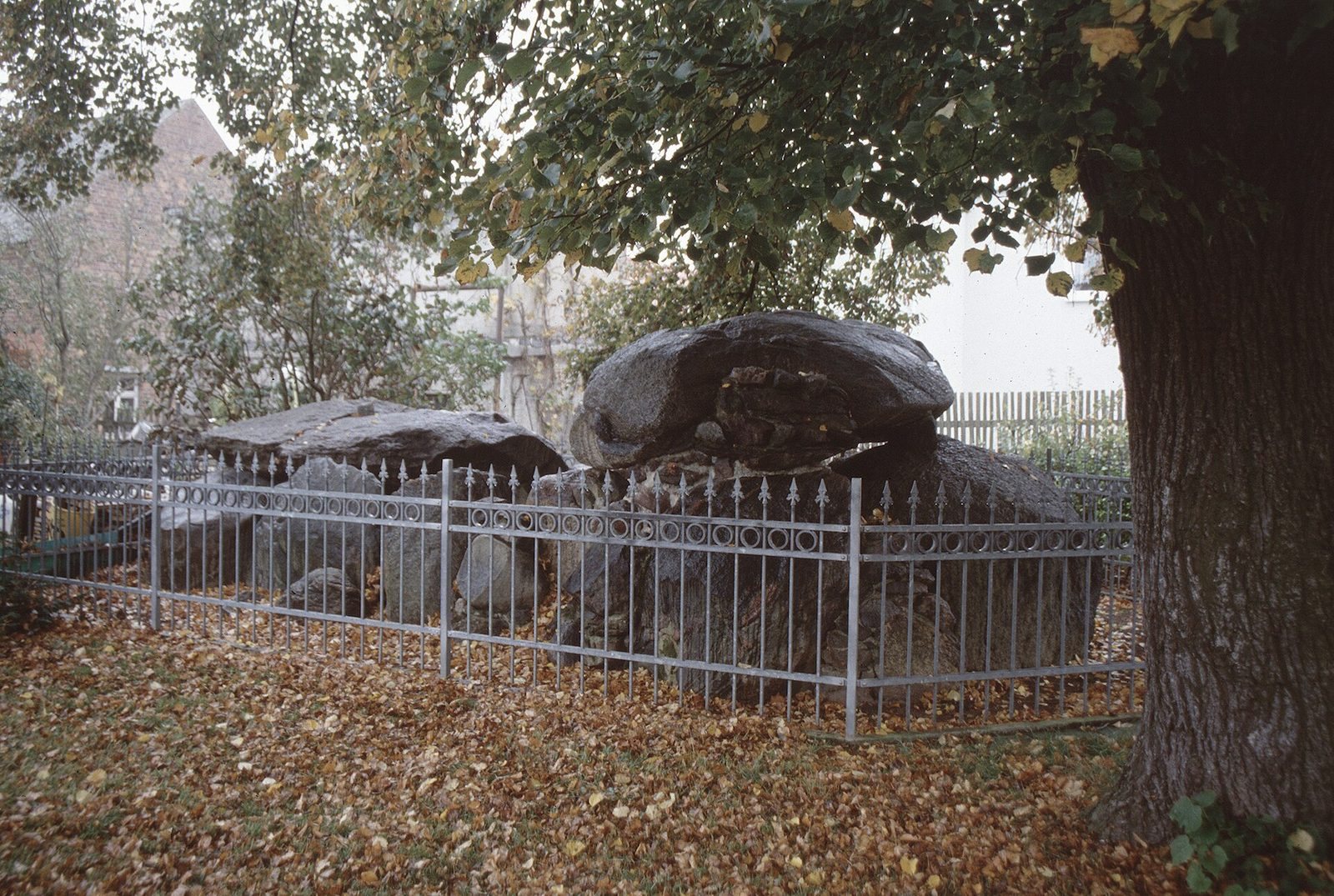
Großsteingrab Schortewitz is a Neolithic burial complex built from large stones on a hill in northern Schortewitz, Germany. The tomb dates broadly to 3500–2800 BC and is classified either as a passage grave, a chamber reached through a passage, or a great dolmen, a large stone-built chamber tomb. It is described as the southernmost monument of this type in Germany. The site is also known as Heidenberg and Heidengrab.
Part of the tomb was destroyed in the early nineteenth century. Excavations took place from 20 May to 27 June 1913 under the German archaeologists Walter Götze and Gustav Eichhorn. Brigitte Schiefer later presented a detailed analysis of the excavation results in an unpublished 2002 master’s thesis.
Remains
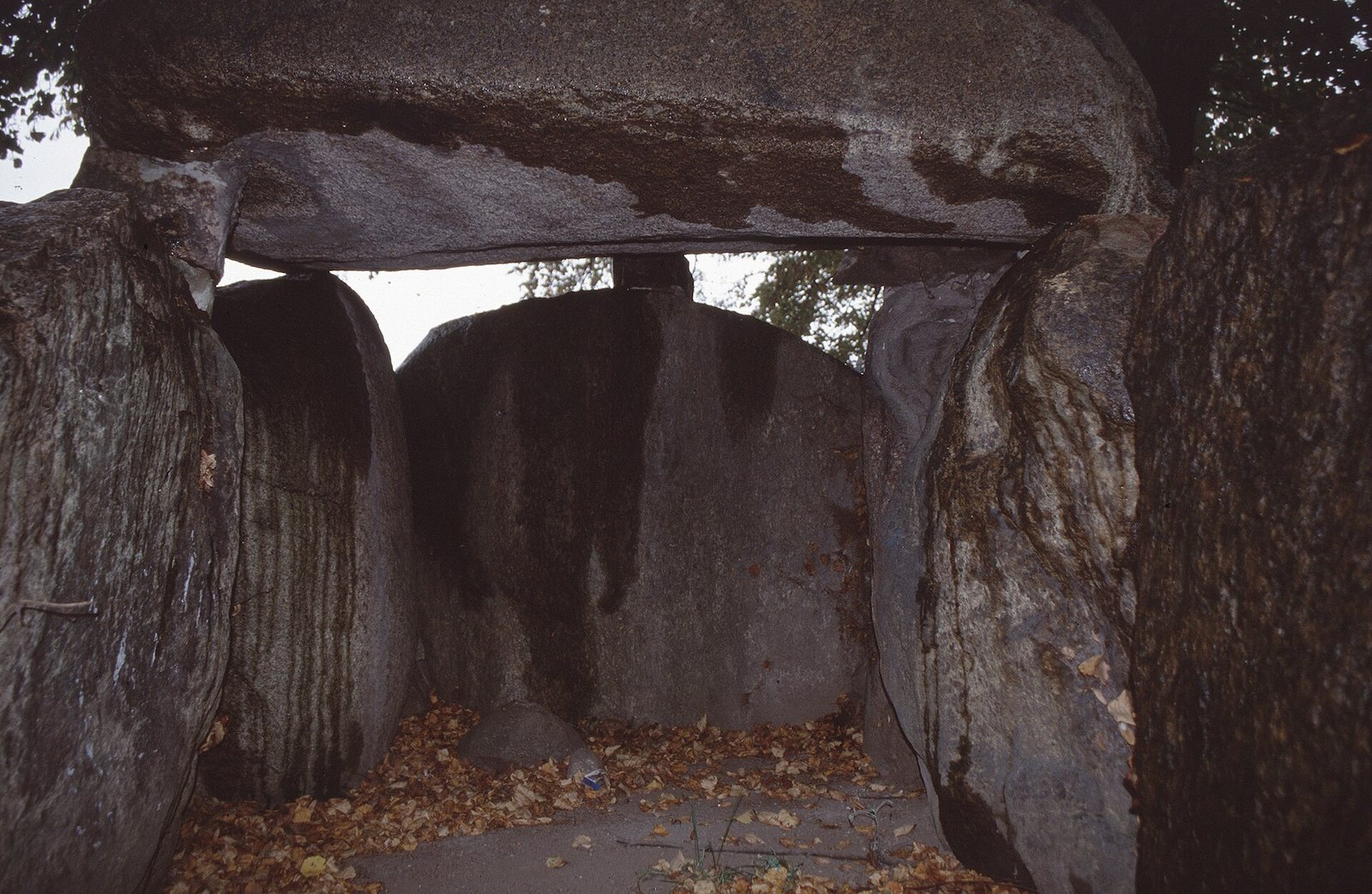
The tomb stands on a hill at the northern edge of the Fuhne. Once open within the surrounding landscape, the hill formed a prominent feature of the Köthener Platte, the plateau in the Köthen region of Saxony-Anhalt. The chamber is aligned approximately west to east and was formed from upright stones supporting large roof stones.
The Chamber and Mound
Walls and Roof Stones
At excavation, the north wall consisted of five upright stones. The south wall had four, three still in their original positions. The surviving southern wall measured 4.50 m, compared with 6.80 m for the northern wall, and a western end stone also remained in place. The western roof stone was still positioned above the chamber; the other had broken inside and was returned to its original position after excavation. The interior measured 5.70 m long and 1.40 m wide, with a height of 1.75 m at the end stone.
Entrance and Floor
The entrance position is uncertain. Observations at the south side support a possible southern entrance, while later finds associated with the Bernburg and Globular Amphora cultures, archaeological groupings identified through characteristic material remains, suggest an entrance at the eastern short end. The eastern part of the chamber had already been disturbed when excavated. Its floor was paved with carefully laid sandstone and porphyry slabs in two or three layers. A crosswise slab divided the eastern interior into a larger and a smaller space.
Mound and Nearby Burial Structures
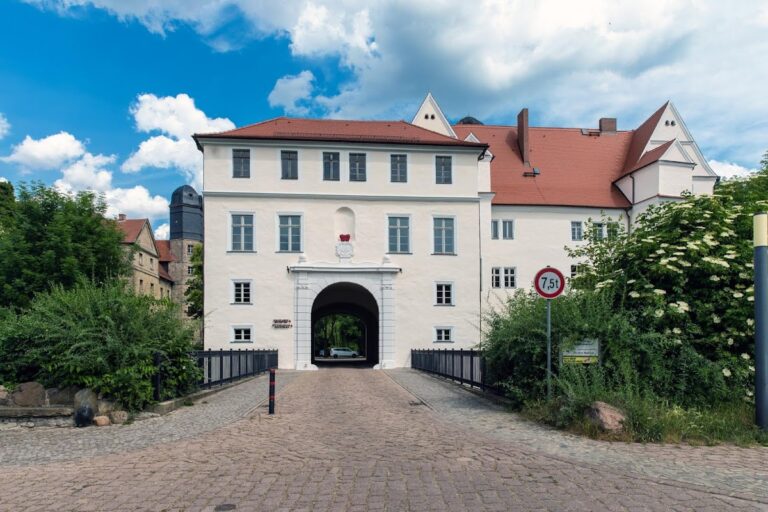
Excavation identified eleven additional grave installations in the mound. A grave mound and a ramped stone cist, a stone burial chamber approached by a ramp, once stood nearby. The cist has since been reconstructed in the courtyard of Köthen Castle.
Burials and Finds
Burials Beneath the Paving
Eleven individual burials lay beneath the chamber floor. The deceased included adults and children of different ages, placed in crouched positions with their orientations related to the cardinal directions. Wood remains suggest that some may have been placed in simple wooden boxes. Associated objects included four perforated amber pendants, a pierced mica pendant, a necklace made from more than 600 perforated fruits and stone kernels, and several flint blades.
Vessels and Pottery
Broken pottery lay along the chamber walls, although only some pieces could be assigned to individual burials. Restored vessels include small jugs of the Opperschön type and two forms associated with the Salzmünde culture, an archaeological grouping identified through characteristic material remains. One form has a folded-over rim, fingertip decoration, and four knobs beneath the rim. The other has a straight-cut neck and vertical loop handles. Both forms were made from two cone-shaped sections joined at their widest points.
Finds from the Eastern Burial
The eastern burial was the only one in which the deceased lay crouched on the left side. Its finds included part of a perforated amber pendant, dog teeth, and a cup associated with the Walternienburg-Bernburg culture, another archaeological grouping identified through characteristic material remains. The two-part cup has a low shoulder, a handle attachment, horizontal grooves, and vertical rows of stamped marks. A decorated potsherd from the eastern chamber has a band of stamped grooves, double-arc impressions above and a single-arc impression below, with traces of white inlay. Its decoration dates it to the Globular Amphora culture.