Grip Stave Church: A Medieval Parish Church in Norway


Site at a Glance
- Rating
- 4.6
- Popularity
- Very Low
- Country
- Norway
- Primary era
- Medieval
- Eras represented
- Medieval, Early Modern, Modern
- Civilizations
- Norwegian
- Site type
- Religious
- Remains
- Church
On this page7 sections
History
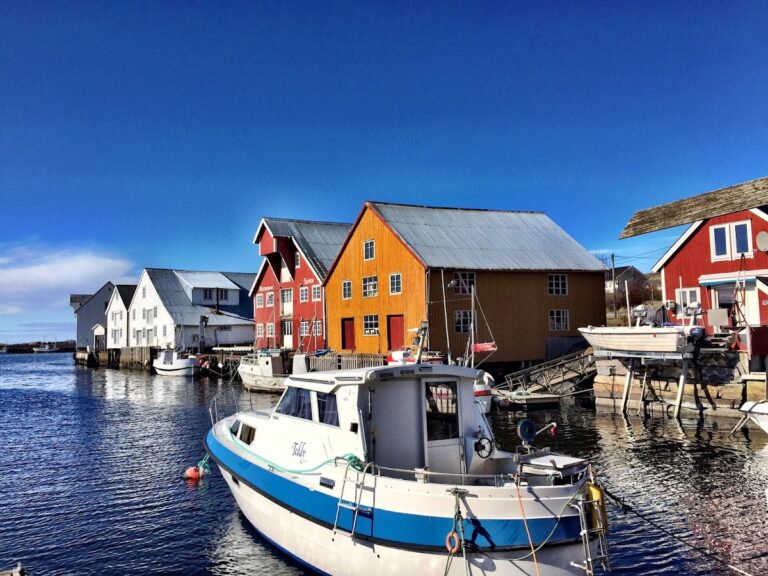
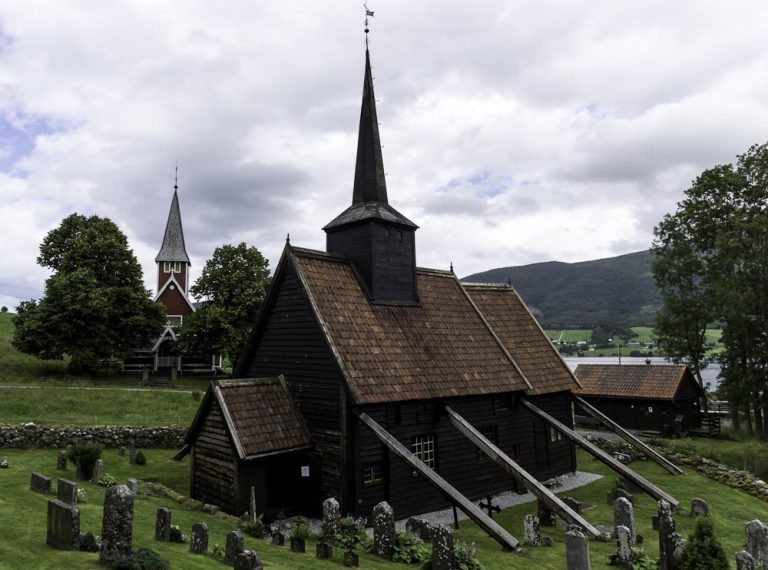
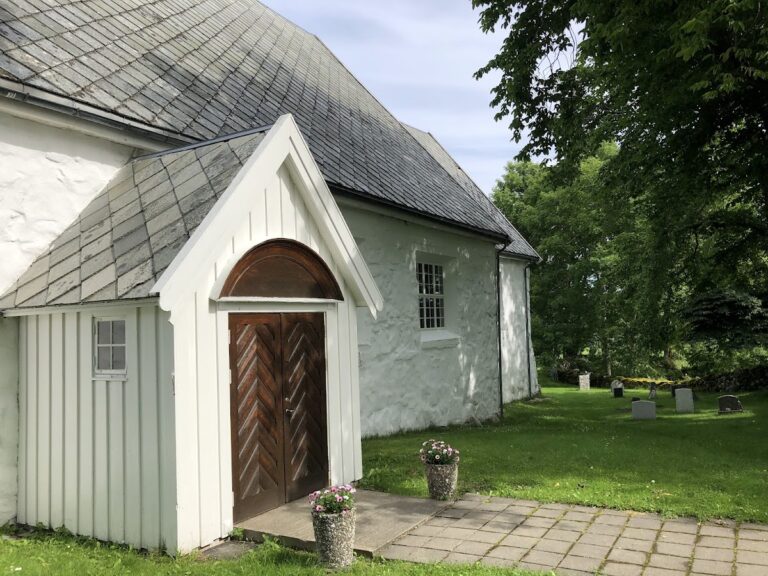
Grip Stave Church is a historic parish church in Norway, founded and consecrated around 1470 in the medieval period. It stands in the former fishing village of Grip on Grip Island, about 12 to 14 kilometres northwest of Kristiansund. Built as a stave church, a medieval wooden church whose framework uses upright timber posts joined to supporting beams, it belongs to the regional Møre type found in western Norway.
Medieval and Catholic Origins
The church was formerly associated with the Catholic Church. Its altar preserves sculptures of three saints, a reminder of its pre-Reformation religious setting. The Protestant Reformation changed Norway’s official religious establishment in 1537, but the altar at Grip survived this transition.
A small altar cup inside the church dates to around 1320, earlier than the present building. The church also contains a triptych, or three-part altarpiece, made in Utrecht around 1520. A tradition connects it with Isabella of Austria, who is said to have donated five altars to Norwegian churches after travelling with Erik Valkendorf, Archbishop of Norway, to her 1515 wedding in Copenhagen with Christian II of Denmark. The other four churches were at Kinn, Leka, Hadsel, and Røst. Four of the five altars survive, and the Grip altar remains in its original church.
Parish and Civic History
Grip’s isolated position shaped the organisation of its parish. Since 1635, no priest has lived permanently on the island, and clergy have travelled there regularly instead. The barren ground could not support a cemetery, so people connected with the church were buried elsewhere, especially at Bremsnes Church, more than 10 kilometres away across open sea.
Major changes to the building took place in 1621. Portions of the walls were rebuilt, and a small roof spire called a flèche was added. New windows, a weaponhouse, or entrance porch, and a sacristy were added during the 1870s. In 1814, the church served as an election church and polling station for Norway’s elections to the Constituent Assembly, the body that drafted the constitution at Eidsvoll later that year.
Modern Changes and Use
Grip became an annex of the Kristiansund parish in 1967. It is an Evangelical Lutheran church within the Church of Norway, the country’s historic Lutheran national church, and belongs to the Diocese of Møre and the Ytre Nordmøre Deanery. The island settlement is now abandoned, and the church is used mainly for summer worship.
John Tverdahl led a restoration in 1933, when the church received a new foundation and its exterior walls were covered with panelling. A proposal to move the building in 1972 was not carried out. In 2007, the roof and roof spire were restored, and some of the exterior panelling was replaced. The church is automatically protected as a Norwegian cultural-heritage site. Its altar was restored in 2002.
Remains
Building and Setting
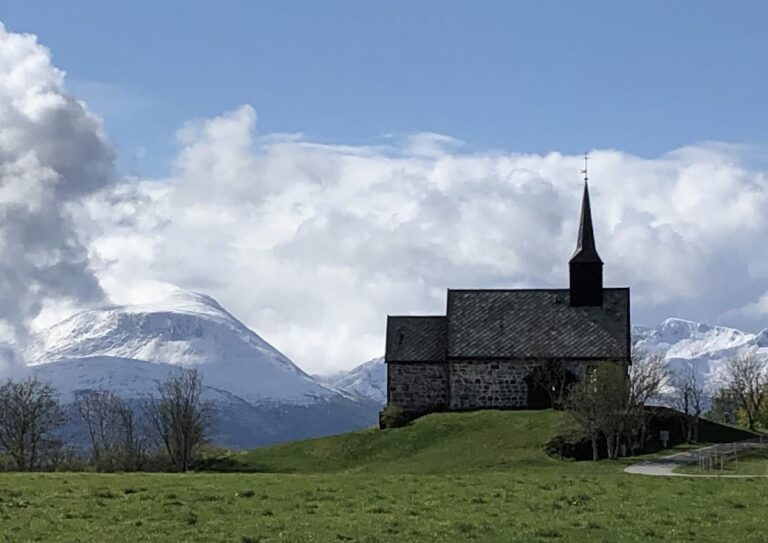
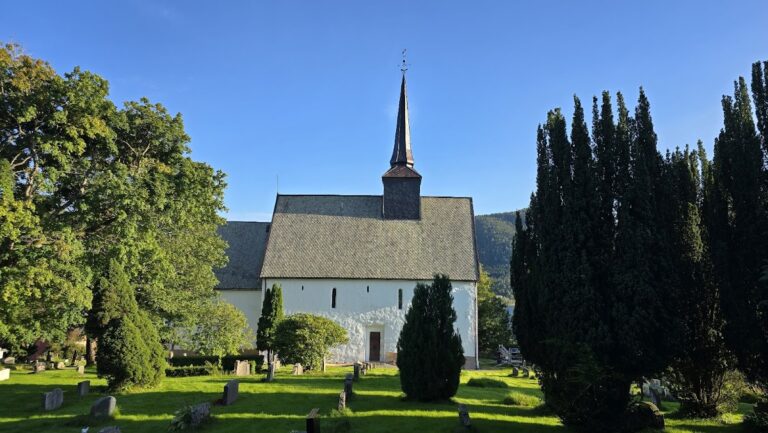
Grip Stave Church is a small, white wooden Møre-type church with a rectangular plan and a single nave. The nave is approximately 12 metres long, 6.5 metres wide, and 6 metres high. The church stands at the highest point of Grip Island, about 8 metres above sea level. Its structural form resembles the larger Møre-type stave churches at Kvernes and Rødven.
Most of the walls and roof belong to the medieval stave structure, although the exterior walls were later enclosed by panelling. The building includes the roof spire added in 1621, together with the weaponhouse and sacristy constructed in the 1870s. The church’s small scale, rectangular arrangement, and surviving timber framework define its present form.
Interior Furnishings
The principal furnishing is the Utrecht triptych from around 1520. Its central sculpture depicts the Virgin Mary, while the side sections show Saint Olaf of Norway and Saint Margaret, known locally as St. Maret. Saint Olaf was a Norwegian king later venerated as a Christian saint, while Saint Margaret was an early Christian martyr. The altar’s survival through the 1537 Reformation and its restoration in 2002 form an important part of the interior’s history.
Other furnishings include the small altar cup dating to around 1320, a double-sided sixteenth-century painting on canvas, and murals associated with the alterations of 1621. Two votive ship models, donated by sailors, are also kept in the church. A pipe organ donated in 2006 came from the Netherlands and has 270 wooden pipes. Because of the island’s humid conditions, it is installed at Grip during the summer and kept at Kirkelandet Church during the rest of the year.