Old Edøy Church: A Medieval Parish Church in Norway
Site at a Glance
- Rating
- 4.9
- Popularity
- Very Low
- Country
- Norway
- Primary era
- Medieval
- Eras represented
- Medieval, Early Modern, Modern
- Civilizations
- Denmark–Norway, German, Norwegian
- Site type
- Religious
- Remains
- Church
On this page9 sections
History
Old Edøy Church is a medieval stone church in Norway, standing on Edøya in the municipality of Smøla. It was first established in the middle of the twelfth century, and the existing church was built around 1190 by an unknown architect. The church served as the main parish church of Edøy Parish until a new church was completed in 1885.
Medieval origins and parish use
The earliest surviving historical record of Old Edøy Church dates from 1533. The building was formerly Catholic and now belongs to the Evangelical Lutheran Church of Norway. It is administered within the Ytre Nordmøre Deanery of the Diocese of Møre. Around 1690, the nave was extended westward by several metres to provide more seating and increase the church’s capacity.
In 1814, Old Edøy Church served as an election church and polling station. In this arrangement, the parish selected electors who later helped choose representatives to Norway’s Constituent Assembly at Eidsvoll Manor, where the Constitution of Norway was drafted.
Replacement, fire, and reconstruction
By the 1880s, the church was considered too small and old to continue as the parish’s main church. A replacement was built farther north on the main island of Smøla, rather than at the older church’s more isolated location on Edøya. After the new Edøy Church was completed in September 1885, the old building was reserved for special occasions.
Lightning caused a fire in 1887. The blaze destroyed the roof and interior furnishings, while the stone walls survived. The ruins remained unrepaired until the Second World War, when occupying German forces used them as a warehouse and built an underground bunker beneath the old chancel. Old Edøy Church was reconstructed in a historically accurate manner in 1946 and 1947 under the direction of architect John Tverdahl. It was re-consecrated on 4 June 1950 and is now a protected historic site with automatic protection under Norway’s cultural-heritage system.
Evidence of earlier activity
In 2019, archaeologists used large-scale, high-resolution georadar, a non-invasive survey method that detects buried structures and objects with radar pulses, near the church. The survey identified a buried ship estimated to be more than 1,000 years old, together with traces of a small settlement. The vessel may date from either the Merovingian period, an early medieval Scandinavian period before and partly overlapping the Viking Age, or the Viking period. Further searches in the area were planned.
Remains
Stone church layout
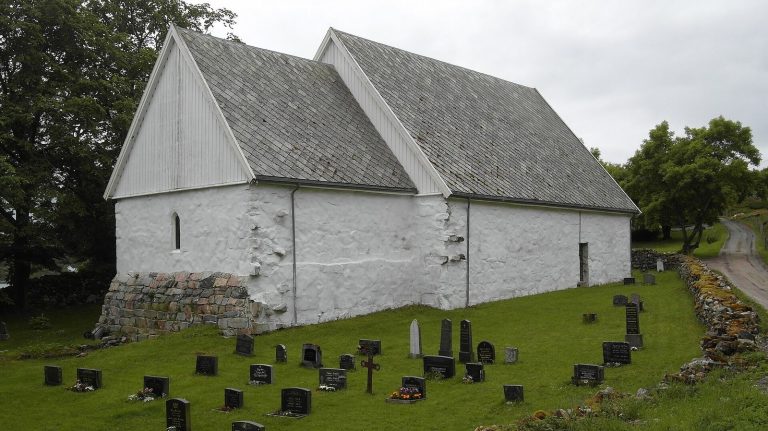
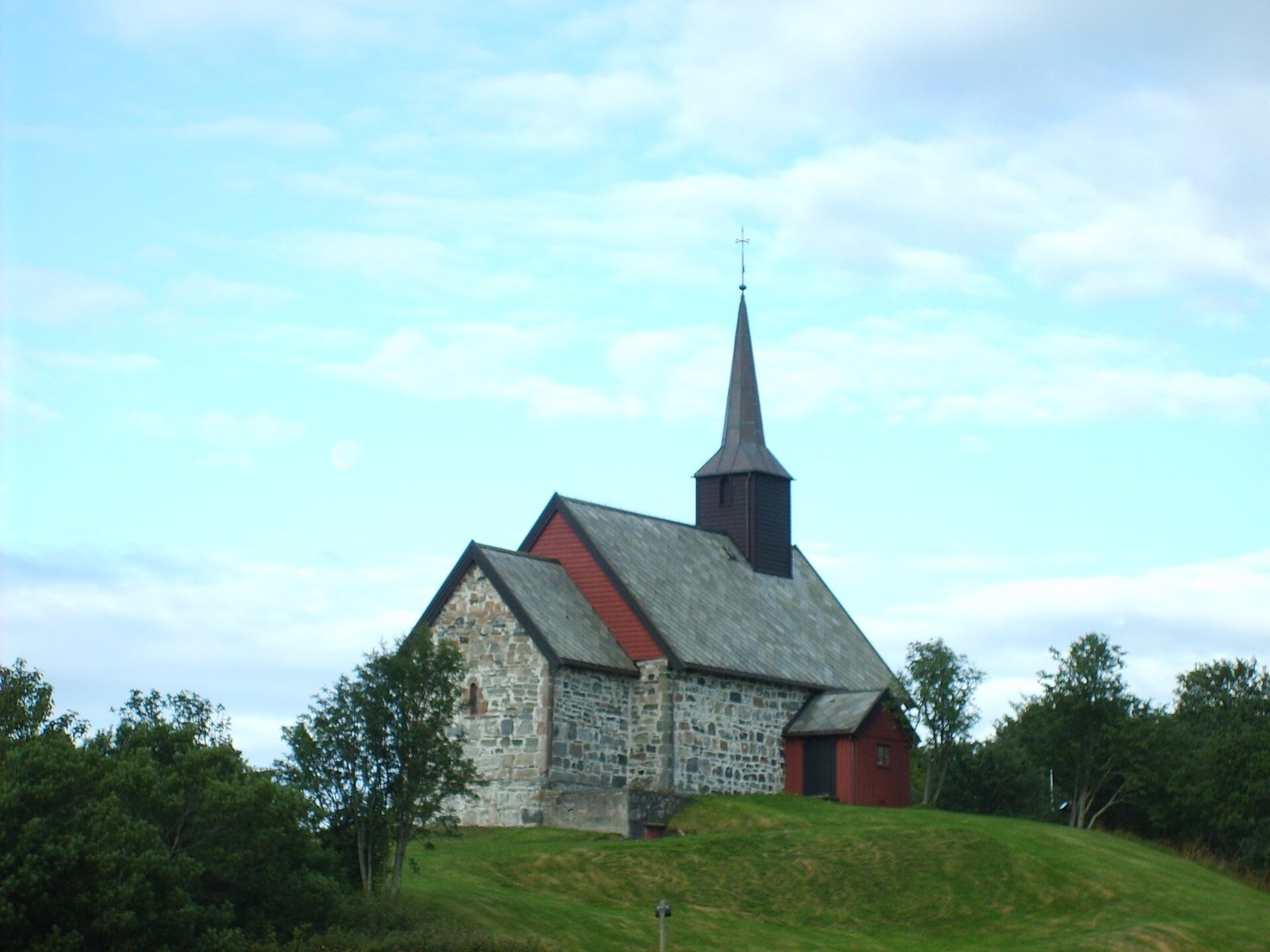
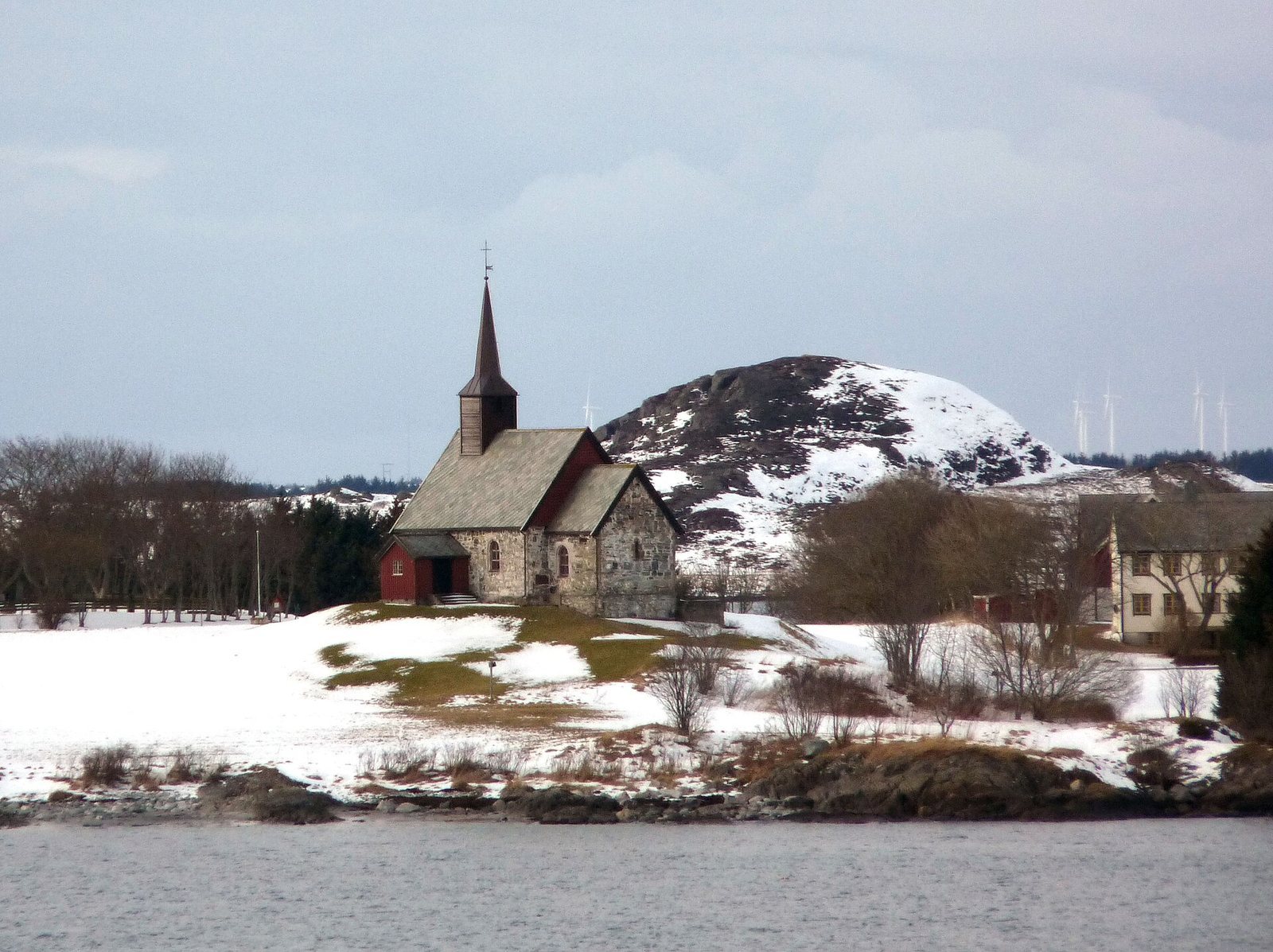
Old Edøy Church stands at the southwestern end of the small island of Edøya, just south of the larger island of Smøla. It is a stone long church with seating for approximately 120 people. The original nave was rectangular, measuring about 12.2 by 9.5 metres, while the narrower rectangular chancel measured about 5.5 by 5.9 metres. The chancel is slightly crooked in relation to the nave, since the nave’s north and south walls do not run parallel with the corresponding chancel walls.
Altered and reconstructed fabric
The nave was lengthened several metres toward the west around 1690. The 1887 fire removed the roof and interior furnishings, but the original stone walls remained and formed the basis for the later reconstruction. The rebuilding of 1946 and 1947 restored the church in a historically accurate form.
Chancel bunker
The underground bunker built beneath the old chancel during the Second World War was retained after the church was reconstructed. Its top now forms the floor of the chancel, incorporating a wartime structure into the surviving historic building.
Buried ship and settlement
Georadar surveys carried out near the church in 2019 detected a buried Viking ship approximately 17 metres long and traces of a small settlement. The ship is estimated to be more than 1,000 years old and may belong to either the Merovingian or Viking period. These buried features add an earlier archaeological dimension to the physical setting around the medieval church.