Cmurek Castle: A Medieval Castle and Psychiatric Institution in Slovenia
Site at a Glance
- Popularity
- Medium
- Country
- Slovenia
- Primary era
- Early Modern
- Eras represented
- Medieval, Early Modern
- Civilizations
- Duchy of Styria, Habsburg, Holy Roman Empire
- Site type
- Domestic
- Remains
- Castle
On this page8 sections
History
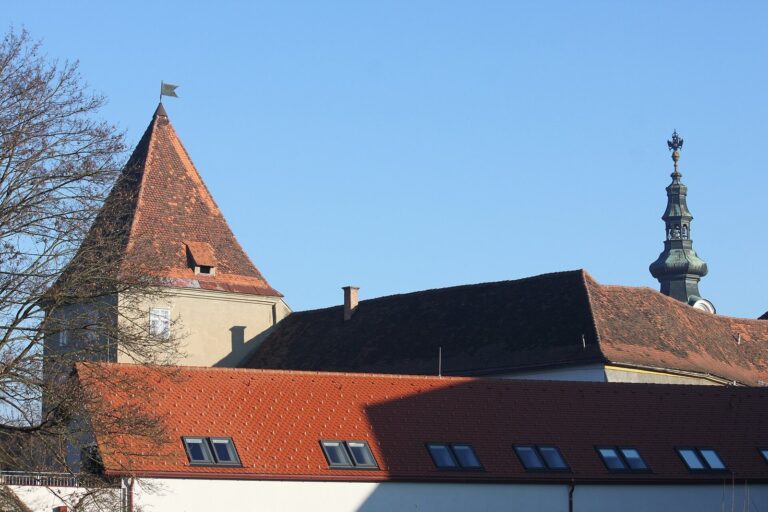
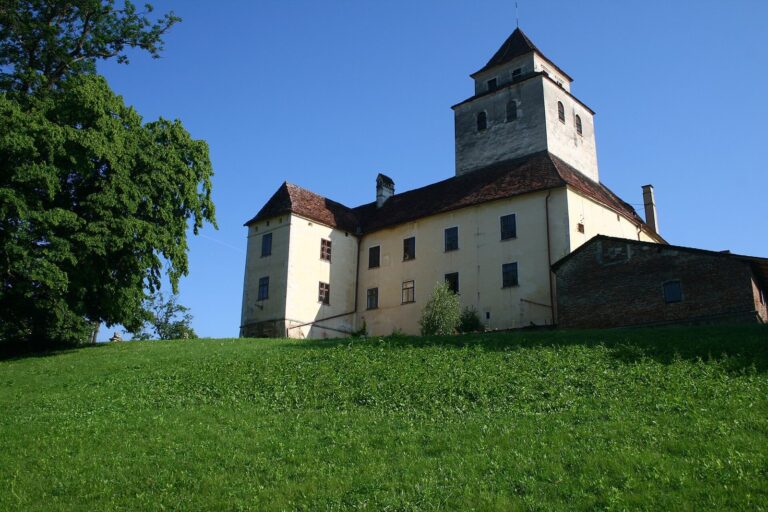
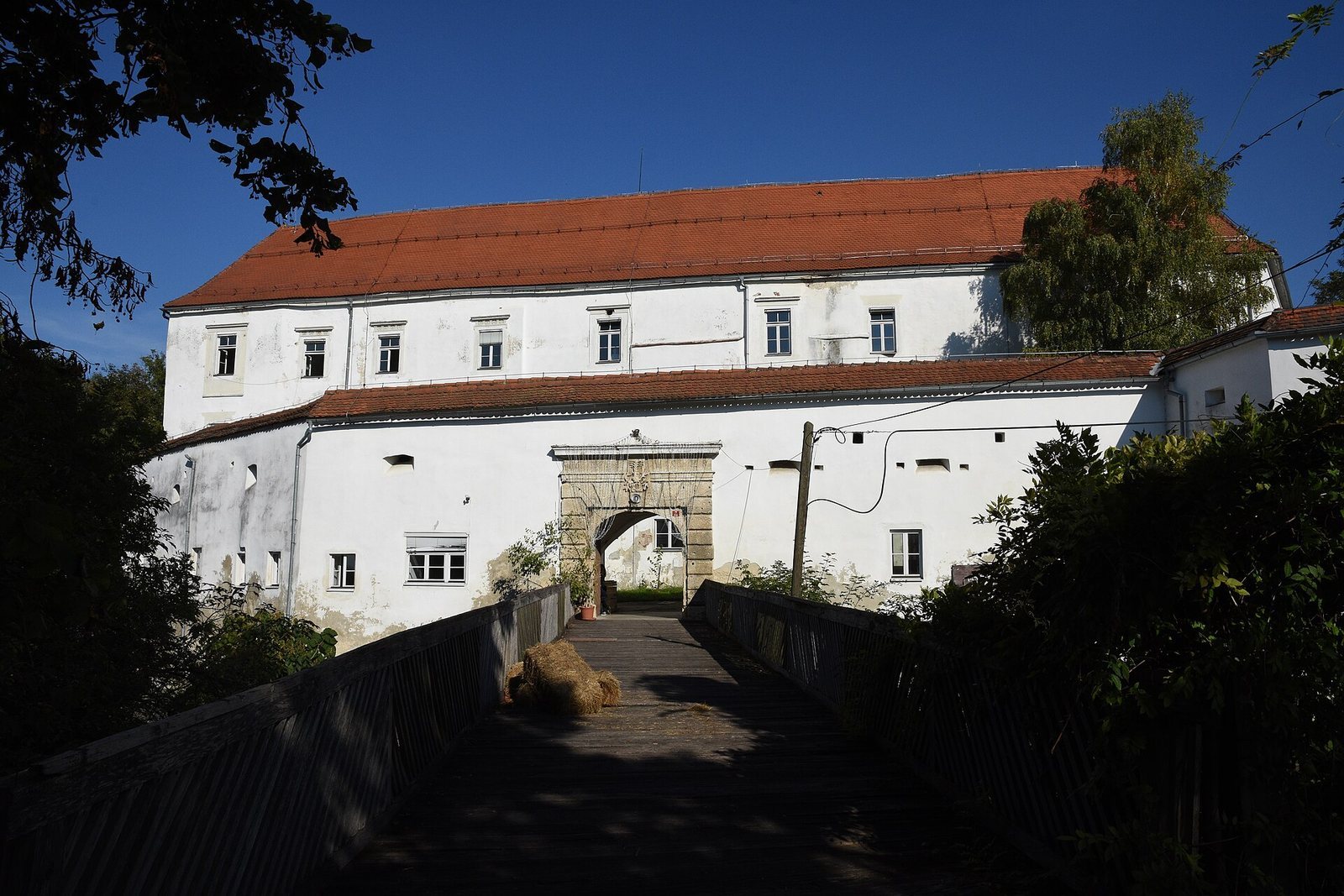
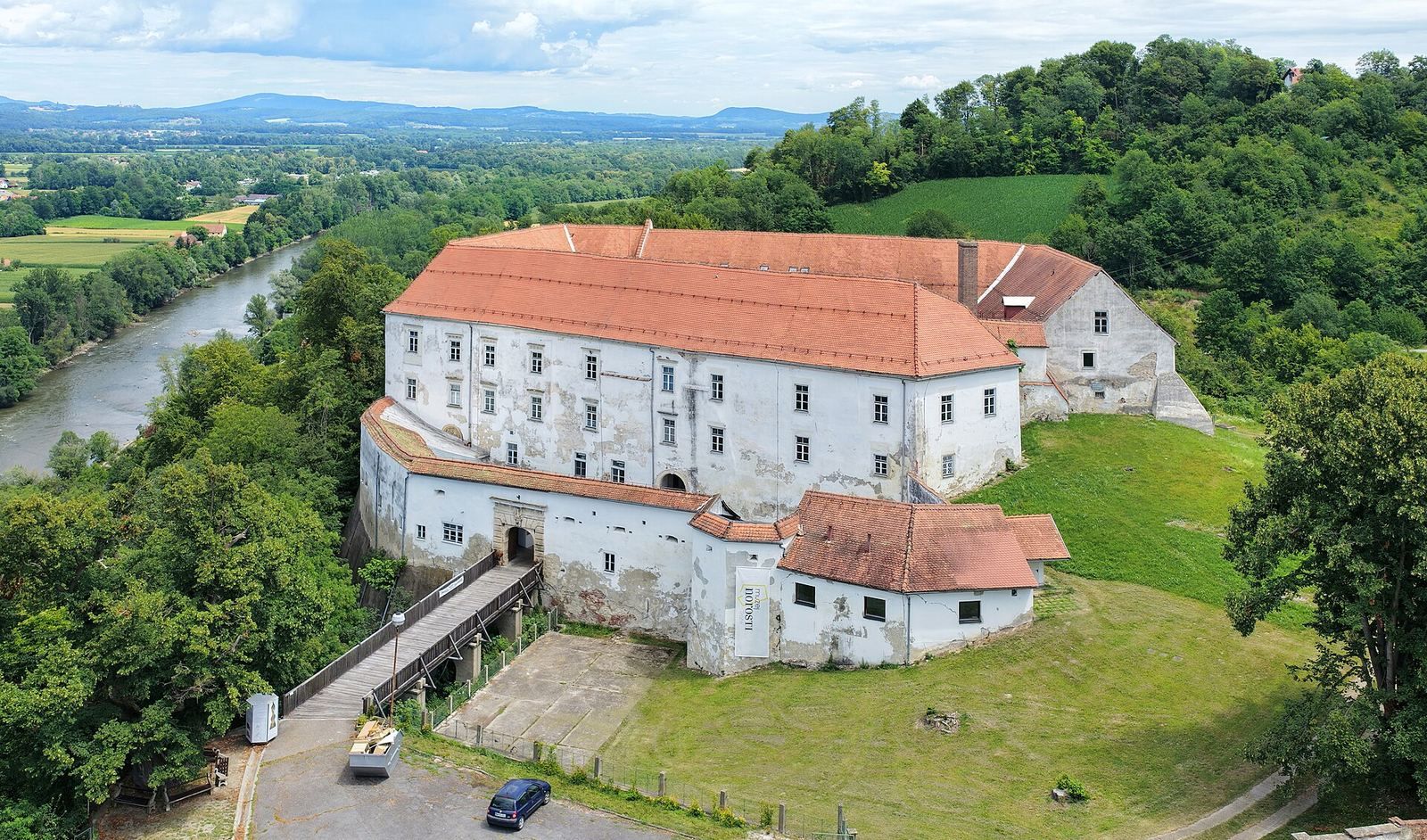
Cmurek Castle stands above the Mura River at Trate, Slovenia. The Lords of Cmurek built it in the first half of the 12th century. Described as a Baroque castle, it has an irregular plan with a Romanesque character. Its history includes centuries of noble ownership and later use as a residential care and psychiatric institution.
Medieval foundations and ownership
Burkhard de Morekke, an early lord associated with the castle, is first recorded in 1148. In 1174, Reinbert of Cmurek served as chief chamberlain, a senior court official, to Ottokar IV, the Styrian margrave, or ruler of a frontier territory. After the original owners died out in 1245, the estate passed to the von Traungau family. The castle appears in a record from 1299 as Hovs Murek.
The Counts of Celje acquired Cmurek in 1386. In 1401, Count Herman of Celje sold it to his brother-in-law Hans, Lord of Stubenberg. The Stubenberg family retained the castle for centuries. Anton Mali, who had served as its caretaker, later purchased it.
Institutional use and preservation
After the Second World War, Cmurek became a residential care institution in the late 1940s. In 1956 it was converted into a closed psychiatric institution for people with mental and nervous illnesses, later called the Institute for the Mentally and Nervously Ill. The institution operated until 2004 and probably housed 200 to 400 people at a time.
Cmurek Castle is designated a Slovenian cultural monument of national importance. A cross-border preservation and revitalization project began in 2013, and the Museum of Madness has been based in the castle since 2014. Its exhibitions cover the Mura River, the castle’s development and history, and life and work at the institution.
Remains
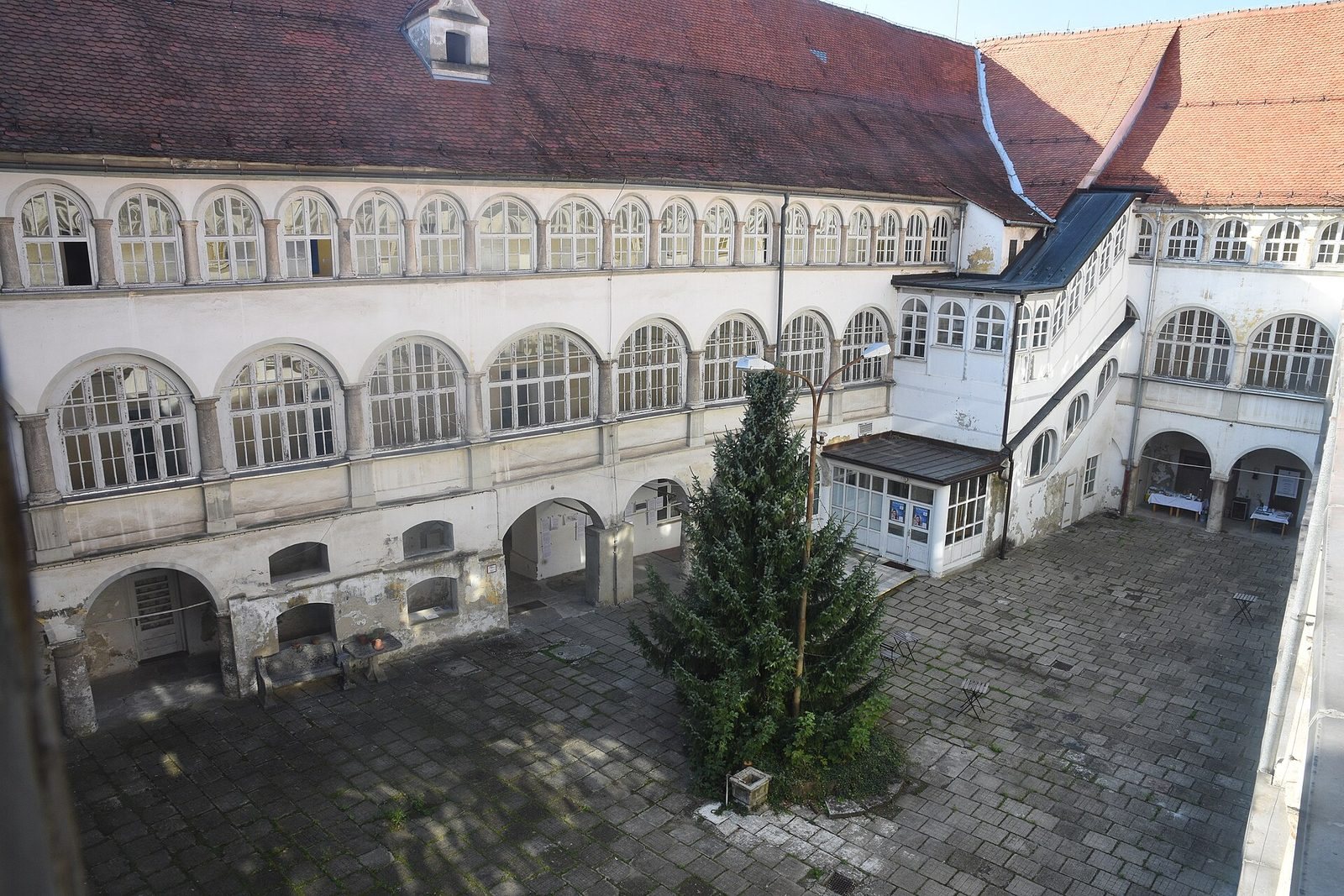
The two-storey castle has residential wings around a central core and an arcaded courtyard. It stands on a steep cliff above the Mura River and a bridge at Trate, opposite the Austrian village of Mureck at an international border crossing. Later alterations substantially changed the earlier design, while a few Romanesque elements survive.
Chapel and later alterations
Castle chapel
The castle chapel was built in 1340. It forms part of the castle’s architectural history alongside the later residential buildings and courtyard.
Courtyard arcades
The arcades in the courtyard were added during extensive Renaissance alterations led by imperial master builder Andrea Bertoletti. This work began around 1590 and continued into the 17th century.
Tower and extensions
A multi-storey Romanesque tower stood at the castle until its demolition in the late 18th century. Several extensions to the buildings were also made during that period.