Goose Tower: A Medieval Defensive Tower at Vordingborg Castle
Site at a Glance
- Popularity
- High
- Country
- Denmark
- Primary era
- Medieval
- Eras represented
- Medieval, Modern
- Civilizations
- Danish
- Site type
- Military
- Remains
- Castle
On this page7 sections
History
Goose Tower is a 14th-century defensive tower within Vordingborg Castle on Zealand, Denmark, built around 1362 under King Valdemar IV Atterdag. It formed part of a castle expanded into Denmark’s largest castle complex and also served the royal court’s administration.
Foundation and royal expansion
King Valdemar I founded Vordingborg Castle in the 12th century as a stronghold and a base for raids on the German Baltic coast. In the 1360s, Valdemar IV enlarged the castle. Goose Tower, built around 1362, served as a defensive tower and housed the royal court’s archive and treasury.
Decline and survival
After Denmark’s defeat in the Second Danish-Hanseatic War, its conflict with the Hanseatic League, an association of northern European trading cities, the castle gradually lost military importance and fell into decline. In 1665, much of its deteriorated fortification was demolished to make room for a Baroque palace for Prince George, son of King Frederick III. George never lived there. The empty palace became cavalry barracks in 1700 and was demolished around 1750. Bricks from the castle and palace were reused in houses in Vordingborg. Goose Tower survived the dismantling because it was being used as a prison.
The goose tradition and protection
A tradition links the tower’s name to a golden goose that Valdemar IV supposedly placed on its summit to ridicule the Hanseatic League. The story says that in 1362, as the League marched against Copenhagen, Valdemar received 77 declarations of war from Hanseatic cities and mocked their threats as geese honking. The original goose’s fate is uncertain. It may have been taken to Lübeck as a trophy after the Peace of Stralsund, a settlement between Denmark and the League; carried away by Eric of Pomerania when he fled Denmark in 1439; or lost at sea.
On 24 December 1808, Reiersen’s widow transferred the tower to King Frederik VI. It became the first historic monument in Denmark to receive legal protection. Today it is part of the museum at Vordingborg Castle, the Danish Castle Centre, where it is the largest exhibit.
Remains
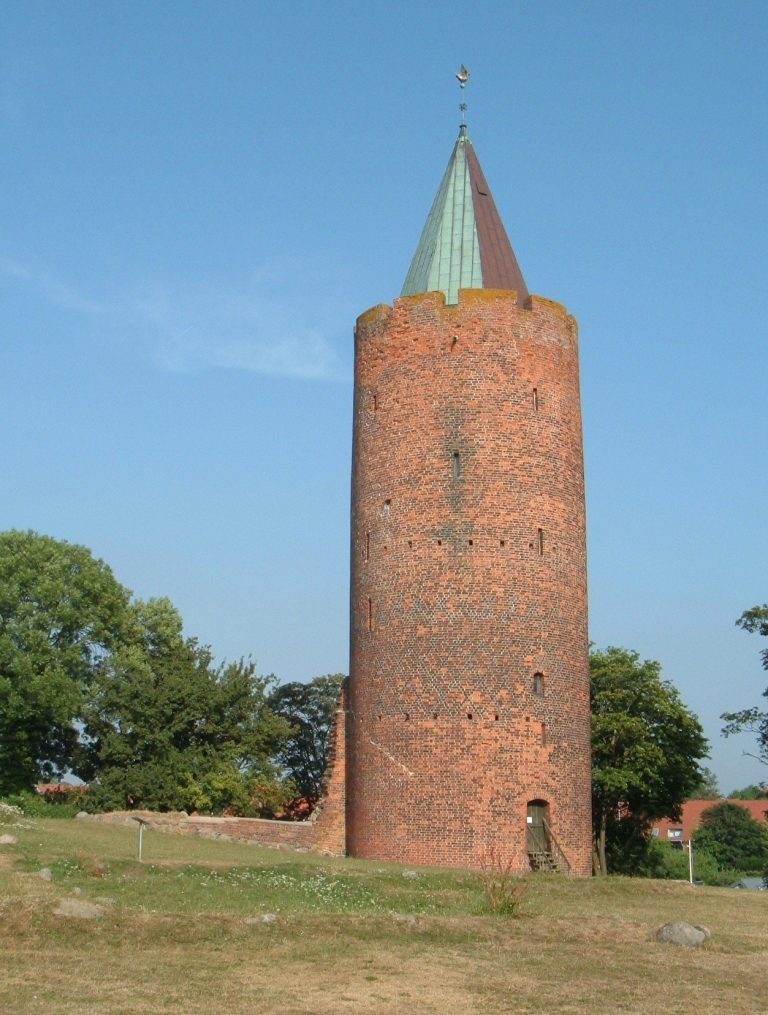
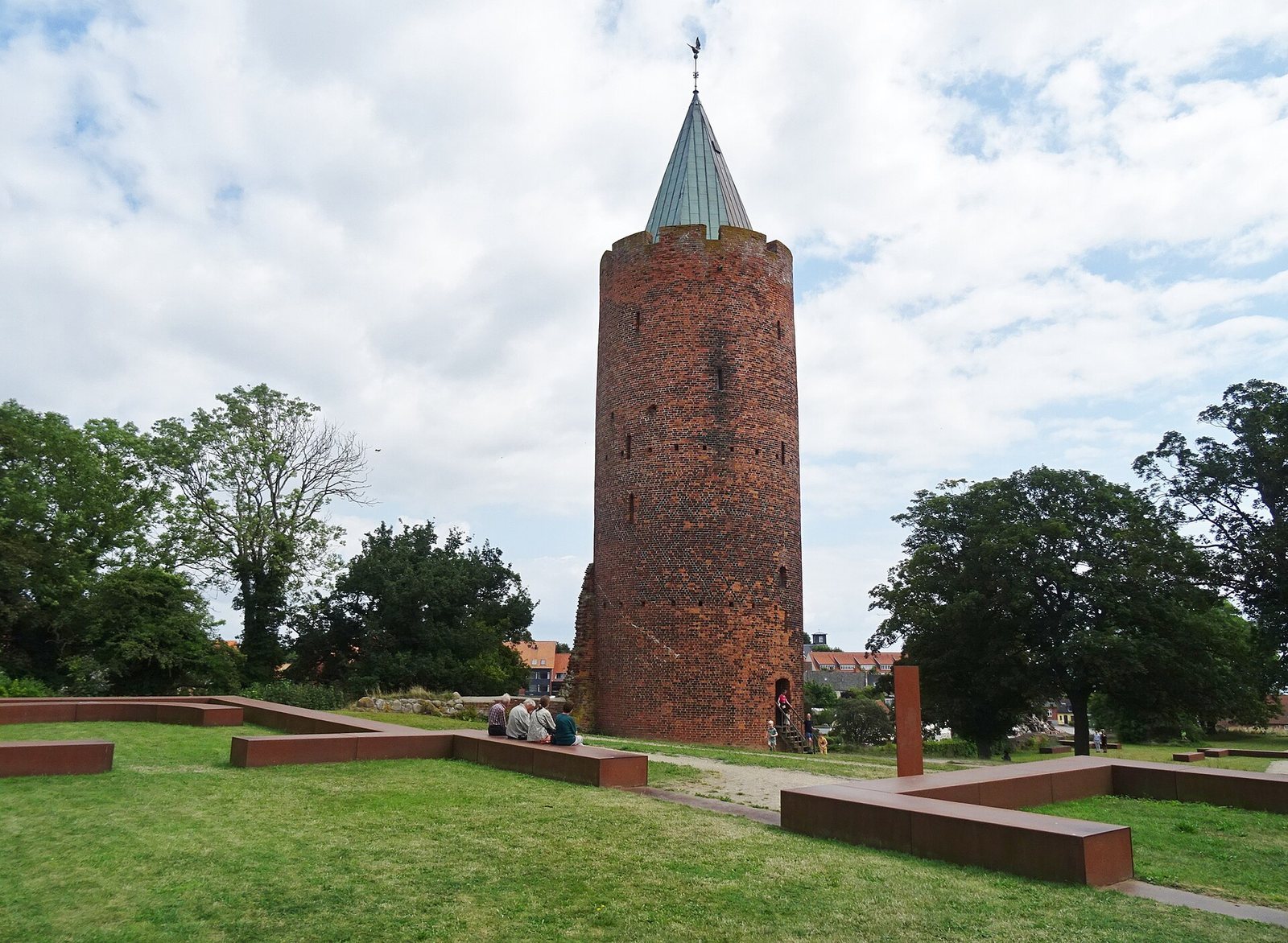
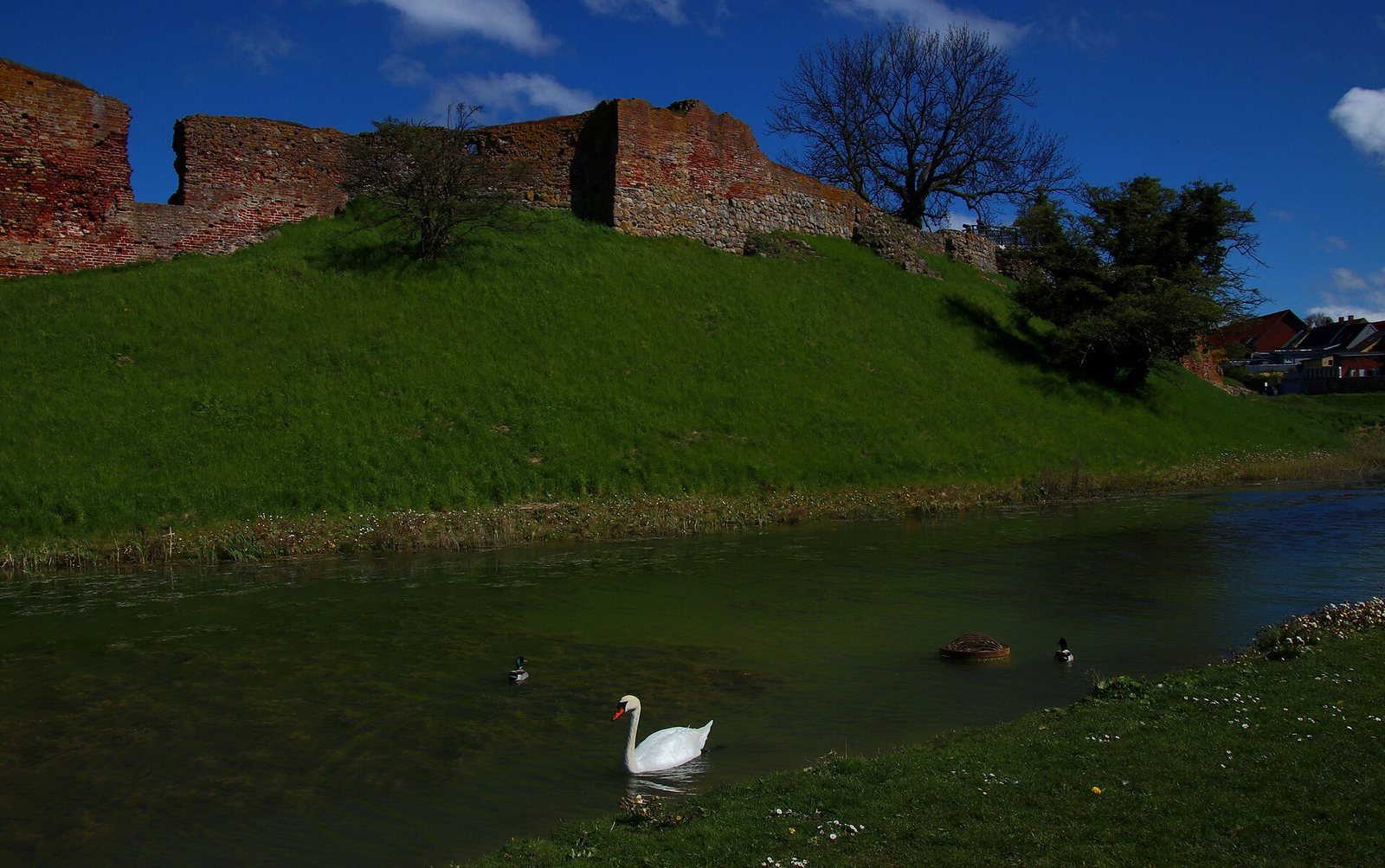
Goose Tower stands within the former defensive enclosure at Vordingborg Castle. Its brick structure survives amid the ruined remains of the wider fortifications.
The castle defenses
The castle’s ring wall measured 770 metres in length and 8 metres in height. Its defenses included nine towers, four of them at the corners, and as many as 12 half-towers, projecting structures that did not form complete towers. Goose Tower is the sole surviving corner tower and the only part of the fortifications that is not in ruins. It is considered Denmark’s only fully preserved castle tower.
The tower and spire
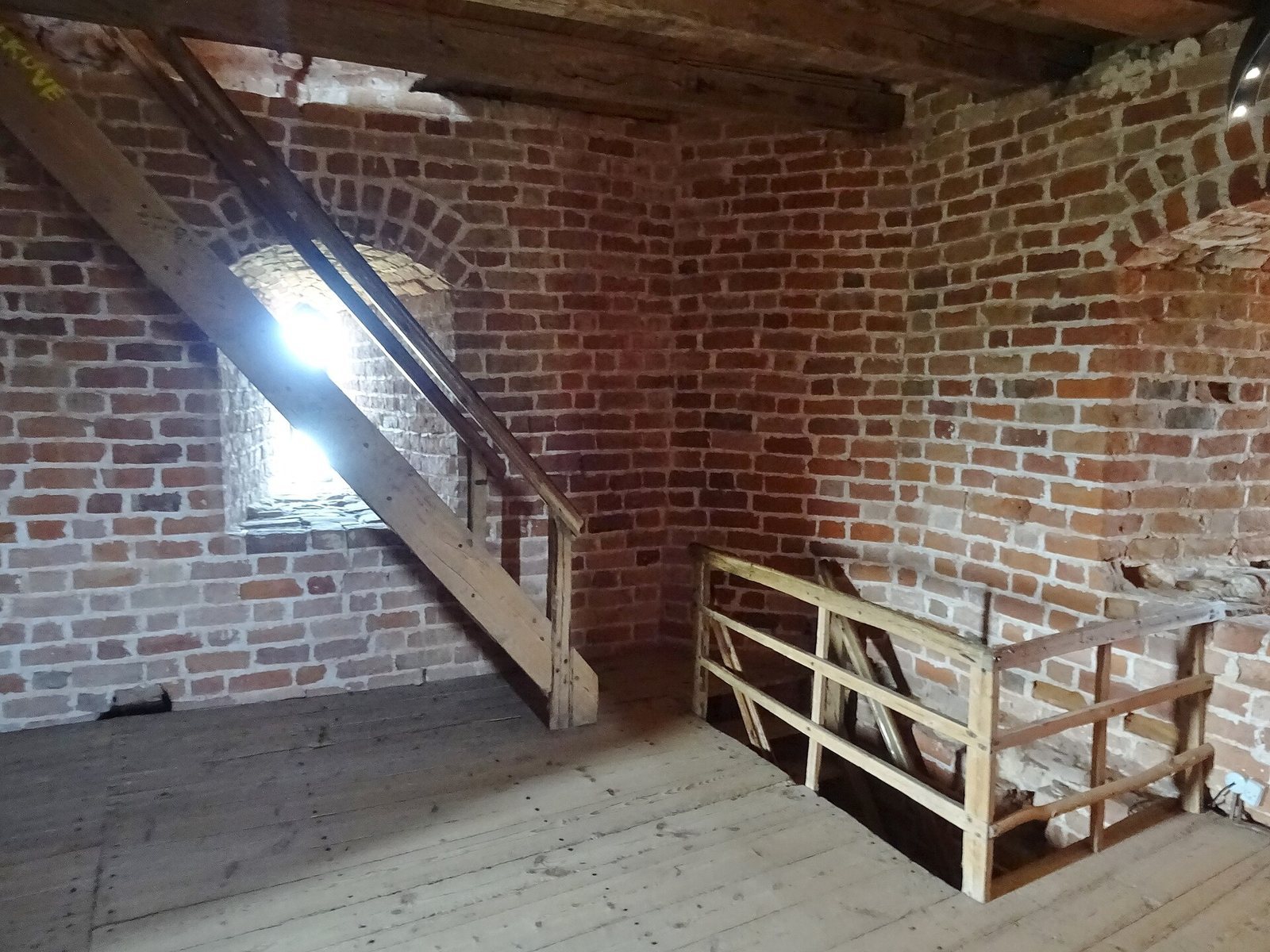
The tower has six levels of brickwork. Its walls are thickest at the base and become thinner toward the top. The masonry reaches 26 metres, while the spire adds about 10 metres, bringing the total height to roughly 36 metres. The spire has taken different forms over time. The present copper spire dates to 1871 and carries a goose covered with about two kilograms of gilding; that goose was installed with the spire.