Godalsa: A State-Supervised Buddhist Temple in Korea
Site at a Glance
- Rating
- 4.5
- Popularity
- Low
- Country
- South Korea
- Primary era
- Medieval
- Eras represented
- Medieval
- Civilizations
- Goryeo, Silla
- Site type
- Religious
- Remains
- Temple
On this page13 sections
History
Foundation under Unified Silla
Godalsa was a Buddhist temple in Yeoju, South Korea, built in 764 under King Gyeongdeok of Unified Silla, the later period of the Silla kingdom. It belonged to a group of three exceptionally large Buddhist temples overseen by the state in its era.
A legend connects the temple’s name and construction with a stonemason called Godal. The story says that, unaware his family had died, he prayed and continued his work until it was complete. He then became a Buddhist monk and a renowned religious figure, and the temple took his name.
Royal patronage in the Goryeo period
Goryeo, the kingdom that followed Silla, protected Godalsa during its early years under King Gwangjong. In the tenth century, the temple is thought to have held sway over almost all of the surrounding village.
An inscription on the memorial to the monk Wonjong says he was born during the reign of Silla’s King Gyeongmun and died aged 90 during Gwangjong’s rule. Gwangjong commissioned the memorial in his honor, and its inscription dates it to 975. A separate stupa for Wonjong was erected in 977.
Decline and modern recognition
Godalsa later declined, but the date and cause of its closure are unknown. In 1962, its principal stupa became Korea’s fourth National Treasure. The temple site was registered as Historic Site No. 382 in 1993, and a reconstruction project is restoring the grounds.
Remains
Grounds and excavated evidence
The site covers 58,995 square metres. Its temple buildings were made of wood, which complicated efforts to locate their foundations. Excavations identified seven former building locations and two walls. In 1998, work near a stupa recovered a roof tile inscribed “Godal Temple” and other relics.
Stupas and memorial
Principal Godalsa stupa
Attributed to the tenth century, early in the Goryeo period, the principal stupa stands about 3.4 metres high. Its granite tiers form an octagonal monument. Petal patterns decorate the eight-sided lower stone, while the middle stone carries four dragons and a verse arranged around a turtle. Dragons, turtles, lotus flowers, and clouds also appear among its decorative motifs.
Wonjong memorial
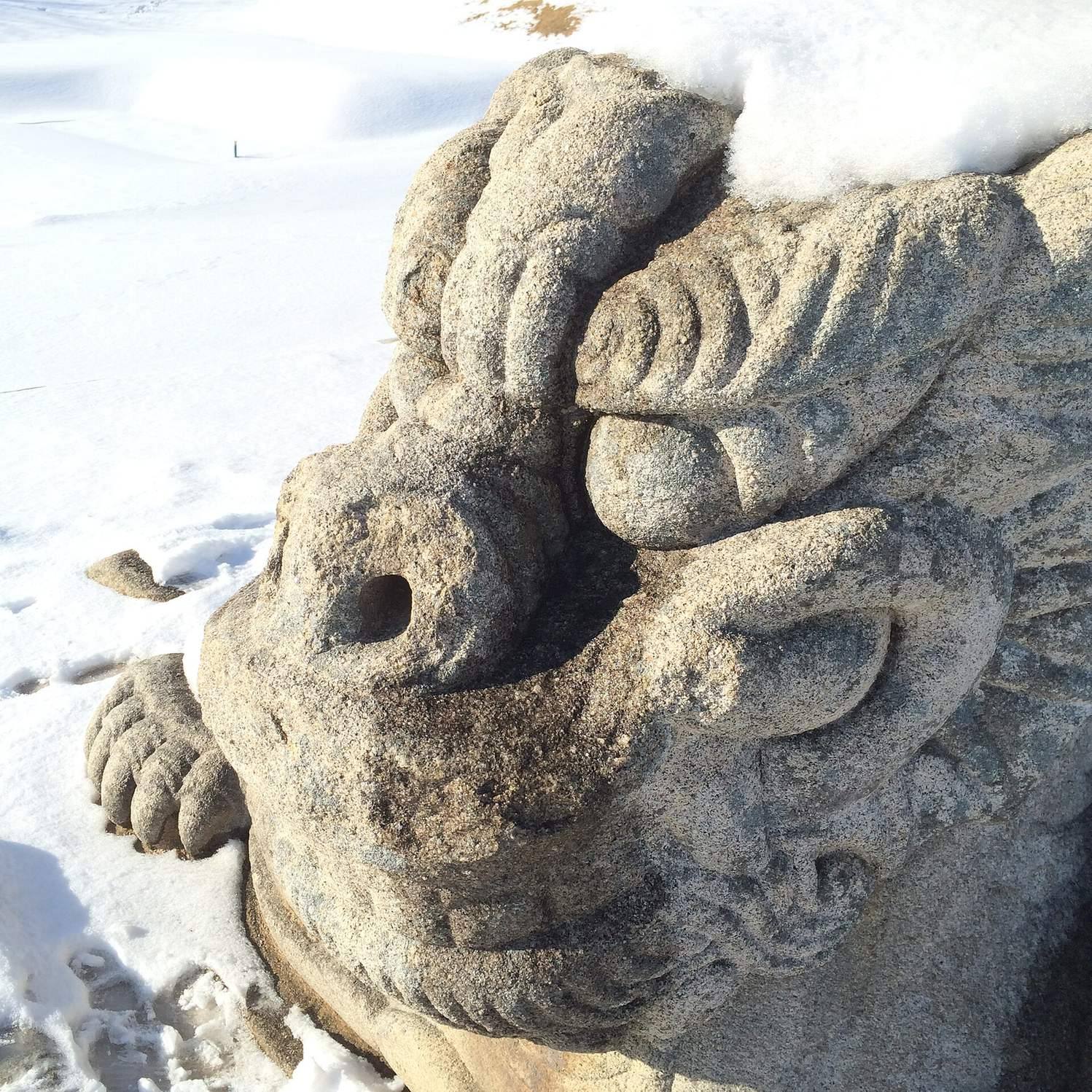
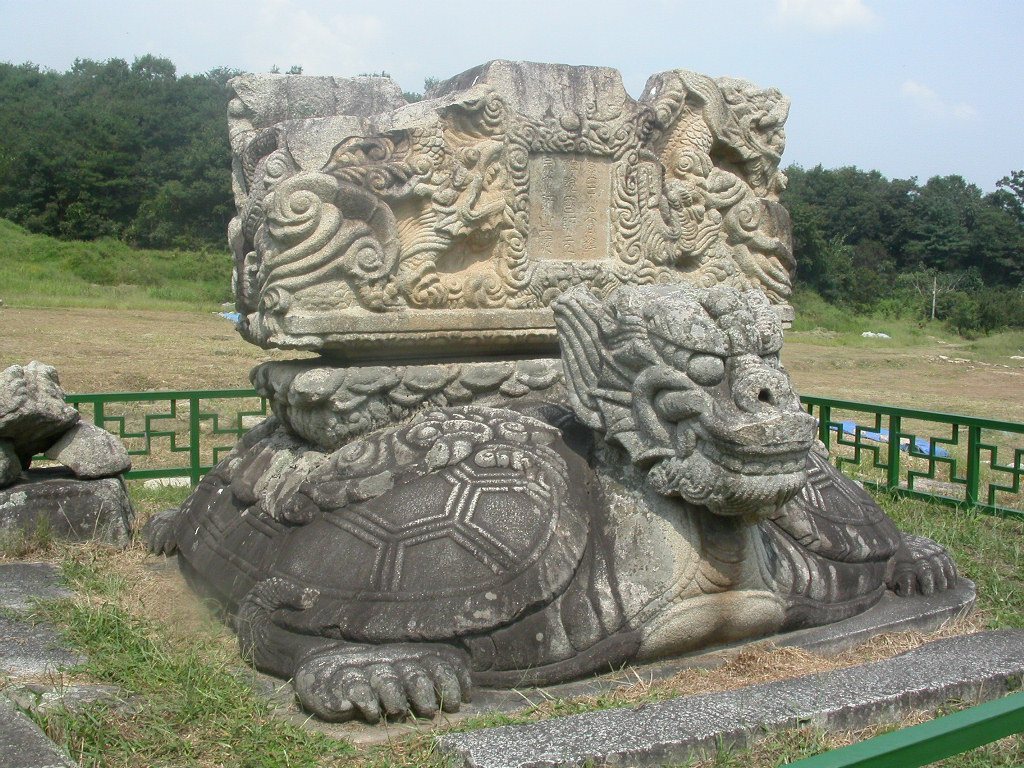
The memorial to Wonjong has a base shaped as a giant turtle and a capstone decorated with a dragon. Its inscribed stone column is preserved in fragments and displayed at Gyeongbok Palace. The inscription recounts Wonjong’s life and deeds.
Wonjong stupa
The separate stupa erected for Wonjong in 977 remains nearly intact. Dragons, turtles, and clouds decorate its surface, and its top takes the form of a pagoda.
Other carved stone objects
Buddha-image pedestal
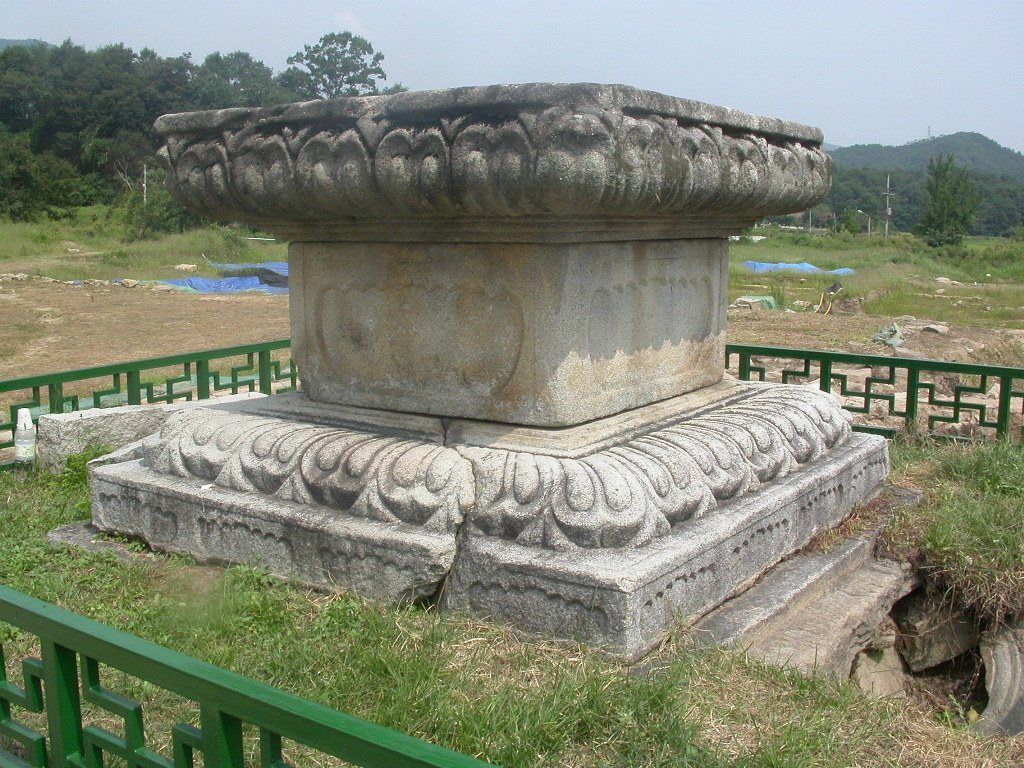
A stone pedestal for a Buddha image, probably made in the late tenth century, is decorated with lotus flowers.
Twin-lion stone lantern
This late tenth-century lantern stands 2.43 metres high and is carved with a pair of lions. Since 1959, it has been displayed in the garden of Gyeongbok Palace.