Garisenda Tower: Bologna’s Leaning Medieval Tower
Site at a Glance
- Popularity
- Very High
- Country
- Italy
- Primary era
- Medieval
- Eras represented
- Medieval, Modern
- Civilizations
- Holy Roman Empire, Italian
- Site type
- Military
- Remains
- Tower
On this page10 sections
History
Construction and medieval alteration
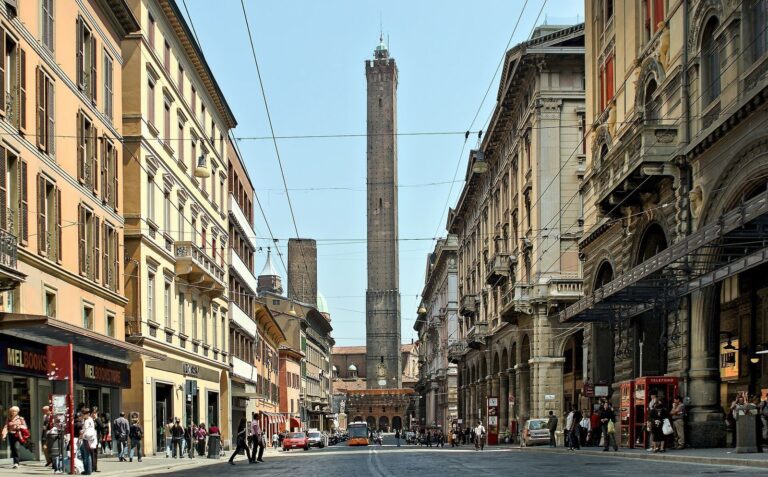
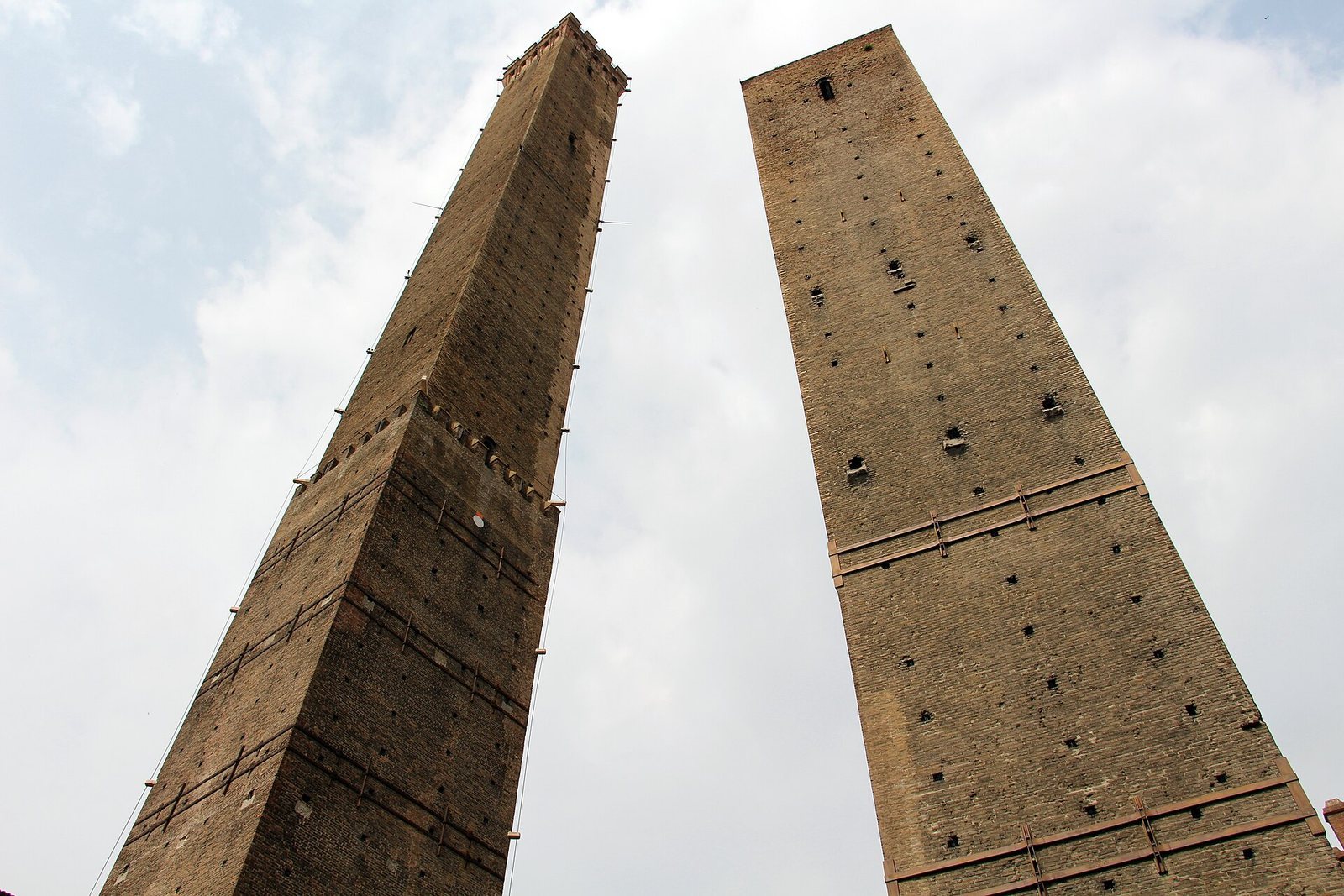
The Garisenda Tower is a medieval masonry tower in Bologna, Italy, built around 1109 by the prosperous Garisendi family of money changers. It is one of the city’s two best-known medieval towers and a symbol of Bologna. Family towers served strategic and military purposes as well as displaying the status of their owners.
Problems with the foundations led to the tower being lowered by 12 metres in the fourteenth century, during the rule of Giovanni Visconti da Oleggio, then ruler of Bologna.
Ownership and literary associations
The Drapers’ Guild later acquired the tower. During the Napoleonic era it passed to the Ranuzzi family, followed by the Malvezzi Campeggi family and Raimondo Franchetti. The Municipality of Bologna became its owner in 1904.
Dante Alighieri, the medieval Italian poet best known for the Divine Comedy, also referred to the tower in a sonnet attributed to him, though its authorship is disputed. The sonnet’s mention of a “greater” subject may mean the nearby Asinelli Tower, but more probably refers to a woman.
Changing surroundings and safeguarding
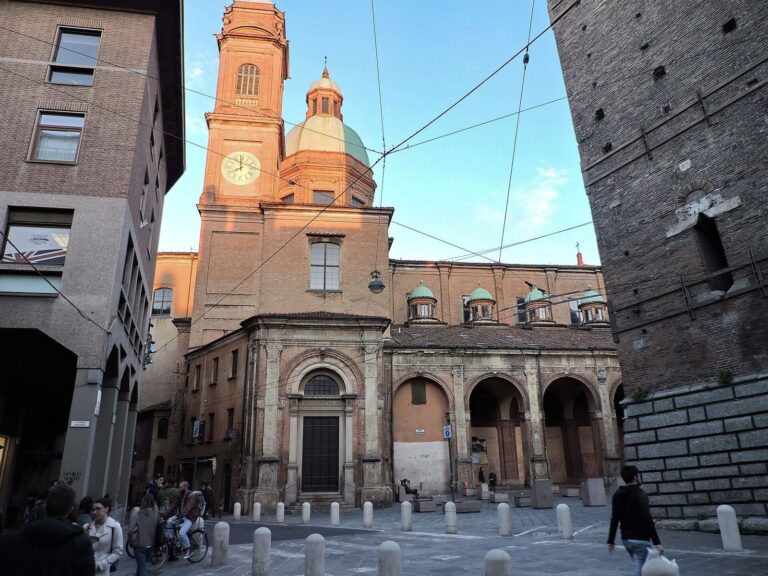
Commercial buildings and a small church dedicated to Santa Maria delle Grazie, built in 1710, once partly obscured the tower. These structures were demolished toward the end of the nineteenth century.
The municipality, the University of Bologna and successive technical committees have monitored the tower. Emergency work in 2020 and 2021 aimed to strengthen the load-bearing capacity of its base. In 2023, a technical committee suspended ongoing work and secured the area considered at risk. After unusual oscillations that October, the city described the situation as highly critical in December and began work on a protective barrier intended to shield nearby buildings and passers-by from falling stones or a possible collapse.
Remains
Tower and protective works
Position and street setting
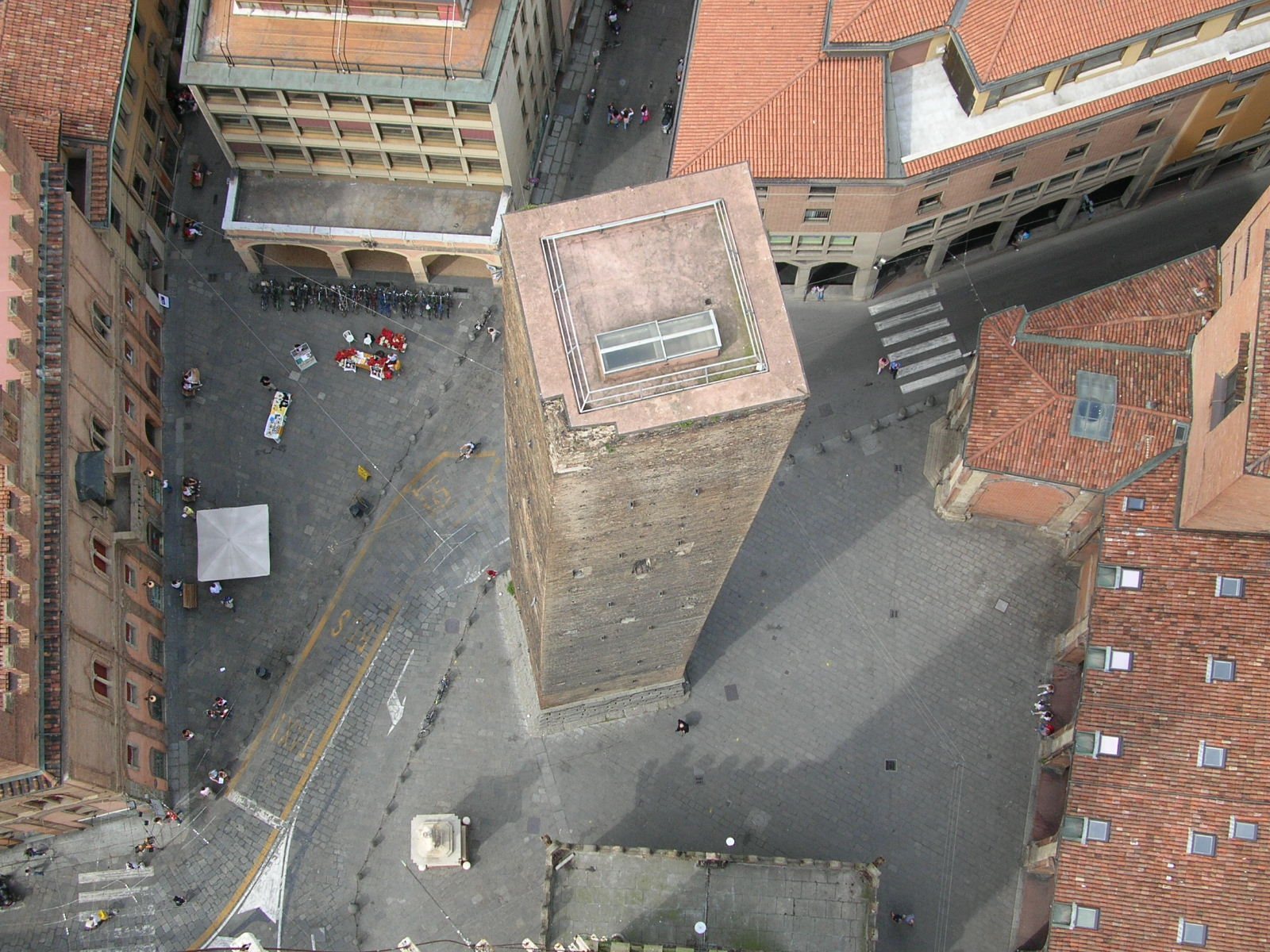
The masonry tower stands in Piazza di Porta Ravegnana, at a junction of historic routes. San Donato, now Via Zamboni, Via San Vitale and Strada Maggiore meet in this area; Via Santo Stefano, Via Castiglione and Via Rizzoli are also among the nearby routes. The taller, contemporary Asinelli Tower stands close by.
Height and inclination
The tower now reaches 48 metres. Its top lies 3.22 metres from the vertical axis, and its inclination is about four degrees. The increasing lean has been linked to deformation of the ground beneath its foundations and deterioration of the masonry at the base.
Base and commemorative features
Toward the end of the nineteenth century, the base was faced with rough-faced blocks of selenite, a crystalline form of gypsum. An inscription on the tower recalls Dante’s comparison of its leaning form to Antaeus, a giant from classical mythology who bends over in the Divine Comedy. A statue of Saint Petronius, traditionally identified as a bishop of Bologna and the city’s patron saint, is positioned in front of the tower’s west and south sides.
Protective enclosure
A protective barrier erected around the area at risk of collapse in 2023 was described as about five to six metres high. One description specifies two levels of containers forming the enclosure.