Byzantine Bath: A Medieval Public Bath in Thessaloniki
Site at a Glance
- Popularity
- Medium
- Country
- Greece
- Primary era
- Medieval
- Eras represented
- Medieval
- Civilizations
- Byzantine, Ottoman
- Site type
- Sanitation
- Remains
- Baths
On this page7 sections
History
Byzantine origins and public use
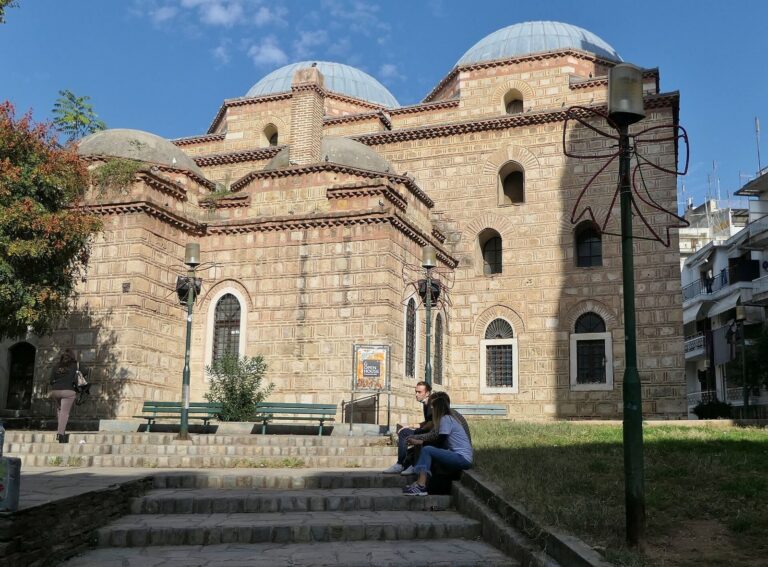
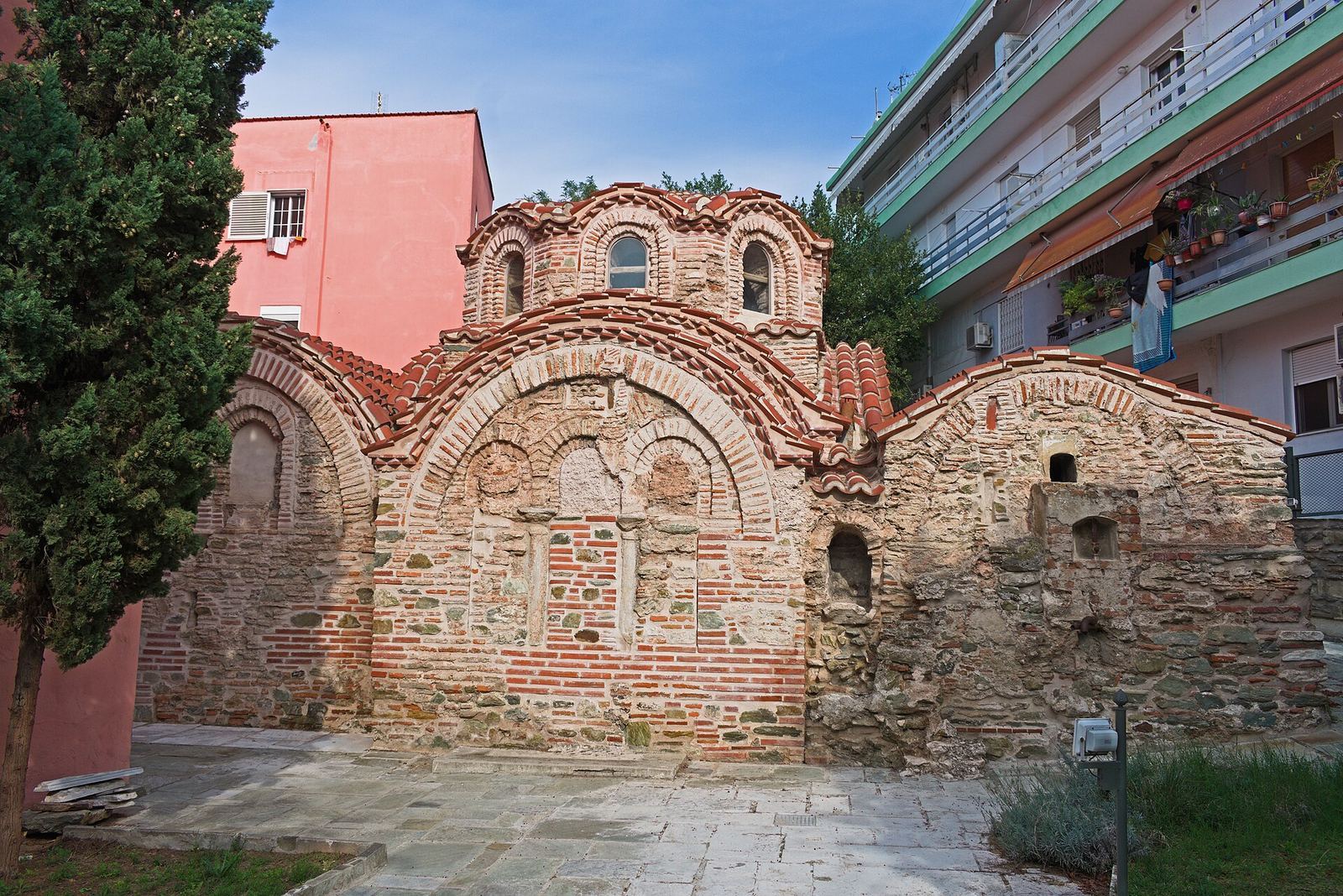
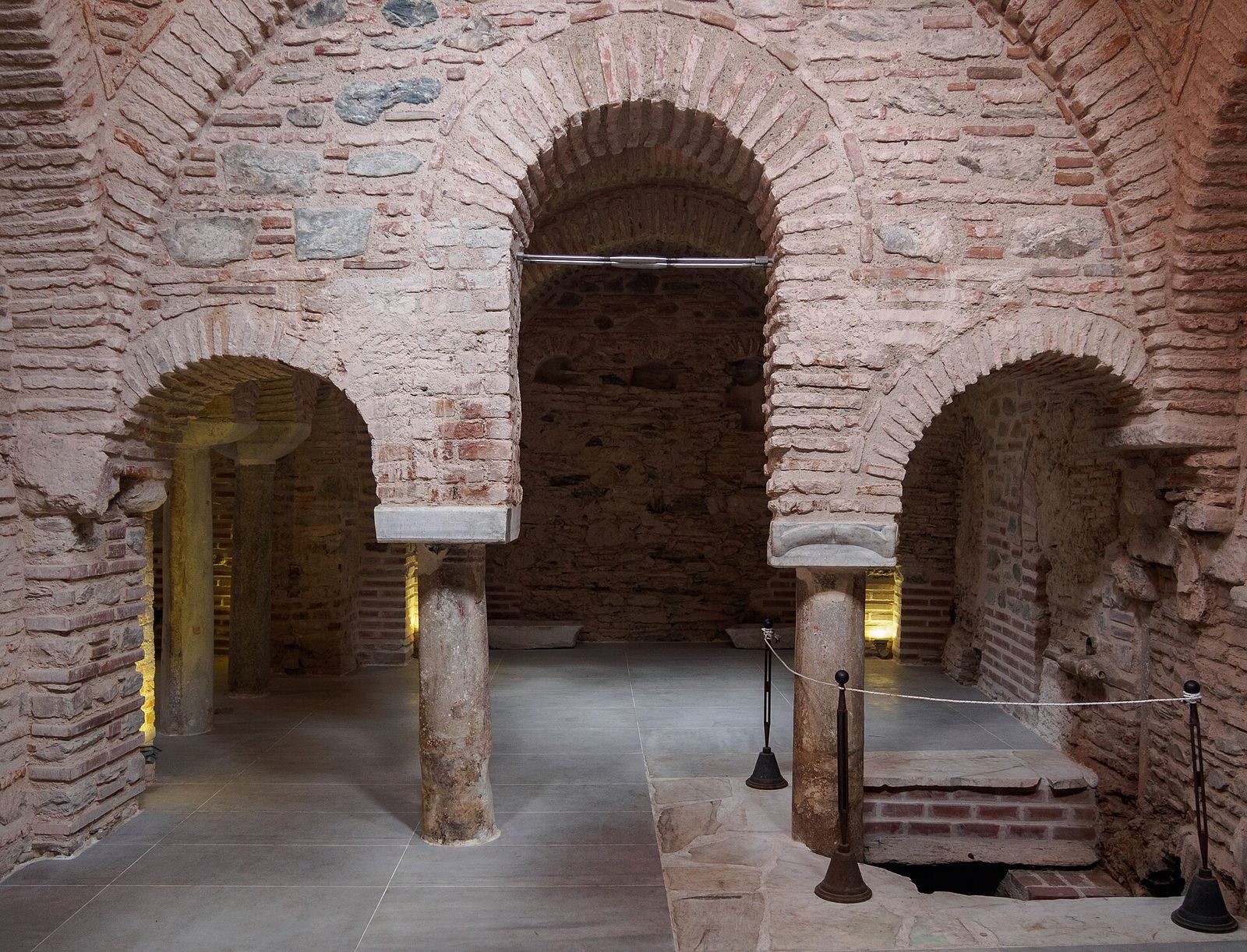
The Byzantine Bath is a medieval bathhouse in Thessaloniki, Greece, dating to the late 12th or early 13th century. At the time, Thessaloniki belonged to the Byzantine Empire, the medieval continuation of the Roman Empire centered on Constantinople. The bath’s earliest role is uncertain, but it is thought to have formed part of a monastery complex. It later operated as a public bath, with men and women using it at different times.
Ottoman-era changes
Under Ottoman rule, the building was adapted for separate use by men and women. It became known as Kule Hammam, meaning Bath of the Tower, a name associated with the neighborhood where it stood.
Closure and preservation
The bath remained in use until it closed in 1940, probably because of the Second World War and the German occupation of Greece. It was declared a protected monument in 1952, and initial work on the building took place in the 1970s. The 1978 earthquakes damaged it; the 9th Ephorate of Byzantine Antiquities, the regional authority responsible for antiquities oversight and protection, supported the structure and shielded it with an external metal covering. In 1988, the bath became part of the UNESCO World Heritage listing for the Paleochristian and Byzantine Monuments of Thessaloniki. The Ephorate brought renewed attention to the building in 2002, and restoration began in the early 2010s, continuing for four years.
Remains
Setting and overall plan
The bath stands in Thessaloniki’s Upper City, at the entrance to its traditional settlement, on Theotokopoulou Street among the streets of Theotokopoulou, Krispou, Chrysostomou, and Philoktitou. Measuring 17 by 12.5 metres, it is one of the few surviving secular buildings of its period. It is the largest surviving Byzantine bath in Greece and the only surviving Byzantine bath in Thessaloniki. The examples at Corinth, Sparta, Paramythia, Ioannina Castle, and the monasteries of Kaisariani and Zoodochos Pigi survive as ruins. The building follows a three-part plan characteristic of Byzantine baths.
Bathing rooms and heating
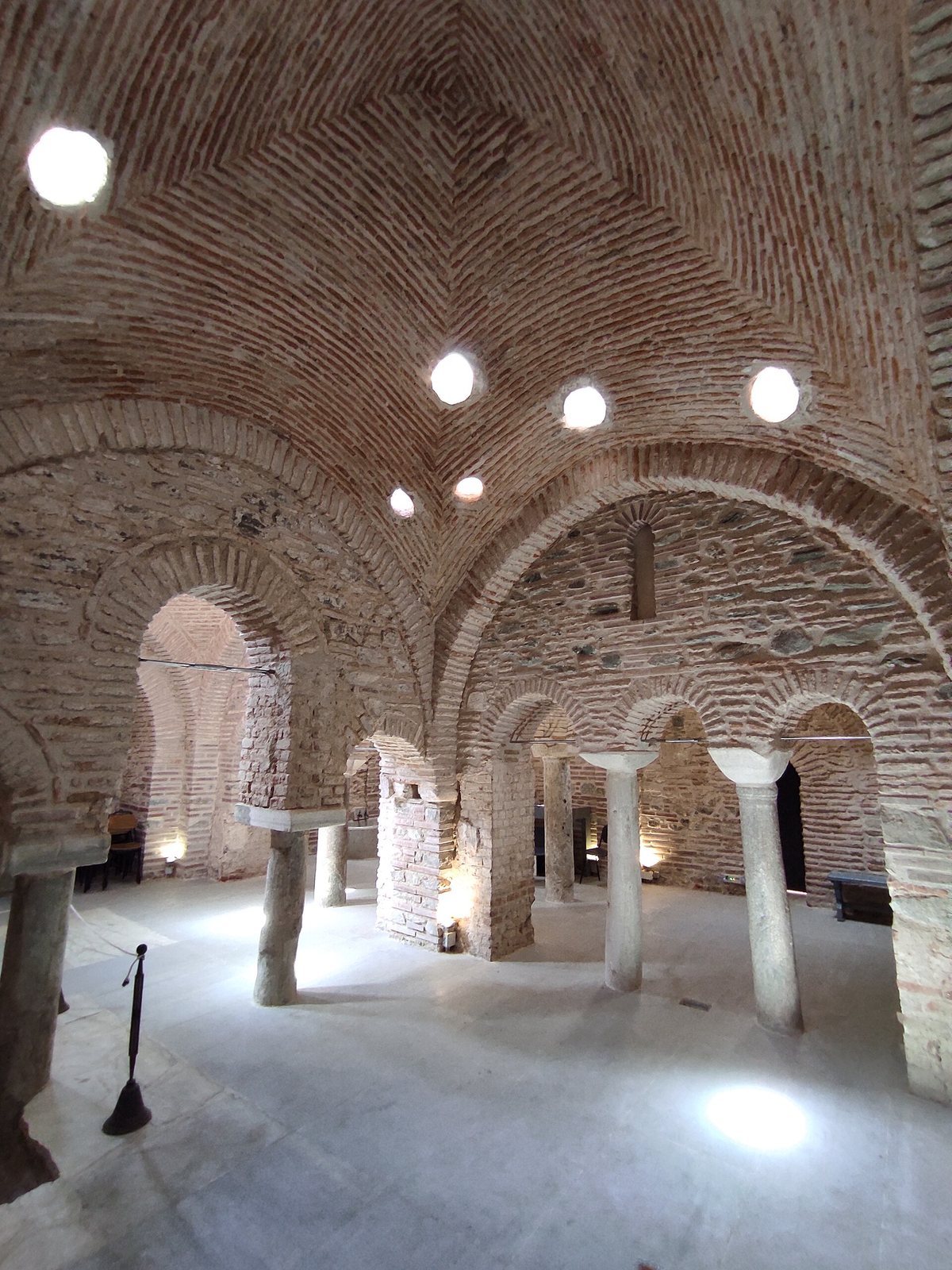
The original entrance was on the south side. From there, rectangular cold rooms used for changing led to two vaulted warm rooms, followed by two square hot rooms. Underfloor heating systems warmed the hot rooms. One was topped by a dome resting on an eight-sided base with eight windows; the other had a domed ceiling. Air vents in the walls helped regulate the temperature. A water cistern stood north of the bath, with a hearth beneath it to heat the water.