Galatzó: A Historic Estate in Mallorca
Site at a Glance
- Rating
- 4.6
- Popularity
- High
- Country
- Spain
- Primary era
- Medieval
- Eras represented
- Bronze Age, Iron Age, Classical, Medieval, Modern
- Civilizations
- Crown of Aragon, Spanish
- Site type
- Domestic
- Remains
- Manor House
On this page17 sections
History
Galatzó is a historic rural estate dating to the 13th century near Es Capdellà in Calvià, Mallorca, Spain. Its buildings follow vernacular architecture, a tradition shaped by local materials, techniques, and practical needs, and its history reaches back to prehistoric settlement in the valley.
Prehistoric settlement and medieval estate
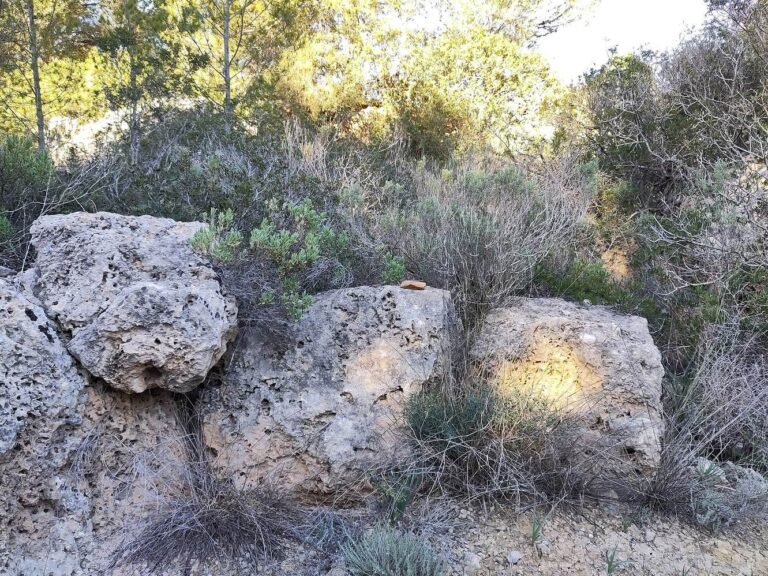
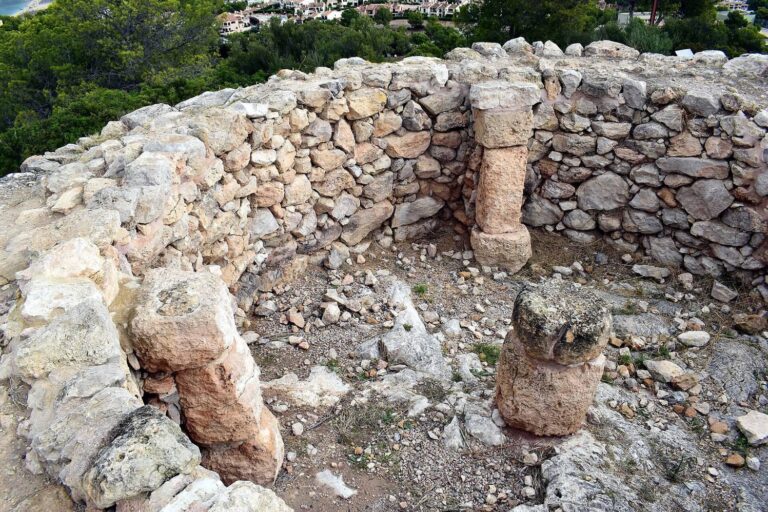
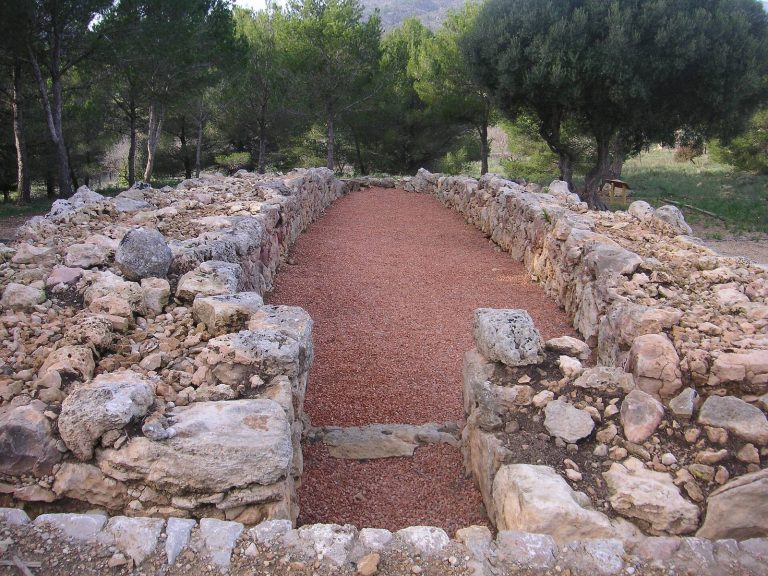
The sheltered southern slopes at the foot of the Tramuntana mountains supported settlement about 4,000 years ago. Towers and burial structures at the estate belong to the Talayotic culture, a prehistoric Balearic tradition associated with tower-like monuments and burial complexes. These remains date from the 13th to the 2nd century BCE.
During Muslim rule of Mallorca, from the 10th to the 12th century, people built an irrigation system that drew on springs and streams, particularly the Torrent de Galatzó. The estate was first mentioned in writing in 1283, shortly after James I of Aragon took Mallorca for the Crown of Aragon.
Agriculture and changing ownership
Farming shaped the valley for centuries. A tithe barn, used to store agricultural produce paid as a customary levy, and two watermills reflect the cultivation of grain and its milling. The estate also had an oil mill, where olive oil production continued until the 1960s.
Aina Roca Arrom bought Galatzó in 1903. Her daughter, Maria Coll Roca, sold it in 1943 to Victorio Luzuriaga, a Basque metallurgical entrepreneur. In 1945, he built large stables and pigsties, rearranged the owners’ residence, and renovated the chapel.
By 1960, the estate belonged to Luzuriaga’s daughter Maria del Carmen Luzuriaga and her husband, José Urresti. It was leased to Miquel Llabrés in 1977, and he held the lease for about 30 years. In 1987, Maria del Carmen transferred the estate to her son Victorio.
Decline and municipal stewardship
Galatzó declined from the 1960s as tourism became Calvià’s leading economic sector amid wider development. In May 2006, Calvià’s municipal council acquired the estate and opened it for public use. The municipal project gives priority to conservation while allowing public use, and the land is protected under the Natural Areas Act.
Remains
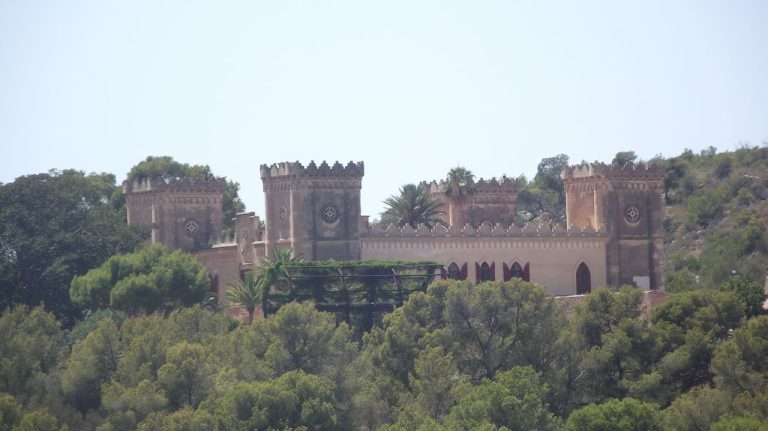
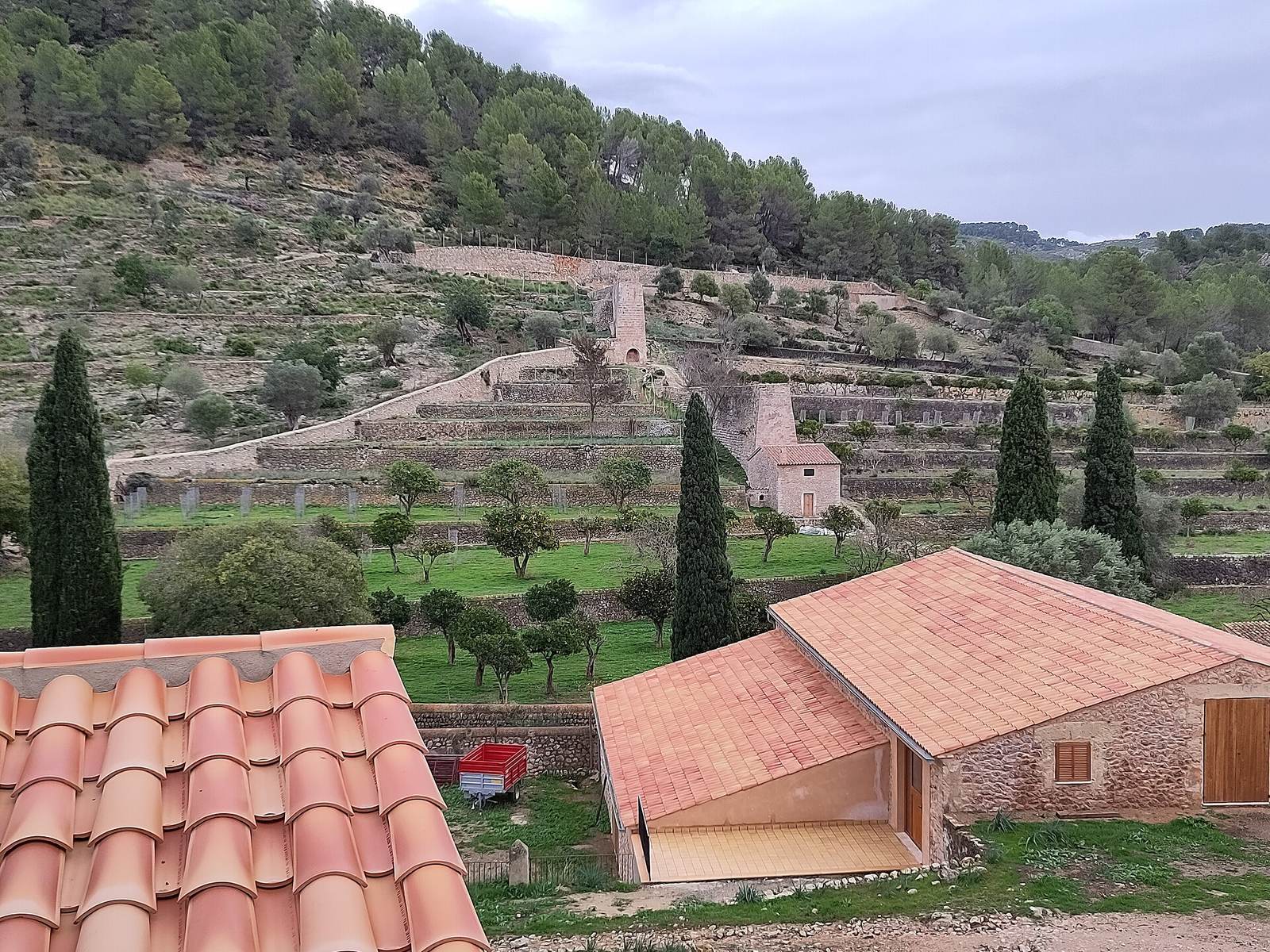
The estate’s built core comprises a manor house and working farm buildings, set within a large valley landscape of cultivated slopes and mountain terrain. The complex follows local vernacular building traditions, while terraces, paths, waterways, and archaeological remains extend across the surrounding land.
Valley and mountain setting
Galatzó covers about 1,400 hectares, or 9.66 percent of Calvià’s municipal area, near Es Capdellà in northern Calvià and beside the municipalities of Estellencs, Puigpunyent, and Andratx. The fertile valley is sheltered from north winds. It includes Puig de Galatzó, about 1,025 metres high, and Mola de s’Esclop, at 925 metres. Both are among the highest peaks in the southern Serra de Tramuntana. Puig de Galatzó is the highest point in Calvià, Puigpunyent, and Estellencs, as well as Mallorca’s second-most prominent summit.
Several drainage basins run from north to south. The Torrent de Galatzó joins the Torrent de Valldurgent, which flows into Santa Ponça Bay; the Torrent de Galatzó now carries water only after rain. The limestone terrain includes caves, exposed limestone surfaces, gorges, natural springs, eroded slopes, and depressions formed as water dissolves the rock.
Terraces, agriculture, and paths
Terraces and crops
Dry-stone terraces, made from fitted stones without mortar, step across the mountain slopes and made more land available for cultivation, especially olives. The cultivated fields now support mainly olives, almonds, carob, and fruit, including citrus.
Paths and kilns
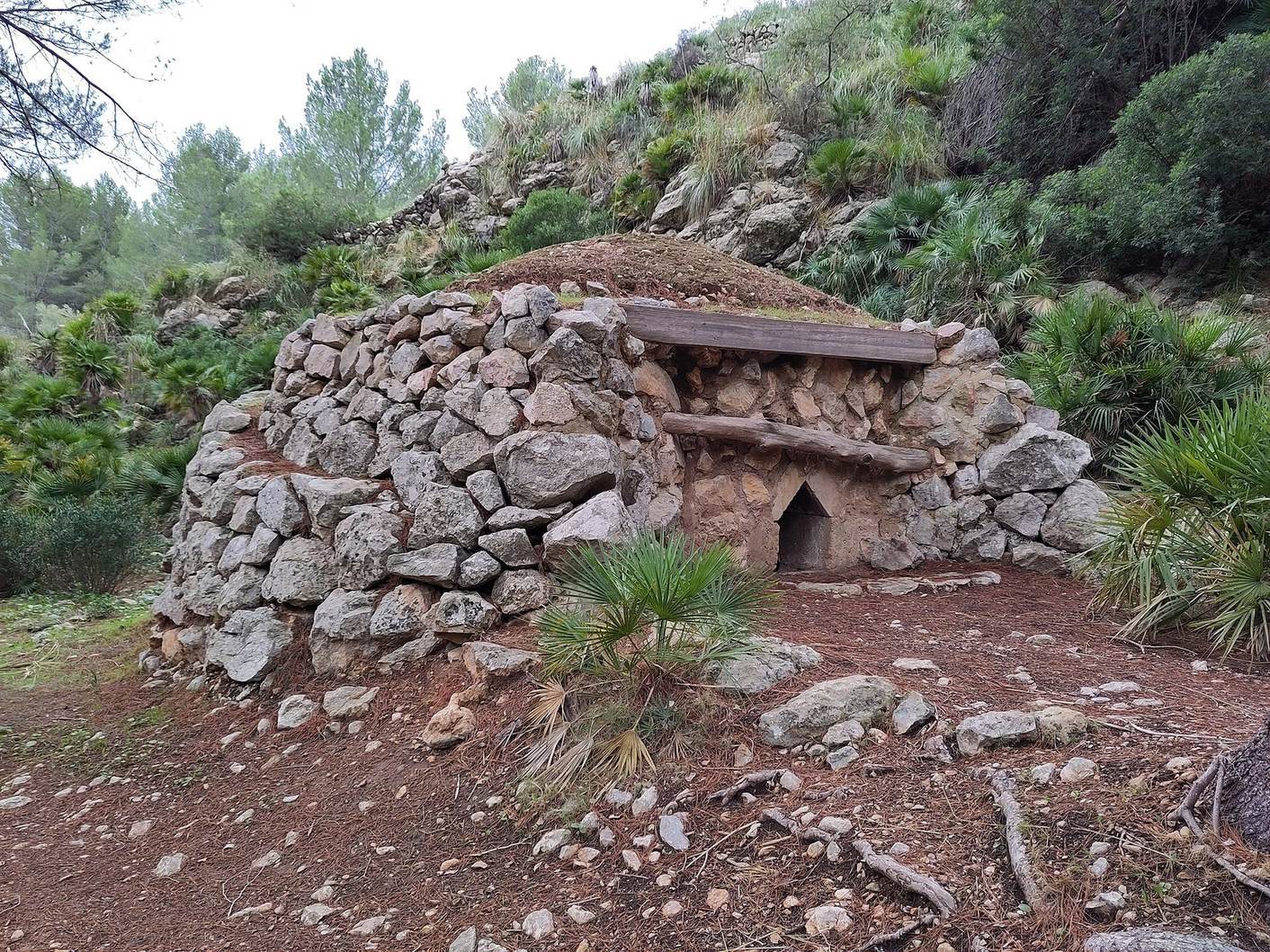
Unpaved paths extend for about 35 kilometres across the estate, and the GR 221, a long-distance route across Mallorca, crosses the valley from south to north. A 6.7-kilometre round-trip cart track to Ses Sínies passes a lime kiln and several charcoal kilns.
Natural vegetation
Open Aleppo pine woodland covers much of the natural landscape, with dwarf palm, mastic, Mediterranean heath, and prickly juniper growing beneath the trees. In spring, branching asphodel, crown daisy, Urospermum dalechampii, friar’s cowl, and other Mediterranean wildflowers bloom in fields and along path edges.
Archaeological features
Towers and burial structures from the estate’s prehistoric past remain as archaeological features. At s’Argolla, a place of execution, justice was administered during the 17th century.
Estate buildings and garden
Manor house
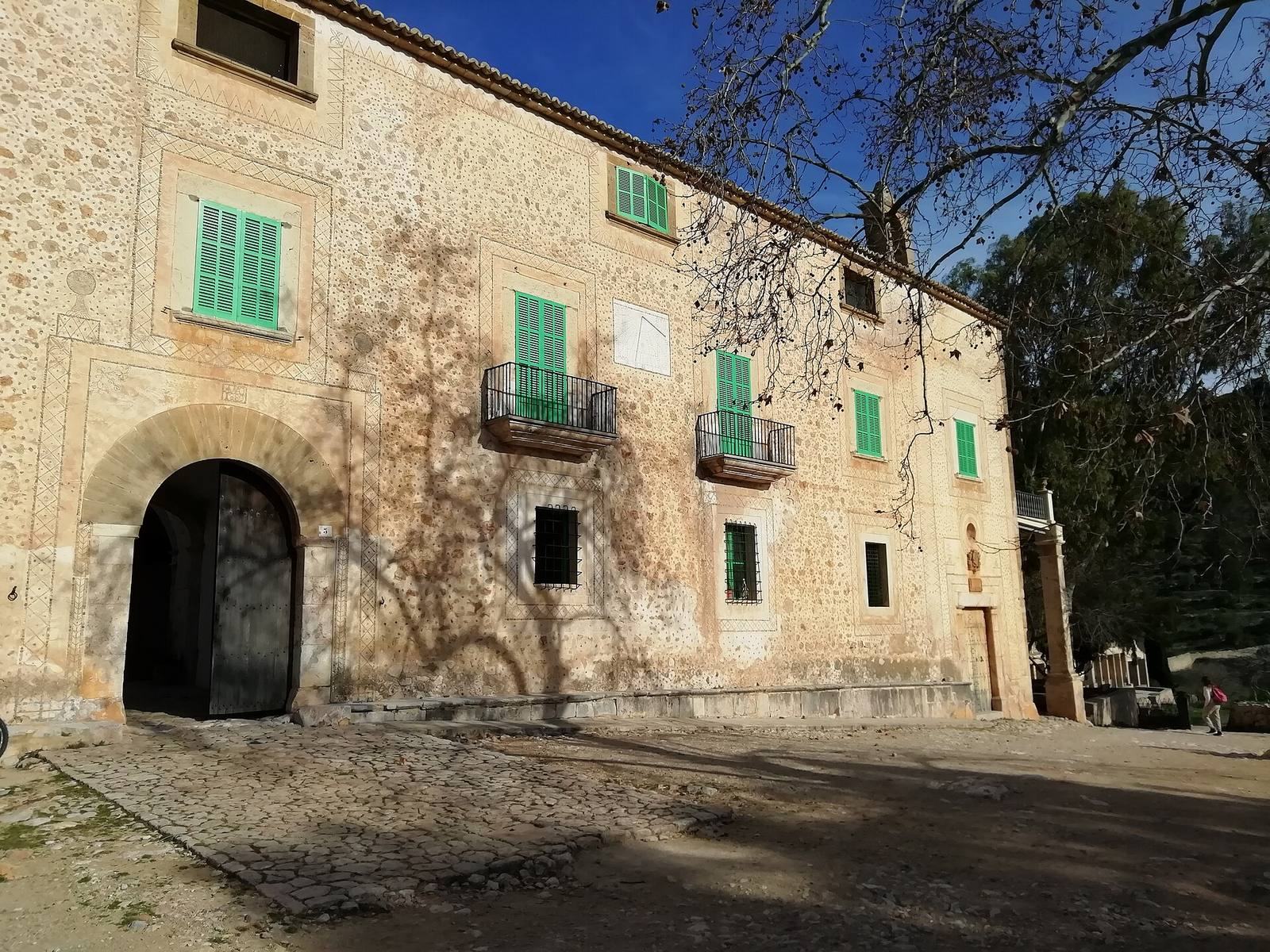
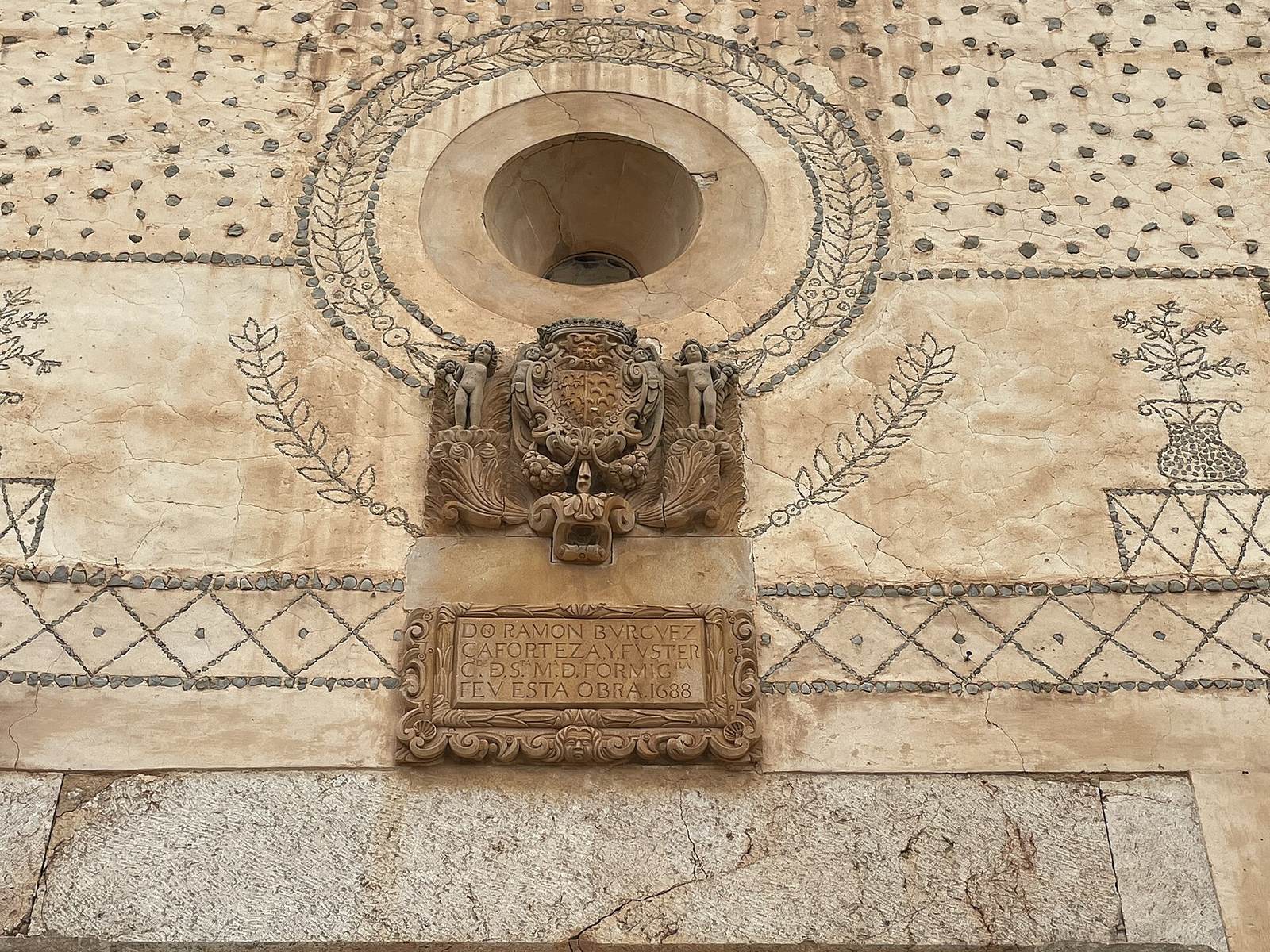
The three-storey manor house has a prominent south-facing facade decorated with pebbles set into the plaster.
Courtyard and farm buildings
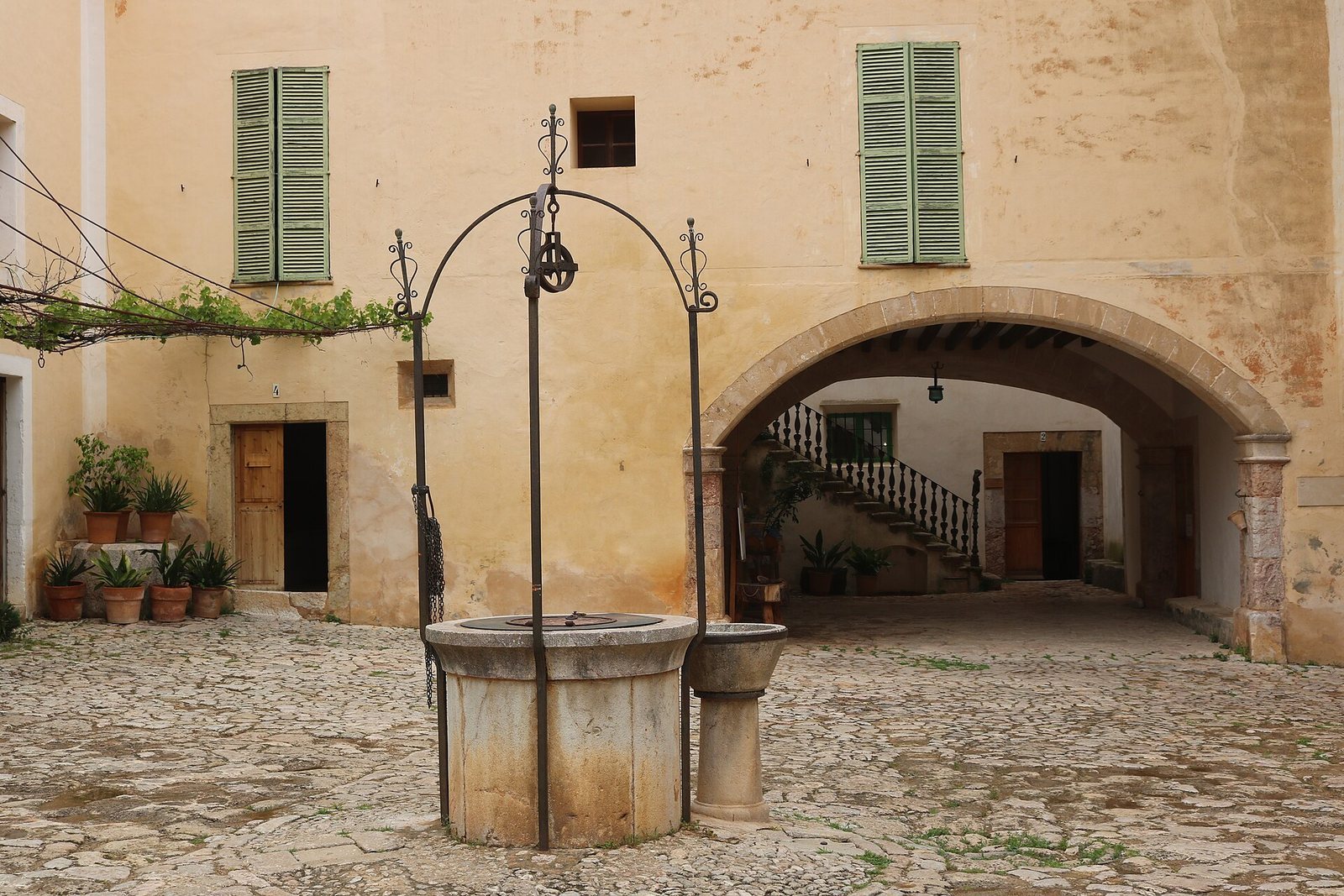
A draw well stands in the large courtyard. The former farm kitchen and a restored oil mill are reached from it. The mill occupies a high hall, with a storage room beside it.
Chapel
The simple house chapel has its own entrance to the right of the main doorway. A coat of arms above the chapel portal refers to one of the estate’s former aristocratic owners.
Stables and pigsties
The large stables and pigsties built in 1945 are preserved. Former stables beside the main house have been converted into a mountain refuge, which opened in 2022 with 50 beds.
Garden
The garden opposite the main building dates to the 19th century. Its trees include a large stone pine (Pinus pinea), hackberry (Celtis australis), and Peruvian pepper tree (Schinus molle), alongside Mediterranean ornamental shrubs.