Fulštejn Castle: A Gothic Castle Ruin in Czechia
Site at a Glance
- Rating
- 4.5
- Popularity
- Low
- Country
- Czechia
- Primary era
- Medieval
- External website
- Open
- Eras represented
- Medieval
- Civilizations
- Holy Roman Empire, Kingdom of Bohemia
- Site type
- Military
- Remains
- Castle
On this page7 sections
History
Fulštejn Castle is a Gothic castle ruin in Czechia, near Bohušov, established during the first half of the thirteenth century by Bruno of Schauenburg, Bishop of Olomouc. It was built on the earthworks of an earlier prehistoric hillfort, and its central part was completed in 1255. With the consent of the Olomouc chapter, half of the castle and the village of Bohušov were granted as a fief to Herbord of Fulštejn.
Thirteenth-Century Foundation and Ownership
In 1266, Herbord transferred his share of the castle to his youngest son, Ekerik. Nine years later, the Bishop of Olomouc sold the other half to Ekerik and his brother Jan for 300 marks of silver. The brothers also surrendered their shares in the town of Osoblaha, and King Přemysl Otakar II confirmed the agreement.
Wars, Rebuilding, and Noble Administration
Fulštejn was captured by the forces of Matthias Corvinus, the fifteenth-century king of Hungary, in January 1476 during the Bohemian-Hungarian Wars, a series of conflicts involving the Bohemian and Hungarian crowns. The fighting damaged the castle so severely that it was almost entirely rebuilt by the end of the fifteenth century.
In 1566, Jiří of Fulštejn sold the estate and castle for 29,000 thalers to his brother-in-law Václav the Elder Sedlnický of Choltice, who was married to Jiří’s sister, Helena Herbortovna. The Bishop of Olomouc, Vilém Prusinovský of Víckov, refused to recognize the purchase. After Václav died in 1572, his sons Jan, Jaroslav, Petr, Jiří, Bedřich, and Zikmund administered the estate. Bedřich ordered repairs to the castle in 1611.
Seventeenth-Century Destruction and Decline
After the deaths of Bedřich and his wife, Kateřina Planknarová of Kinšperk, their son Karel Kryštof Sedlnický became lord of Fulštejn and Dívčí Hrad. His property was confiscated because he had taken part in the Bohemian Revolt, an uprising by the Bohemian estates against Habsburg rule in the early seventeenth century. Karel Kryštof died in exile in Szczecin in 1651.
In 1623, Cardinal and Bishop of Olomouc František of Ditrichstein converted the estate into an ecclesiastical fief, a landed holding controlled by a church authority and granted to a secular holder in return for specified obligations. He granted it to Pavel Michna of Vacínov, who never settled at Fulštejn. Danish troops commanded by Peter Ernst Mansfeld partially demolished the castle during their passage through the region in 1626 and 1627. In 1641, Pavel Michna’s heirs sold the ruined castle and devastated estate for 18,000 florins to Jan of Jarošín.
From 1642 to 1648, Swedish troops used Fulštejn as a base and blew up the castle when they departed. Jan’s son, Julius Ferdinand, Baron of Jarošín, sold the estate in 1668 to Count Julius Leopold of Hodice, who also owned Slezské Rudoltice. The castle received limited repairs after the Swedish departure, but it later declined as its owners moved their residence to the chateau at Slezské Rudoltice. Fulštejn is protected as a cultural monument of the Czech Republic.
Remains
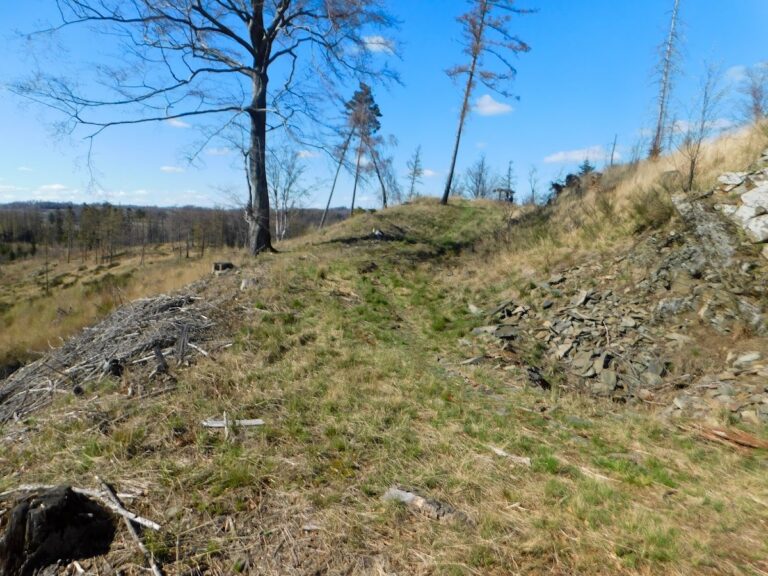
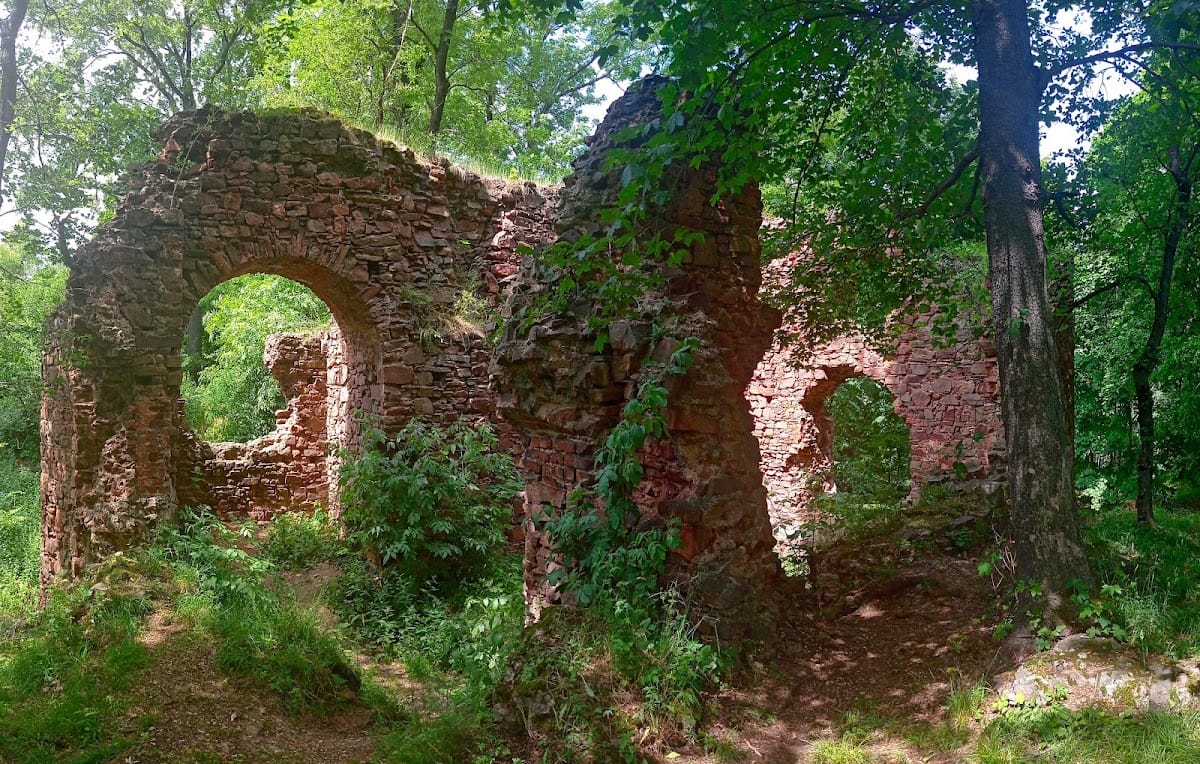
Fulštejn survives as an extensive Gothic castle ruin in the cadastral territory of Bohušov, within the Bruntál District of the Czech Republic. Its physical setting incorporates the earthworks of the earlier prehistoric hillfort, while the medieval fortification remains include a round tower, a gate, a bridge, substantial earthworks, and ditches.
Fortifications and Earthworks
The surviving fortifications are defined by massive earthworks and ditches, which form part of the castle’s defensive layout. These features occupy the site of the earlier prehistoric fortification earthworks and preserve the relationship between the medieval castle and its older fortified setting.
Gate, Bridge, and Tower
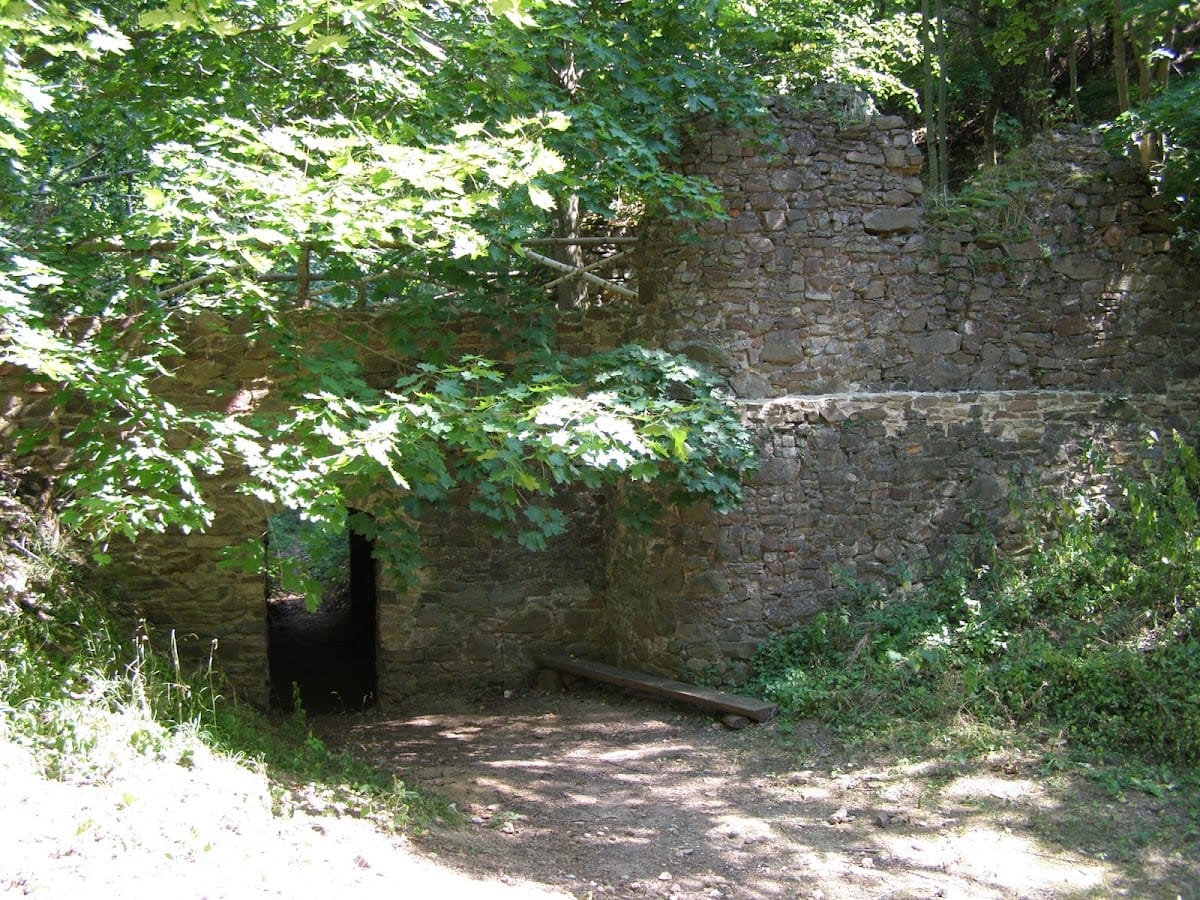
Architectural remains include the castle gate and a bridge, together with parts of a round tower. They survive within the wider ruin as elements of the castle’s entrance and defensive structure.
Nearby sites