Fudō-ji Temple: A Shingon Buddhist Prayer Temple in Japan


Site at a Glance
- Rating
- 4.3
- Popularity
- Low
- Country
- Japan
- Primary era
- Unclassified
- External website
- Open
- Eras represented
- Unclassified
- Civilizations
- Unclassified
- Site type
- Religious
- Remains
- Temple
On this page8 sections
History
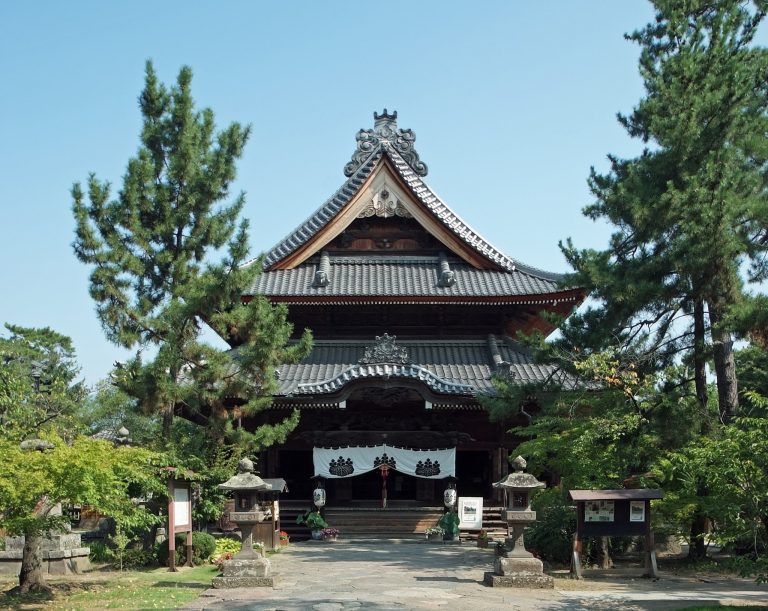
Fudō-ji Temple is a Shingon Buddhist prayer temple in Suzaka, Japan, founded in 718 in connection with the Hakusan faith. Shingon Buddhism is a Japanese Esoteric Buddhist tradition, and Fudō-ji belongs to its Buzan branch. The temple is also known as Yonako Fudōson and by several names linking it with the Sanada family and Uesugi Kenshin.
Foundation and Hakusan worship
The founding monk was Kiyosada, a Shugendō ascetic and disciple of Taichō. Shugendō is a Japanese tradition of mountain ascetic practice that combines Buddhist and local religious elements. Kiyosada established the site in connection with the Hakusan faith, which centers on sacred mountains and deities associated with Hakusan, a major religious mountain region of central Japan. Gyōki, the Nara-period monk known for popular Buddhist preaching and public works, is identified as the temple’s founding patron.
The temple developed as a religious center with both a village temple area and a mountain sanctuary. The mountain Oku-no-in was connected with the Hakusan tradition. Sanada Yukitaka, also known as Yukitsuna, served as ritual officiant there. The Oku-no-in was regarded as the satomiya, or lower local shrine, of Hakusan Daigongen on the northern side of the waterfalls. The Sanada family followed the Hakusan faith, and the temple’s current head priest is described as descending through the lines of both Sanada Nobuyuki and Sanada Nobushige.
Uesugi Kenshin and the later temple identity
Uesugi Kenshin is regarded as Fudō-ji’s restorer. After Ashikaga Yoshiteru, the thirteenth shogun of the Muromachi shogunate, appointed Kenshin Kantō kanrei, Kenshin received a Buddhist image of Fudō Myōō that had traditionally been transmitted within the Ashikaga shogun’s family. A Kantō kanrei was a high-ranking office representing and administering shogunal authority in the Kantō region. The image was given for the peace of the people of Kantō and later became Kenshin’s personal devotional image.
During the Fourth Battle of Kawanakajima in September 1561, Kenshin is traditionally said to have enshrined the image in his military camp and performed goma rites for victory. Goma is a consecrated fire ritual used for prayer and offering. On the return journey, his senior retainers Kakizaki Kageie, Amakasu Kagemochi, and Naoe Sanetsuna installed Fudō Myōō as the principal image at the present Oku-no-in. They renamed the institution Yonako Takizan Itokuin Fudō-ji, establishing the identity that the temple retains.
Fudō-ji is counted among Japan’s three great Fudōson, a term referring to sacred manifestations or images of Fudō Myōō, the Buddhist guardian deity. Worshippers visit the temple throughout the year. The Yonako Waterfall Group, regarded as the temple’s founding area, has been designated a National Place of Scenic Beauty. The Oku-no-in Main Hall also holds that designation and is a Suzaka City tangible cultural property, as is the principal Fudō Myōō statue.
Remains
Fudō-ji is organized in two connected settings: a village temple area known as the satodō and the mountain Oku-no-in. The Oku-no-in Main Hall stands approximately 12 kilometres beyond the satodō, at the central foot of Fudō and Gongen Falls in the Yonako Waterfall Group. The temple venerates the waterfalls as sacred bodies together with the standing image of Fudō Myōō.
The mountain sanctuary and waterfalls
Fudō and Gongen Falls
Fudō Falls and Gongen Falls are both nearly 100 metres high. Each descends as a straight, plunging waterfall, and together they form the physical setting of the Oku-no-in. Fudō Falls is described as Japan’s highest waterfall suitable for waterfall ascetic practice. Their sacred character is central to the mountain sanctuary and to the religious landscape associated with Fudō-ji.
Oku-no-in Main Hall
The Oku-no-in Main Hall lies at the central foot of the two waterfalls. It forms the mountain sanctuary of Fudō-ji and is associated with the Hakusan religious tradition. The hall is a National Place of Scenic Beauty and a Suzaka City tangible cultural property.
Standing image of Fudō Myōō
The standing statue of Fudō Myōō is the temple’s principal image. It is associated with the devotional image of Uesugi Kenshin and remains connected to the worship practiced at the Oku-no-in. Suzaka City designates the statue as a tangible cultural property.