Fredriksberg Fortress: A Seventeenth-Century Fortification in Bergen
Site at a Glance
- Rating
- 3
- Popularity
- Very Low
- Country
- Norway
- Primary era
- Early Modern
- Eras represented
- Early Modern, Modern
- Civilizations
- Danish, Norwegian
- Site type
- Military
- Remains
- Fort
On this page7 sections
History
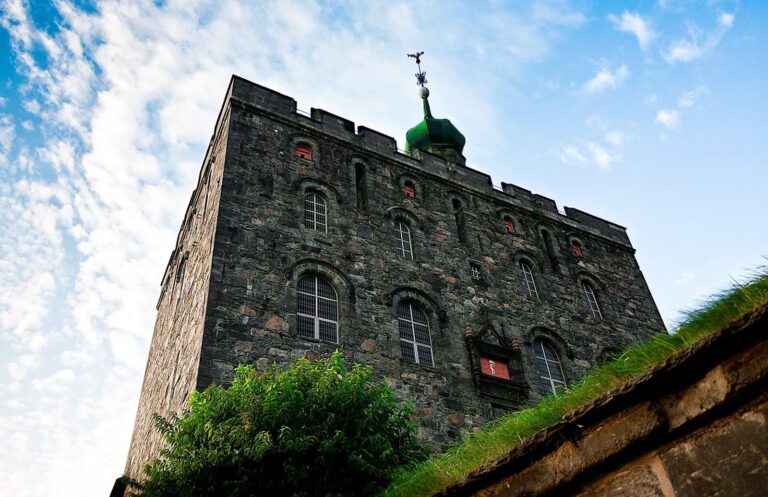
Fredriksberg Fortress is a seventeenth-century fortification on the Nordnes peninsula in Bergen, Norway. Construction began in 1666–1667 under Henrik Ruse, a Dutch military engineer, partly in response to the Battle of Vågen, a naval battle fought in Bergen’s harbor. The fortress was named for Frederick III, king of Denmark and Norway.
Construction and completion
Work on the fortifications stalled, and they fell into disrepair. A 1695 inspection of Bergen by Christian Gyldenløve, son of King Christian V, led to construction resuming. The fortress was completed by 1706.
Executions
The grounds in front of the Lavette houses served as an execution site from 1667 to 1876. The final execution there was that of Swedish counterfeiter Jacob Wallin in 1876.
Fire service and later use
Fredriksberg entered Bergen’s fire service as a fire-watch station in 1667. Nordnes Park was created between 1888 and 1898. After Bergen’s great fire of 1901, the fortress was converted in 1905 into an observation tower, replacing the tower at Bergen Cathedral. Its staff consisted of a chief, a worker, four other staff members, and a horse. The fire station closed in 1926, when urban development made the observation tower unnecessary.
After its closure, the fortress became the headquarters of the Nordnæs Bataillon, a Bergen youth organization with military-style traditions. The group still rents part of the site. Following the city fire of 1916, the Lavette houses were used as temporary housing.
Remains
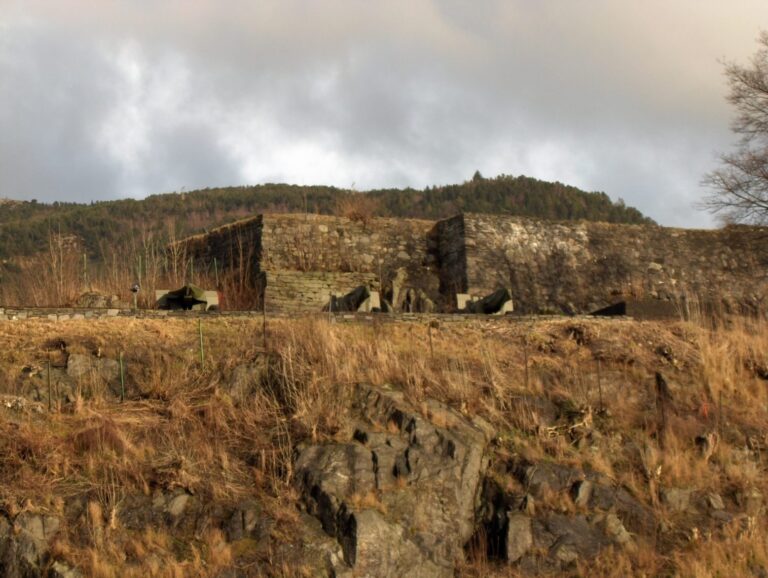
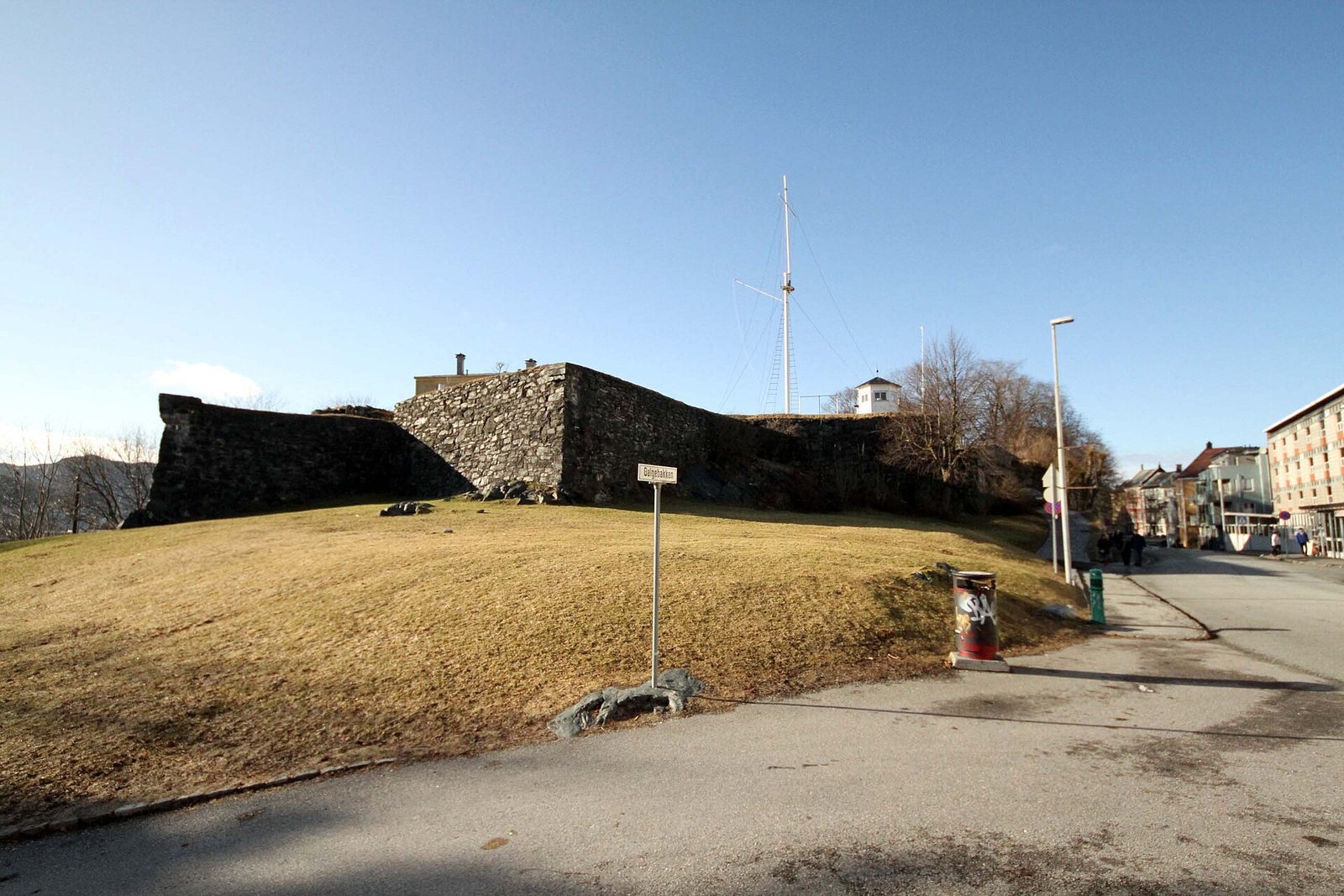
The fortress occupies the highest point of the Nordnes peninsula, with a steep cliff on its western, seaward side. Its original plan called for three projecting bastions, a half-bastion with one face and one flank, and a wall following the cliff. The completed defenses took a less elaborate form, and parts of the fortress are now in ruins.
Fortifications and park
The Katten bastion was built in 1666 in the area now occupied by Nordnes Park. The park also extends over parts of the former fortifications, linking the surviving ruined sections with the broader defensive layout.
Lavette houses
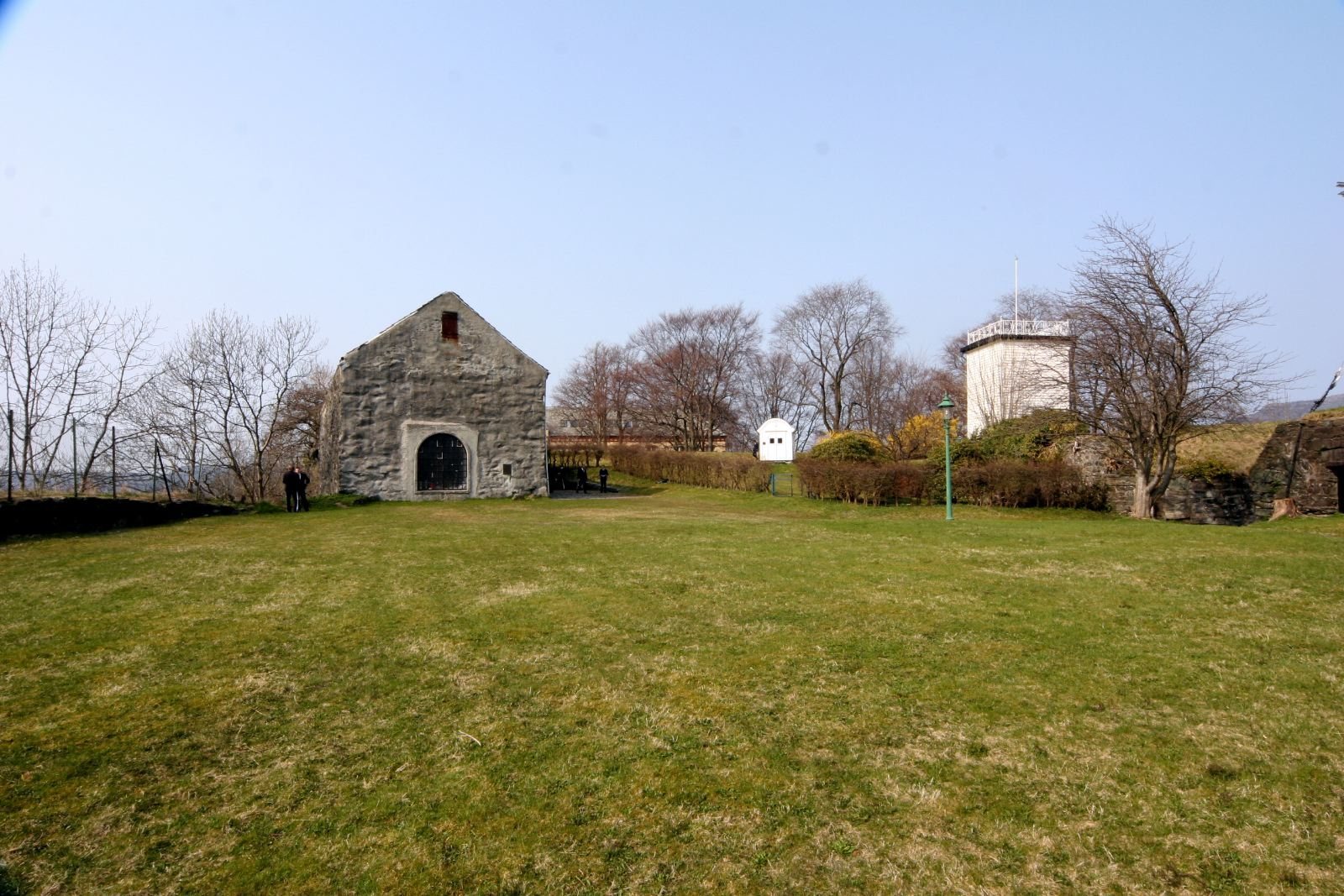
The Lavette houses were built in 1810 and 1843 as military storage buildings. They form a later building group within the fortress grounds.