Fortezza della Verrucola: A Medieval Fortress and Feudal Stronghold in Italy




Site at a Glance
- Rating
- 4.4
- Popularity
- Low
- Country
- Italy
- Primary era
- Medieval
- Eras represented
- Medieval, Early Modern
- Civilizations
- Holy Roman Empire
- Site type
- Military
- Remains
- Fortified Town
On this page11 sections
History
Fortezza della Verrucola is a medieval fortress in Italy, located in Verrucola, a hamlet of Fivizzano in eastern Lunigiana, Tuscany. Its earliest known references date to the beginning of the twelfth century, when the settlement was associated with the Bosi noble family. The fortress developed as a castrum, a fortified settlement whose buildings, defenses, and authority formed part of a territorial domain.
Early settlement and contested control
A notarial deed of 1104 was drawn up in the caminata domini Bosonis, probably a reference to a Bosi tower house. A document from 1148 mentions a castrum at Verrucola, while a papal bull refers to the Church of Saint Margaret at the castle. The settlement occupied a strategic position on routes crossing the Apennines, and its control was contested during the thirteenth and fourteenth centuries by the Bosi, the Dallo, the Nobili of Castello Aghinolfi, Lucca, and the Malaspina.
The Malaspina, a powerful medieval noble family with extensive territories in Lunigiana, claimed ancient imperial privileges through their genealogy. In 1221 they included Verrucola in a division of territory between Corrado and Opizzone Malaspina, although they did not secure full control for more than a century. In 1277, Cubitosa, the widow of Marquis Isnardo Malaspina, lost the settlement. Through her son Gabriele, the father of Spinetta Malaspina, the fief returned to its former holders. Spinetta later had to share it with the Dallo and the Nobili of Castello Aghinolfi in 1291.
Malaspina rule and Lucchese intervention
In 1299, the Dallo became vassals of Lucca and handed the castle to the Lucchese, but Lucca failed to take the fortified keep. Spinetta Malaspina recovered Verrucola in 1312 and purchased the Nobili of Castello Aghinolfi’s share in 1315. Castruccio Castracani, the Lucchese military and political leader who extended Lucca’s power into Lunigiana, defeated Spinetta in the early fourteenth century. Spinetta was exiled to Verona, and much of his property was lost. Castruccio’s army invaded Lunigiana, destroying the castle of Agnino and other minor fortifications. After Castruccio’s unexpected death, Spinetta regained Verrucola and his other territories.
Spinetta assigned the fortress in his testament to the children of his nephew Isnardo II Malaspina. His will also mentioned the large palace associated with him. The fortress continued to be drawn into wider regional struggles. In 1399, the Visconti dynasty of Milan conquered Verrucola and forced Marquis Niccolò, the last of Isnardo II’s four sons, and his family into exile. Niccolò had governed the fief since 1348 and recovered his lands in 1402. In June 1418, however, agents of his relatives, the marquises Leonardo and Galeotto of Castel dell’Aquila, murdered Niccolò and his family in the castle. His children, Giovanna and Spinetta, survived and sought protection from the Republic of Florence.
Florentine takeover and later transformation
The marquises of Castel dell’Aquila seized the fief and expanded their authority in eastern Lunigiana. Florence opposed them and recovered Verrucola for the surviving Spinetta. The fortress was captured again in 1437 by Niccolò Piccinino, a leading commander campaigning for the Duchy of Milan, and in 1450 by Marquis Giacomo I Malaspina. Spinetta left his fief to the Republic of Florence in his 1478 testament, allowing the Florentine city-state to consolidate its rule. With that transfer, the fortress’s strategic military function came to an end.
A major earthquake seriously damaged the structure in 1481. After partial recovery, the complex was transformed during the sixteenth century, on behalf of the Augustinian nun Alessio Casani, into a monastery for Augustinian nuns, a female religious community following the Rule of Saint Augustine. The castle chapel became the Church of Saint Margaret. In 1977, the sculptor Pietro Cascella and his wife, Cordelia von den Steinen, recovered the castle and made it their home. It is now a private residence.
In January 2014, researcher Rino Barbieri identified remains along the eastern-facing castle walls as those of a previously lost church. The architecture was interpreted as pre-Romanesque, and the building was identified with the medieval Church of Saint Margaret. It may have disappeared after the earthquake of 1481. The identification connects the surviving fortress with an earlier ecclesiastical phase and may support further archaeological discoveries.
Remains
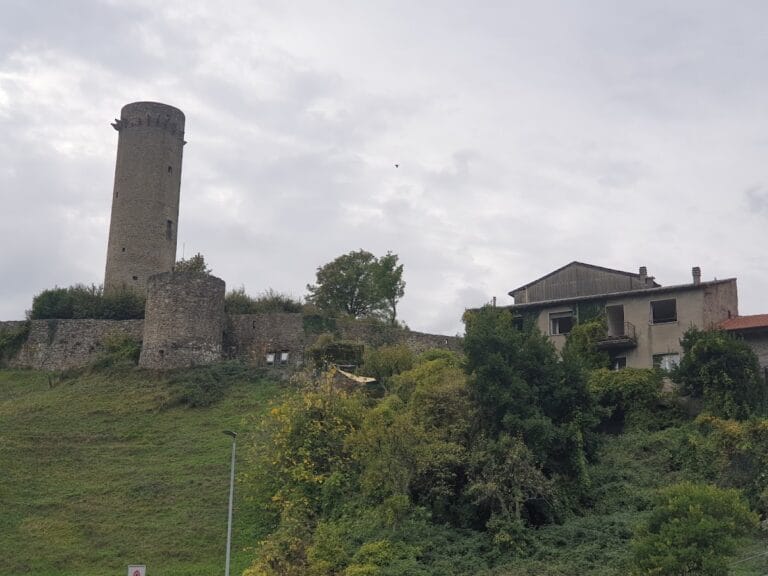
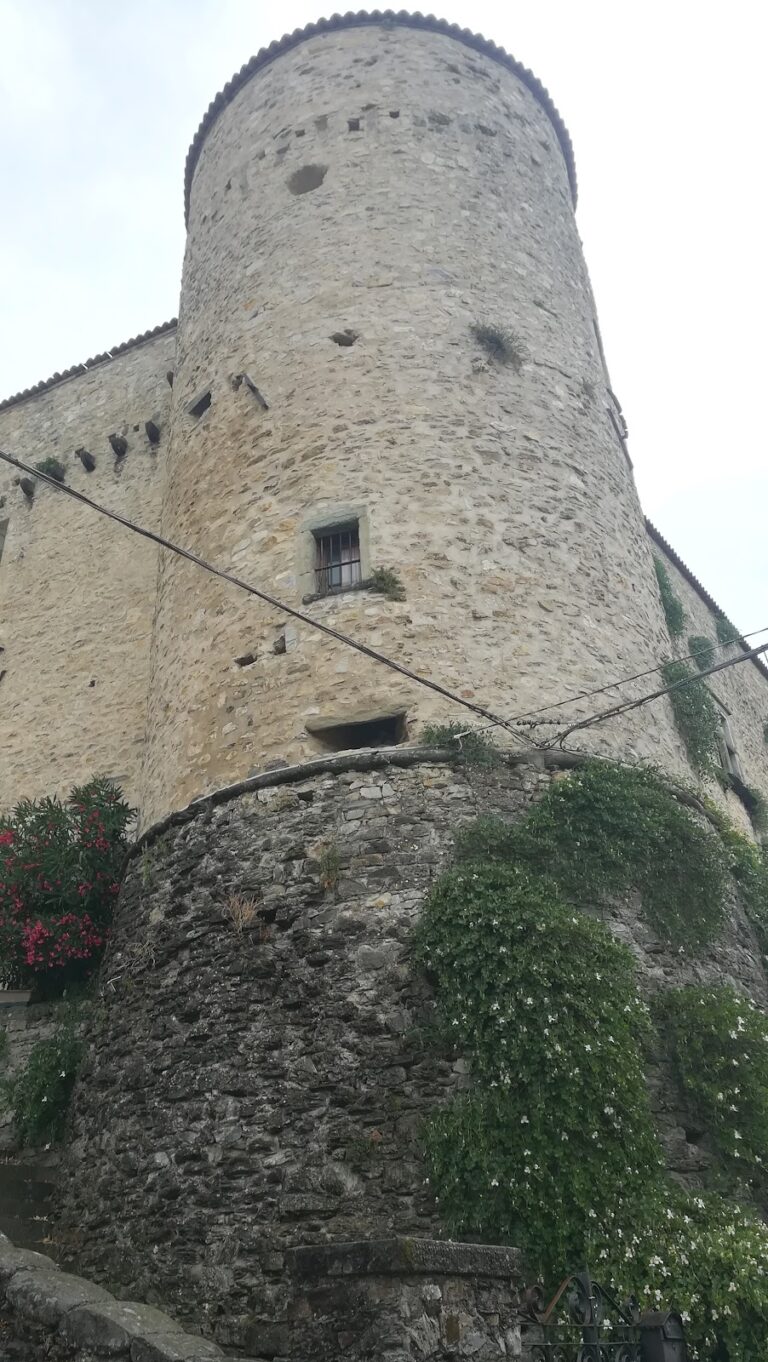
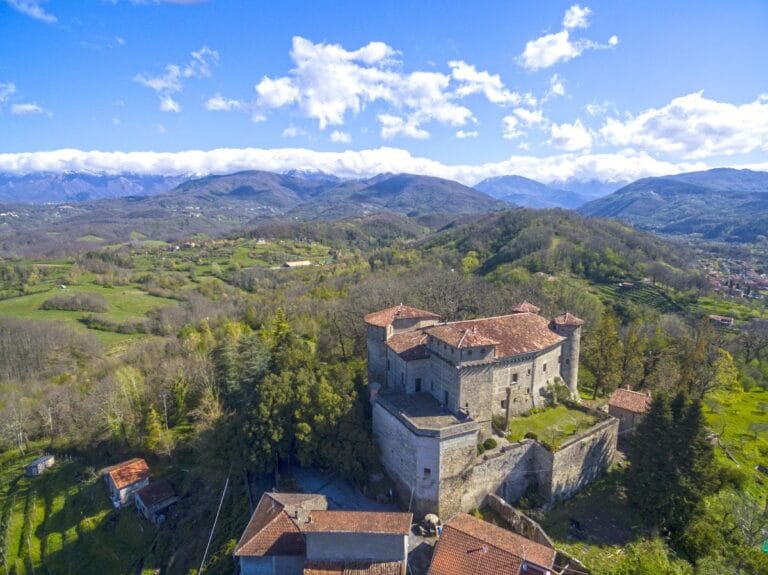
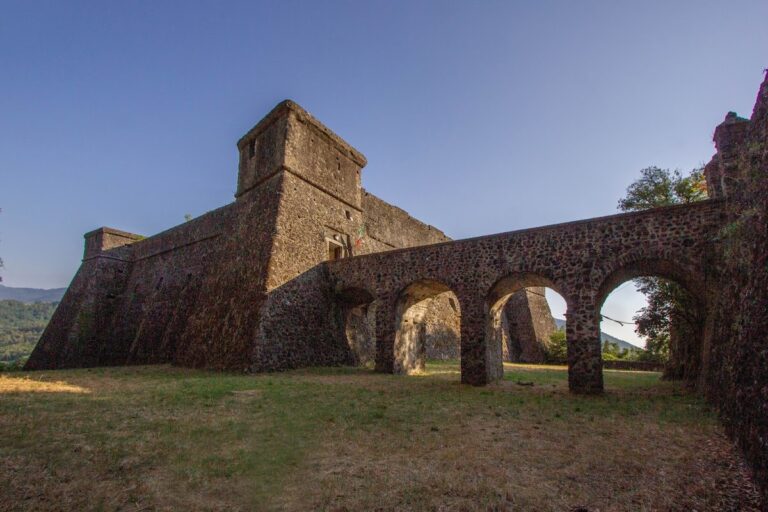
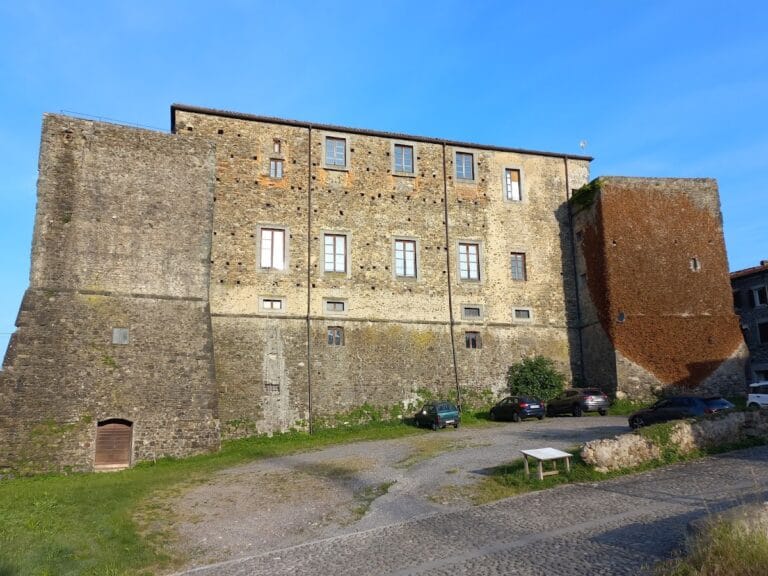
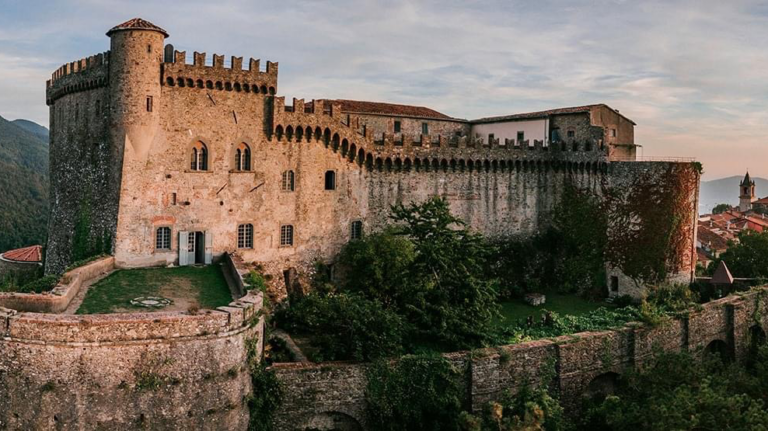
Fortezza della Verrucola occupies a hill and retains the organization of a medieval fortified settlement. Its buildings, towers, palaces, chapel, court, and walls were added or altered by successive owners, so the complex does not form a single architectural unit. Its medieval character nevertheless remains visible alongside Renaissance changes. Two concentric wall circuits organize the site. The fifteenth-century outer circuit encloses the settlement and has two external gates, while the inner circuit surrounds the tower house and Spinetta Malaspina’s palace at the top of the hill.
Walls and entrances
The principal northern entrance is flanked by a quadrangular tower. The outer defenses enclose the wider settlement, while the inner walls protect the hilltop buildings associated with the fortress’s feudal center. The later lords retained the basic arrangement linked with Spinetta Malaspina, who added substantial flanking towers and completed the surrounding walls.
Hilltop buildings
Upper tower house
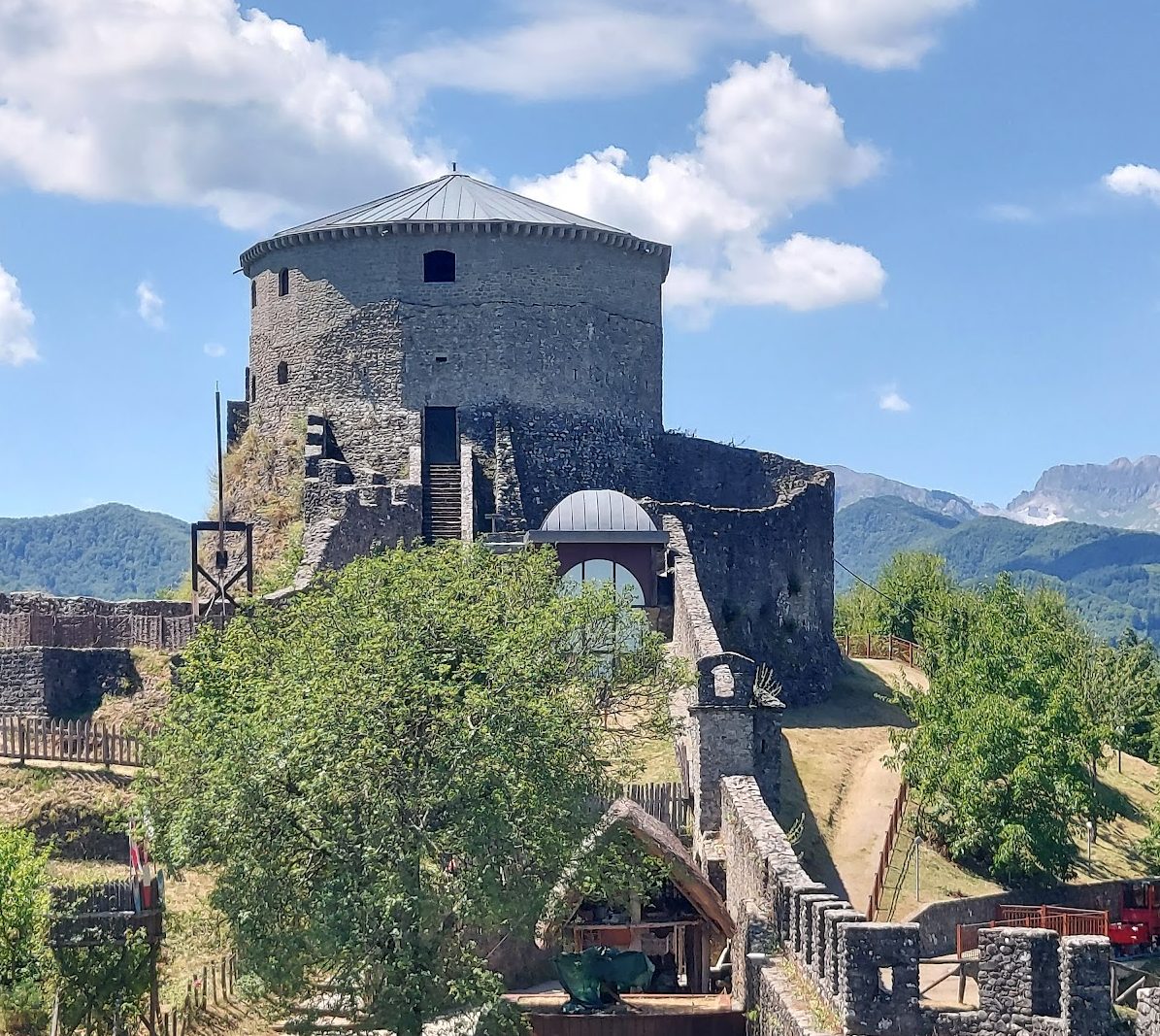
A small rectangular building stands at the upper part of the hill. It may be the Bosi family’s tower house mentioned in connection with the 1104 deed, or the fortified keep that the Lucchese failed to capture in 1299. Its position within the inner circuit places it among the defensive buildings at the core of the settlement.
Spinetta’s palace
A large quadrangular palace occupies three superimposed levels within the settlement. It is regarded as Spinetta Malaspina’s probable residence. Castruccio destroyed it in 1319, and it was rebuilt after 1328. On the ground floor, the hall known as the armory hall has a vaulted ceiling supported partly by the surrounding masonry and partly by a single central octagonal pillar.
Eastern defensive tower
A large rectangular tower with fourteenth-century architectural character rises on the eastern side of the complex. It served to defend the settlement and forms part of the fortified arrangement that developed around the hilltop buildings.
Ecclesiastical remains
The castle chapel later received the title of the Church of Saint Margaret, but the ruins along the eastern-facing walls represent a separate and earlier church. Their architecture has been interpreted as pre-Romanesque. Some observers had previously understood the remains as a retaining wall or a Roman structure. Their identification with the medieval Church of Saint Margaret provides a possible link between the early religious building mentioned in 1148 and the later chapel within the castle complex.
Nearby sites