Forte Begato: A Nineteenth-Century Fortress in Genoa, Italy


Site at a Glance
- Rating
- 4.3
- Popularity
- Low
- Country
- Italy
- Primary era
- Modern
- Eras represented
- Modern
- Civilizations
- Kingdom of Sardinia
- Site type
- Military
- Remains
- Fort
On this page7 sections
History
Origins and nineteenth-century construction
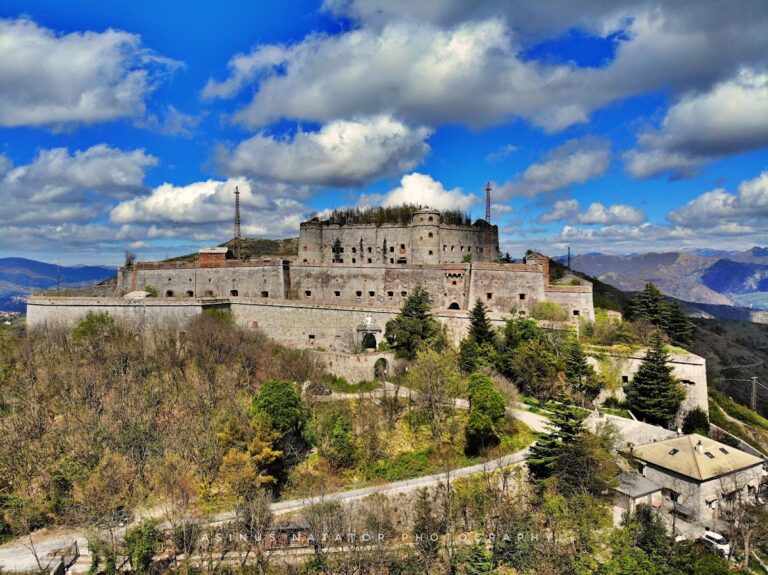
Forte Begato is a nineteenth-century fortification in Genoa, Italy, incorporated into the city’s New Walls, the defensive system built to protect Genoa. It stands on a broad plateau along the ridge descending from Forte Sperone toward the Polcevera Valley and takes its name from the settlement of Begato below it.
The plateau had already formed part of Genoa’s seventeenth-century circuit of walls. In 1818, the Savoy government, which ruled the territories of the House of Savoy and later directed the Kingdom of Italy, began building the fort’s barracks. Construction continued until 1830. The bastioned enclosure facing the present road was completed between 1832 and 1836, separating the complex from the city.
The uprisings of 1849
Forte Begato played a direct role in the uprisings of 1849, a period of political and military revolt against established governments in parts of Italy. Insurgents occupied the fort because its position controlled the Polcevera Valley and the road used by royal troops approaching Genoa.
From Forte Begato, the insurgents bombarded royal soldiers who had retaken San Benigno Hill and Forte Tenaglia. When the military situation turned in favor of the royal army, they abandoned the fort. After the surrender of 10 April, military authorities took possession and found Forte Begato empty.
Wartime uses
During the First World War, Austrian prisoners of war were held at Forte Begato while they were employed in reforestation work on Monte Peralto. In the Second World War, anti-aircraft positions were installed at the fort. An English air raid in 1941 completely destroyed one of its four bastions. After 8 September 1943, German troops occupied the complex and retained it until the end of the war.
Postwar ownership and restoration
Forte Begato’s strategic military function ended after the Second World War, although the Italian Army continued to use it as a depot through the 2000s before its military decommissioning. Under a 2010 agreement involving the Municipality of Genoa, Italy’s Ministry for Cultural Heritage and Activities, and the State Property Agency, ownership passed from the public domain to the Municipality of Genoa on 8 October 2015.
The fort then underwent restoration intended to create premises for associations of former combatants and a museum. Bureaucratic and decision-making problems delayed that project. The restored complex is now abandoned.
Remains
Barracks and defensive enclosure
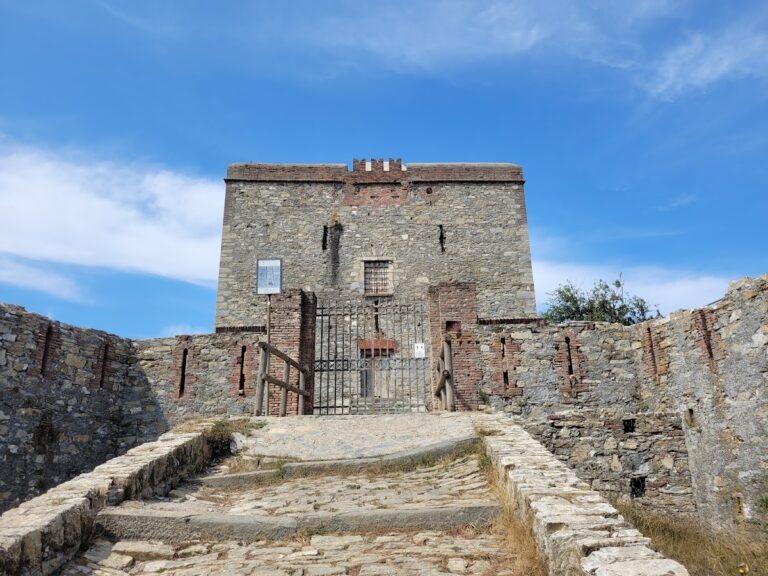
Forte Begato is a stone fortification set on a large plateau along the outer defensive ridge above the Polcevera Valley. Its principal structure is a large quadrangular barracks, partly two storeys high and partly three storeys high, arranged around a central courtyard. Four corner bastions, projecting platforms designed to let artillery cover the walls and nearby approaches, formed part of the defensive enclosure.
The upper terrace was originally protected by a pitched roof covered with slate tiles. A roof was reinstated during the recent restoration, although it differs from the original. The fort accommodated a garrison of 340 soldiers, with capacity for more than 800 when necessary. Its artillery included 14 cannon of various sizes, five howitzers, and numerous smaller pieces. The 1941 air raid completely destroyed one of the four bastions, leaving the defensive complex with a major wartime loss in its surviving fabric.
Nearby sites