Fort Zuidwijkermeer: A Defensive Fort on the Amsterdam Defence Line
Site at a Glance
- Country
- Netherlands
- Primary era
- Modern
- Eras represented
- Modern
- Civilizations
- Dutch
- Site type
- Military
- Remains
- Fort
On this page8 sections
History
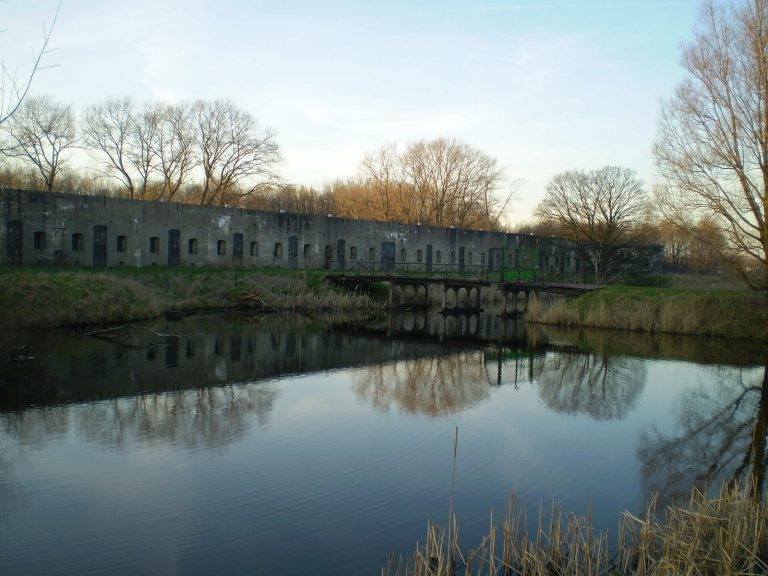
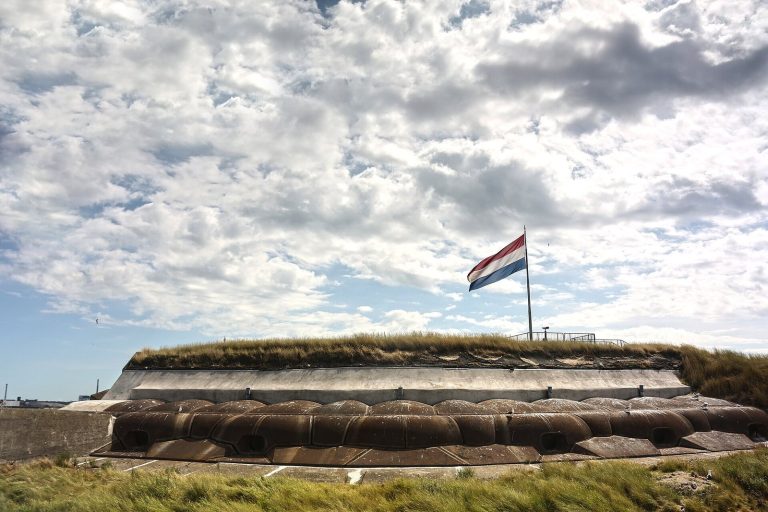
Fort Zuidwijkermeer is a fort near Assendelft in the Netherlands, built to defend the military approach formed by the North Sea Canal and its adjoining dikes. It belonged to the Amsterdam Defence Line, a defensive system around Amsterdam that combined forts with controlled flooding to impede an enemy. Work began with a defensive earthwork in 1894–1895. Buildings designed to withstand bombardment were constructed between 1900 and 1903, and the Model A fort was completed in 1903.
Construction and flood defense
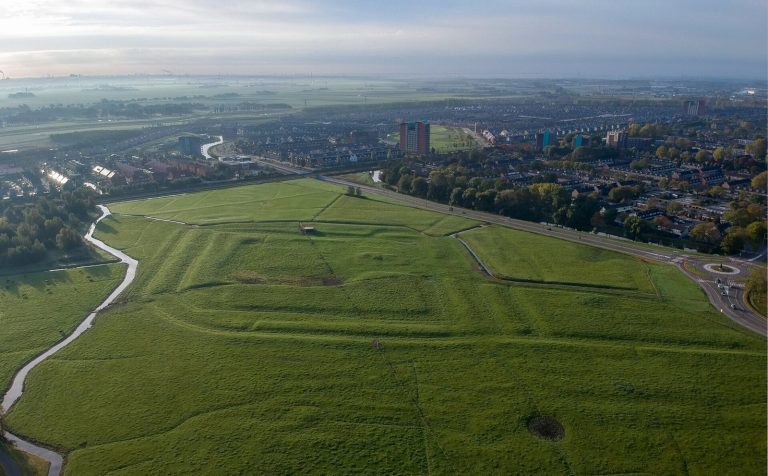
Building the North Sea Canal led to the reclamation of large areas of the IJ on both sides of the waterway. The westernmost area, Wijkermeer, had fertile clay suited to agriculture and livestock. Since food was intended to be produced within the defence line, planners selected only the western part of the polder for deliberate flooding as a defensive measure. The Aagtendijk–Zuidwijkermeer embankment was built as part of this arrangement.
Military and film storage
From after the Second World War until the 1980s, the Dutch army used the fort to store explosives. Later, the Dutch EYE Film Institute Netherlands, an institution devoted to film and its preservation, stored part of its collection there. The films needed cool, relatively humid conditions, and their sensitivity meant the fort was not open to the public during this period.
Cheese storage and stewardship
After the films left, restoration began in 2017. Work to adapt the fort for cheese storage started in 2019, and since 2021 it has been used to age and store cheese. Its high humidity and consistently low temperature suit this purpose. Landschap Noord-Holland owns and manages the fort, which is also a nature area.
Remains
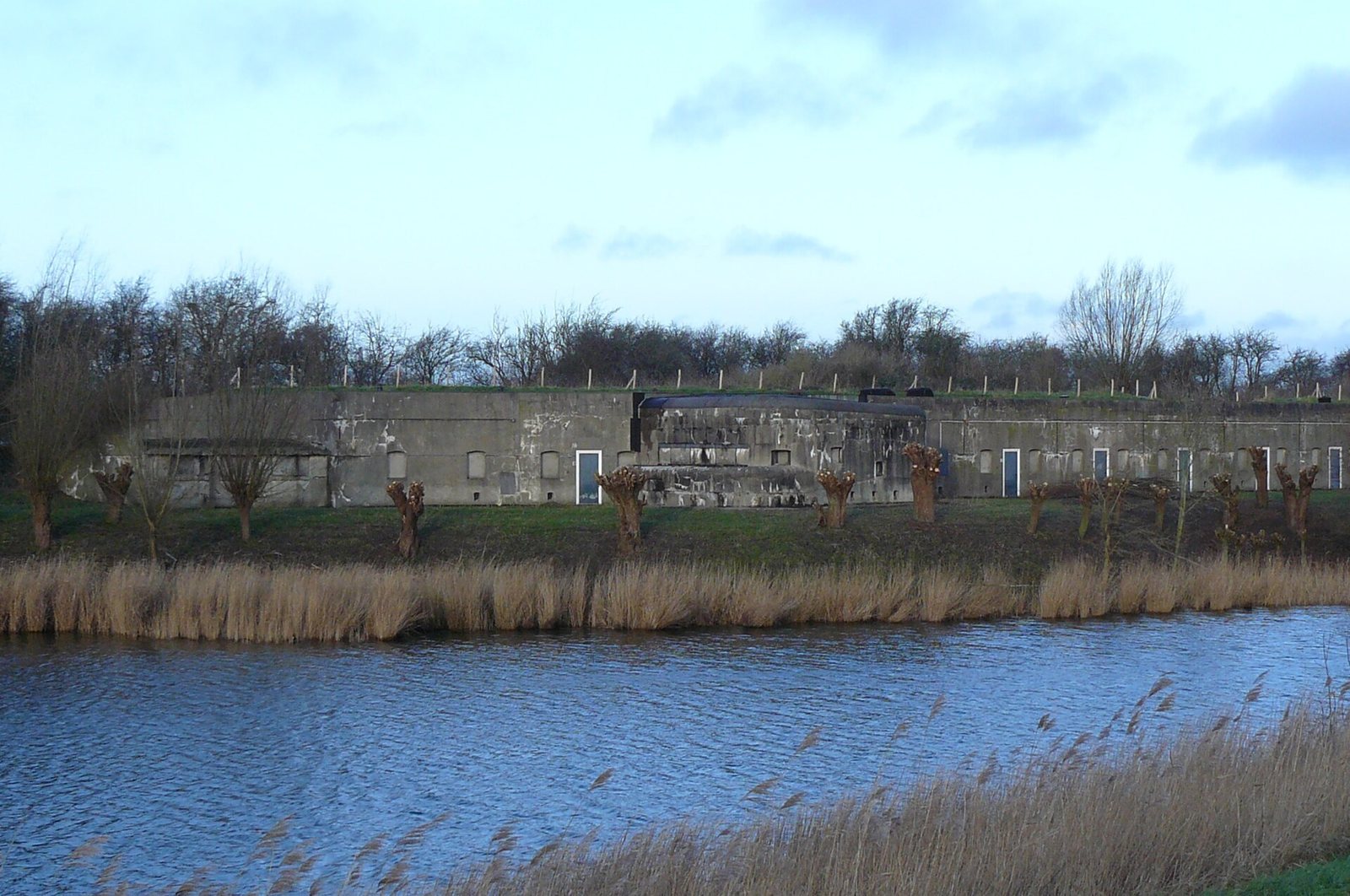
The concrete fort stands on heavy clay, a foundation that did not require piles. It lies on the north bank of the North Sea Canal, several kilometres east of Fort bij Velsen. Repeated widening of the canal has brought the waterway close to the fort and removed an auxiliary battery that stood to its south.
Gun positions and storage spaces
Guns in the rear casemates, fortified chambers used for military purposes, covered the approaches in front of Fort aan de St. Aagtendijk and Fort benoorden Spaarndam. Cellars beneath both rear casemates have glazed-tile linings. They served as meat stores: provisions crossed the North Sea Canal and were then sent from the fort to other forts. The drinking-water reservoirs are outside the fort, beneath an earthen covering.
Outer defensive works
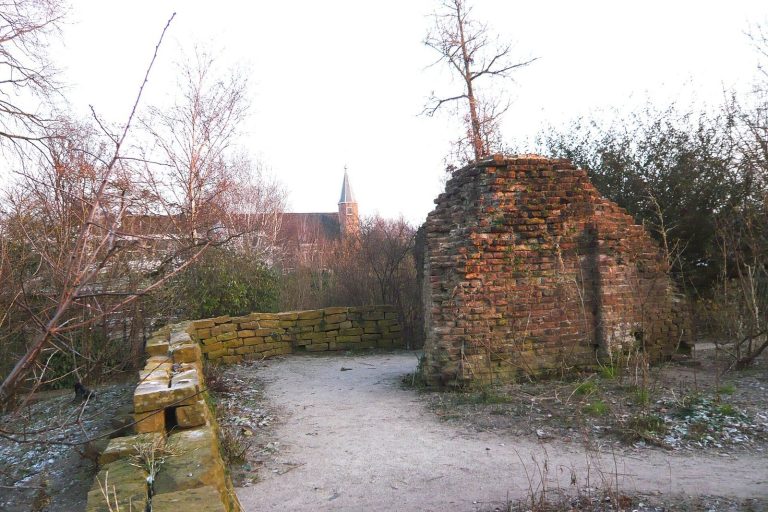
The Aagtendijk–Zuidwijkermeer embankment runs north to south between Fort Zuidwijkermeer and the more northerly Fort aan de St. Aagtendijk. It held back water for controlled flooding, while a road behind it allowed troops and equipment to move unseen. In front of the fort stands the wooden farm De Eersteling. It was built under the Dutch Circle Law, which regulated construction around fortifications and could require buildings to be cleared in wartime. If war threatened, the farm could be removed from the fort’s field of fire.
Changes during film storage
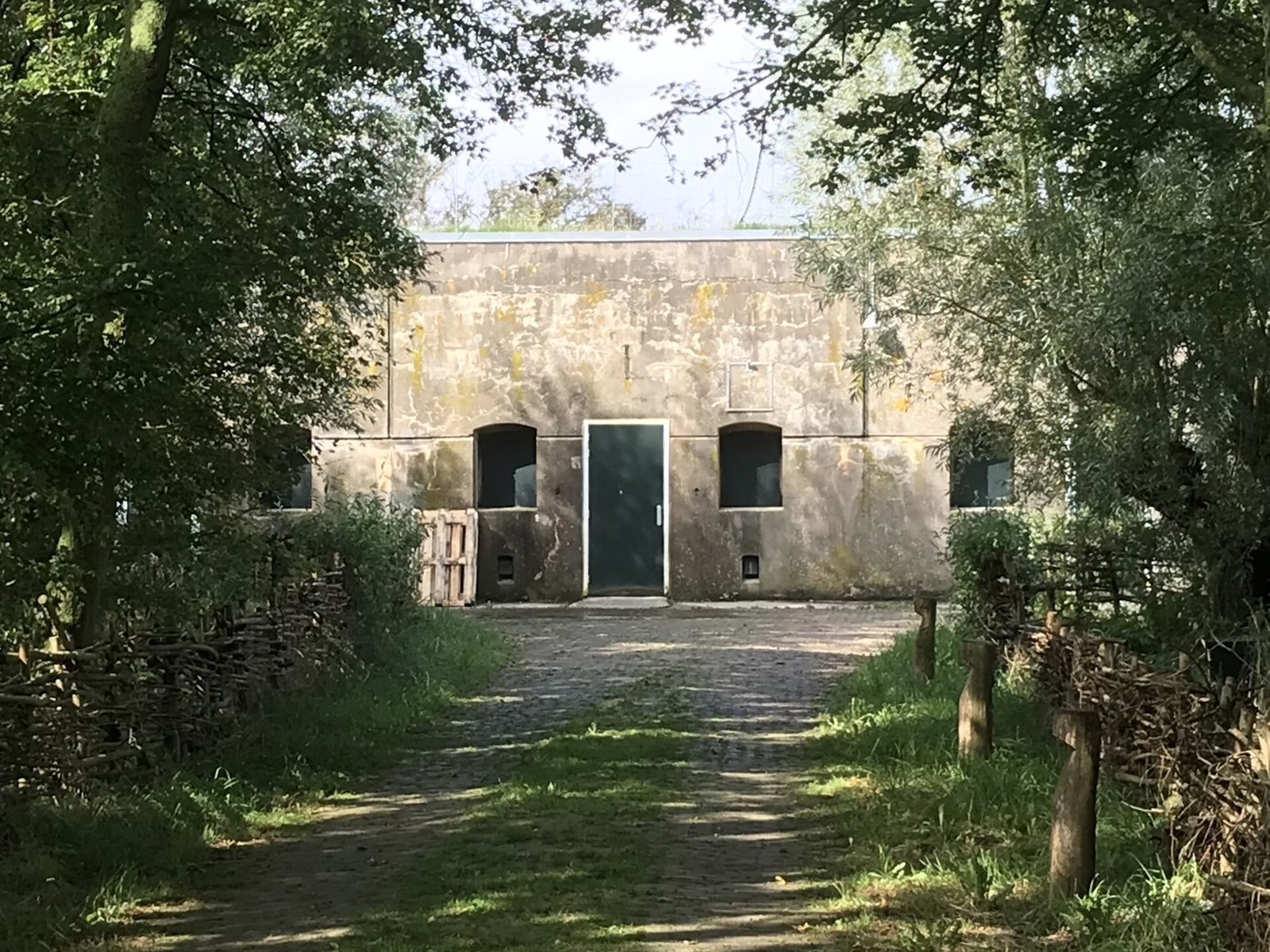
During the period when films were stored at the fort, its steel doors were removed and its windows were bricked up.