Fort XV: The Largest Artillery Fort of the Toruń Fortress


Site at a Glance
- Rating
- 4.6
- Popularity
- Low
- Country
- Poland
- Primary era
- Modern
- Eras represented
- Modern
- Civilizations
- German, Kingdom of Prussia
- Site type
- Military
- Remains
- Fort
On this page11 sections
History
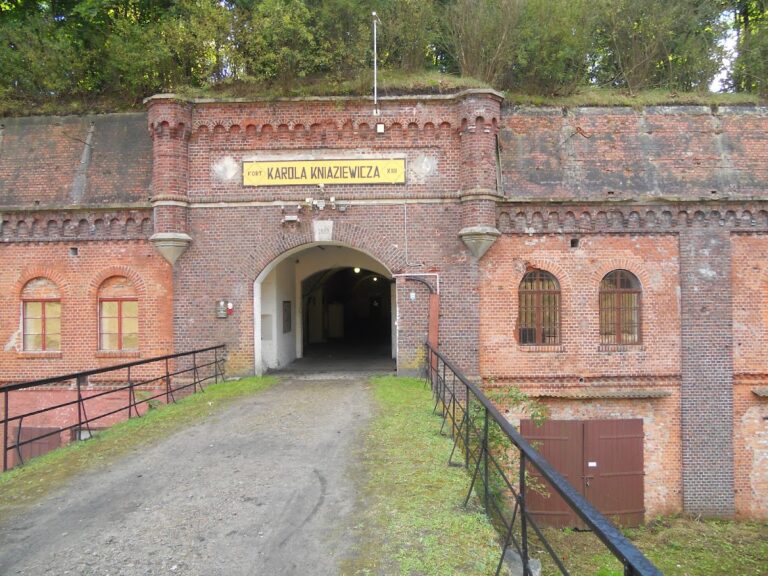
Fort XV is a large artillery fort in Toruń, Poland, built between 1880 and 1885 as the largest artillery fort of the Toruń Fortress. Originally named Fort VII Hermann von Salza, after the thirteenth-century grand master of the Teutonic Order, it stood in the Rudak district and was designed to protect Toruń Główny railway station and the railway bridge. Although classified as an artillery fort, its main arrangement addressed the needs of infantry defence.
Construction and military modernization
The fort was built as a two-rampart artillery work. A protected shelter for the right flank battery followed in 1883 and 1884, while the corresponding left flank shelter was added in 1888 and 1889. Further modernization took place from 1889 to 1893, around 1905, and again in 1914.
In 1894, the fort was repaired and strengthened against fire from 150 mm guns. Its barracks received a concrete covering one metre thick. Vegetation camouflage was supplemented in 1911, and traverses, defensive barriers within the fort, were installed in the most important internal passages in 1914.
Internment and wartime imprisonment
From 1920 to 1921, Fort XV housed part of Internment Camp No. 11 for Russians. Between 1940 and 1944, it operated as Stalag XXA, a German prisoner-of-war camp for enlisted personnel and non-commissioned officers. French prisoners formed the principal group held there.
Prisoners created cultural and educational activities within the camp. A theatre included a stage, room for an orchestra, and seating for as many as 100 people. The camp also had a small library, a school, and a prisoner newspaper first titled The Prisoners Pie and later The New Prisoners Pie.
In 1941, prisoners who refused forced labour for Nazi Germany organized an ensemble consisting of five violinists, two trumpeters, two saxophonists, one trombonist, one clarinetist, and fifteen singers. A twenty-man choir also performed, mainly singing carols, military songs, and hymns. The library relied chiefly on privately owned books. A Library Association operated from 1942, with Alan Dickinson serving as caretaker in 1943, while the Red Cross supplied books and educational materials for the school.
Post-war labour camp and later history
From February 1945 until September 1946, Fort XV functioned as a labour camp for people of German origin who had been interned. The NKVD, the Soviet Union’s internal-security and secret-police agency, administered the camp from February until mid-1945. The Polish Ministry of Public Security then took over its administration.
The camp was intended for Germans, but it also held Poles accused of collaboration with Germany during the Second World War. In July 1945, the camp held 663 internees, including 219 women and 15 children and elderly people. It closed on 24 September 1946, when the internees were transferred to the Central Labour Camp at Potulice.
The number of deaths remains uncertain. Official figures list slightly fewer than 100 people as having died or been murdered, while other estimates place the total at 170 or suggest that it may have been several times higher. The victims included Poles. Deaths resulted from heavy labour, poor sanitary conditions, starvation, disease, torture, executions, murders, and rape by supervisors and guards. Bodies were taken beyond the fort walls in jute sacks, on stretchers, or on carts, and the burial places remain unknown.
Around 1960, the demolition of the fort’s earth slopes partially damaged a caponier, a fortified structure projecting into or adjoining a ditch to permit fire along it. Fort XV entered the historic-monument register on 7 October 1971 under registration number A/143. In 2018, researchers from the Institute of National Remembrance searched for graves connected with the labour camp but found no human remains. The fort is privately owned.
Remains
Fortifications and associated shelters
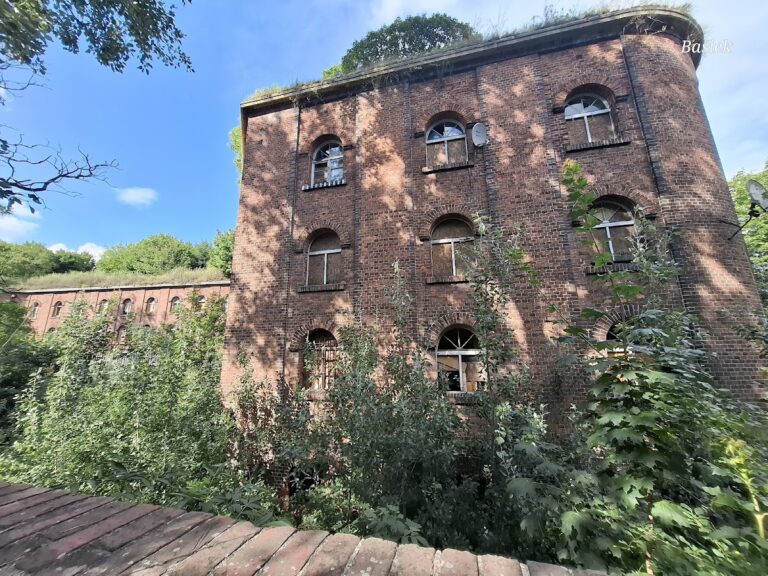
Barracks and protected structures
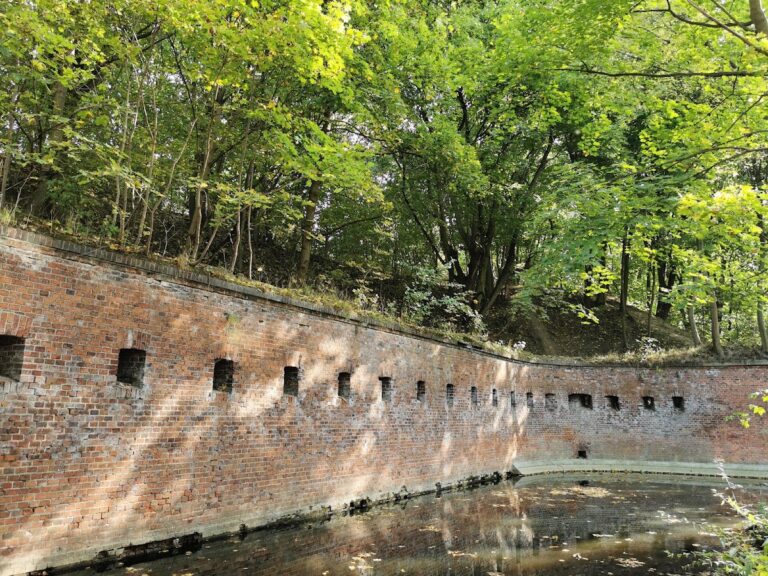
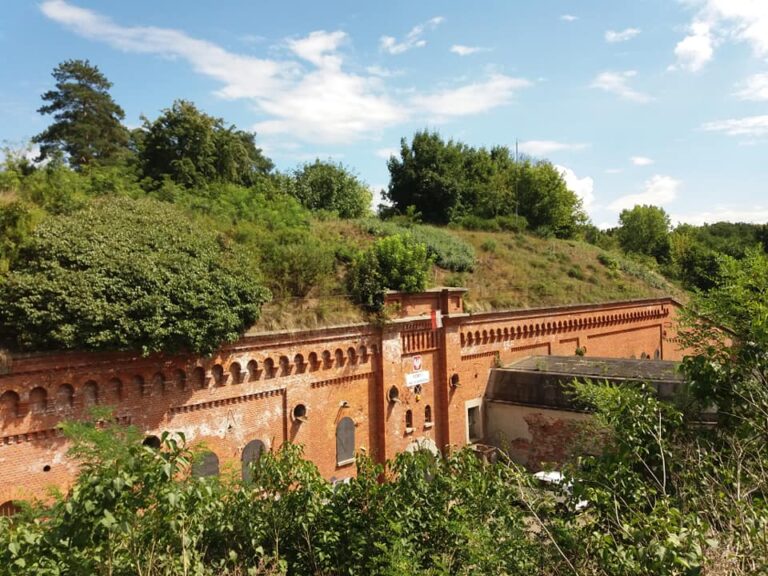
Fort XV survives as a two-rampart artillery fort with masonry elements, mechanisms, grilles, and an armoured PBSt-87 artillery observation post. The barracks retain the protective concrete covering added in 1894. The slab is one metre thick and formed part of the fort’s adaptation to artillery fire from 150 mm guns.
Flank-battery shelters
The fort complex includes shelters associated with artillery positions on its flanks. The right flank-battery shelter was built in 1883 and 1884, and the left shelter followed in 1888 and 1889. The left flank shelter remains among the surviving features of Fort XV.
The flank-battery shelter on Dwernickiego Street retains its connection with Fort XV. Its window and door openings were bricked up in 2008. The fort’s defensive arrangement also included traverses in the principal passageways, built in 1914, while vegetation camouflage was maintained and supplemented around the position.
Camp-era interiors
Theatre
During the Stalag XXA period, the fort contained a theatre with a stage, space for an orchestra, and seating for up to 100 people. The theatre formed part of the prisoner camp’s organized cultural life.
Library and school
A small library and a school also operated inside the fort during the prisoner-of-war period. The library was supplied mainly with privately owned books, and the Red Cross provided educational materials and additional books for school activities.
Nearby sites