Fort Tsche: An Inner Fort of the Warsaw Fortress
Site at a Glance
- Popularity
- Medium
- Country
- Poland
- Primary era
- Modern
- Eras represented
- Modern
- Civilizations
- Russian
- Site type
- Military
- Remains
- Fort
On this page10 sections
History
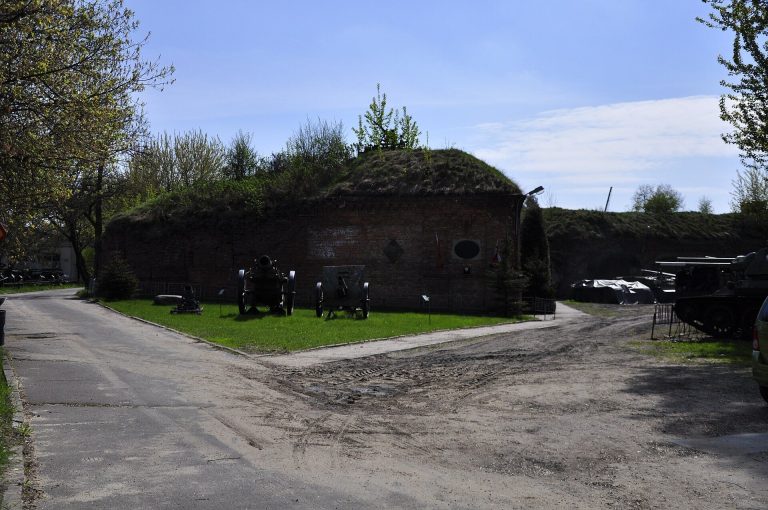
Fort Tsche is a 19th-century fort in Warsaw, Poland, built in the 1880s as part of the inner defensive ring of the Warsaw Fortress, a system of fortifications intended to defend the city. The historic-monuments-register entry gives 1883 as its date. After the fortress was modernized in 1892, the fort was used mainly for storage.
Construction and military use
An order to de-fortify the fort was issued on 31 January 1909. It was later disarmed, although most of its buildings and defensive structure remained. Russian soldiers called it Fort Cz, after the Warsaw neighborhood of Czerniaków, while German maps used the name Tsche. In 1921 it was renamed Fort of the Dąbrowski Legions, Polish military formations organized in Italy under General Jan Henryk Dąbrowski during the Napoleonic era. In 1928 it became Piłsudski Fort, after Polish military commander and political leader Józef Piłsudski. Mokotów II is another recorded name.
Factory and urban development
After the First World War, a factory producing special ammunition operated inside the fort. It made as many as 2.3 million illuminating, smoke, and incendiary grenades a year, along with other mortar ammunition, including rounds for Stokes mortars, which fired explosive ammunition.
In 1930 the outer grounds were divided into parcels. Half the land east of Puławska Street, along Idzikowskiego Street, went to the city for parks and other green spaces. Housing for military officers, mainly from the air force, and allotments grew around the fort, including on its former esplanade, the open ground adjoining a fort. Nearby street names such as Ikara, Obserwatorów, and Idzikowskiego reflect this development; the last commemorates Polish aviator Ludwik Idzikowski.
Wartime and postwar changes
During Warsaw’s defense in September 1939, fighting in and around the fort caused severe damage, including to its barracks shelters. German forces captured it on 25 September, when it was functioning as an independent point of resistance. During the 1944 Warsaw Uprising, an armed Polish revolt against German occupation, Polish forces held the fort until German troops captured it on 15 September.
After the war, garages and allotments were established within the fort, and the allotments initially bore the name of veterans of the workers’ movement. The fort was entered in the historic-monuments register as Fort Mokotów II on 12 March 1973. The army left around 2007, and residential development on the grounds was completed in 2018.
Remains
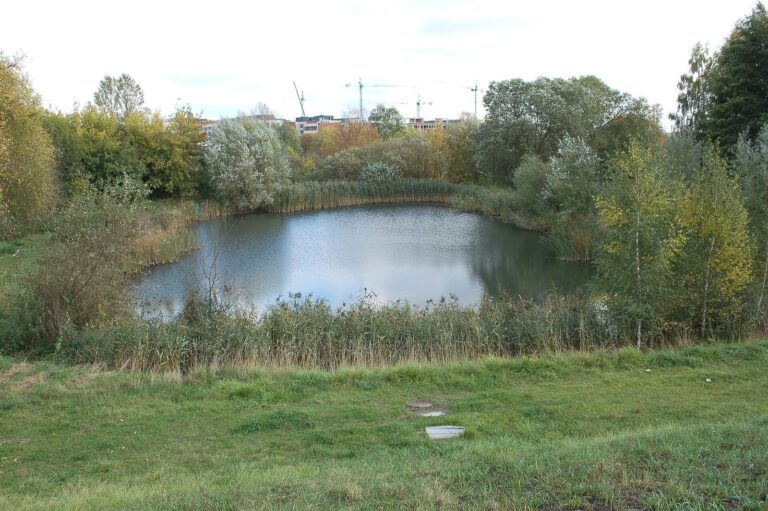
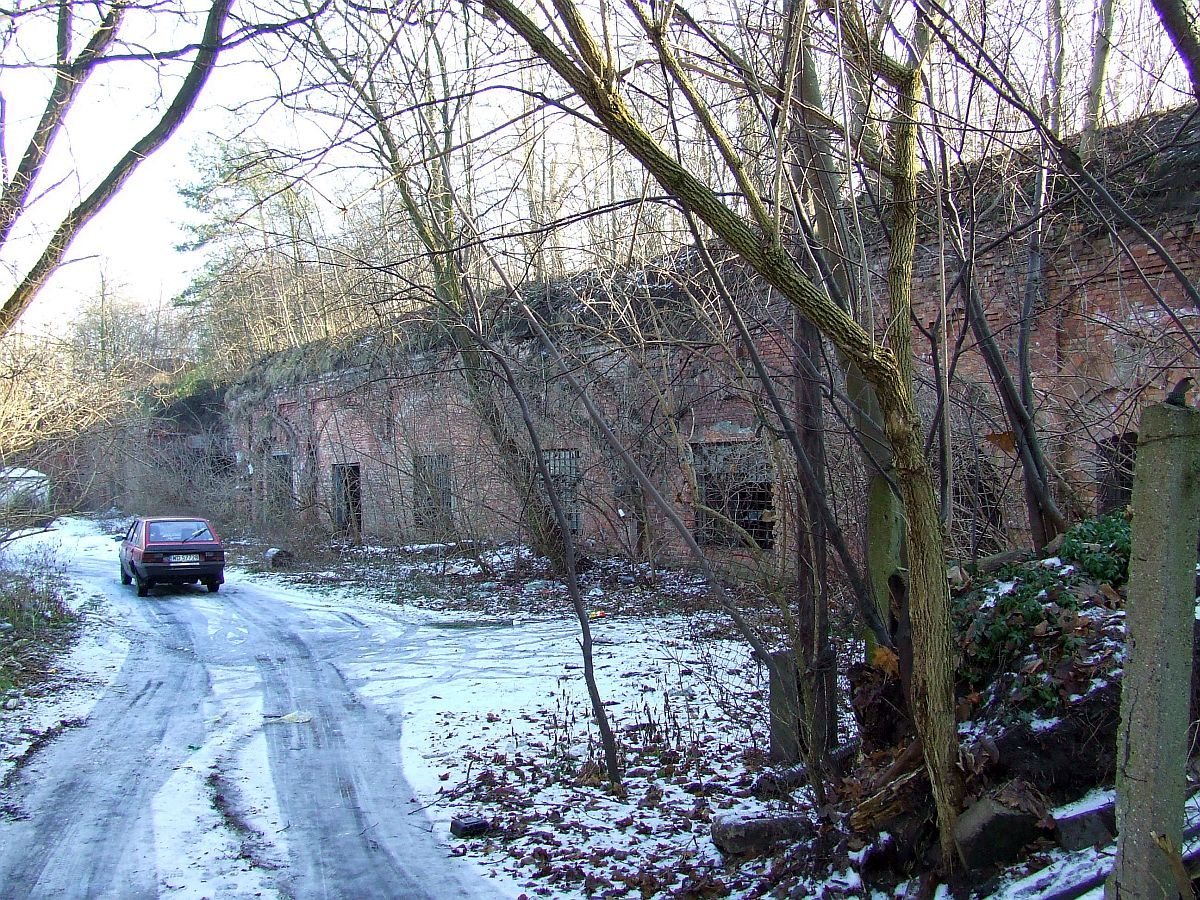
The fort has a regular pentagonal plan with two fronts, built from brick and earth. Its area, including the water-filled moat, was 70,000 square metres. With the outer works, including embankments and probably a glacis, a sloping stretch of ground intended to expose attackers, the area was about 30 hectares. The fort stands on a low terrace below the Vistula escarpment, a position that left its moat flooded. The separate fortified battery of Królikarnia stood on higher ground overlooking the fort, near present-day Ikara Street.
Surviving structures and water features
Casemates
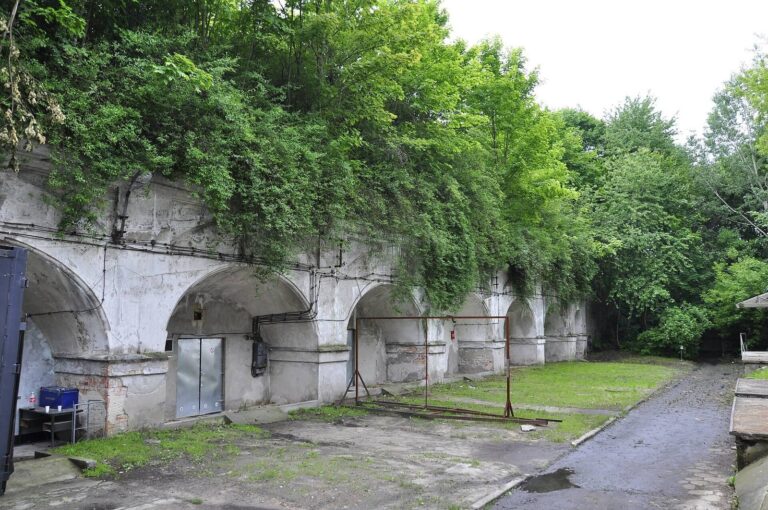
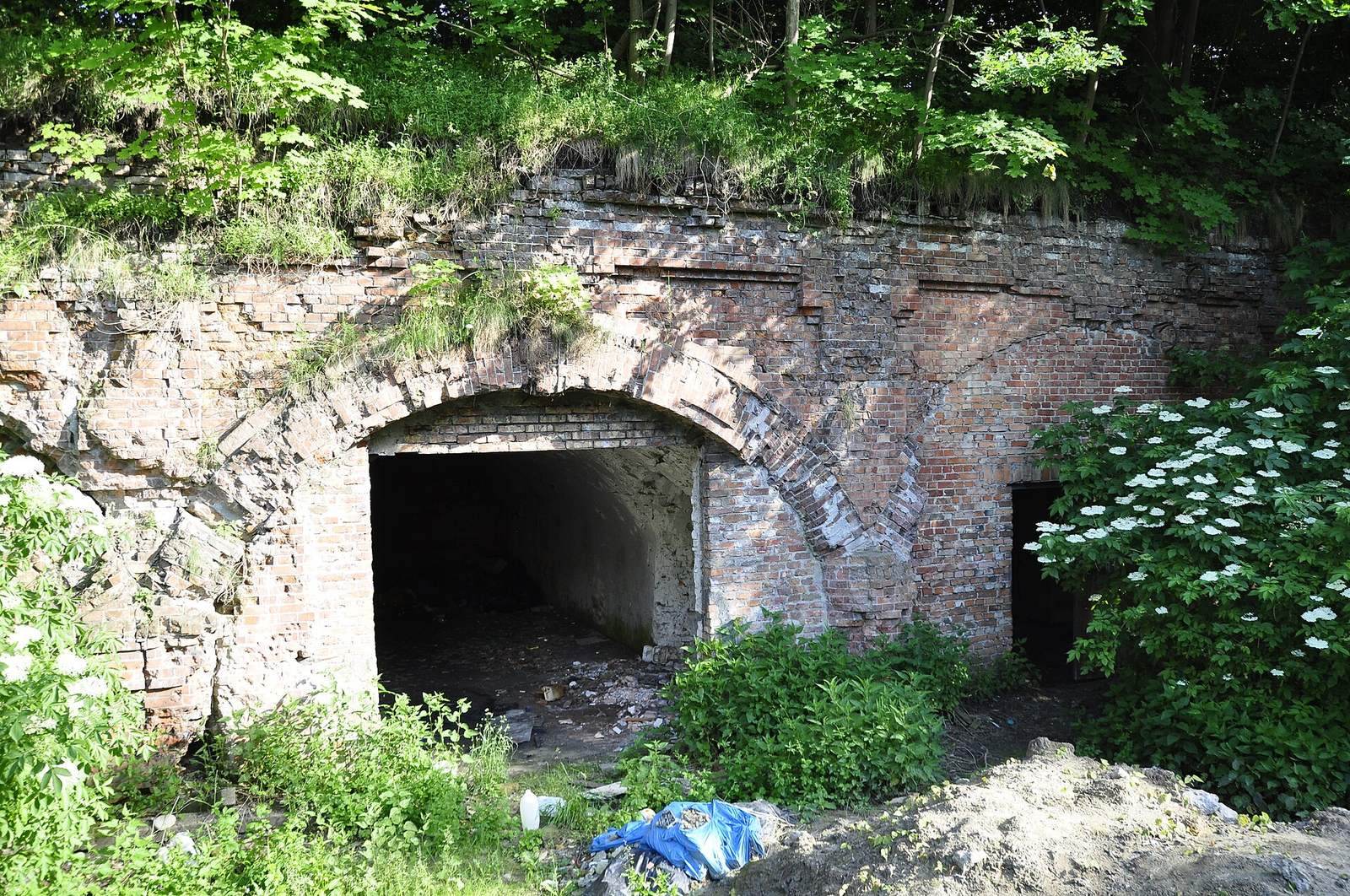
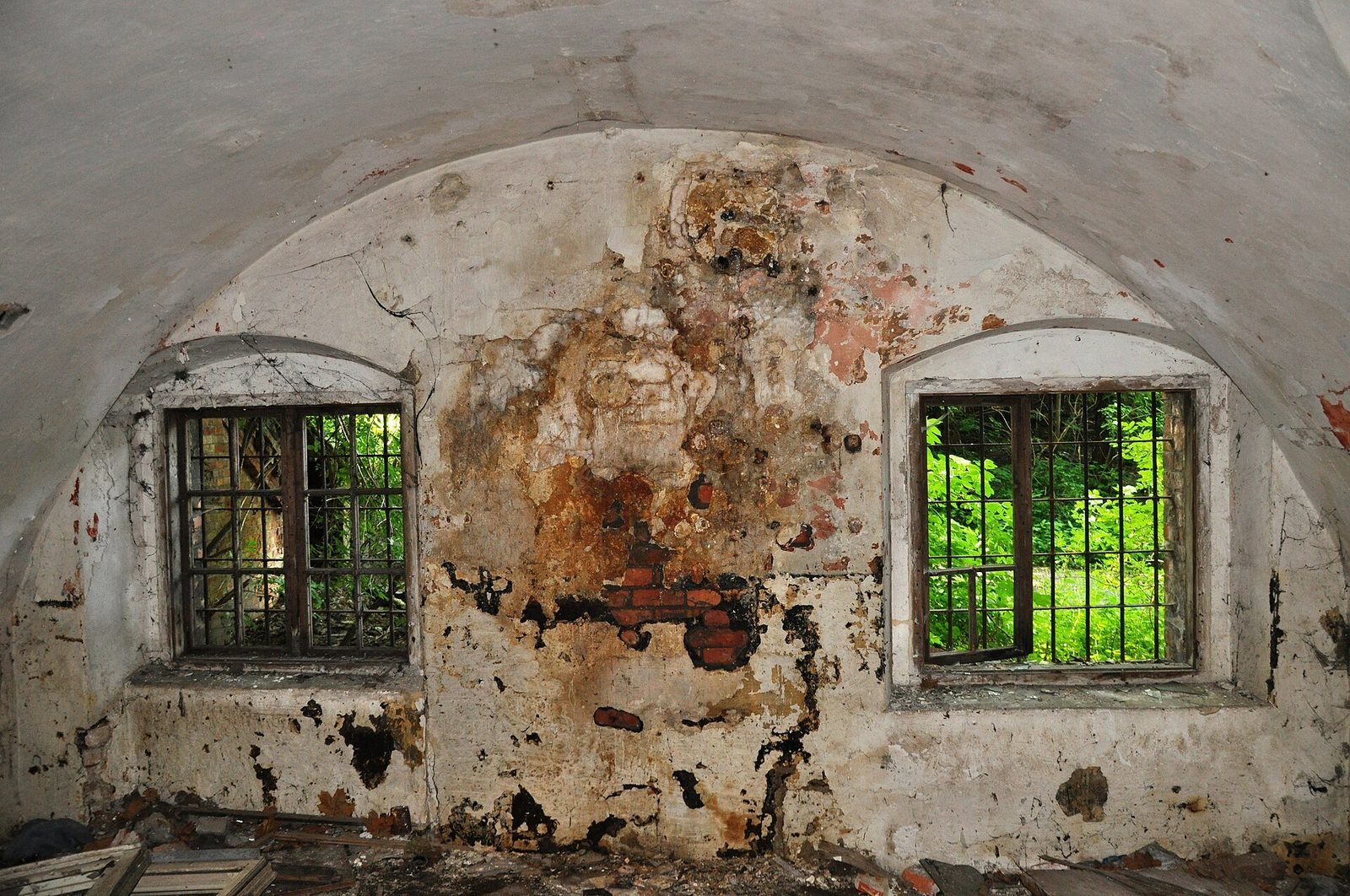
The fort’s casemates, fortified chambers used for shelter or storage, were built of masonry and covered with earth. Some barrack casemates beneath the main rampart survive, including part of one in the inner courtyard.
Bridge and magazine
A steel bridge remains on the fort’s rear side, and the former drawbridge is fixed in position. Across the street, a provision magazine, a storage building, also survives.
Moat
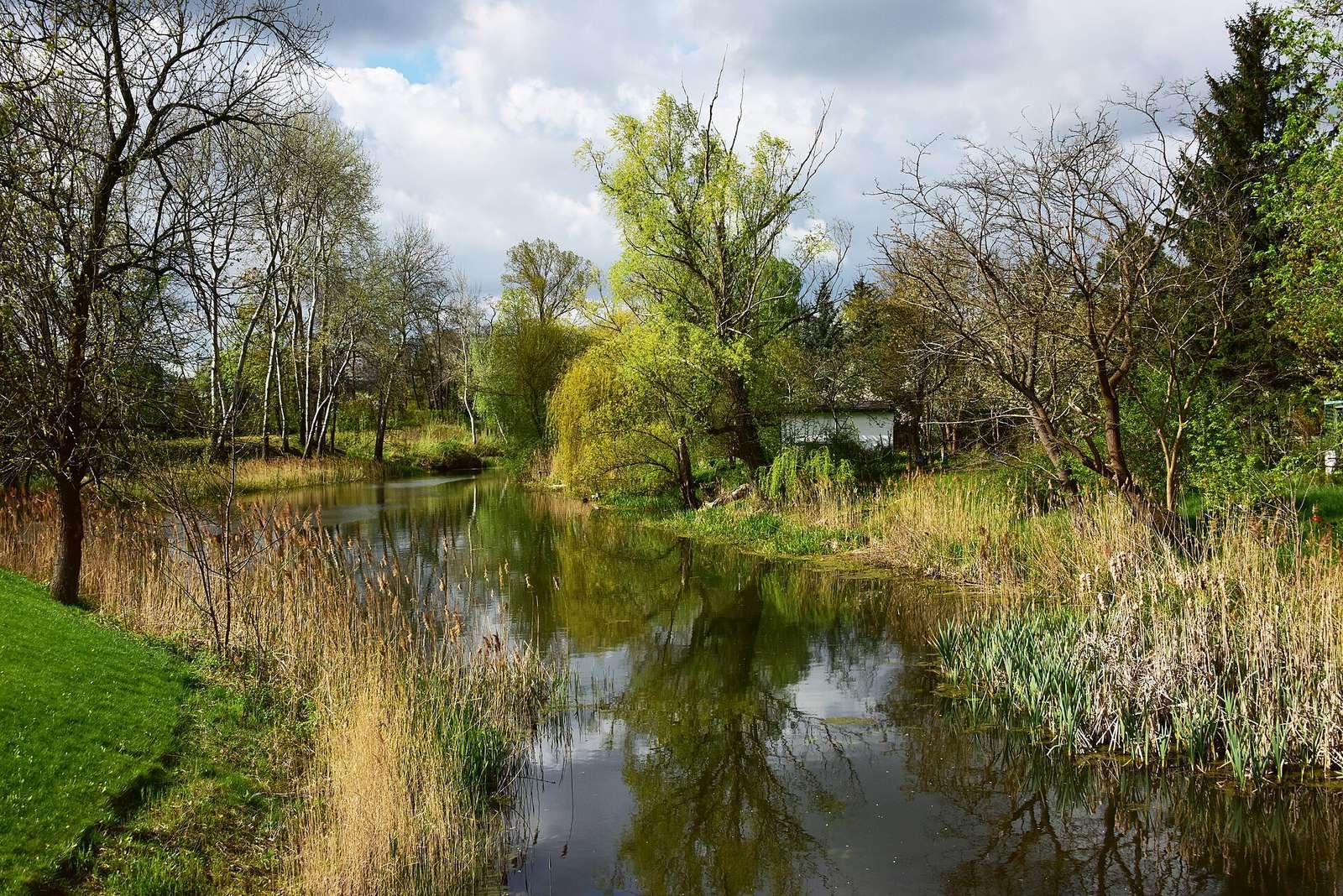
Long sections of the former moat remain. One section, called Bernardyńska Woda, runs along Idzikowskiego Street between Witosa Avenue and Powsińska Street.
Monument and surrounding grounds
An obelisk stands in front of the fort gate. Unveiled in 1997, it bears a plaque identifying the site as Fort Józef Piłsudski. Trees now cover much of the grounds, making the original line of the fortifications difficult to trace. The area is neglected and has also been used for illegal dumping. An ice- and roller-skating rink was built in the largely undeveloped foreground in the 1970s, and a modern electrical substation stands immediately east of the fort.