Fort Tourgis: A Victorian Coastal Fort on Alderney
Site at a Glance
- Country
- Guernsey
- Primary era
- Modern
- Eras represented
- Modern
- Civilizations
- British, German
- Site type
- Military
- Remains
- Fort
On this page18 sections
History
Victorian construction and coastal defence
Fort Tourgis is a coastal fort on Alderney, Guernsey, completed in 1855 as part of the island’s Victorian defences. The Victorian period, the reign of Queen Victoria from 1837 to 1901, shaped the fort’s original design. Planned to house 346 men, it was intended to become Alderney’s largest fort. Its proposed armament included 33 heavy guns across five batteries and four 13-inch mortars. Fort Albert, begun in 1856, later became the island’s largest and most heavily armed fort.
Alderney’s forts were built to defend the island and a planned harbour for a British fleet intended to counter French naval power in the English Channel. From 1860, rifled guns, whose grooved barrels spun their projectiles, and ironclad ships protected by iron armour made the island’s 18 forts and batteries, along with the harbour, increasingly outdated. Fort Tourgis was among the forts later equipped with newer guns.
Declining defences
In 1886, Alderney’s defences comprised 124 artillery weapons. By 1893, Fort Albert and Roselle Battery remained armed, while Fort Grosnez had two practice guns manned by the Royal Alderney Militia, the island’s local militia force. In 1908, the island’s stated defences were Fort Albert, with two six-inch guns installed in 1901, and Roselle Battery, with two 12-pounder quick-firing guns, designed to reload and fire faster than older artillery. Alderney was effectively demilitarized by the 1920s.
German occupation and postwar conservation
After German forces occupied the Channel Islands in 1940, they heavily refortified Alderney. Their island-wide defences included five artillery batteries, 23 anti-aircraft batteries, 13 strongpoints, 12 smaller defensive positions, three defensive lines, and more than 30,000 mines. From July 1940, these works were intended to protect the sea route between Cherbourg and Saint-Malo and resist a possible British attempt to recapture the only part of the British Isles then under German occupation.
Fort Tourgis became a German strongpoint known in English as Turk’s Castle. Its seaward-facing slope suited the defence against landings by boats, tanks, and amphibious vehicles. German forces adapted the Victorian fort with anti-aircraft, coastal-defence, and anti-tank guns, as well as searchlights and machine guns. Alderney became one of the most heavily fortified parts of the Atlantic Wall, Germany’s coastal-defence system in occupied western Europe. Fort Tourgis and Cambridge Battery show how earlier fortifications were adapted for Second World War weapons.
Since then, extensive clearance and conservation work has been carried out on the fort’s northern defences. The Living Islands Project coordinated this work with volunteers supported by the States Works department, Alderney’s public works service.
Remains
Victorian fort
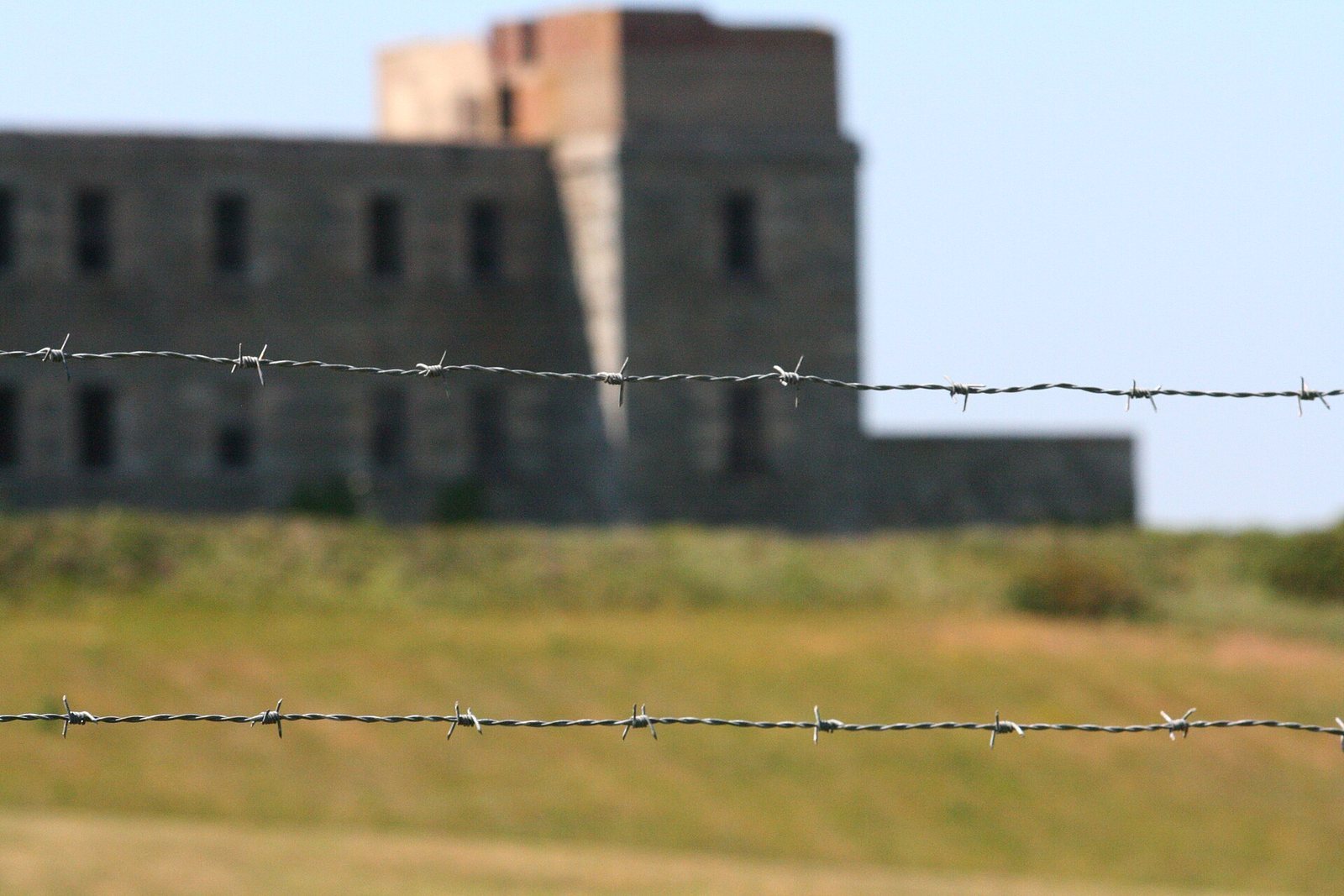
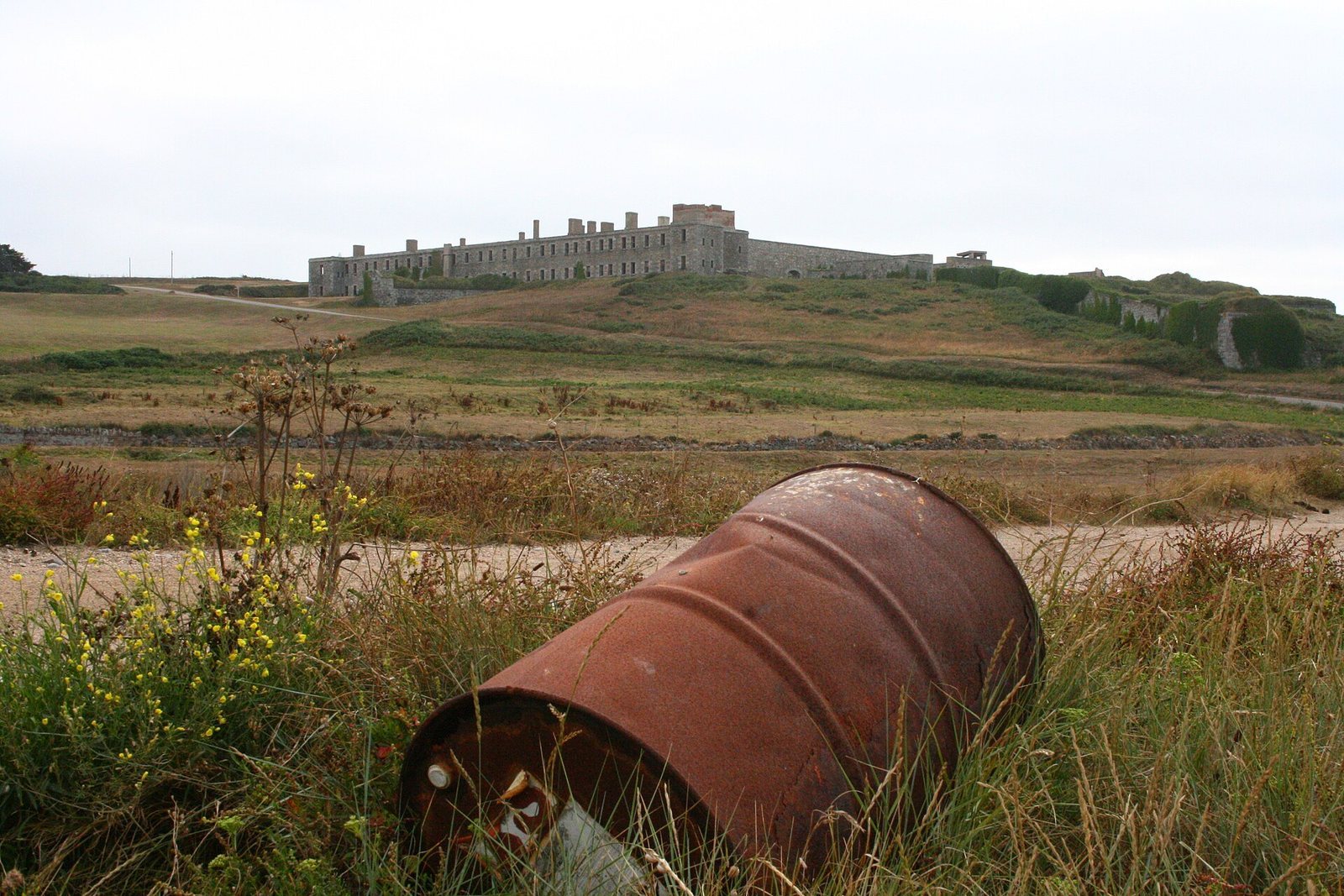
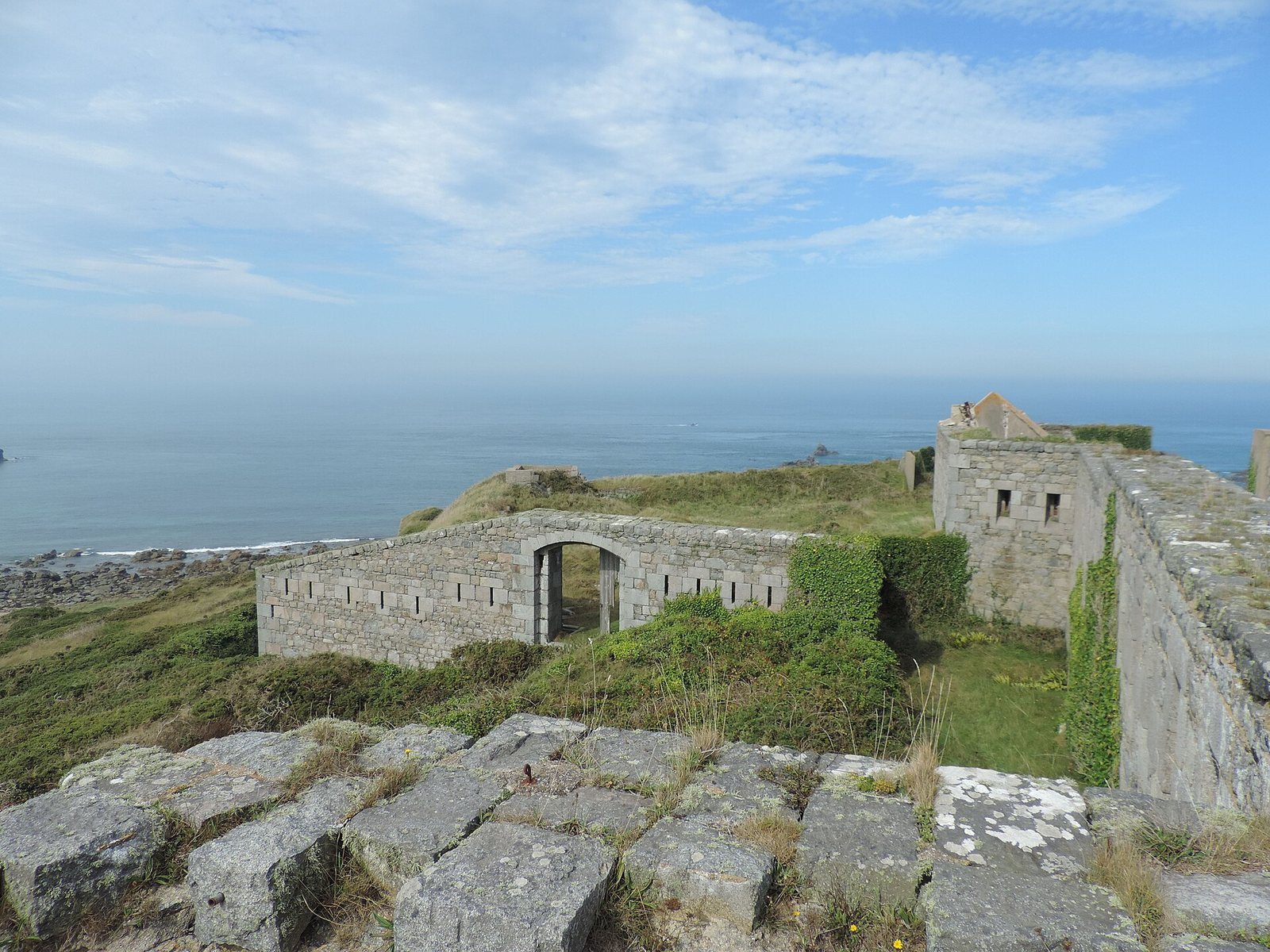
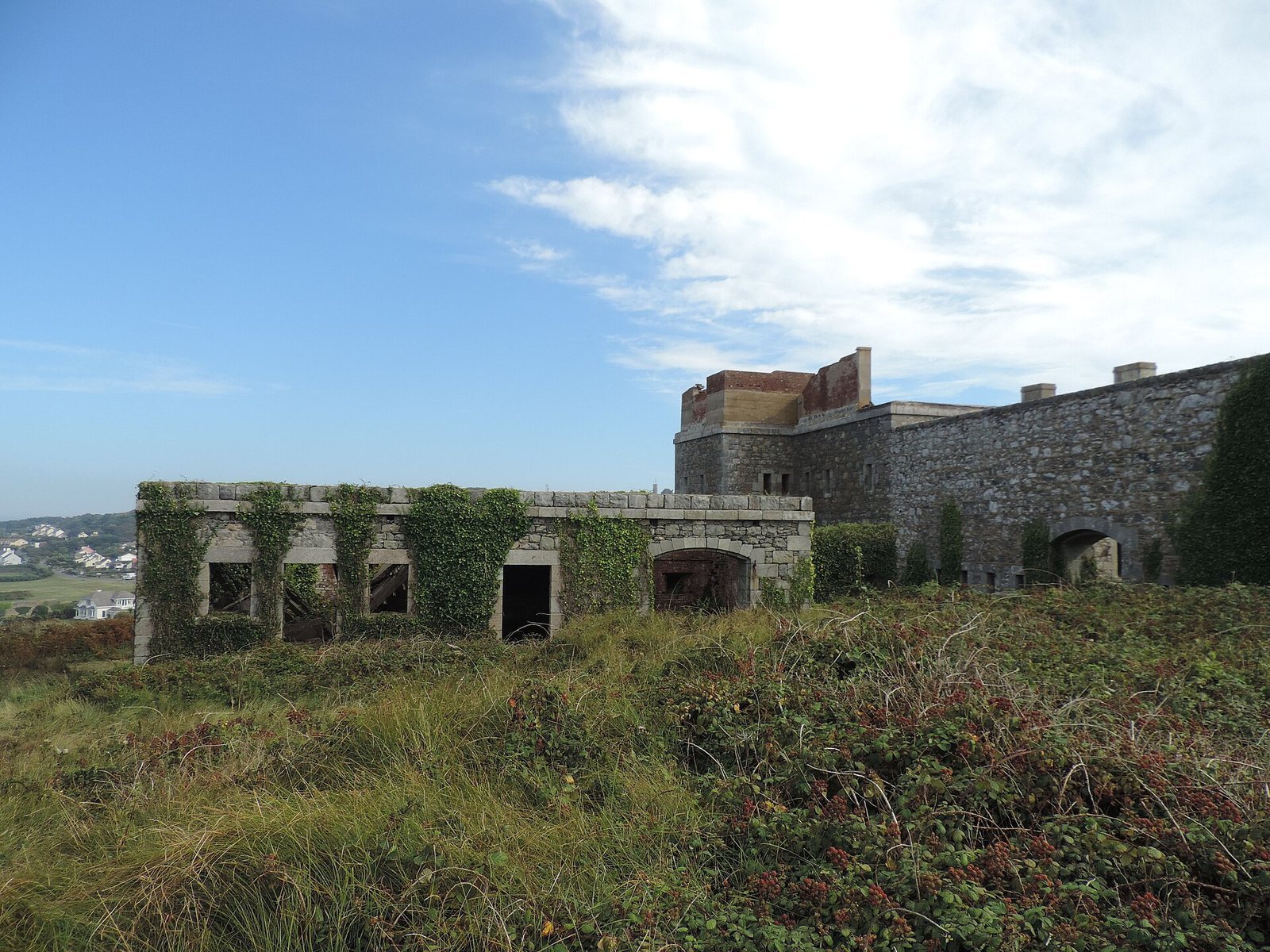
The ruined fort lies northwest of St Anne on a hillside that slopes toward the sea. Its walls are built of rubble masonry, using irregular stones. The layout centres on a citadel, the fort’s central defensive enclosure, with a barrack block, a main magazine for storing ammunition, and other facilities. Ditches and drawbridges divided the batteries from one another and from the citadel.
Citadel and batteries
Two smaller batteries faced west and east. The western one held three guns; the eastern position held two guns in a redan, an angular projecting defensive work. Three principal batteries faced the sea. Together, these features formed the fort’s Victorian defensive layout.
Cambridge Battery
Cambridge Battery, also called Battery No. 2, stood at the fort’s northeast corner and was one of its five Victorian batteries. It mounted eight smooth-bore 68- and 32-pounder guns, whose barrels had no rifling. The guns fired over walls topped with earthen ramparts. Their heavy timber platforms turned on iron pivots, while small metal wheels ran on curved and circular rails. Some of these rails remain visible.
A long wall facing southeast has narrow openings for rifle fire. At its northern end, a caponier, a protected position for firing along a fort’s perimeter, projected outward to defend the fort’s northern face.
Cambridge magazine and caponier tunnel
The Victorian magazine supplied Cambridge Battery with powder, shells, and shot. It was designed to keep these materials secure and dry. Gunpowder charges were prepared there and packed into bags for delivery to the crews. A thick concrete wall was added later, probably by German forces to strengthen the structure.
A separate Victorian tunnel linked the battery to the caponier, which otherwise had no secure approach from outside the fort. The passage was probably lit by oil lamps.
German adaptations
German forces added new defensive works and altered earlier parts of the fort. These surviving positions include a gun bunker at the entrance to the strongpoint, a searchlight emplacement, and a larger beach-defence bunker.
Adapted caponier
The Germans lined the caponier’s original stone walls with concrete and adapted it for two machine guns. Its earlier exterior remains distinguishable, including the openings that allowed defenders to fire along the fort walls. The German conversion also included two weapon positions facing west.
Tunnel beneath Cambridge Battery
A German tunnel passes beneath a Victorian wall and enters the fort through the former Cambridge Battery magazine. It connected the fort to gun bunkers outside and offered a shorter route toward Platte Saline and beyond.
Entrance anti-tank bunker
A German bunker at the entrance combined a machine-gun position with a 7.5-centimetre Pak 40 anti-tank gun. Pak was the German abbreviation for an anti-tank gun. A track still visible in the concrete floor allowed the gun to turn, and a large opening provided a broad field of fire. The bunker’s type is uncertain. It was built to reinforced field-fortification standards, with concrete more than a metre thick; its large door was probably bullet-resistant.
Searchlight and adjacent bunker
The German 60-centimetre searchlight emplacement retains rails in its floor. The light could be moved from a recessed shelter onto a turntable to illuminate the sea and beach, and possibly to watch for air attacks. Its range exceeded five kilometres.
Beside the searchlight is a German bunker of uncertain function, built where a Victorian heavy gun had stood on a pivot and rails that are now buried beneath concrete. The bunker may have housed a small generator for the searchlight, served as a personnel shelter, or performed both roles.
Jäger beach-defence bunker
The large German Jäger bunker, a type built only in the Channel Islands, housed a 10.5-centimetre K331 (f) beach-defence gun, crew accommodation, and a magazine. The captured French gun covered the broad beach at Platte Saline, which was vulnerable to landings by boats and tanks.
Vegetation, wildlife, and coastal setting
Vegetation and wildlife
Since 1945, scrub, brambles, shrubs, and ivy-covered walls have spread across parts of the fort, providing habitat for invertebrates, small mammals, and birds. Kestrels nest in openings in the eastern wall and hunt in nearby fields and grassland. Other wildlife includes buzzards, meadow pipits, stonechats, Dartford warblers, white-toothed shrews, barn swallows, sparrows, and the Bloxworth snout moth. Flowering plants and ferns also grow at the site. Barn swallows nest in the German tunnel, while the generator shelter has held as many as three active sparrow nests in some years.
Views across the coast
From the searchlight emplacement, views extend across Clonque Bay and Platte Saline, east toward Forts Doyle and Grosnez, and west across part of Alderney’s Ramsar site, a wetland area recognized for its international importance. The site includes rocky coastline, islets, and seabed habitats. Tidal upwellings in the Swinge attract fish and seabirds; birds around the shore include gannets, shags, curlews, and little egrets.