Fort Taillefer: A Coastal Defense at Le Palais, France
Site at a Glance
- Rating
- 4.6
- Popularity
- Very Low
- Country
- France
- Primary era
- Modern
- External website
- Open
- Eras represented
- Early Modern, Modern
- Civilizations
- French
- Site type
- Military
- Remains
- Fort
On this page13 sections
History
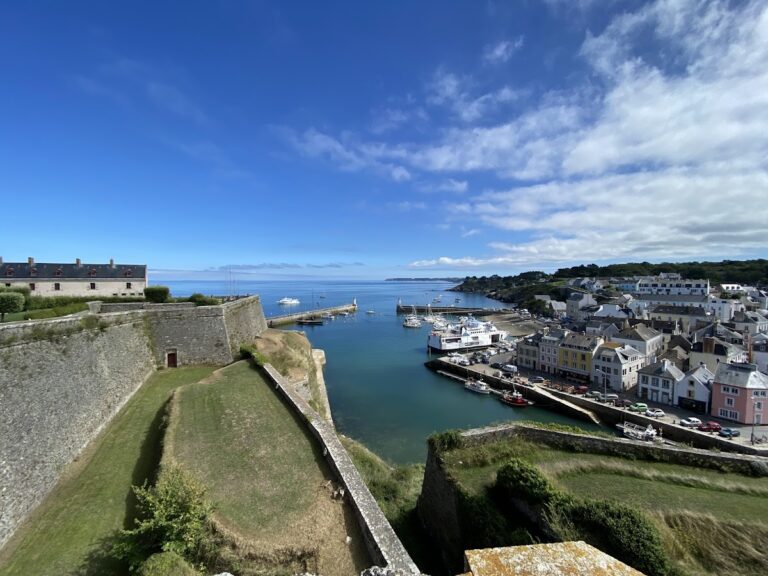
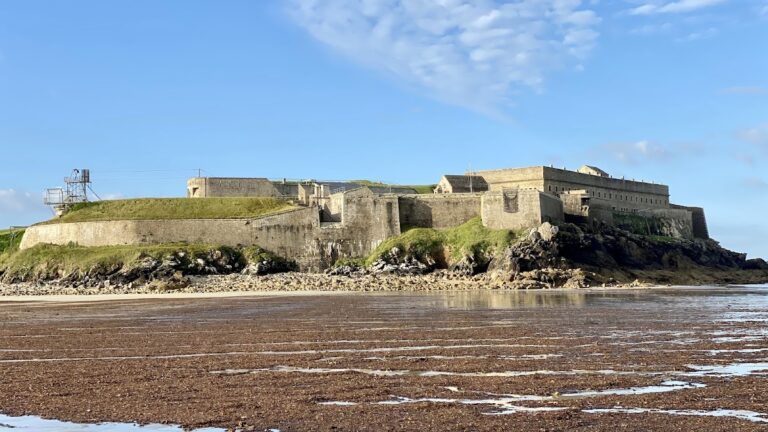
Fort Taillefer is a coastal fortification at Le Palais, on Belle-Île in France. Its defenses began after the French military engineer Sébastien Le Prestre de Vauban inspected the point in 1689 and recommended a battery, which was in place by 1692.
Seventeenth and eighteenth centuries
By the mid-eighteenth century, the battery carried six cannon and a mortar. It was restored in the 1770s, then received further work during the French Revolutionary and Napoleonic wars. That work included a reverberatory furnace, which heats material using reflected heat rather than direct contact with fuel.
Nineteenth-century expansion
In 1830–1831, the battery was judged to need rearming, and two artillery pieces were added. A French coastal-defense commission proposed a guardhouse in 1841. A small enclosed defensive work of the 1846 type was completed around 1860, and a semaphore, or signal station, was established around the middle of the century, probably in 1861.
Artillery improvements in the 1880s brought new fortification work, two additional guns, and platforms arranged to cross their fire with guns on the Quiberon peninsula. The development of torpedo shells, a type of explosive artillery ammunition, prompted another modernization in the late nineteenth century. The plans provided for four 240-mm guns and two smaller batteries with 95-mm guns.
Twentieth century
During the First World War, Fort Taillefer’s heavy guns were sent to the front, as happened at many French coastal batteries. In the 1930s, concrete works were built for two 140-mm guns, along with a fire-direction post, a position used to direct artillery fire.
The German army occupied the fort after France’s defeat in 1940. The site was disarmed after the Second World War, although the French Navy continues to use the semaphore. Fort Taillefer was registered as a French Historic Monument in 2000.
Remains
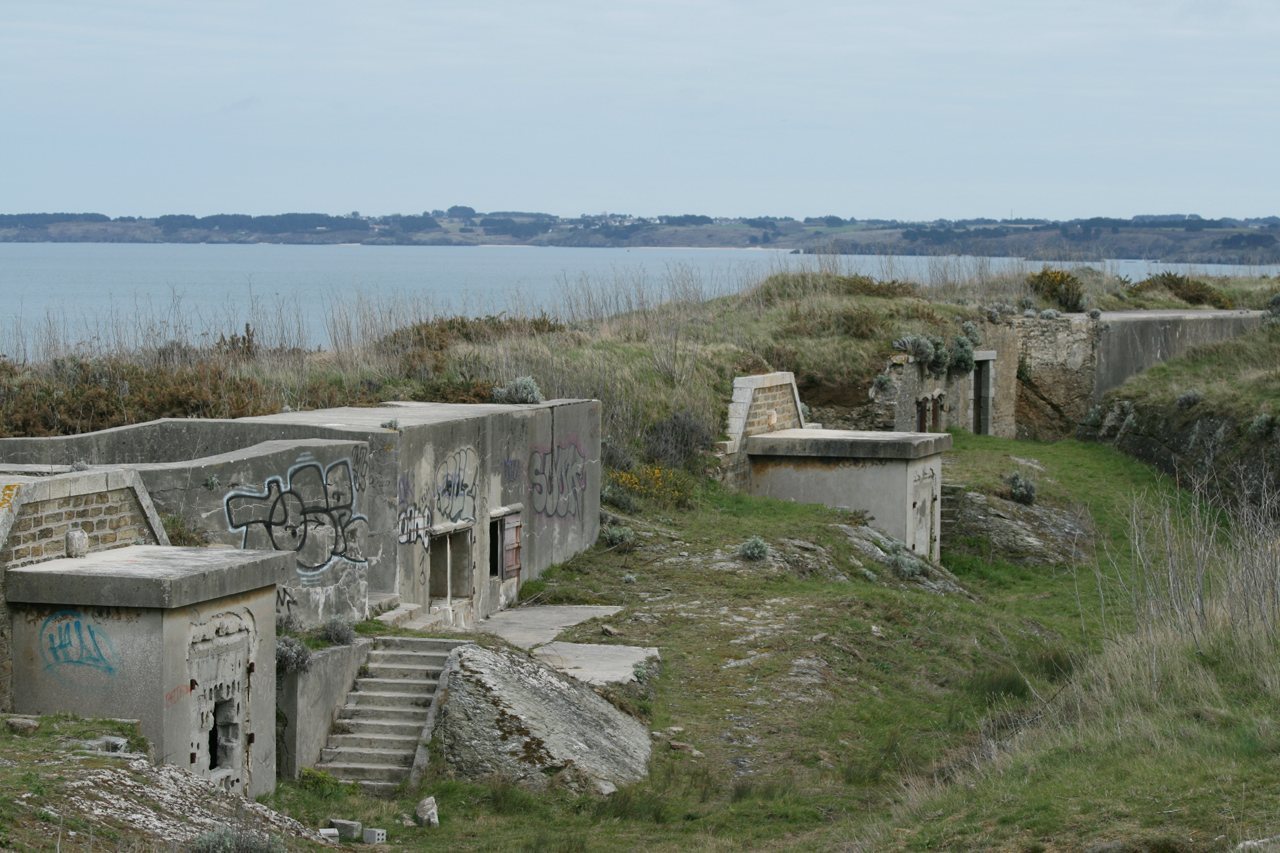
The fort occupies a point on Belle-Île’s northeastern coast overlooking the approach to Le Palais. Its layered remains include a guardhouse, a semaphore, successive battery works, and later concrete defenses. The fort’s guns formed a crossfire with those of the Ramonet battery.
Nineteenth-century fortifications
Guardhouse
The surviving guardhouse is a small enclosed defensive work of the 1846 type, with a notched parapet.
Semaphore
The semaphore, a signal station, remains part of the fort complex.
Battery works and gun platforms
Remains survive from a battery built in 1880 and a second battery dating to 1890. Northwest of the fort, the battery area had two semicircular platforms for 240-mm guns, an earthen parapet, and a position for a 160-mm gun at each end. A later platform was designed for four 240-mm guns and served by a magazine cut into the rock, a hoist, and rails for ammunition wagons. Two small 95-mm batteries stood on either side of this platform and the earlier battery.
Landward defenses
A drawbridge survives among the fort’s landward defensive arrangements.
Interwar defenses
Concrete gun positions
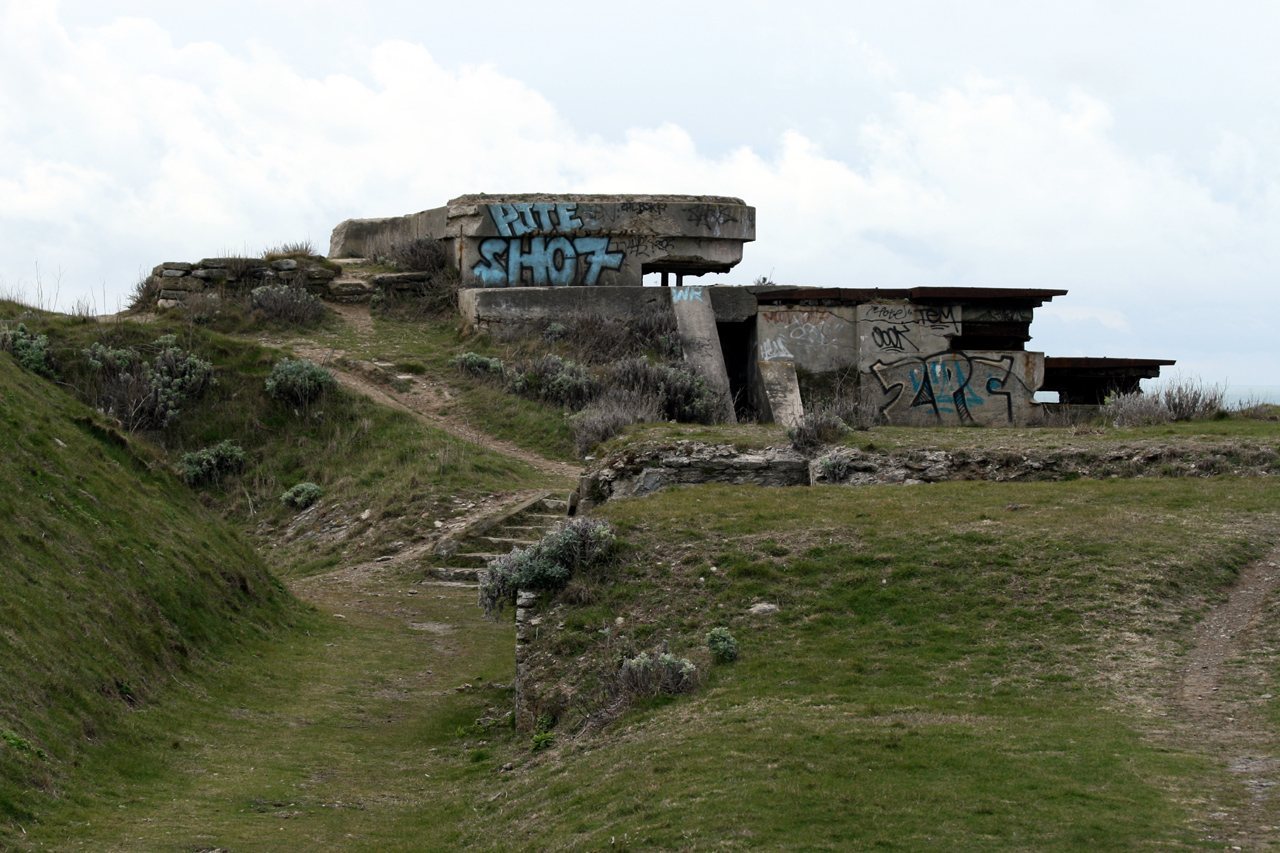
The battery built around 1930 comprised four concrete gun pits with ammunition niches. Concrete works for two 140-mm guns also formed part of the fort’s later defenses.
Fire-direction post
A fire-direction post survives among the concrete defenses. It was used to direct artillery fire.