Fort Mississauga: A War of 1812 Fortification in Canada
Site at a Glance
- Rating
- 4.3
- Popularity
- Low
- Country
- Canada
- Primary era
- Modern
- External website
- Open
- Eras represented
- Modern
- Civilizations
- British
- Site type
- Military
- Remains
- Fort
On this page10 sections
History
Fort Mississauga is a War of 1812 fortification in Niagara-on-the-Lake, Canada, built by the British during the 1812–1815 conflict between the United States and the British Empire. Construction began in 1814 and continued until 1816, as British authorities sought to replace nearby Fort George and strengthen the defence of Upper Canada, the British colony corresponding roughly to present-day southern Ontario. The project followed the burning of Newark, the former name of Niagara-on-the-Lake, by retreating United States forces in December 1813.
Earlier use of Mississauga Point
The site had been used by at least three First Nations, Indigenous peoples other than Inuit and Métis. The Neutral occupied the area in the fifteenth century, the Seneca used it in the late seventeenth century, and the Mississauga used it in the eighteenth century.
A lighthouse was erected at Mississauga Point in 1804. It was the first lighthouse on the Great Lakes, but it was dismantled in 1814 to clear the site for the fort. Stone from the lighthouse was incorporated into the new defence, along with material recovered from the ruins of Newark.
Construction during the War of 1812
Fort Mississauga formed part of a defensive network that included Fort George, Navy Hall, and Butler’s Barracks. Its construction became especially important after the United States Navy gained control of Lake Ontario. The fort was intended to prevent vessels from entering the Niagara River and to reinforce the river’s mouth.
After British forces captured Fort Niagara on 19 December 1813, Captain Runchey’s Company of Coloured Men was attached to the Royal Engineers, the British military corps responsible for fortification design, construction, and repair. In spring 1814, the company was ordered to construct Fort Mississauga. This assignment kept it from taking part in the Niagara campaign, including the Siege of Fort Erie later that year.
Military use and preservation
British Army forces used the fort from 1813 to 1855. The Canadian Militia, Canada’s part-time military force for local defence, training, and wartime service, later used it as a summer training ground from the 1870s. The militia also used the fort during the First and Second World Wars and the Korean War.
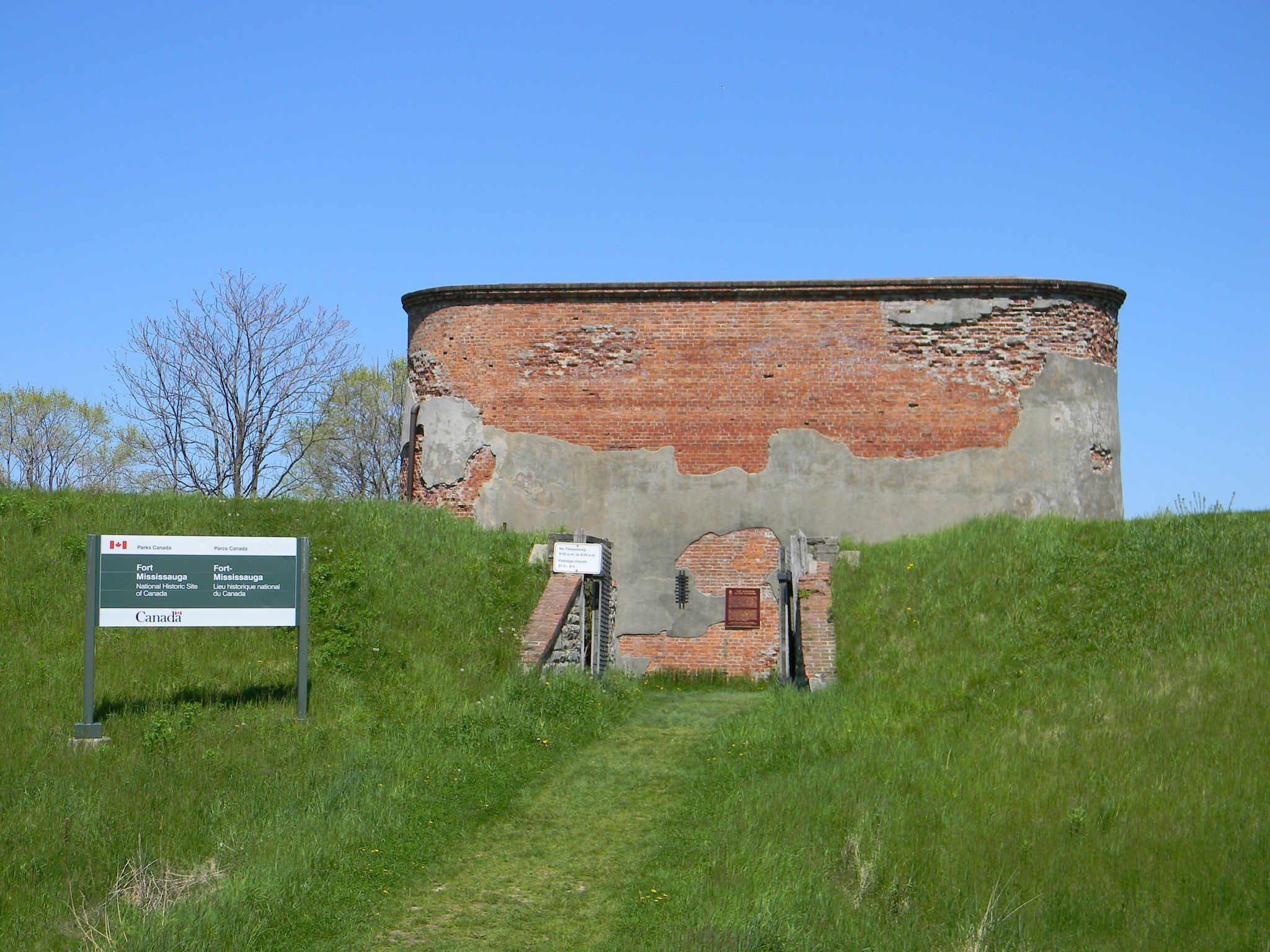
Fort Mississauga became a National Historic Site of Canada in 1960. It forms part of the Niagara National Historic Sites administrative group managed by Parks Canada. The former Mississauga Point Lighthouse received separate national historic designation in 1937 and is commemorated within the fort by a plaque erected by the Historic Sites and Monuments Board of Canada.
Remains
Fortification and surviving structures
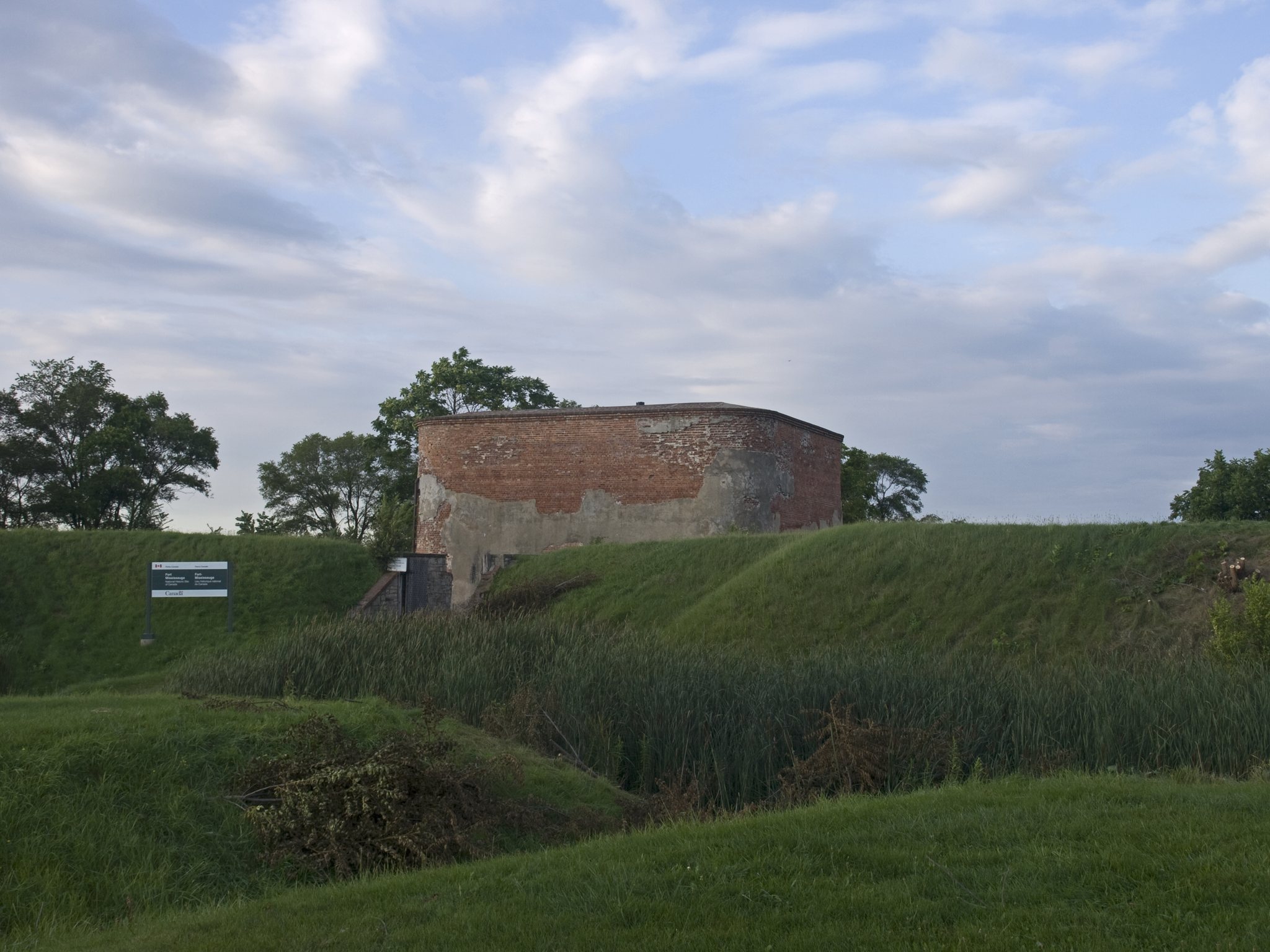
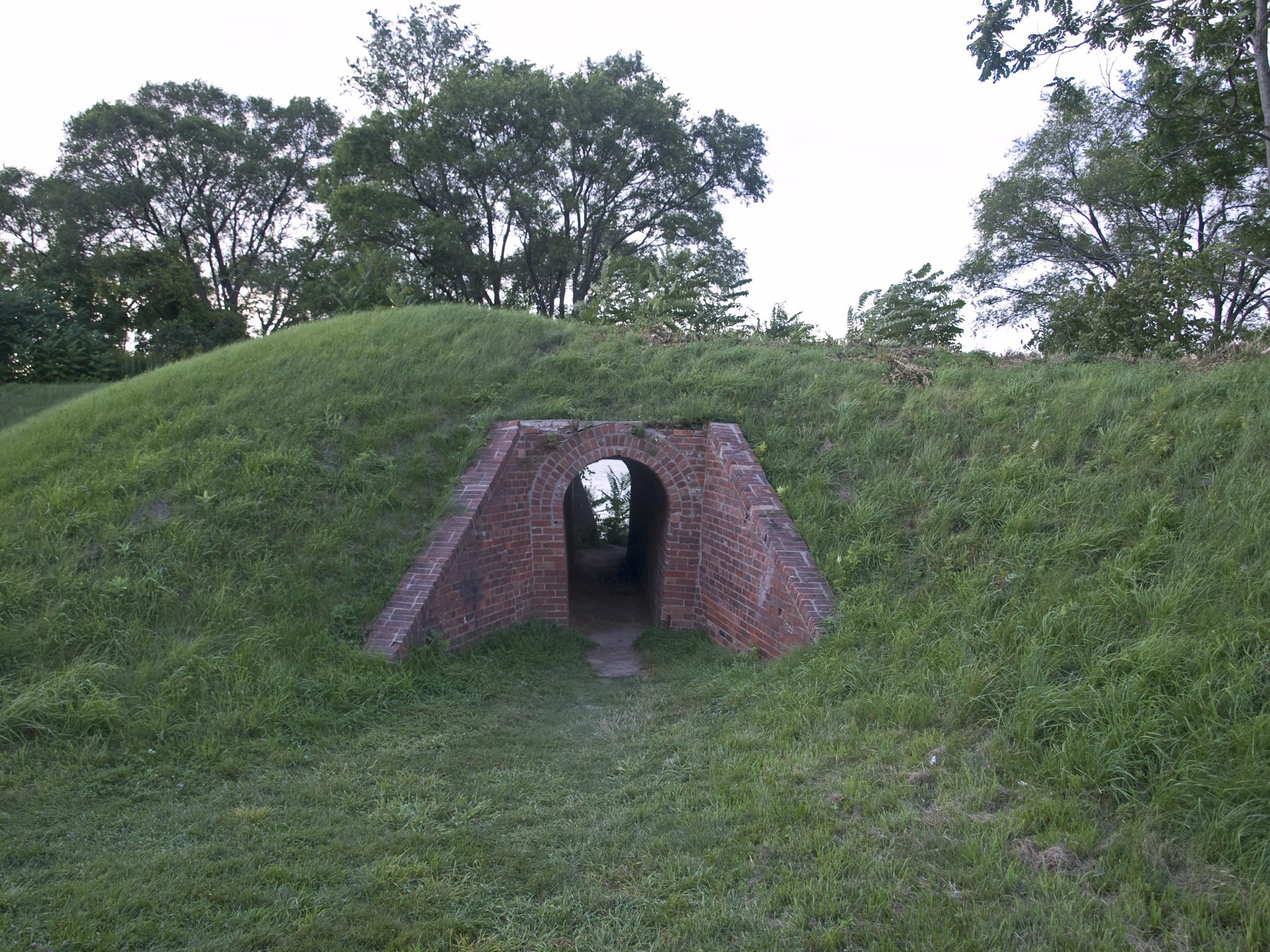
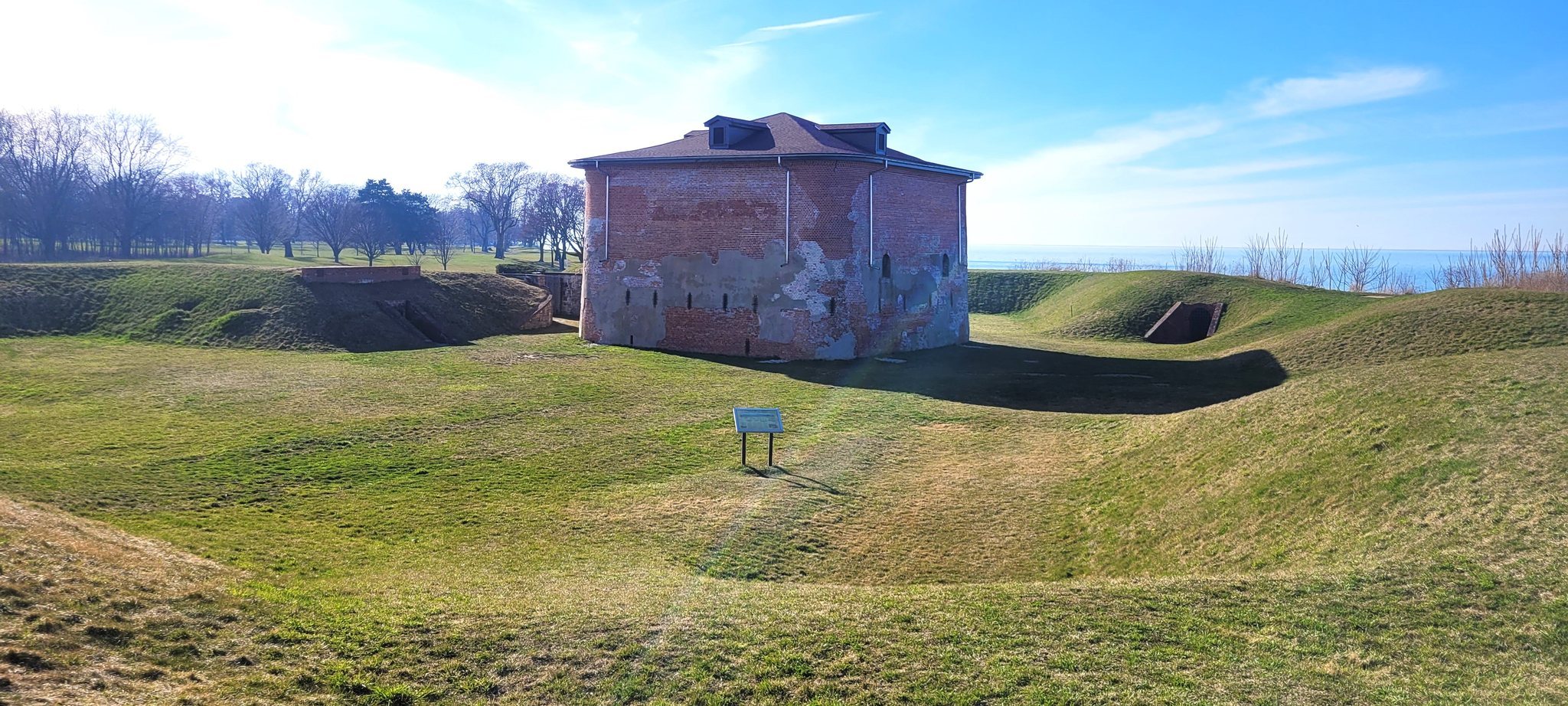
The fort stands on the shore of Lake Ontario at the mouth of the Niagara River, on the former Mississauga Point. Its surviving form consists of a box-shaped, all-brick tower or blockhouse enclosed by historic star-shaped earthworks. These angular banks and ditches project outward in points, allowing defenders overlapping fields of fire. The fort was founded on brick and stone salvaged from the ruins of Newark, with additional stone taken from the dismantled lighthouse.
Blockhouse
The blockhouse is the only original building that survives. A blockhouse was a fortified building intended to provide defensive fire and shelter, and here it served as the main strongpoint within the larger fortification. Its interior is closed, while wooden staircases lead to some of the upper windows.
Earthworks
The historic earthworks surround the brick blockhouse in a star-shaped plan. Their projecting banks and ditches formed the outer defensive structure and remain part of the surviving fort layout.
Lighthouse memorial
A plaque commemorating the former Mississauga Point Lighthouse stands within the fort’s walls. The lighthouse’s stone was reused in the fort after the earlier structure was dismantled in 1814.
Surrounding grounds
A golf course was laid out near the fort in the late 1870s. The Niagara-on-the-Lake Golf Course now surrounds the site.