Fort de Romainville: A Defensive Fort and Wartime Detention Camp in Les Lilas
Site at a Glance
- Popularity
- High
- Country
- France
- Primary era
- Modern
- Eras represented
- Modern
- Civilizations
- French, German
- Site type
- Military
- Remains
- Fort
On this page12 sections
History
Fort de Romainville is a nineteenth-century defensive fort in Les Lilas, France, built from 1844 to 1848 at the request of Adolphe Thiers, a statesman involved in planning Paris’s defenses. It formed part of the system intended to protect the capital and followed the fortification tradition associated with the seventeenth-century military engineer Vauban. During the Second World War, German occupiers turned the fort into a detention center and a major point of departure for deportations to Nazi concentration camps.
Construction and defense of Paris
The fort stood within the commune of Romainville until 1867, when Les Lilas was established from parts of Romainville, Pantin, and Bagnolet. The fort then lay within the new commune but kept its original name.
During the Franco-Prussian War, the 1870 conflict between France and Prussia, residents of Les Lilas and nearby communes sought refuge inside. On 20 September, its command staff included naval Captain Zédé, naval Commander Salmon, responsible for artillery, and army Lieutenant-Colonel Hamel, responsible for engineering, supported by 14 other officers. The garrison included several Marine battalions and companies, a ship’s crew, and artillery and engineering detachments. Its armament comprised 73 guns, howitzers, and mortars, alongside 650,300 cartridges for Model 1866 Chassepot rifles.
Military service, 1918–1940
The front did not reach the fort during the First World War. On 6 April 1918, however, a shell fired by the German long-range gun known as Big Bertha exploded in its ditches. After the war, the 401st Anti-Aircraft Artillery Regiment occupied the fort. It left following the armistice of 22 June 1940, without having fought.
Detention and deportation, 1940–1944
Within hours of the regiment’s departure, the German armed forces, the Wehrmacht, took control of the fort. In October 1940, the German military commander in France ordered its conversion into an administrative detention camp. Commandant Bickenbach and SS officer Trappe led the camp throughout the occupation. The first prisoners were registered in early November, and on 12 December the fort became a center for security detention.
The camp held opponents of the occupation, hostages, women, and foreign nationals. Some hostages were detained for execution in retaliation for Resistance actions, although most such executions took place at Mont-Valérien. Fort de Romainville also served as a major transit point for deportations, alongside Compiègne; nearby railway stations at Pantin and Bercy facilitated prisoner transfers. About 7,000 people passed through the camp, including 3,900 women and 3,100 men who were interned before deportation. Destinations included Ravensbrück, Auschwitz, Buchenwald, and Dachau, and 152 people were executed at the fort.
From February 1944, the prisoners were almost entirely women. Many had been brought from elsewhere in France and were held for around two weeks before deportation, most often to Ravensbrück. A small number of prisoners escaped, including Pierre Georges, a Communist Resistance fighter known as Colonel Fabien. Resistance activist and dentist Danielle Casanova encouraged fellow prisoners to resist their torturers from her cell. She had founded the Union of Young Girls of France and died at Auschwitz on 9 May 1943.
The “31,000” convoy
The best-known transport linked to the fort was the “31,000” convoy, named for the prisoner-registration series assigned to the women at Birkenau. On 23 January 1943, 222 women left Fort de Romainville by truck for the Royallieu camp at Compiègne. Six women from Fresnes prison and two from the Compiègne depot joined them there. On 24 January, the resulting group of 230 was taken to Compiègne station and placed in the final four carriages of a train carrying nearly 1,500 men. They reached Birkenau on the evening of 26 January, left the train the following morning, and entered the camp singing “La Marseillaise,” the French national anthem. Forty-nine returned from deportation in 1945.
Among the women were Resistance members Marie-Claude Vaillant-Couturier, arrested in February 1942 while working as a liaison agent; Marcelle Mourot, arrested on 2 August 1942 while helping escaped prisoners of war reach Switzerland; and Louise Losserand, arrested on 16 May 1942 as a liaison agent. Losserand was the widow of Resistance member Raymond Losserand, who had been executed. Danielle Casanova was also among the prisoners. The convoy included 119 women who were Communists or close to the French Communist Party, and 45 widows of executed men. Other prisoners included Simone Sampaix, daughter of executed newspaper editor Lucien Sampaix; Hélène Solomon, daughter of Professor Paul Langevin and widow of executed resistance member Jacques Solomon; and Maï Politzer and Charlotte Delbo, whose husbands, Georges Politzer and Georges Dudach, were executed on 23 May 1942.
The final days of occupation
About 500 women remained imprisoned at the fort in August 1944. The final transport, known as the “57,000” convoy, left Pantin station on 15 August. On the morning of 19 August, following the intervention of Swedish Consul-General Raoul Nordling, the German garrison handed about 50 women over to the Red Cross. That evening, 11 French Forces of the Interior resistance fighters captured during the liberation of Paris were brought to the fort. On the morning of 20 August, departing German soldiers, including Georgian auxiliaries, shot them at close range and burned their bodies. Residents of Les Lilas and Romainville found the bodies behind the central building the next day.
Later use
The fort no longer serves a military purpose. From 2000 to 2016, it housed reserve collections as a non-public annex of the National Maritime Museum; the collections were then moved to Dugny.
Remains
Fort layout
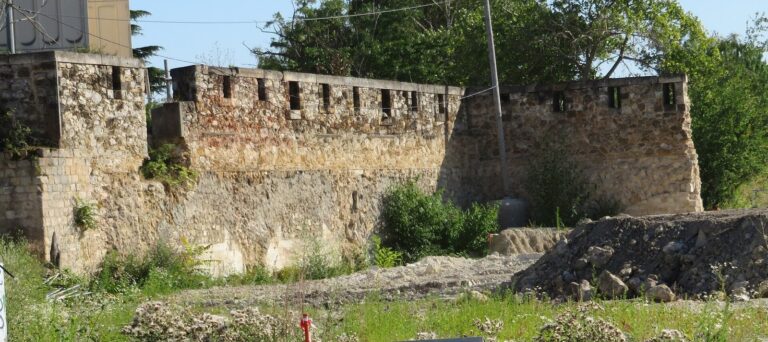
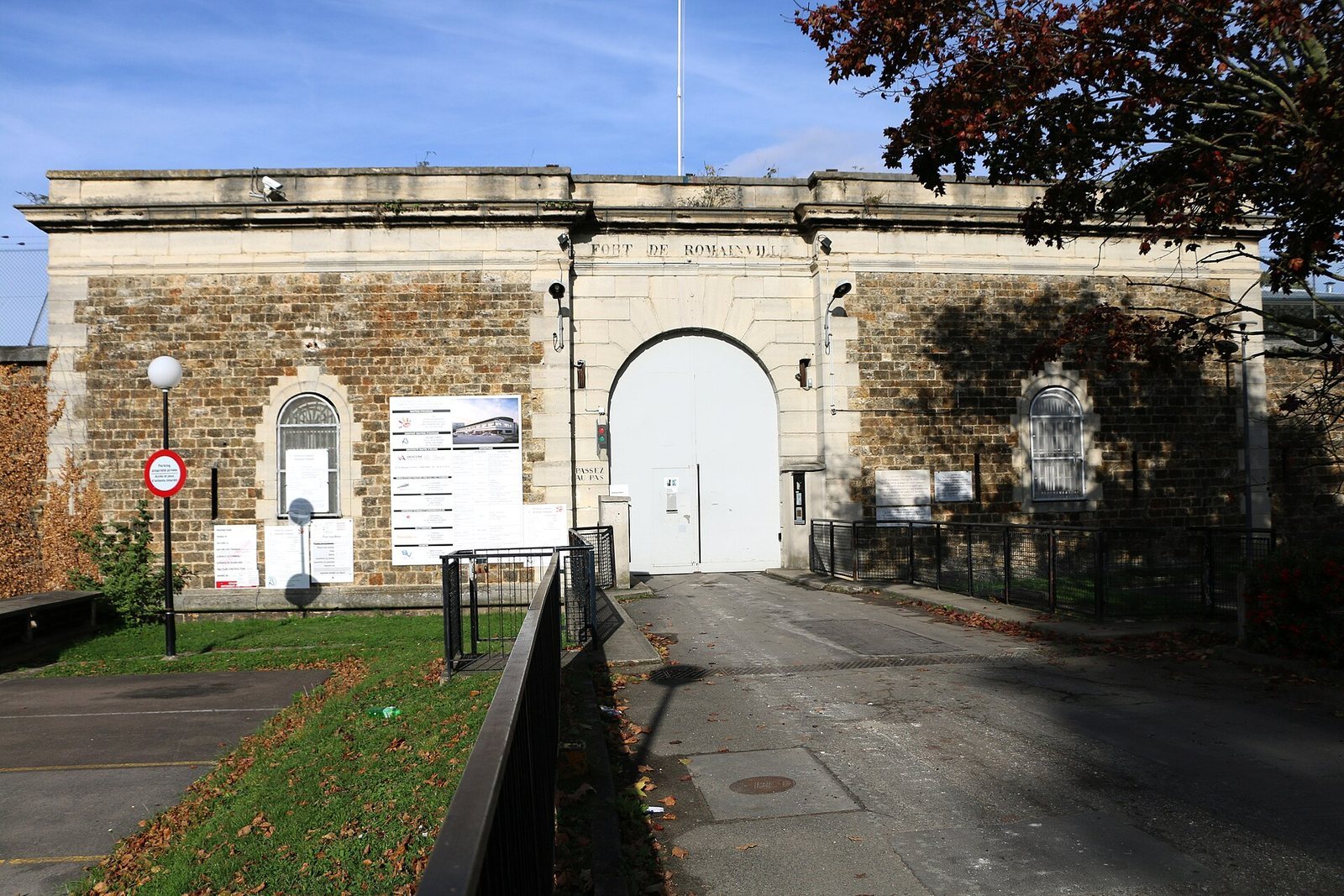
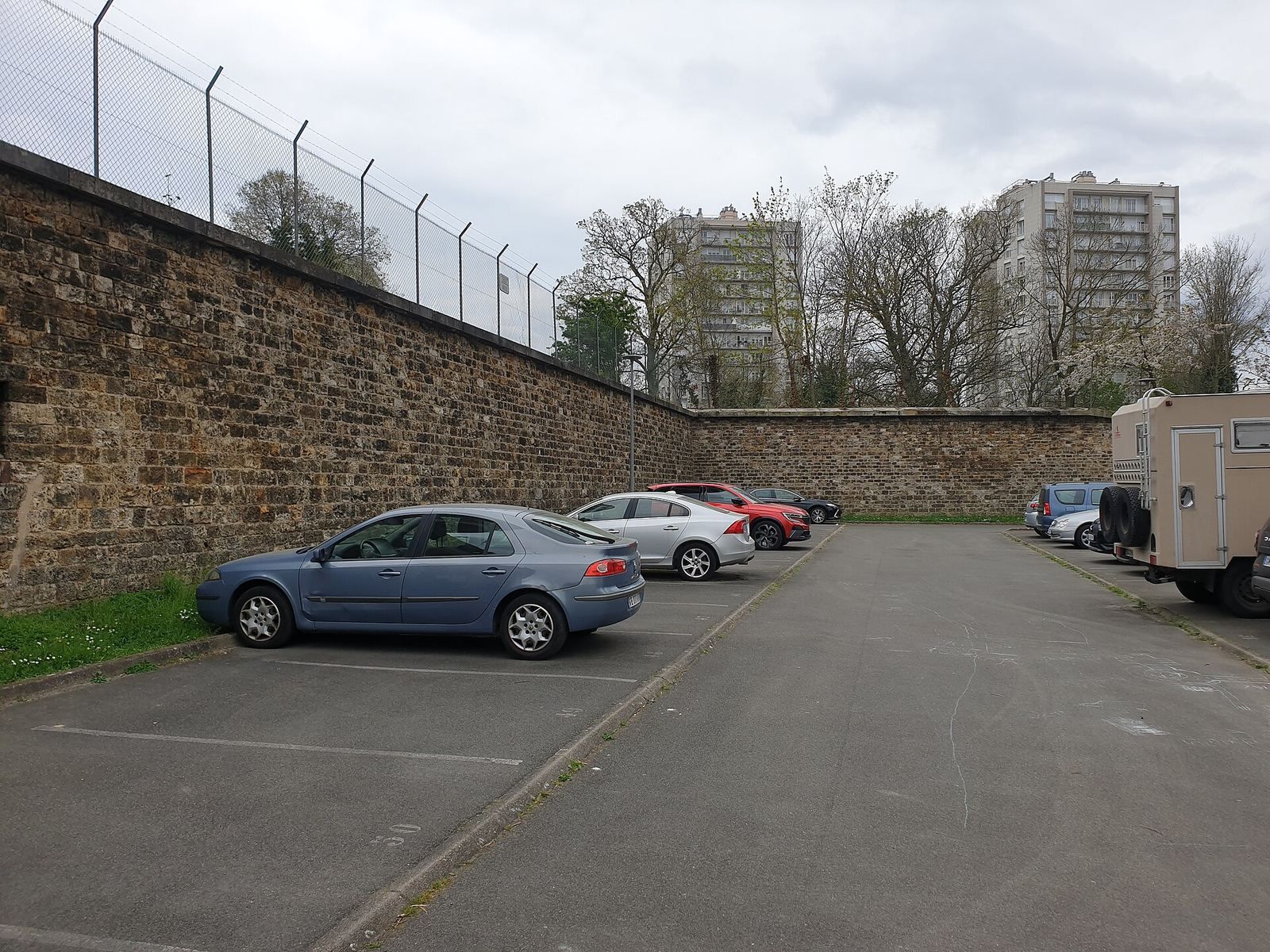
The complex now occupies 3 hectares, compared with its original 20, and retains the layout of a Vauban-style fortification. Its principal features include an entrance archway, a central building, a yard, and surrounding ditches. The design tradition takes its name from Sébastien Le Prestre de Vauban, a French military engineer of the seventeenth century.
Detention-camp features
During its use as a detention camp, watchtowers were added and wire fencing placed along the walkway at the top of the ramparts. Prisoners were held in casemates, protected rooms within the fort. The interior wall of casemate 17 bears graffiti left by deportees; the markings were restored in 2023.
Memorials and artwork
Memorial plaques commemorate internees, people executed at the fort, and the “31,000” convoy. A plaque at the entrance specifically recalls the convoy’s formation there. In 2020, Congolese artist Freddy Tsimba conceived an artwork inspired by the camp’s history. It depicts a man presenting a child to the child’s mother across a fence, referring to the story of a woman prisoner who became pregnant.
Telecommunications tower
A 141-metre telecommunications tower was built in 1984 within a decommissioned section of the fort’s enclosure. It carries radio and television broadcasts across France and is visible from the Plaine de France and the eastern and northern suburbs of Paris.