Fort de Matra: A Genoese Fortress and Archaeological Museum in Corsica


Site at a Glance
- Rating
- 4.3
- Popularity
- Low
- Country
- France
- Primary era
- Medieval
- External website
- Open
- Eras represented
- Medieval
- Civilizations
- Genoese
- Site type
- Military
- Remains
- Fort
On this page5 sections
History
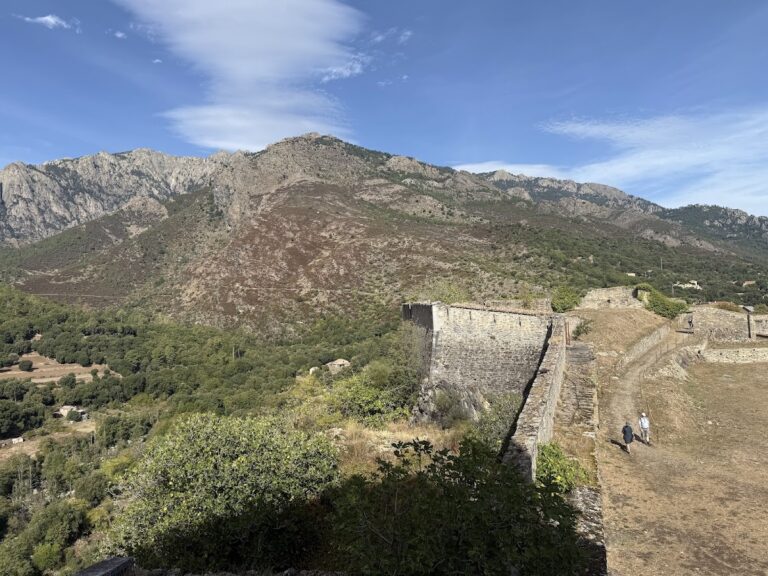
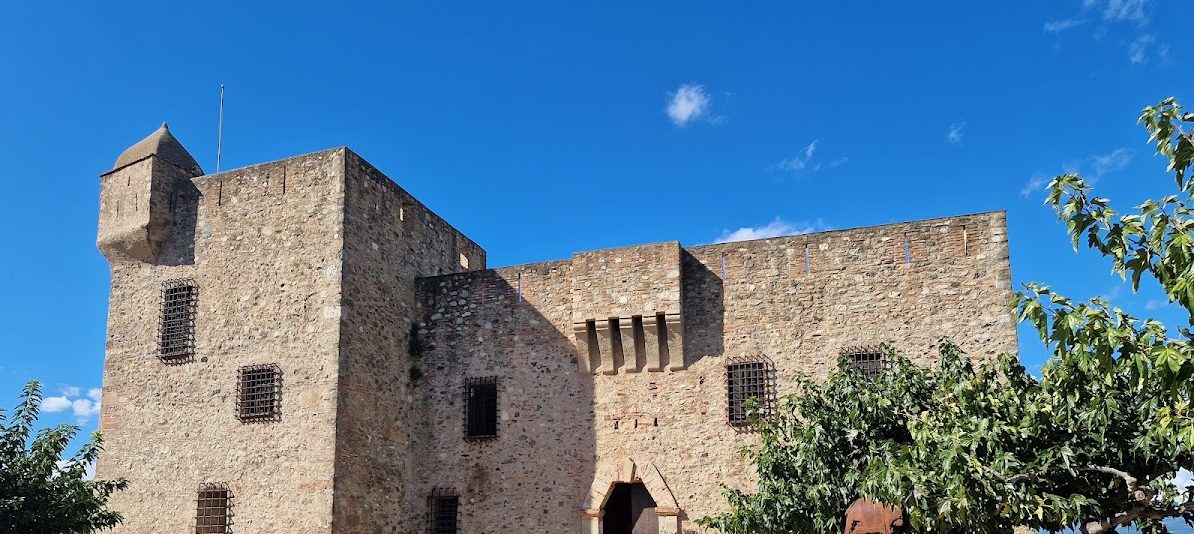
Fort de Matra is a fourteenth-century Genoese fortress in France, located at Aléria in Corsica. Built during the period when the Republic of Genoa controlled the island, it occupied a strategic hilltop overlooking the surrounding plain, the eastern coast, and the coastal lagoons. Its original military purpose was to monitor this territory, with a cavalry squadron stationed at the fort.
Genoese military stronghold
Over the following centuries, the fortress also served as a Genoese weapons depot. Corsican rebels partially destroyed it in 1729, after which it was rebuilt. The restored fort later hosted Theodore I of Corsica, a short-lived eighteenth-century claimant and king whose reign lasted only briefly.
The Matra family and eighteenth-century conflict
Control of the rebuilt fortress subsequently passed to the powerful Matra family, which retained possession of it. Marius Emmanuel Matra, the family’s best-known member, was one of Corsica’s elected generals. He opposed Pascal Paoli, a leading Corsican political and military figure, in a struggle for control of the island. Matra supported the Genoese in seeking their backing and was killed on 28 March 1757. The fort nevertheless remained in his family’s possession.
From fortress to archaeological institution
Fort de Matra was classified as a historic monument in 1962. The following year, it became a depot for archaeological material recovered in the surrounding area, especially from excavations at the nearby ancient city of Alalia and from pre-Roman necropolises. The institution associated with the fort took the name Jérôme Carcopino in 1969, commemorating the French historian of ancient Rome, and became the Departmental Museum of Archaeology Jérôme-Carcopino in 1978. After the Department of Haute-Corse acquired the fort in 1979, the archaeological finds and excavation equipment housed there formed the basis of the museum’s collection. The museum was subsequently designated a Musée de France, a French state status for recognized museums with public-service and conservation obligations.
Remains
Fort de Matra occupies the summit of a hill above the surrounding plain and territory. This elevated position shaped its military function by supporting surveillance of Corsica’s eastern coast and the nearby coastal-lagoon region. The surviving fortress reflects both its Genoese origins and the rebuilding that followed its partial destruction in 1729.
In its later form, the fort also became an archaeological depot and the premises of the Departmental Museum of Archaeology Jérôme-Carcopino. From 1963, archaeological material from the surrounding area was collected there, including finds from ancient Alalia and pre-Roman necropolises. This material, together with excavation equipment housed at the fort, provided the foundation for the museum’s collection.
Nearby sites