Fort Catinat du Larmont supérieur: A French Mountain Fort
Site at a Glance
- Popularity
- Medium
- Country
- France
- Primary era
- Modern
- Eras represented
- Modern
- Civilizations
- French
- Site type
- Military
- Remains
- Fort
On this page8 sections
History
Construction and defensive role
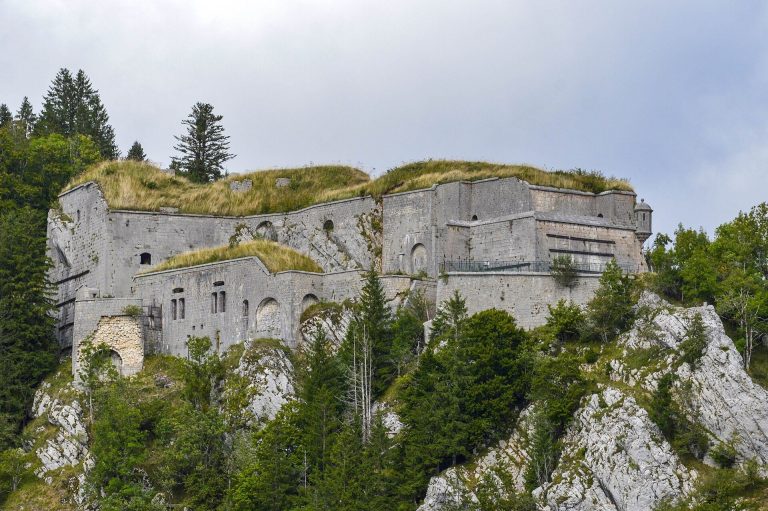
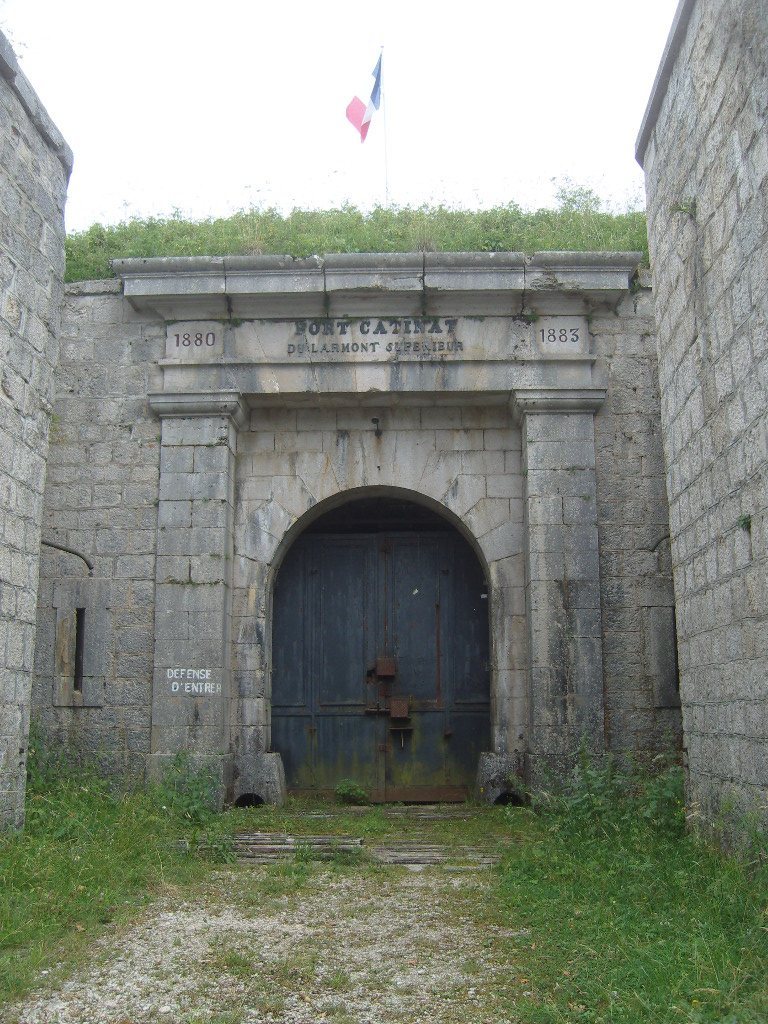
Fort Catinat du Larmont supérieur is a mountain fort above Pontarlier in the Doubs department of France, built by Adrien Hallier’s company between 1880 and 1883. It belonged to the Séré de Rivières system, a late nineteenth-century French network of fortifications associated with military engineer Raymond Adolphe Séré de Rivières. Together with Fort du Larmont inférieur, Fort de Joux, and Fort Saint-Antoine, it formed a defensive group intended to control routes from Switzerland, protect Fort de Joux, and guard a barrier across a valley. Its planned garrison numbered 400 to 500 men.
Renaming and the First World War
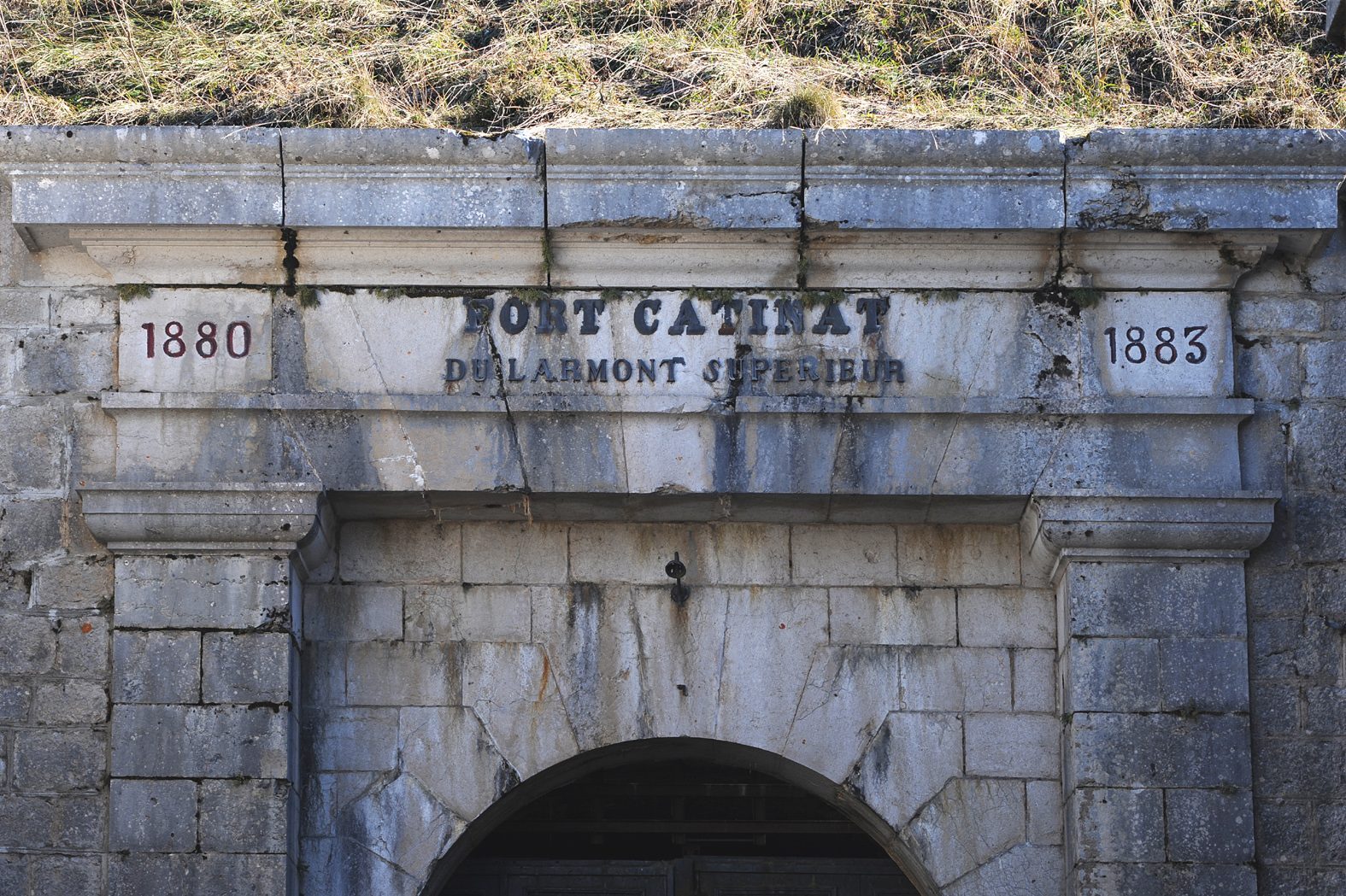
On 21 January 1887, War Minister Georges Boulanger decreed that French forts, batteries, and barracks should take the names of former military leaders. The fort was renamed for Nicolas de Catinat, a French commander who held the rank of Marshal of France. Boulanger’s successor, Théophile Ferron, revoked the decree on 13 October that year, and the fort officially returned to its earlier name. The entrance pediment, however, retained the name Fort Catinat. During the First World War, the front line never reached the fort.
The fighting of June 1940
German forces were sighted near the fort on 16 June 1940. At about 19:30, retreating troops moved through Pontarlier toward Morez along the Pontarlier–Oye-et-Pallet road. The 14th demi-brigade, a French military formation made up of varied troops and commanded by battalion commander Davouze, received orders to resist and delay the German advance. Defenders organized the fort’s defenses that night.
At 05:30 the next morning, four German armored cars appeared at Pontarlier’s eastern exit; one carried a radio. Lieutenant Pavelet drove out with four men to identify them, made contact, and returned with his party to the fort, where the 4th demi-brigade’s headquarters was based. Customs officers and other troops joined the small garrison, which had four machine guns but little ammunition and few grenades. Women and children took shelter in the rock-cut shelters as the defenders moved to their positions.
The bombardment began at 11:45, with German 105-mm and 210-mm guns striking the fort. An air attack destroyed French artillery at Grange-Dessus, leaving the fort to fight alone, and its communications were cut at 13:15. German infantry attacked from three directions but was held back by sustained fire; two of the fort’s four machine guns were destroyed. The infantry reached the fort at about 18:00. At 18:45, defenders repelled the first assault, in which German troops descended into the ditches on ropes. They turned back six attacks. By 19:40, only one machine gun and very little ammunition remained, but defenders also drove back an attempt to force the entrance gate.
The fort had delayed the German advance. After a German general proposed that the garrison surrender, 122 men and eight officers left the fort at 20:00 as German troops presented arms. The officers were allowed to retain their weapons, baggage, and horses, and were lodged at a hotel in Pontarlier.
Remains
The mountain fort
At 1,170 metres above sea level, the fort has a ground plan between a pentagon and a parallelogram. A moat originally enclosed three sides, and this incomplete protection left the position vulnerable. The fort had capacity for 290 men and 17 guns. Its entrance pediment bears the name Fort Catinat, the title assigned by the 1887 decree.
Rock-cut shelters and signaling
Two shelters excavated into the rock in 1891 each contained two barrack rooms, together accommodating 60 men. The underground works also included two powder magazines and two workshops for preparing ammunition. Optical-signaling posts connected the fort with other positions, one with Fort Saint-Antoine and the other with Fort de Montfaucon near Besançon.
Outlying battery and armament
A separate battery dating to 1886 lies southwest of the fort and was designed to hold four 120-mm guns. In 1914, the fort’s armament comprised seven 155-mm guns, four 120-mm guns, four 95-mm guns, and two 90-mm guns.