Les Clées Castle Ruins: A Medieval Toll Fortress in Switzerland


Site at a Glance
- Rating
- 4.8
- Popularity
- Very Low
- Country
- Switzerland
- Primary era
- Medieval
- External website
- Open
- Eras represented
- Medieval, Modern
- Civilizations
- Duchy of Savoy
- Site type
- Military
- Remains
- Castle
On this page10 sections
History
Les Clées castle ruins are the remains of a medieval fortified castle in Switzerland, built above the village of Les Clées to control a narrow passage through the Jura. The stronghold governed a large castellany, a territorial district administered from a castle, and protected the abbey church of Romainmôtier and the Joux Valley. It also served as a commercial exchange point where goods were stored before tolls were collected.
Medieval castellany and passage
The castle’s castellany initially belonged as a fief to the Counts of Geneva before passing to the House of Savoy, a ruling dynasty whose possessions included territories in the western Alps and the County of Vaud. Its jurisdiction extended over Rances, Valleyres, La Russille, Sergey, L’Abergement, Montcherand, and Mont-la-Ville, together with the lordships of Lignerolle and Ballaigues.
During the twelfth century, the fortress became a refuge for brigands who robbed travellers and intercepted merchandise moving through the passage. Around 1130, Pope Innocent II ordered Guy de Maligny, bishop of Lausanne, to excommunicate anyone who continued to remain there. Excommunication was a formal ecclesiastical penalty excluding a person from participation in the Christian community.
Geneva, Burgundy, and Savoy
In 1232, William II of Geneva held Les Clées as a fief from Hugh of Chalon, Count of Burgundy. About thirty years later, an arbitral judgment confirmed the castle’s ownership by Peter II, Count of Savoy. The succession of castellans included Antoine in 1232, the lord of Seuther in 1260, Nantelme de Billens in 1263, Humbert Suchet de Féterne in 1266, Jocerand de La Baume in 1272, Girard de Compey in 1285, and Thorain de Gruyère in 1296.
Control of the passage also brought commercial responsibilities. In 1326, Louis of Savoy, Lord of Vaud, granted Jaques de Galera, a bourgeois of Les Clées, the right to operate the local weighing facility for wool bales bound for Italy. He could collect ten deniers per bale. On 9 February 1351, Isabelle of Chalon, Lady of Vaud, granted Jaquemin de Galera the toll of Les Clées, allowing him to collect nine Lausanne deniers per bale. He was also required to maintain and protect the hall against fire and to secure its doors and windows.
The House of Savoy acquired the lands of the Joux Valley from Francis I of La Sarraz in 1344, bringing Les Clées into its possessions. The site then became a major stronghold and received a charter of liberties on 14 July 1359. Later castellans included Richard, lord of Mont-le-Grand, in 1349; Nicod de Saint-Martin in 1392; Jacques Champion in 1398; Richard d’Illens in 1410; Pierre de Pittignier in 1415; and Guillaume Mayor in 1438.
Wars, tolls, and decline
In 1444, Duke Louis I of Savoy ordered repairs to the enclosing walls. When the Swiss Confederates entered the County of Vaud in 1475, they captured the fortress. Its captain, Peter of Cossonay, and his lieutenant, Hugues de Gallera, were beheaded, and the town was burned. Guillaume de La Sarraz was recorded as castellan in 1462, followed by Pierre de Cossonay in 1475 and Jean de Valayre in 1536.
After the Bernese invasion of 1536, the stronghold remained in use for collecting tolls and taxes associated with the warehouse. Merchants gradually turned to more practicable routes across the Jura, especially the road linking Orbe and Jougne. As commercial traffic declined, the castle progressively fell into disrepair.
Nineteenth-century conversion and heritage status
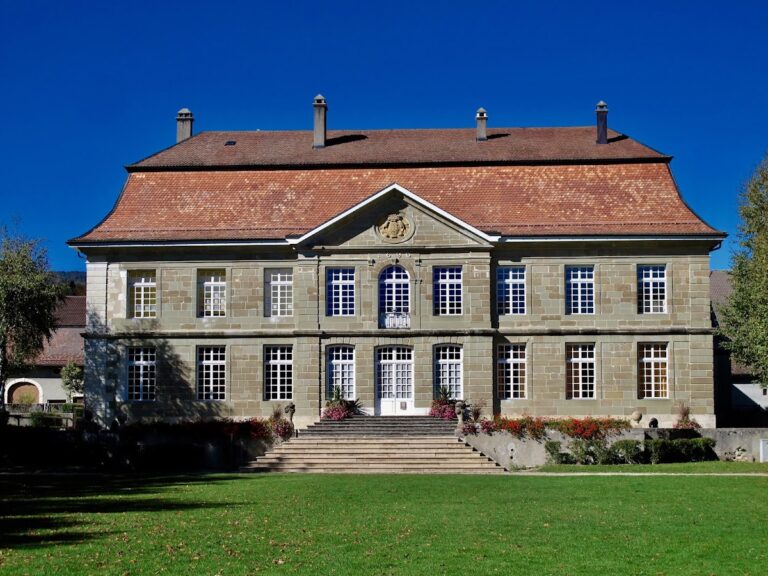
Around 1831, the Reverend Walter Holiday, an English pastor, transformed the picturesque ruin into a residence. He rejected proposals by the regional architects Louis Landry and Henri Fraisse and remodelled the building according to a sketch sent by an otherwise unidentified English builder. Les Clées Castle is designated a Swiss cultural property of national significance, a high-level heritage status for sites considered nationally important.
Remains
Fortified castle on the rocky spur
Entrance, keep, and enclosing walls
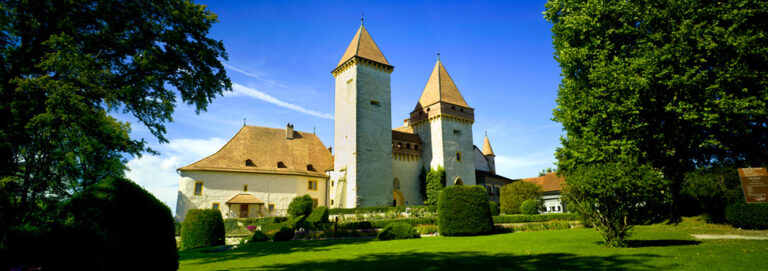
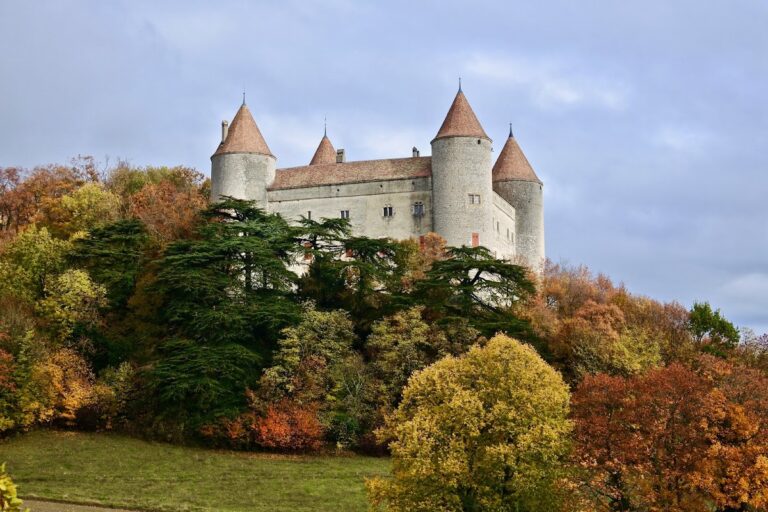
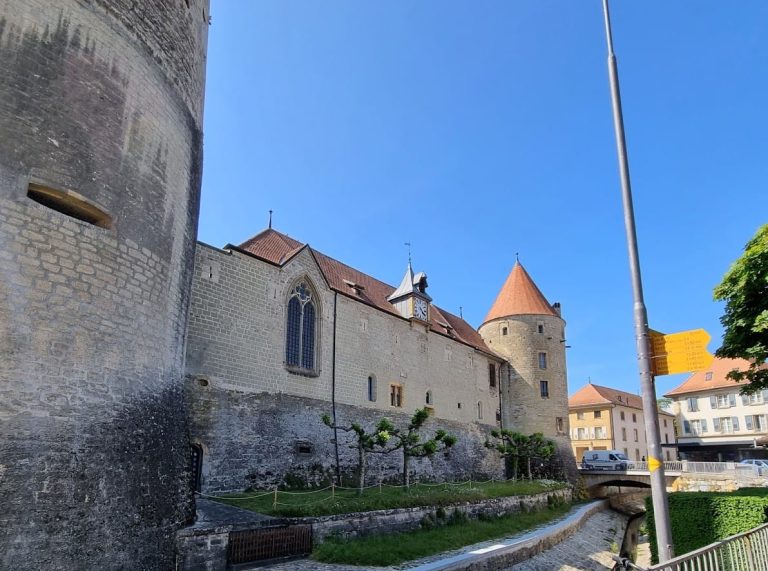
The castle occupied a rocky spur above the village, a position that enabled it to control the narrow passage below. The surviving medieval complex includes an entrance, a keep, and enclosing walls. These elements formed the defensive core of the stronghold and remain part of the castle ruins presented on the site.
Commercial warehouses
Large storage warehouses belonged to the castle’s commercial installations. They held merchandise before tolls were collected, linking the fortified site with the movement of goods through the passage. The warehouses also supported the toll and tax functions that continued after the Bernese invasion.
Converted residence
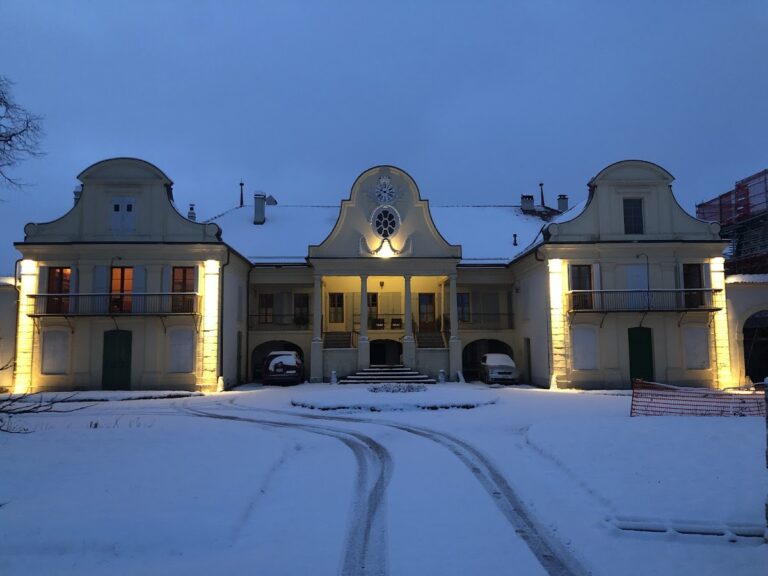
After the medieval stronghold fell into disrepair, the former castle was progressively adapted into a dwelling around 1831. The surviving site therefore combines the remains of the fortified castle with the later residential conversion carried out under Reverend Walter Holiday.