Urrutia Battery: A Coastal Defence Fortification in San Fernando, Spain
Site at a Glance
- Popularity
- Medium
- Country
- Spain
- Primary era
- Modern
- Eras represented
- Modern
- Civilizations
- Spanish
- Site type
- Military
- Remains
- Fort
On this page4 sections
History
A position guarding the channel
Urrutia Battery is a coastal artillery fortification at Punta del Boquerón, on Camposoto beach in San Fernando, Spain. Built in the early nineteenth century after the Duke of Alburquerque arrived in the city, it guarded the sea approach to San Fernando through Sancti Petri Channel. The battery took its name from General José de Urrutia y de las Casas, a Spanish military engineer who served as Engineer General, the Spanish Army’s senior military-engineering office, and was credited with establishing its Corps of Military Engineers.
Urrutia formed part of a defensive line that also included Castillo de Sancti Petri, Batería de San Genís, and Batería de Aspiroz. The line was intended to stop enemy ships and landings, protect the channels on the Chiclana side and Punta del Boquerón, and prevent an advance through the channel toward San Fernando, especially the Arsenal de La Carraca, and the Bay of Cádiz. San Genís lay farther south in a position suited to firing directly on ships; Aspiroz stood farther north inside the channel, less exposed to enemy artillery. During the Siege of Cádiz, the British Navy watched the western shore at Camposoto.
The 1823 surrender and later changes
In 1823, the battery’s garrison, the San Marcial Regiment, mutinied and handed over the position in support of the Duke of Angoulême and the Hundred Thousand Sons of Saint Louis, the French force that intervened to restore King Ferdinand VII. The surrender helped bring an end to the Liberal Triennium, the period of constitutional government, and the return of Ferdinand’s absolute rule. Urrutia Battery played a decisive role in that restoration.
A reform plan was drawn up in 1845, and later alterations gave the fortification its present general appearance. It is protected as an Asset of Cultural Interest under Spain’s 1949 general declaration and the 1985 Spanish Historical Heritage Law. Andalusia gave special recognition to the region’s castles in 1993. The battery also forms part of the Historic Site of the Places of the Cortes and the Constitution of 1812 in San Fernando, Cádiz, and the Bay. The Cortes was Spain’s national representative assembly, and the Constitution of 1812 was a Spanish constitutional charter.
Remains
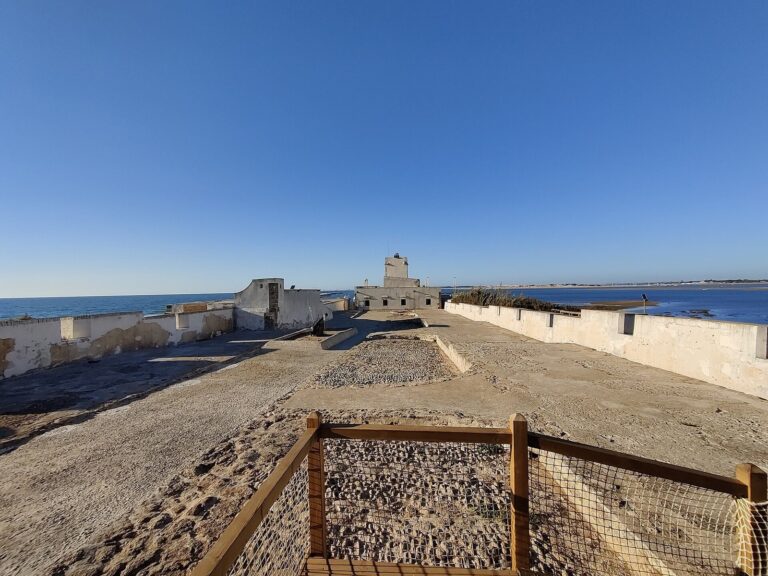
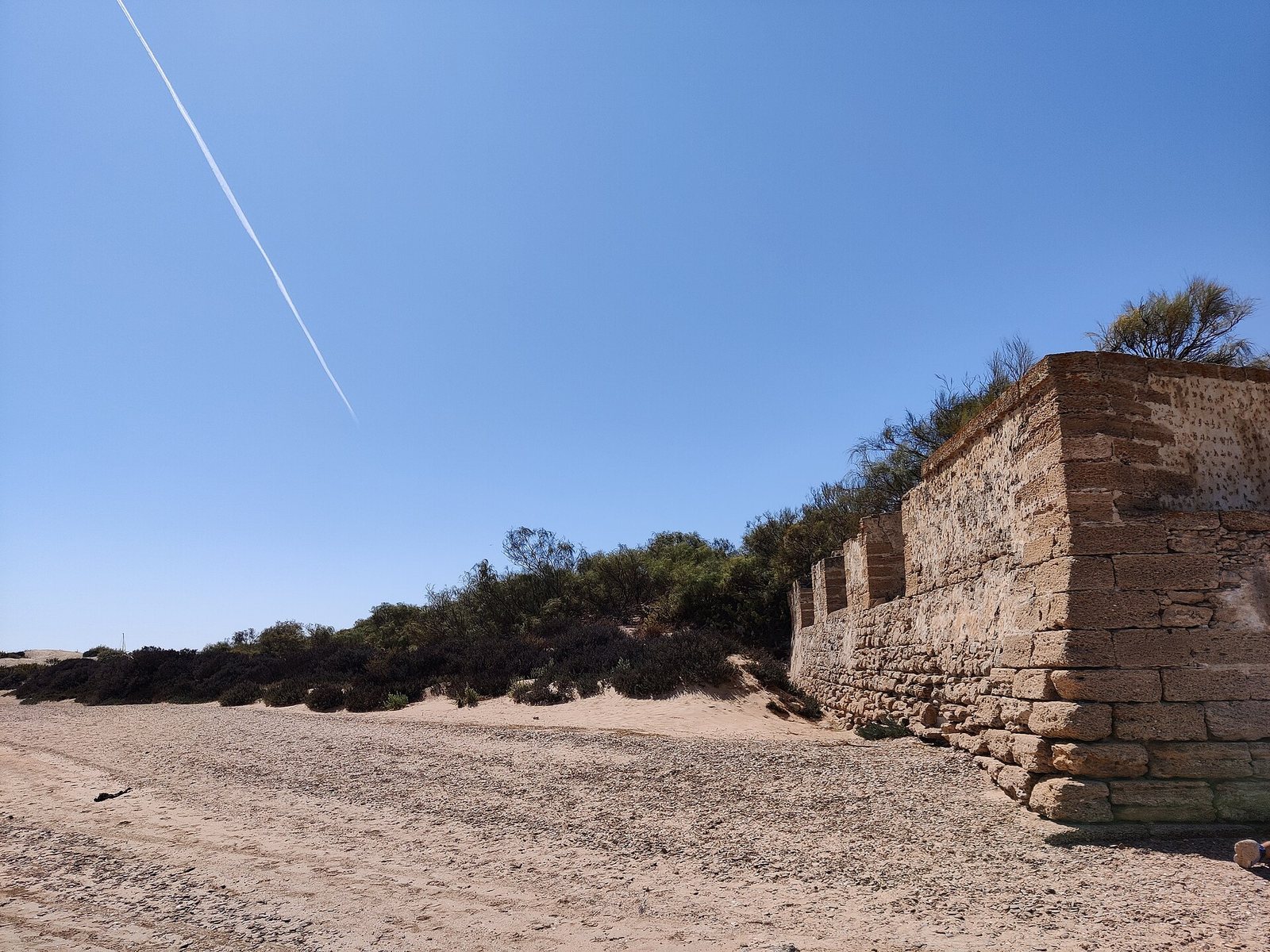
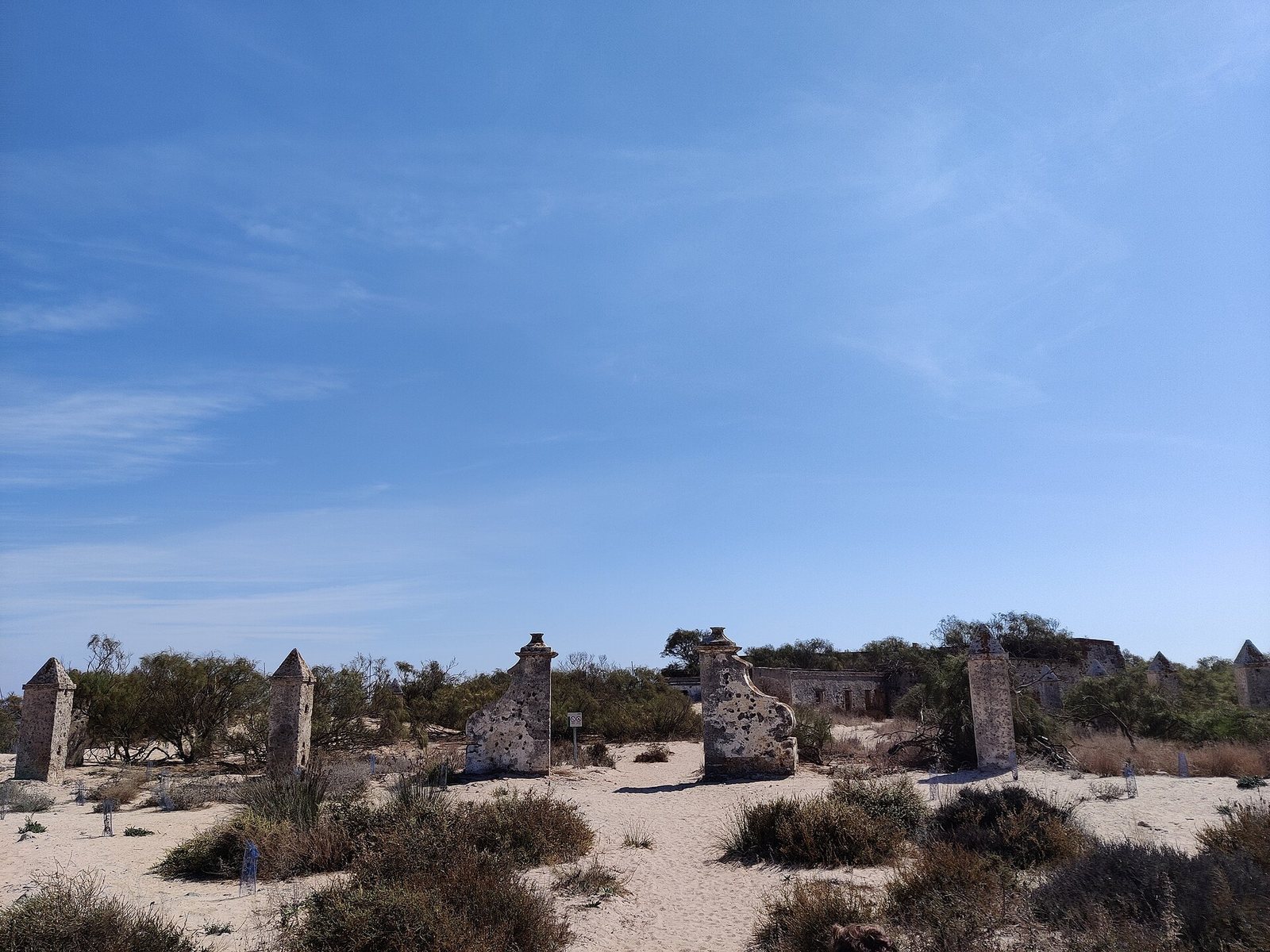
The rectangular fortification stands beside the southern entrance to Sancti Petri Channel, facing the waterway opposite Sancti Petri Islet, where Castillo de Sancti Petri is located. Its curved defensive wall was raised on an earthwork supported by masonry. The wall’s merlons, raised solid sections of a defensive parapet, carried nine 24-pounder guns and two 16-pounder guns. An enclosure wall closed the rear, with a central opening leading to a broad parade ground. Guard quarters and stores occupied the interior, which also had access points to the rampart walk, a path along the top of a fortification wall.
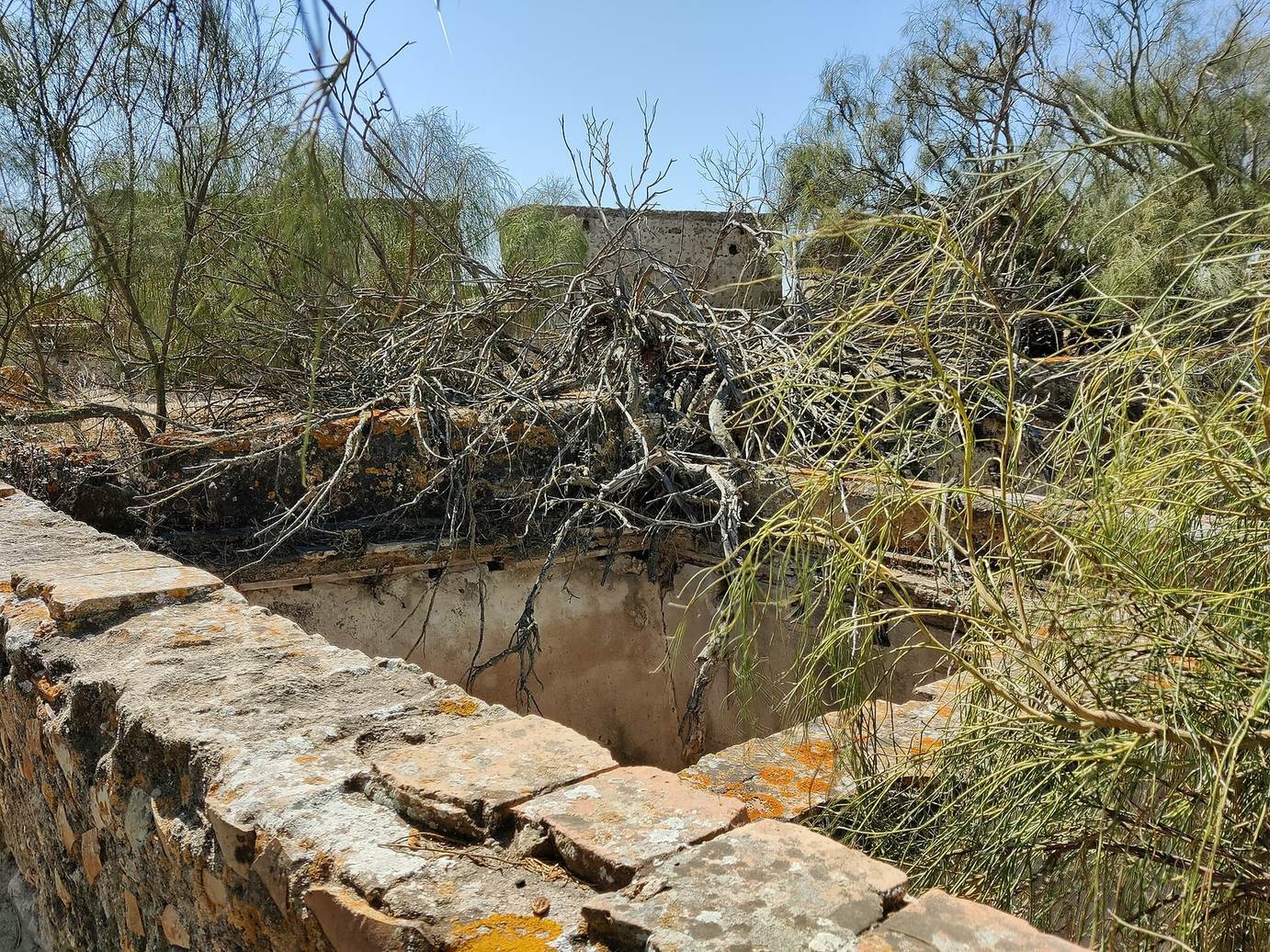
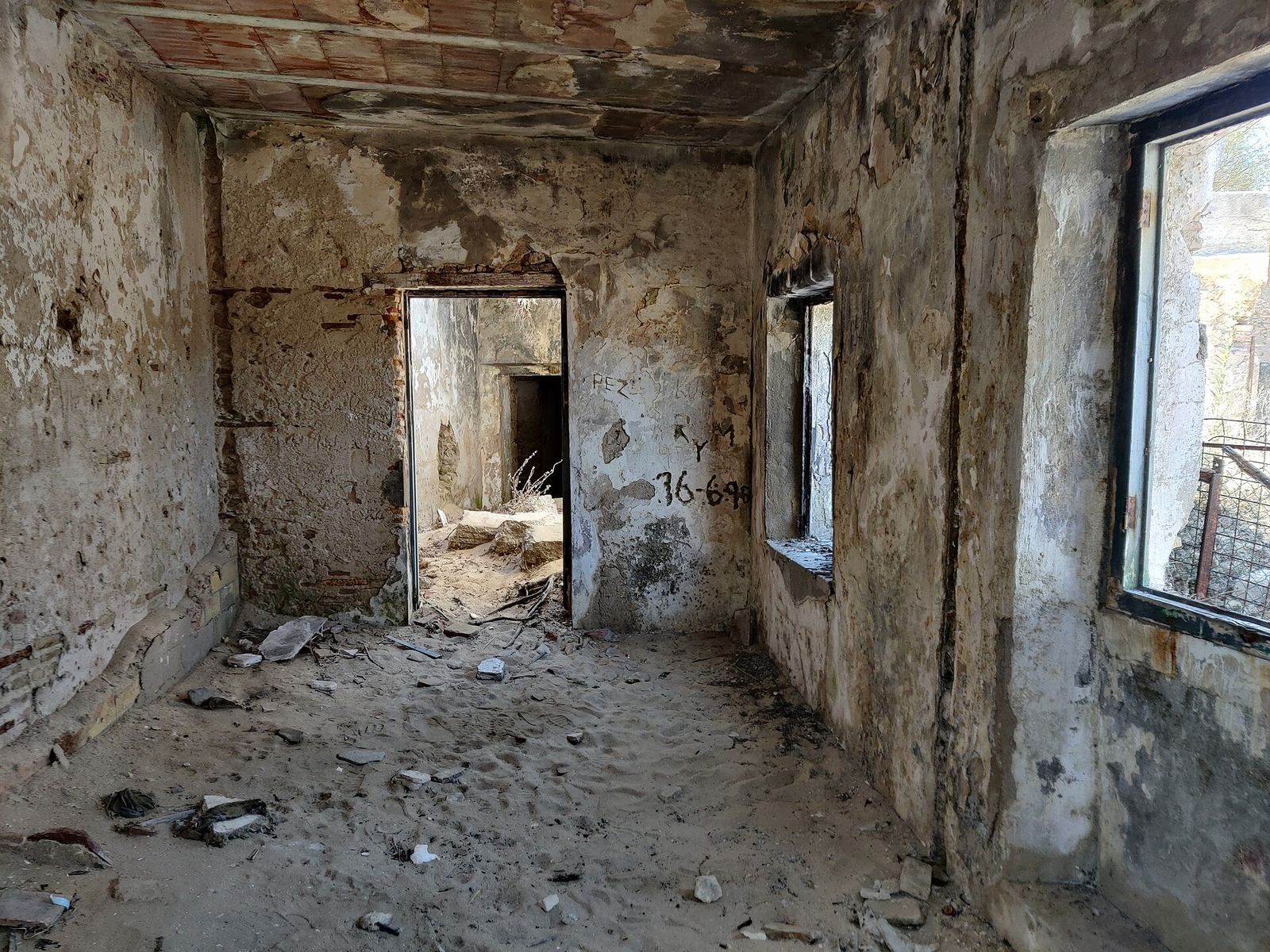
The battery is now in ruins, particularly within the enclosure and across its walls. Vegetation conceals much of the structure, but the merlons remain visible. The overgrown interior still shows the recognizable form of the parade ground and guard areas, as well as access to the rampart walk.