Fort Alexander I: A Maritime Fortress and Bacteriological Laboratory in Russia


Site at a Glance
- Rating
- 4.7
- Popularity
- Very Low
- Country
- Russia
- Primary era
- Modern
- Eras represented
- Modern
- Civilizations
- Russian
- Site type
- Military
- Remains
- Fort
On this page14 sections
History
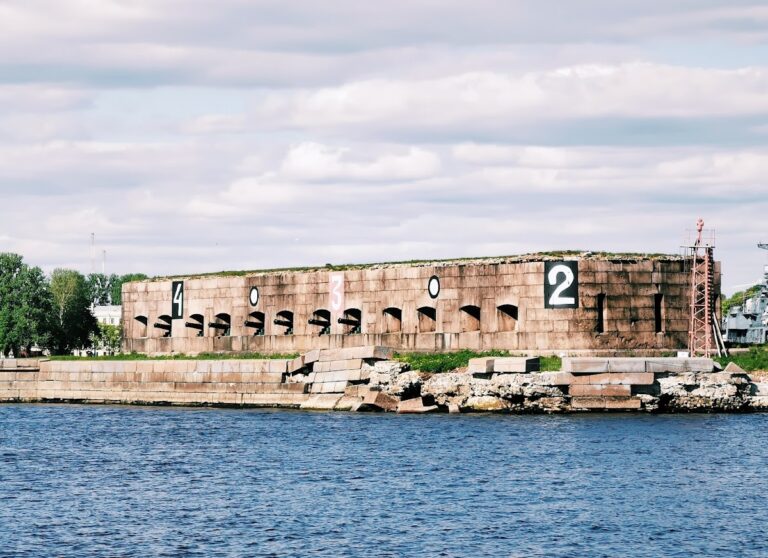
Fort Alexander I, also known as Plague Fort, is a nineteenth-century Russian maritime fortress in St Petersburg, Russia, built as part of the Kronstadt Fortress defensive system. Completed in 1845, it guarded the southern waterway toward Kronstadt and Saint Petersburg from an artificial island south of Kotlin Island.
Foundations of the Kronstadt defenses
The waterways of the Gulf of Finland acquired strategic importance for Russia after Saint Petersburg was founded in 1703. Peter I, the ruler who established the city and initiated major naval and military construction in the gulf, began fortifying the area with Fort Kronshlot in 1704. Fortification continued for the next two centuries as the Kronstadt Fortress developed into the principal defensive complex protecting the naval base and the sea route to Saint Petersburg.
Fort Alexander I formed part of a coordinated group of maritime defenses that included Fort Peter I, Fort Risbank, later renamed Fort Pavel I, Fort Kronshlot, and Fort Constantin. Together, these positions were intended to bring attacking ships under crossfire before they could reach Kronstadt or proceed toward Saint Petersburg.
Design and construction
In the 1820s, the military engineer Louis Barthelemy Carbonnier d’Arsit de Gragnac prepared an unrealized design for two maritime forts. It took the form of the upper part of a horizontal torus, with curved walls intended to deflect round cannonballs, inland-facing loopholes to resist landings, and spaces for rocket launchers. The completed fort did not follow this design fully, although its concave walls at the waterline helped reduce the force of waves. Later forts incorporated provision for rocket installations.
After Carbonnier’s death in 1836, a committee led by Jean Antoine Maurice Destrem revised the plan. Construction began in 1838 under the supervision of Mikhail von der Veide and ended in 1845. Emperor Nicholas I formally commissioned the fort on 27 July 1845 and named it for his elder brother, Alexander I, who had been emperor from 1801 to 1825.
Military service and changing defenses
Fort Alexander I never fought in a military engagement, but its presence contributed to the defense of Kronstadt during the Crimean War, a conflict in which Britain, France, and the Ottoman Empire opposed Russia. In June 1854, a British squadron commanded by Admiral Napier approached the area but did not attack after encountering minefields and substantial fortifications. The following year, an Anglo-French fleet under Vice-Admiral Dundas attempted minesweeping raids with small steamships. Four vessels were damaged or destroyed, and Dundas abandoned the plan to attack Kronstadt.
The waters around the fort and the wider Kronstadt defenses contained galvanic naval mines, which detonated through electrical mechanisms, as well as chemical-contact mines that fired when contact activated their chemical systems. Moritz von Jacobi was associated with the galvanic mines, while Immanuel Nobel developed the chemical-contact type. The fort was placed on full alert in 1855 during the Anglo-French raids, in 1863 because of a possible conflict with Britain, and during the Russo-Turkish War of 1877 to 1878.
Military alterations took place in 1867, 1868 to 1869, and 1885. By the end of the nineteenth century, rifled artillery, whose spiral-grooved barrels improved range and accuracy over smoothbore guns, had reduced the effectiveness of many earlier fortifications. Fort Alexander I was then used mainly to store ammunition. It was removed from the Russian military register and the defensive fortification system in 1896.
The bacteriological station
In 1897 to 1899, the fort was reconstructed as an isolated bacteriological research station, largely with funding from Duke Alexander Petrovich of Oldenburg. A government commission concerned with preventing plague selected the site in January 1897 for a laboratory belonging to the Imperial Institute of Experimental Medicine, a major Russian biomedical research institution. Research began in 1899, and the station was ceremonially consecrated on 27 July that year.
The laboratory produced plague serum, a blood-derived immune material used to provide protection against plague, and developed plague vaccines intended to stimulate longer-term immunity. It also investigated cholera, tetanus, typhus, scarlet fever, and infections caused by Staphylococcus and Streptococcus. Researchers associated with the early work included Danylo Zabolotny, Mikhail Gavrilovich Tartakovsky, and Nikolai Mikhailovich Berestnev.
The station’s isolation also brought danger. Three cases of pneumonic or bubonic plague occurred among its staff in 1904 and 1907, resulting in two deaths. The First World War brought most of the research nearly to a halt as many scientists were drafted into the army. After the February Revolution of 1917, Duke Alexander Petrovich of Oldenburg resigned as trustee of the Imperial Institute of Experimental Medicine on 9 March. At the end of that year, plague and cholera cultures were transferred to Saratov. In autumn 1918, Saratov became the location of the country’s first specialized anti-plague institute, named Microbe, while other laboratory assets moved to institutions in Petrograd, Moscow, and Saratov.
Military reuse and restoration
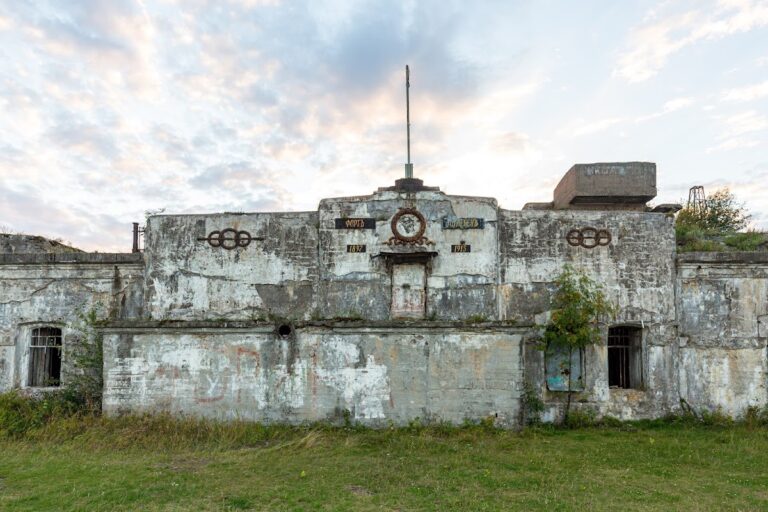
From 1923, Fort Alexander I returned to military control. It served as a storage facility, including for minesweeping equipment, and contained a naval repair facility. By 1983, its fixtures had been removed and the fort had been abandoned. A fire reportedly occurred during the filming of the movie Porokh, although the reliability of that report is uncertain.
The fort became part of the UNESCO World Heritage property Historic Centre of Saint Petersburg and Related Groups of Monuments in 1990, within the defensive installations and forts of the Kronstadt Fortress. It is also a Russian cultural-heritage object of federal significance. Dredging associated with Saint Petersburg’s flood-protection complex and the deepening of the main shipping channel affected nearby waters in 2007. Concern about wave loading and the effect of passing ships on the foundations led to the construction boundary being moved 300 metres away, although concerns about increased wave disturbance remained.
A restoration project was developed in 2020 as part of plans to convert the fort for museum, hospitality, business, cultural, and recreational uses. Emergency stabilization, design and survey work, and state review were completed in 2021. Restoration and construction began in 2022 with the participation of the Ministry of Defence through the Island of Forts project. The planned conversion includes a museum devoted to the history of combating infectious diseases, a restaurant, hotel rooms, and connections to municipal engineering networks for year-round operation.
Remains
Fort Alexander I is an oval, three-storey casemated maritime fort. A casemated fort contains protected vaulted or enclosed rooms for artillery, troops, storage, and other military purposes. The structure measures approximately 90 by 60 metres, surrounds a central courtyard, and has more than 5,000 square metres of floor space. The listed area of the fort is approximately 3.4 hectares.
Maritime fortification
Main fort structure
The fort stands on an artificial island south of Kotlin Island. Its foundation was strengthened with 5,535 piles, each 12 metres long, driven into the seabed. Sand, concrete blocks, and granite slabs covered the piles, while hydraulic lime was used in the concrete. Brick walls were built above the foundation and faced with granite. At the waterline, the walls curve inward in a concave profile that helped lessen the impact of waves. The design was compared with Fort Boyard, a nineteenth-century sea fort off the Atlantic coast of France, although Fort Boyard was completed later.
Defensive and service features
On the side facing Kronstadt, a pier and service building supported personnel and other operations. The central courtyard contained a half-tower with cast-iron spiral staircases. The entrance gates carried decorations of lion heads, anchors, and flags, while rooms around the courtyard housed furnaces for heating cannonballs.
The fort contained 103 cannon ports, including positions for the powerful three-pood bomb cannons used in its period. A pood weighed approximately 16.38 kilograms, so a three-pood cannon was named for a projectile weighing roughly three poods. The roof provided additional space for 34 guns, and the accommodation could house a garrison of up to 1,000 people.
Bacteriological research facilities
Research station
The conversion for bacteriological research added a science library and research laboratories, including containment laboratories. These facilities supported the production of plague serum and vaccine and investigations into several other bacterial diseases. The station’s physical organization also included arrangements for handling laboratory animals and maintaining communication with the outside world.
Animal and support facilities
Stables housed the horses used in serum production, and a lift raised the animals within the complex. The station also had a cremation furnace for laboratory animals and other auxiliary facilities. A small steamship named Microbe provided communication with the outside world.
Present condition and planned conversion
After the fort was abandoned, it deteriorated and lost its fixtures. Emergency stabilization and restoration work began in the early 2020s, with the planned conversion adapting the surviving fortress and laboratory spaces for a museum, restaurant, hotel rooms, and cultural and recreational uses.
Nearby sites