Dønnes Church: A Medieval Parish Church in Norway
Site at a Glance
- Popularity
- Medium
- Country
- Norway
- Primary era
- Medieval
- Eras represented
- Medieval, Early Modern, Modern
- Civilizations
- Danish, Norwegian
- Site type
- Religious
- Remains
- Church
On this page9 sections
History
Medieval origins
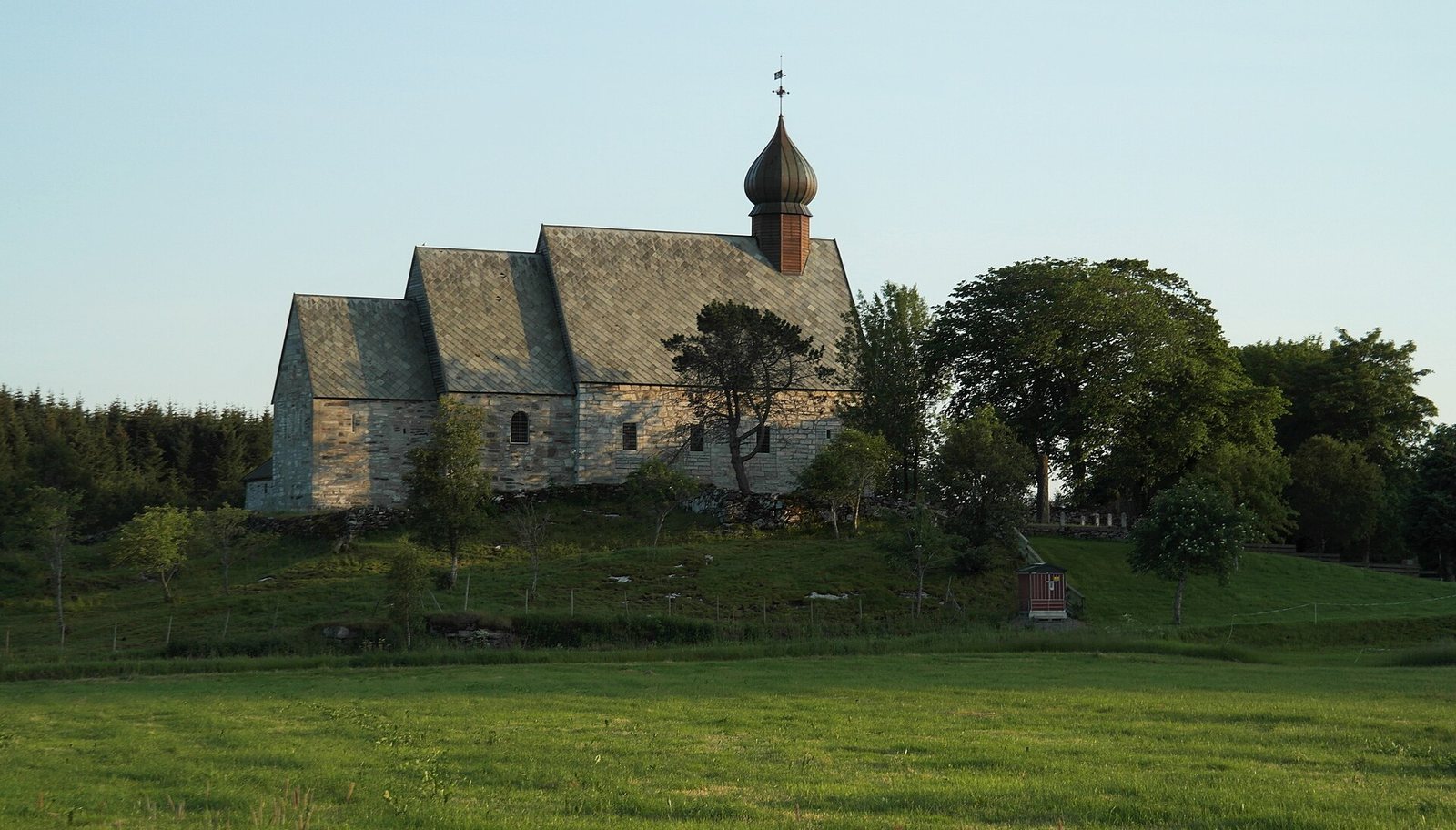
Dønnes Church is a medieval stone parish church in Dønnes village on Dønna island, Norway, generally dated to the first half of the 13th century. It is thought to have been built at the urging of Pål Vågaskalm, a Norwegian nobleman who died in 1245. An earlier church may have stood on the site. Today, Dønnes serves the local parish, or church community, and belongs to the Evangelical Lutheran Church of Norway and the Diocese of Sør-Hålogaland, a regional church jurisdiction. It previously belonged to the Catholic Church.
The church began as a privately owned family chapel within the Dønnes estate. The earliest surviving written record of it dates to 1308. It remained known as a chapel in the 16th century while also serving as a parish church.
Ownership and parish life
In 1584, the church was described as being in such poor condition that people preferred to worship outdoors in the churchyard. Preben von Ahnen bought it in 1651, and Peter Christoffersen Tønder acquired it in 1675. Later owner Isach Jørgen Coldevin sought to collect church tithes, levies intended to support the church, from the islanders. Following Coldevin’s death in 1793, the church was sold to the Mission College, a church institution concerned with missionary affairs, in 1796. The college transferred it to the people of Dønnes parish in 1824.
National elections and modern work
In 1814, Dønnes Church served as a polling station during Norway’s first national elections. Each parish selected electors, who later met at county level to choose representatives for the assembly that drafted the Norwegian Constitution. Around 1866, the western part of the nave was dismantled and rebuilt on a wider and longer plan to increase the church’s capacity.
Architect and architectural historian Håkon Christie led examinations and restoration work during the 1960s and 1970s, completed in 1974. Dønnes Church is a Norwegian Cultural Heritage Site and is automatically protected.
Remains
Plan and construction
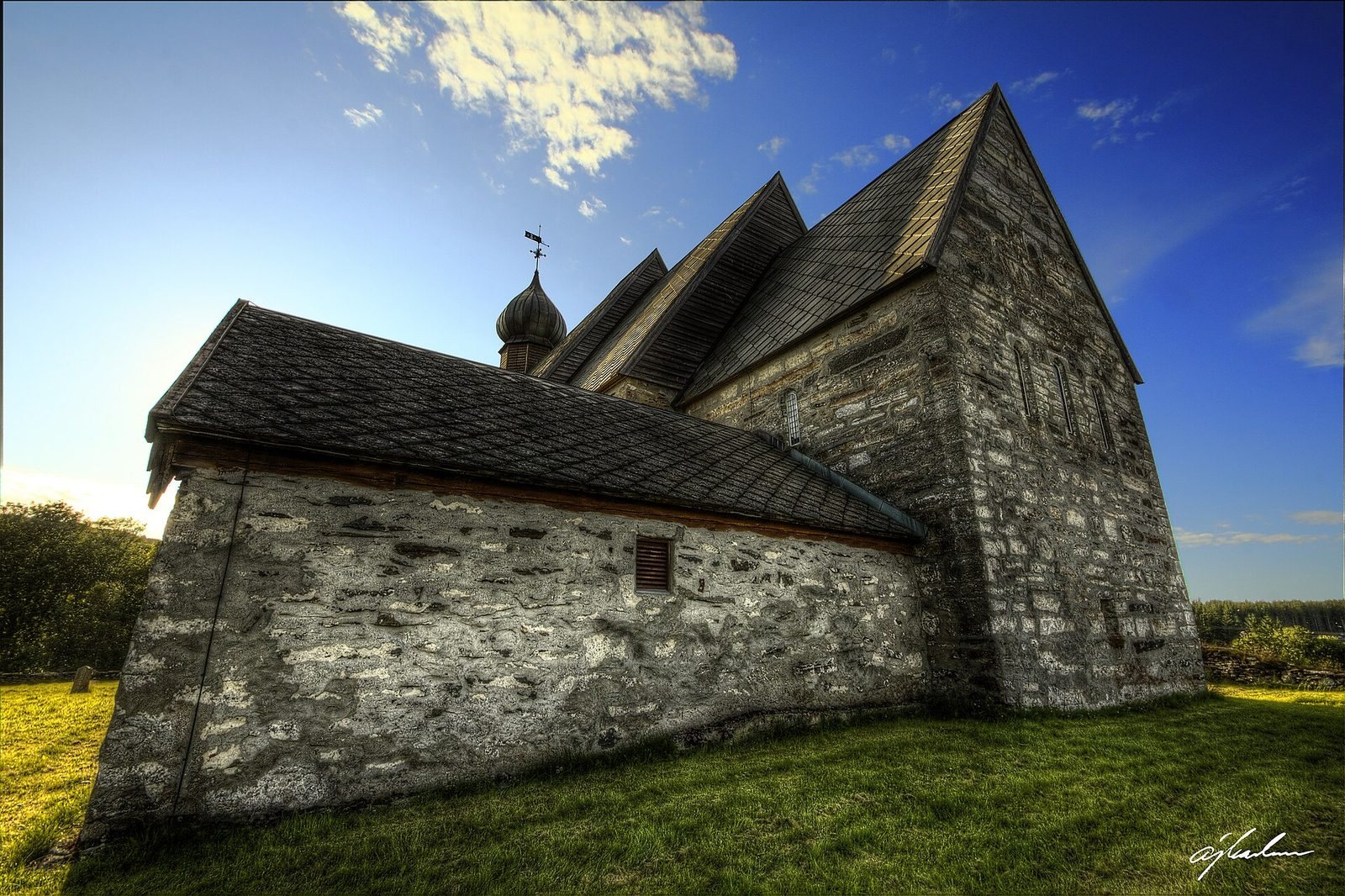
The church has an elongated plan, with its main interior arranged along its length, and is built of grey stone. It originated as a single-nave chapel. The nave is the main body of the church, while the chancel is the area around the altar. A churchyard lies beside the building, which has seating for 250. Concealed passages were made within the walls during the 16th century, and burial chapels were added later as family mausoleums. The church also has a distinctive onion dome from the 18th century, reinstated in 1974.
Burial spaces
A mausoleum, or family burial chamber, was established beneath the chancel. Its grave chapel contains 22 embalmed bodies and served as the Coldevin family burial place until the mid-19th century. During the 1866 rebuilding, coffins belonging to the Coldevin and Tønder families were found beneath the wooden floor; they are now in the mausoleum.
Interior furnishings
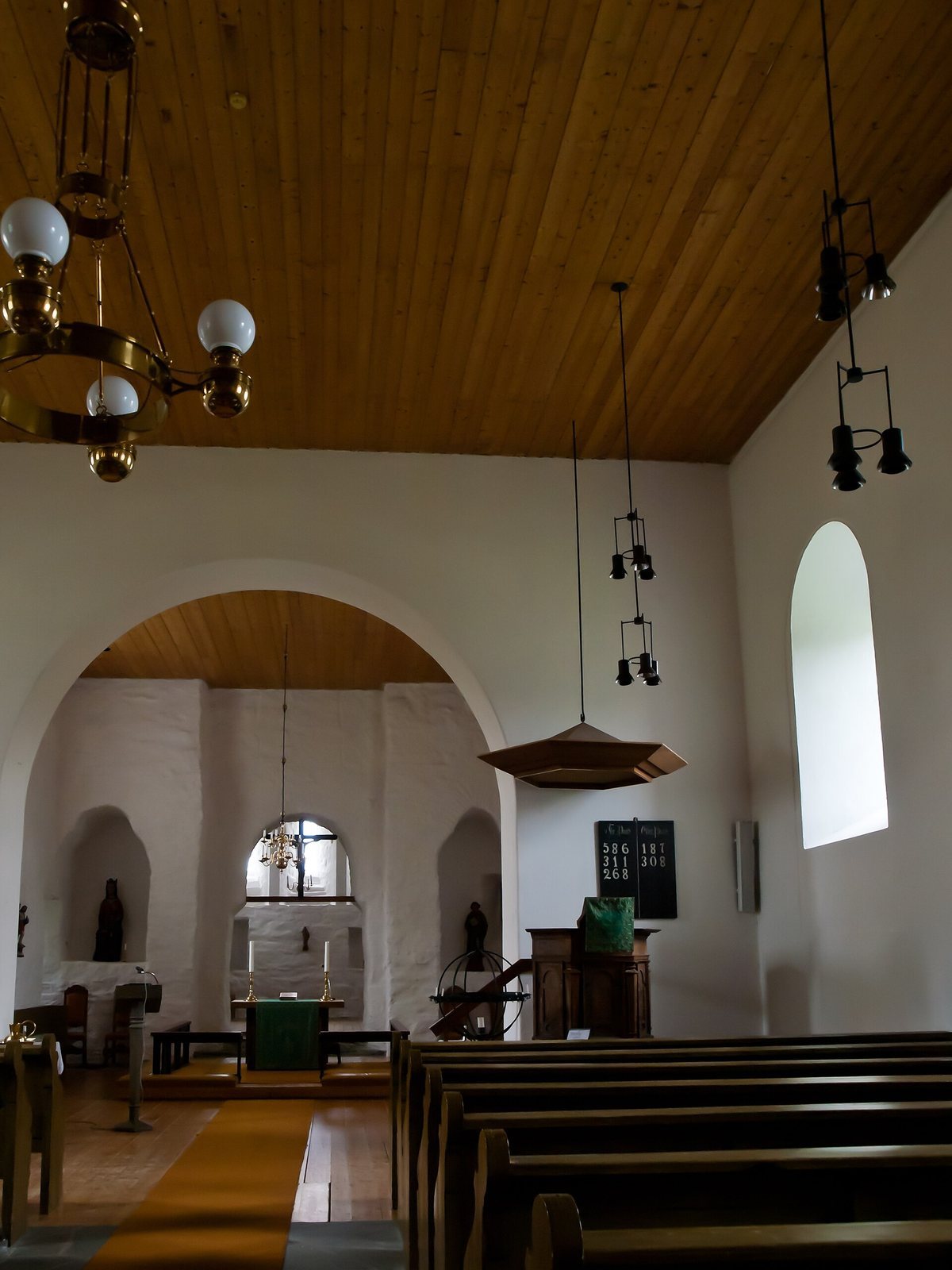
The furnishings include a 13th-century Madonna and Child and a 15th-century figure of Saint Lawrence, an early Christian martyr venerated in Western Christianity. The carved pulpit is in the ornate Baroque style associated especially with the 17th century. The altarpiece dates to 1670, and several paintings from the 17th century are by Barak Boghart. An organ built by Paul Chr. Brantzeg was installed in 1866.
Archaeological finds
Excavations in the 1960s uncovered a coin hoard from the reign of Haakon Haakonsson, a medieval king of Norway. The find included 356 coins and bracteates, thin coins generally struck on one side; the oldest date to the first half of the 13th century. The excavations also recovered fragments of coloured window glass, a small metal figure of an angel, and pieces of a reliquary, a container for sacred relics.